THE PERSON BEHIND THE ACCOUNT
Elizabeth of Portugal: making peace inside a divided royal family
Elizabeth of Portugal’s role as peacemaker was tested inside her own family. Her husband, King Denis, and their son Afonso became opponents in a struggle over power and succession. The received history remembers her intervening between them, even after she had herself been confined on suspicion of favoring the prince. [1][2]
A marriage arranged in childhood
Elizabeth came from the royal house of Aragon and was married to Denis while very young. The confraternity that now keeps her memory records the marriage arrangements and her arrival in Coimbra in 1282. She was entering a dynastic household in which private relationships had political consequences. [3]
The Vatican biography describes the king’s infidelities. Admiration for Elizabeth’s patience supplies no requirement that a spouse accept betrayal or danger. [1]
Between father and son
The conflict between Denis and Afonso involved succession anxieties and rival political supporters. Coimbra University’s account traces the tensions across the early 1320s. It also discusses the commemorative monument at Alvalade, whose inscription preserves a narrative of Elizabeth going repeatedly between the opposing parties until they reconciled. [2]
The familiar scene has a political and religious history. Accounts differ over details and dating. The monument is evidence of remembrance, not a transcript of the queen’s words. [2]
The confinement reported by the Vatican biography gives the peacemaking an actual cost. She could be distrusted by the husband whose conflict she was trying to resolve. Her position was neither outside the struggle nor protected from it simply by being royal. [1]
IN OUR OWN LIVES
Peacemaking when both sides are close
Elizabeth’s story is useful because mediation here involved people she could not simply dismiss as strangers. Her family ties gave her access and exposed her to suspicion. The remembered repeated journeys between opponents make peace a task requiring intervention and persistence. [1][2]
An almoner’s instructions and a hospital’s support change other people’s circumstances. Asking how privileged access is used gives the queen’s charitable reputation a practical meaning.
THROUGH THE EYES OF FAITH
Faith and daily life
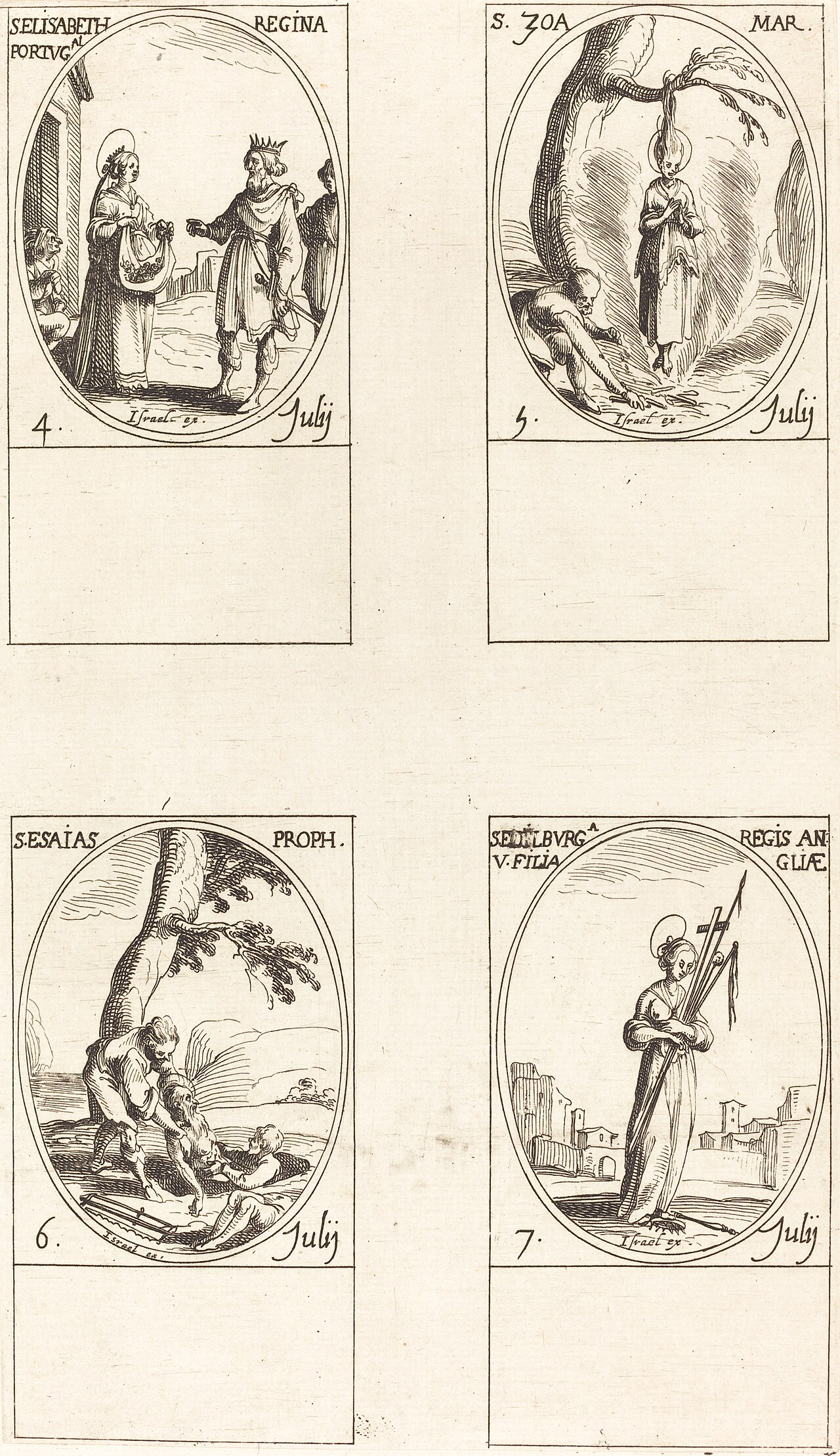
Catholic accounts connect Elizabeth’s peacemaking with prayer, care for poor people and Franciscan devotion. She used royal access and resources for religious and charitable purposes. [3][5]
Charity required more than a kind reputation
The Vatican account records hospitals, religious foundations, care for orphans and instructions to her almoner to help people who came in need. These are ways in which royal resources could reach others. They place her charity within institutions and household decisions, rather than leaving it as a personality trait. [1]
The confraternity associates her later life especially with Coimbra and preserves the bread-to-roses story as a legend expressing her charitable reputation. The legend’s symbolic generosity should remain distinct from the historical work of supporting people and institutions. [3]
Widowhood and a different public identity
After Denis died in 1325, Elizabeth’s life took a more explicitly Franciscan form. The Catholic Encyclopedia recounts her attachment to the Poor Clares at Coimbra, her pilgrimage to Santiago and her continuing efforts to reconcile royal relatives. Widowhood changed her circumstances without ending her involvement in family diplomacy. [5]
The Poor Clare connection does not require us to imagine that she ceased to possess influence or that every later action occurred inside an enclosure. Her final journey was again associated with a conflict among descendants. She died at Estremoz in 1336 and was brought back to Coimbra for burial. [3][5]
THROUGH THE LENS OF SCIENCE
The evidence about the remains
The 1612 tomb opening and later veneration of her right hand anchor the preservation tradition in specific historical accounts. They are different from a modern whole-body examination. [4]
The tomb has its own history
The 1612 opening became important to the later cult. A scholarly history published in a municipal journal distinguishes the preservation of at least part of the body, especially the right hand, from an undifferentiated claim about the whole. Drawing on António de Vasconcelos’s historical work, it identifies repeated solemn viewings through the nineteenth century. [4]
The confraternity’s account dates the transfer of the silver tomb to its later setting to 3 July 1696. Its description concerns a seventeenth-century object made with metalwork, glazed openings and an architectural design. The container is a historical artifact with its own makers and movements. [6]
Together these sources document a preservation tradition and a long history of devotional custody. They do not provide a current inventory of surviving tissues, conservation treatments or burial conditions sufficient to explain the physical process. The right-hand tradition is more specific than a promise that a visitor will see an unchanged medieval body. [4][6]
READER QUESTIONS
Questions and answers
Are all the familiar battle-scene details certain?
The Alvalade monument preserves a longstanding memory of mediation. Exact details and dating vary across accounts. [2]
What does the preservation evidence specifically concern?
The 1612 opening and later veneration of preserved parts, especially the right hand. No current whole-body technical report was reviewed. [4]
FOLLOW THE SOURCES
Sources and further reading
- Vatican City State: Saint Elizabeth of Portugal
official devotional biography
Family conflict, confinement, mediation and charitable foundations. Exact dates differ from other official summaries.
- University of Coimbra: Batalha de Alvalade
university public-history account
Political context, competing narrative dates and text of commemorative inscription. Used as political memory, without invented battlefield dialogue.
- Confraternity of Queen Saint Elizabeth: life
devotional custodian
Search-index text inspected; full retrieval timed out. Marriage/1282 Coimbra arrival, local charity and roses legend, 1336 death and burial. Birth date differs from Vatican summary; exact date omitted.
- Fernando Florêncio and Vera Rodrigues: Elizabeth’s cult, Revista de Religiosidade Popular 2 (2024), pp. 178–179
scholarly history of devotion
Indexed text distinguishes partial preservation and right-hand veneration, citing Vasconcelos’s historical openings. No current technical report.
- Catholic Encyclopedia: Elizabeth of Portugal
historical reference
Widowhood, Poor Clare attachment, pilgrimage and later mediation. Older devotional history, not a contemporary medical or personal record.
- Nelson Correia Borges: silver tomb of Queen Saint Elizabeth
custodian art history
Search-index full article excerpt inspected; direct fetch timed out. 1696 transfer and tomb materials/design. Metalwork’s decorative masks are not alleged body coverings.
Sources checked: 2026-10-27. Suggest a correction or a source.