
Our images include documentary photographs, scientific observations, and clearly labeled AI-generated illustrations. Inline article figures preserve the supplied composition. Cinematic openings, story cards, and page banners use responsive crops and dark shading behind text. Scientific figures retain their original colors. No image implies an institutional endorsement.
Webb Takes a Stunning, Star-Filled Portrait of the Pillars of Creation (Full View)
Webb’s NIRCam view of the Pillars of Creation combines six near-infrared filters. Visible colors represent infrared light; stars and warm-edged clouds fill the Eagle Nebula scene.
Credit: NASA, ESA, CSA, STScI; J. DePasquale, A. Koekemoer, A. Pagan (STScI).
Original source · CC BY 4.0
16:9 crop of source at x=0, y=650; no recoloring; compressed as WebP; layout may crop and darken cover images. Responsive WebP sizes; no retouching or recoloring. Story cards, article leads, and cinematic banners may use responsive crops; inline reading figures retain the full photograph. Adapted share-alike images retain their stated license.
Webb Takes a Stunning, Star-Filled Portrait of the Pillars of Creation (Full View)
Webb’s NIRCam view of the Pillars of Creation combines six near-infrared filters. Visible colors represent infrared light; stars and warm-edged clouds fill the Eagle Nebula scene.
Credit: NASA, ESA, CSA, STScI; J. DePasquale, A. Koekemoer, A. Pagan (STScI).
Original source · CC BY 4.0
Resized to 1800px high, no crop; compressed as WebP; layout may crop and darken cover images. Responsive WebP sizes; no retouching or recoloring. Story cards, article leads, and cinematic banners may use responsive crops; inline reading figures retain the full photograph. Adapted share-alike images retain their stated license.
Pillars of Creation (MIRI Image)
MIRI observes longer infrared wavelengths. Its three-filter composite emphasizes the Pillars’ dust structure, with fewer stars visible than in the NIRCam view.
Credit: NASA, ESA, CSA, STScI, J. DePasquale (STScI), A. Pagan (STScI)
Original source · CC BY 4.0
Resized to 1800px high, no crop; compressed as WebP; layout may crop and darken cover images. Responsive WebP sizes; no retouching or recoloring. Story cards, article leads, and cinematic banners may use responsive crops; inline reading figures retain the full photograph. Adapted share-alike images retain their stated license.
Pandora’s Cluster (Abell 2744)
A modern view of the distant universe: Webb’s near-infrared panorama of Pandora’s Cluster, Abell 2744. The cluster’s gravity magnifies and distorts the light of galaxies behind it.
Credit: NASA, ESA, CSA, I. Labbe (Swinburne University of Technology), R. Bezanson (University of Pittsburgh), A. Pagan (STScI)
Original source · CC BY 4.0
Resized to 2800px wide, then centered crop to 16:9; compressed as WebP; layout may crop and darken cover images. Responsive WebP sizes; no retouching or recoloring. Story cards, article leads, and cinematic banners may use responsive crops; inline reading figures retain the full photograph. Adapted share-alike images retain their stated license.
Webb mirror covers being removed at Goddard
Technicians uncover Webb’s gold-coated mirror segments at NASA’s Goddard Space Flight Center in April 2016, before installation of its science instruments.
Credit: NASA/Chris Gunn
Original source · NASA media usage guidelines — educational and factual editorial reuse
Resized to 1800 × 1175 pixels and converted from JPEG to WebP. No crop or content alterations. Responsive WebP sizes; no retouching or recoloring. Story cards, article leads, and cinematic banners may use responsive crops; inline reading figures retain the full photograph. Adapted share-alike images retain their stated license.
Asteroid Bennu
Bennu, photographed by OSIRIS-REx. The mosaic shows a surface covered in boulders.
Credit: NASA / Goddard / University of Arizona
Original source · NASA media usage guidelines
Responsive WebP sizes; no retouching or recoloring. Story cards, article leads, and cinematic banners may use responsive crops; inline reading figures retain the full photograph. Adapted share-alike images retain their stated license.
Evening at Lourdes
Evening at the sanctuary in Lourdes. This is a photograph of the place, not of the reported recovery.
Credit: Moahim / Wikimedia Commons
Original source · CC BY-SA 4.0

Responsive WebP sizes; no retouching or recoloring. Story cards, article leads, and cinematic banners may use responsive crops; inline reading figures retain the full photograph. Adapted share-alike images retain their stated license.
Inside St. Peter’s Basilica
Inside St. Peter’s Basilica, Rome. Architecture as context for the Catholic tradition.
Credit: Christoph Strässler / Wikimedia Commons
Original source · CC BY-SA 2.0

Responsive WebP sizes; no retouching or recoloring. Story cards, article leads, and cinematic banners may use responsive crops; inline reading figures retain the full photograph. Adapted share-alike images retain their stated license.
Returned Bennu material inside the opened TAGSAM head
Bennu material inside the opened OSIRIS-REx sampler head at NASA’s Johnson Space Center, published in January 2024. This is the mission’s collection hardware, not Robert Macke’s research instrument.
Credit: NASA/Erika Blumenfeld & Joseph Aebersold
Original source · NASA media usage guidelines — factual editorial and educational use
Source composition and color preserved. NASA assembled the original photograph using focus stacking. Responsive WebP sizes; no retouching or recoloring. Story cards, article leads, and cinematic banners may use responsive crops; inline reading figures retain the full photograph. Adapted share-alike images retain their stated license.
Jason Dworkin holding a vial of returned Bennu material
NASA project scientist Jason Dworkin holds a vial of returned Bennu material in this video frame published in January 2025. A view of the wider mission collaboration.
Credit: NASA/James Tralie
Original source · NASA media usage guidelines — factual editorial and educational use
Source composition and color preserved. Responsive WebP sizes; no retouching or recoloring. Story cards, article leads, and cinematic banners may use responsive crops; inline reading figures retain the full photograph. Adapted share-alike images retain their stated license.
The Grotto of Massabielle at Lourdes
The Grotto of Massabielle at Lourdes, photographed on 15 August 2012. This view provides location context; it does not document Antonia Raco’s recovery.
Credit: Dinh Nguyen / Wikimedia Commons
Original source · CC BY-SA 3.0

Source composition and color preserved. Website derivatives are offered under the linked Creative Commons license. Responsive WebP sizes; no retouching or recoloring. Story cards, article leads, and cinematic banners may use responsive crops; inline reading figures retain the full photograph. Adapted share-alike images retain their stated license.
Lourdes basilica viewed from the esplanade
The Rosary Basilica at Lourdes, seen from the esplanade on 27 August 2019. This view provides location context; it does not document Antonia Raco’s recovery.
Credit: Hammondtravels / Wikimedia Commons
Original source · CC BY-SA 4.0

Source composition and color preserved. Website derivatives are offered under the linked Creative Commons license. Responsive WebP sizes; no retouching or recoloring. Story cards, article leads, and cinematic banners may use responsive crops; inline reading figures retain the full photograph. Adapted share-alike images retain their stated license.
Beyond the Horizon
AI-generated illustration of an anonymous person standing on a mountain ridge beneath an immense twilight sky.
Credit: Saints and Science · AI-generated illustration
Created for the Beyond the Horizon design concept. Compressed and resized for web delivery; responsive crops and shading are used behind text. This is an illustrative scene, not a historical photograph or scientific observation.
Light carries a story
AI-generated illustration of an anonymous observer at a telescope in a dark observatory.
Credit: Saints and Science · AI-generated illustration
Created for the Beyond the Horizon design concept. Compressed and resized for web delivery; responsive crops and shading are used behind text. This is an illustrative scene, not a historical photograph or scientific observation.
WMAP nine-year cosmic microwave background map
WMAP’s nine-year map shows tiny temperature variations in the cosmic microwave background, with the Milky Way’s signal removed. The colors visualize microwave measurements from about 380,000 years after the Big Bang; this is neither an optical photograph nor a view of the universe’s absolute beginning.
Credit: NASA / WMAP Science Team
Original source · NASA media usage guidelines; educational and informational reuse permitted with credit
Proportionally resized from 4096 × 2048 to 1600 × 800 and converted to WebP. Original false-color palette, full-sky projection, and orientation preserved; no cropping or retouching. Adapted share-alike images retain their stated license.
Why does the Vatican have an observatory?
The Vatican Advanced Technology Telescope on Mount Graham, Arizona, photographed in 2010. The dome houses the telescope; adjoining rooms support the observers who use it.
Credit: Vatican Observatory / Jjstott
Original source · CC BY-SA 3.0

Responsive WebP resizing and compression. Article images retain the supplied composition and colors; journal and related-story thumbnails may crop around the subject. Adapted images retain the source license. Adapted share-alike images retain their stated license.
Galileo: what happened, and what should Catholics learn?
Galileo’s lunar illustrations in Sidereus nuncius (1610) show the shifting shadows and uneven surface he observed through a telescope. These are historical drawings, not photographs.
Credit: Galileo Galilei / Wellcome Library, London
Original source · CC BY 4.0

Responsive WebP resizing and compression. Article images retain the supplied composition and colors; journal and related-story thumbnails may crop around the subject. Adapted images retain the source license. Adapted share-alike images retain their stated license.
The sister who saw the future of computing
Sister Mary Kenneth Keller at her doctoral graduation, in a photograph published in the Wisconsin State Journal on June 8, 1965. Her documented doctorate anchors a career often obscured by computing legends.
Credit: Edwin Stein and John Kreissler / Wisconsin State Journal, via Wikimedia Commons
Original source · Public domain in the United States

Responsive WebP resizing and compression. Article images retain the supplied composition and colors; journal and related-story thumbnails may crop around the subject. Adapted images retain the source license. Adapted share-alike images retain their stated license.
How should Catholics read Genesis alongside science?
William de Brailes combined the first two days of Creation into this Bible illumination around 1250. The page is a medieval visual reading of Genesis, not a scientific account of cosmic history.
Credit: William de Brailes / The Walters Art Museum, W.106, fol.1r
Original source · Public domain

Responsive WebP resizing and compression. Article images retain the supplied composition and colors; journal and related-story thumbnails may crop around the subject. Adapted images retain the source license. Adapted share-alike images retain their stated license.
Saint Albert the Great and the habit of looking closely
An illuminated manuscript in the Eisenbibliothek brings together Aristotelian works and Albert the Great’s writings on minerals and the natural world. It records a tradition of study rather than a modern laboratory method.
Credit: Eisenbibliothek, Mss20 / Wikimedia Commons
Original source · Public domain

Responsive WebP resizing and compression. Article images retain the supplied composition and colors; journal and related-story thumbnails may crop around the subject. Adapted images retain the source license. Adapted share-alike images retain their stated license.
Do laws of nature leave room for miracles?
Rembrandt’s Christ in the Storm on the Sea of Galilee (1633) interprets a Gospel miracle through paint and light. The artwork illustrates the theological question; it is not documentary evidence for the event.
Credit: Rembrandt van Rijn / Isabella Stewart Gardner Museum, via Wikimedia Commons
Original source · Public domain

Responsive WebP resizing and compression. Article images retain the supplied composition and colors; journal and related-story thumbnails may crop around the subject. Adapted images retain the source license. Adapted share-alike images retain their stated license.
The priest who learned to read starlight
A plate from Secchi’s Le Soleil (1870) compares the spectra of stars in his classes III and IV. These engraved bands preserve a historical classification; the explanatory diagram below uses a simplified modern example.
Credit: Pierre Dulos / Angelo Secchi, courtesy of Science History Institute
Original source · Public domain
Responsive WebP resizing and compression. Article images retain the supplied composition and colors; journal and related-story thumbnails may crop around the subject. Adapted images retain the source license. Adapted share-alike images retain their stated license.
What happened before the Big Bang?
WMAP’s nine-year map shows tiny temperature variations in the cosmic microwave background, with the Milky Way’s signal removed. The colors visualize microwave measurements from about 380,000 years after the Big Bang; this is neither an optical photograph nor a view of the universe’s absolute beginning.
Credit: NASA / WMAP Science Team
Original source · NASA media usage guidelines
Responsive WebP resizing and compression. Article images retain the supplied composition and colors; journal and related-story thumbnails may crop around the subject. Adapted images retain the source license. Adapted share-alike images retain their stated license.
How do we know Earth is billions of years old?
Western Australia’s Jack Hills, seen by Landsat in 1999, contain rocks bearing exceptionally old zircon grains. A landscape image locates the evidence; the ages themselves come from laboratory measurements of minerals.
Credit: Robert Simmon / NASA Earth Observatory; Landsat data from the University of Maryland’s Global Land Cover Facility
Original source · Public domain (NASA)
Responsive WebP resizing and compression. Article images retain the supplied composition and colors; journal and related-story thumbnails may crop around the subject. Adapted images retain the source license. Adapted share-alike images retain their stated license.
The sisters who helped map the stars
An open volume of the Helsinki portion of the international Carte du Ciel catalogue makes the measuring work tangible: rows of observations became a mapped sky. The Vatican sisters contributed to the project’s separate Vatican catalogue; this is not their own volume.
Credit: MKFI / Wikimedia Commons
Original source · Public domain

Responsive WebP resizing and compression. Article images retain the supplied composition and colors; journal and related-story thumbnails may crop around the subject. Adapted images retain the source license. Adapted share-alike images retain their stated license.
The church floor that became an astronomical instrument
Cassini’s meridian line stretches across the floor of San Petronio in Bologna. Sunlight projected through an opening high above it turned the church into a place for precise solar observations.
Credit: Rosapicci / Wikimedia Commons
Original source · CC BY-SA 4.0

Responsive WebP resizing and compression. Article images retain the supplied composition and colors; journal and related-story thumbnails may crop around the subject. Adapted images retain the source license. Adapted share-alike images retain their stated license.
A priest, a chemistry laboratory, and the road to synthetic rubber
Workers handle synthetic rubber at B. F. Goodrich in Akron, Ohio, in 1941. This later Ameripol production scene illustrates the wider industrial story; it does not depict Nieuwland’s laboratory or the manufacture of neoprene.
Credit: Alfred T. Palmer / Library of Congress, LC-DIG-fsac-1a35068
Original source · Public domain (U.S. FSA/OWI)

Responsive WebP resizing and compression. Article images retain the supplied composition and colors; journal and related-story thumbnails may crop around the subject. Adapted images retain the source license. Adapted share-alike images retain their stated license.
Why would a good creation include animal suffering?
SUE, the Field Museum’s Tyrannosaurus rex, displayed with a replica skull. Fossils place predation and animal life deep in Earth’s history; this museum photograph is contextual, not a close-up of a diagnosed injury.
Credit: James St. John
Original source · CC BY 2.0

Responsive WebP resizing and compression. Article images retain the supplied composition and colors; journal and related-story thumbnails may crop around the subject. Adapted images retain the source license. Adapted share-alike images retain their stated license.
Adam, Eve, and human evolution: where do the questions meet?
Albrecht Dürer’s Adam and Eve (1504), an engraving in the Morgan Library & Museum. This is a historical interpretation of Genesis, not a reconstruction of human evolutionary history.
Credit: Albrecht Dürer / The Morgan Library & Museum
Original source · Public domain

Responsive WebP resizing and compression. Article images retain the supplied composition and colors; journal and related-story thumbnails may crop around the subject. Adapted images retain the source license. Adapted share-alike images retain their stated license.
How did life begin—and how is that different from evolution?
A carbonate formation at the Lost City hydrothermal field. Modern vent chemistry offers a setting for origin-of-life research; the photograph does not show where or how the first life arose.
Credit: NOAA / Lost City 2005 Exploration
Original source · Public domain

Responsive WebP resizing and compression. Article images retain the supplied composition and colors; journal and related-story thumbnails may crop around the subject. Adapted images retain the source license. Adapted share-alike images retain their stated license.
Would discovering extraterrestrial life change Christian belief?
An artist’s interpretation of the seven TRAPPIST-1 planets, released in 2018. Their illustrated surfaces are possibilities, not photographs or evidence of life, and the orbital spacing is not to scale.
Credit: NASA/JPL-Caltech; background constellations courtesy of California Academy of Sciences/Dan Tell
Original source · NASA/JPL educational image use
Responsive WebP resizing and compression. Article images retain the supplied composition and colors; journal and related-story thumbnails may crop around the subject. Adapted images retain the source license. Adapted share-alike images retain their stated license.
Is the universe fine-tuned for life?
The Hubble Ultra Deep Field reveals distant galaxies in a small patch of sky. Fine-tuning arguments concern the universe’s physical conditions. This image shows galaxies; probabilities and theological interpretations require other evidence.
Credit: NASA, ESA, and N. Pirzkal (European Space Agency/STScI) and the HUDF Team (STScI)
Original source · CC BY 4.0
Responsive WebP resizing and compression. Article images retain the supplied composition and colors; journal and related-story thumbnails may crop around the subject. Adapted images retain the source license. Adapted share-alike images retain their stated license.
Can a brain scan tell us whether we have a soul?
A series of structural MRI slices through a human head. These images show anatomy; they are not functional activation maps, pictures of thoughts, or tests for the existence of a soul.
Credit: Daniel Schwen
Original source · CC BY-SA 4.0

Responsive WebP resizing and compression. Article images retain the supplied composition and colors; journal and related-story thumbnails may crop around the subject. Adapted images retain the source license. Adapted share-alike images retain their stated license.
Can an AI be a person?
Oak Ridge National Laboratory’s Summit supercomputer in 2018. The machinery illustrates the computing infrastructure used for scientific and AI research; hardware and performance alone do not settle questions about consciousness or personhood.
Credit: Carlos Jones / ORNL (OLCF)
Original source · CC BY 2.0

Responsive WebP resizing and compression. Article images retain the supplied composition and colors; journal and related-story thumbnails may crop around the subject. Adapted images retain the source license. Adapted share-alike images retain their stated license.
Are we really made of stardust?
The Cassiopeia A supernova remnant, observed with Webb’s Mid-Infrared Instrument. Visible colors represent infrared measurements of dust and stellar debris—a view of the recycling of stellar material, not a claim that every element began inside a star.
Credit: NASA, ESA, CSA, Danny Milisavljevic (Purdue University), Tea Temim (Princeton University), Ilse De Looze (UGhent); image processing: Joseph DePasquale (STScI)
Original source · Public domain
Responsive WebP resizing and compression. Article images retain the supplied composition and colors; journal and related-story thumbnails may crop around the subject. Adapted images retain the source license. Adapted share-alike images retain their stated license.
Why does Easter move?
A page from a portable calendar made in 1456 sets out a method for reckoning Easter. It predates the Gregorian reform and shows the long history of using calendar cycles, rather than simply looking at the Moon, to determine the feast.
Credit: Paul of Kignin / Bibliothèque nationale de France, via Wikimedia Commons
Original source · Public domain

Responsive WebP resizing and compression. Article images retain the supplied composition and colors; journal and related-story thumbnails may crop around the subject. Adapted images retain the source license. Adapted share-alike images retain their stated license.
Can chance be part of providence?
Escherichia coli grown in culture, seen through a scanning electron microscope. This modern micrograph provides context for the bacterial mutation experiments discussed in the article; it does not depict Luria and Delbrück’s original cultures.
Credit: Rocky Mountain Laboratories / NIAID / NIH, via Wikimedia Commons
Original source · Public domain


Responsive WebP resizing and compression. Article images retain the supplied composition and colors; journal and related-story thumbnails may crop around the subject. Adapted images retain the source license. Adapted share-alike images retain their stated license.
What does the loss of a species mean for creation?
Martha, the last known passenger pigeon, preserved at the Smithsonian’s National Museum of Natural History and photographed in 2015. The museum specimen makes the loss of a species tangible: Martha died in 1914.
Credit: Ph0705; crop and contrast by FunkMonk / Wikimedia Commons
Original source · CC BY-SA 4.0

Source photograph by Ph0705, cropped and contrast-adjusted by FunkMonk. Website changes: responsive WebP resizing and compression. Article images retain the supplied composition and colors; journal and related-story thumbnails may crop around the subject. Adapted images retain the source license. Adapted share-alike images retain their stated license.
What is a leaf doing with sunlight?
Light passes through a green leaf, revealing the branching network of veins that supports its living tissues. The photograph introduces the leaf as a working structure; the diagram below explains the chemical exchanges that a photograph cannot show.
Credit: Jina Lee / Wikimedia Commons
Original source · CC BY-SA 3.0

Responsive WebP resizing and compression. Article images retain the supplied composition and colors; journal and related-story thumbnails may crop around the subject. Adapted images retain the source license. Adapted share-alike images retain their stated license.
Does quantum physics really say what people claim it does?
Successive accumulations of individual electron detections build an interference pattern in Akira Tonomura’s experiment. These are laboratory records of quantum interference; the image does not show a human observer causing the pattern.
Credit: Akira Tonomura and Belsazar; arrangement by Cantons-de-l’Est / Wikimedia Commons
Original source · CC BY-SA 3.0

Responsive WebP resizing and compression. Article images retain the supplied composition and colors; journal and related-story thumbnails may crop around the subject. Adapted images retain the source license. Adapted share-alike images retain their stated license.
The Shroud of Turin: what can the evidence actually establish?
Secondo Pia’s 1898 photographic negative of the face on the Shroud of Turin, reproduced from a museum print. It records the cloth’s appearance; a photograph alone cannot establish the cloth’s age or identify the person represented.
Credit: Secondo Pia / Musée de l’Élysée, via Wikimedia Commons
Original source · Public domain

Responsive WebP resizing and compression. Article images retain the supplied composition and colors; journal and related-story thumbnails may crop around the subject. Adapted images retain the source license. Adapted share-alike images retain their stated license.
Can prayer be tested in a clinical trial?
Albrecht Dürer’s Praying Hands (1508), a study for the Heller Altarpiece. This historical artwork evokes prayer as a human practice; it is not a picture of participants in the clinical trials discussed here.
Credit: Albrecht Dürer / Albertina, via Google Arts & Culture and Wikimedia Commons
Original source · Public domain

Responsive WebP resizing and compression. Article images retain the supplied composition and colors; journal and related-story thumbnails may crop around the subject. Adapted images retain the source license. Adapted share-alike images retain their stated license.
The Jesuits who listened to earthquakes
A Galitzin seismograph preserved in Tokyo’s National Museum of Nature and Science. This museum instrument provides a contextual view of the apparatus behind historical earthquake records, rather than a portrait of Macelwane’s own station.
Credit: Momotarou2012 / Wikimedia Commons
Original source · CC BY-SA 3.0

Responsive WebP resizing and compression. Article images retain the supplied composition and colors; journal and related-story thumbnails may crop around the subject. Adapted images retain the source license. Adapted share-alike images retain their stated license.
Why can mathematics describe the natural world?
The Foucault pendulum at the Panthéon in Paris, photographed in 2012, makes Earth’s rotation visible. It offers a striking example of mathematical physics; the article’s opening calculation concerns the simpler ideal model of a small swinging pendulum.
Credit: Marko Kudjerski / Wikimedia Commons
Original source · CC BY 2.0

Responsive WebP resizing and compression. Article images retain the supplied composition and colors; journal and related-story thumbnails may crop around the subject. Adapted images retain the source license. Adapted share-alike images retain their stated license.
Maria Gaetana Agnesi: a life of mathematics and mercy
Maria Gaetana Agnesi in an engraving by Ernesta Bisi after a drawing by Maria Longhi. The Rijksmuseum dates the print between 1798 and 1859; it belongs to the historical portrait tradition through which the mathematician’s memory was preserved.
Credit: Ernesta Bisi, after Maria Longhi / Rijksmuseum, via Wikimedia Commons
Original source · CC0

Responsive WebP resizing and compression. Article images retain the supplied composition and colors; journal and related-story thumbnails may crop around the subject. Adapted images retain the source license. Adapted share-alike images retain their stated license.
Why does a peacock feather change color when you move? — Peacock male displaying.jpg
A male Indian peafowl displays its train at Paignton Zoo. Its repeated eyespots invite a closer look at how feathers interact with light.
Credit: DeFacto / Wikimedia Commons
Original source · CC BY-SA 4.0

No specific retouching declaration on the file page. The original photograph itself trims the upper and side train edges; do not describe it as showing every feather in full. Web versions resized and compressed; no new crop or color adjustment. Adapted images retain their stated license.
Why does a peacock feather change color when you move? — Peacock feather close-up.jpg
A feather eyespot, photographed close up. The visible branches contain optical structures much smaller than this photograph can resolve.
Credit: Mister rf / Wikimedia Commons
Original source · CC BY-SA 4.0

Focus stack: multiple photographs merged in software; creator notes possible blending and related adjustments. Background removed by creator. These are authentic photographic source manipulations, not generated imagery. Web versions resized and compressed; no new crop or color adjustment. Adapted images retain their stated license.
Why does a peacock feather change color when you move? — Peacock feathers. (20779300743).jpg
The patterned feathers across a peacock’s back offer another view of its varied plumage. This close photograph shows the visible feathers; their internal nanostructure lies far below this scale.
Credit: Bernard Spragg. NZ / Wikimedia Commons
Original source · CC0 1.0

No specific retouching declaration on the file page. Metadata records Adobe Photoshop CS2 processing; do not claim unedited source pixels. Web versions resized and compressed; no new crop or color adjustment. Adapted images retain their stated license.
Why Saturn has rings—and moons among them — Translucent Arcs
Cassini’s natural-color mosaic looks through Saturn’s rings from south to north. The component images were taken on April 25, 2007.
Credit: NASA/JPL-Caltech/Space Science Institute
Original source · JPL editorial/educational reuse terms
Natural-color mosaic assembled from Cassini photographs; a composite view, not a single exposure. Web versions resized and compressed; no new crop or color adjustment. Use under the linked JPL editorial/educational terms, with credit and no implied endorsement.
Why Saturn has rings—and moons among them — Daphnis Up Close
Daphnis and the waves its gravity raises along the Keeler Gap, photographed by Cassini on January 16, 2017. The image was taken in visible green light and is shown in grayscale.
Credit: NASA/JPL-Caltech/Space Science Institute
Original source · JPL editorial/educational reuse terms
Original released PIA21056 main image in grayscale, acquired through a visible-green filter. The source separately offers an enhanced Figure 1 that removes motion smearing; that enhanced file was not selected. Web versions resized and compressed; no new crop or color adjustment. Use under the linked JPL editorial/educational terms, with credit and no implied endorsement.
Why Saturn has rings—and moons among them — Texture in the Outer Cassini Division
Cassini photographed these contrasting bands in the outer Cassini Division from about 113,000 kilometers away. This is the main released image; the source also provides a separately filtered version to emphasize local textures. Released June 13, 2019.
Credit: NASA/JPL-Caltech/Space Science Institute
Original source · JPL editorial/educational reuse terms
Main published grayscale Cassini image. The source explains that its separate supplemental Figure 1 averages and subtracts broad brightness variations to reveal texture; that filtered figure was not selected. Web versions resized and compressed; no new crop or color adjustment. Use under the linked JPL editorial/educational terms, with credit and no implied endorsement.
When a Eucharistic host changes color, what can science tell us? — Oblater.jpg
Communion wafers on a table before packing. This contextual photograph does not show samples from the investigation.
Photo: Maxronnersjo, “Oblater.jpg,” Wikimedia Commons, CC BY-SA 4.0. Original file unchanged.
Original source · CC BY-SA 4.0

No edits by Saints & Science; downloaded original file unchanged. No prior compositing or editing is declared on the source page.
When a Eucharistic host changes color, what can science tell us? — Serratia marcescens on an XLD agar plate (PHIL 6620)
A CDC photograph from 1985 shows Serratia marcescens growing on XLD agar after 24 hours. This separate laboratory culture is contextual; it is not a host or a sample from the 2025 study.
Source: CDC, Public Health Image Library (PHIL 6620), 1985; public domain in the United States. The image is available free from CDC. Use does not imply endorsement of Saints & Science by CDC, HHS, or the U.S. Government. Original file unchanged.
Original source · Public domain in the United States; CDC PHIL reuse terms
No edits by Saints & Science; Commons-distributed source file unchanged. The existing species-name overlay is part of that source file; no additional label, crop, or color adjustment applied.
When a Eucharistic host changes color, what can science tell us? — Biology microscope.jpg
An optical microscope in a laboratory. This contextual photograph illustrates a research tool; it does not show the laboratory or instruments used in the 2025 study.
Photo: J.Doniyorovich, “Biology microscope.jpg,” Wikimedia Commons, CC0 1.0. Original file unchanged.
Original source · CC0 1.0 Universal

No edits by Saints & Science; downloaded original file unchanged. No prior compositing or editing is declared on the source page.
Original explanatory diagrams
These six diagrams were prepared for Saints and Science with AI assistance. They explain relationships discussed in the articles; they are not observations, historical artifacts, or experimental measurements. Their scientific background is linked below.
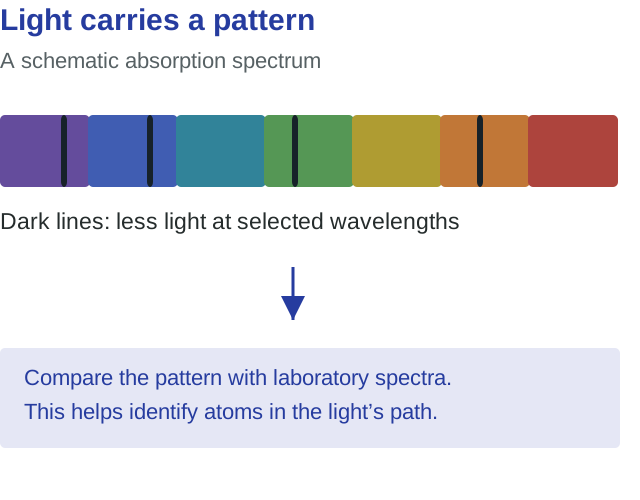
Light carries a pattern
Illustrative line positions and colors; this is not a measured spectrum or a reconstruction of Secchi’s instrument. Real spectra also depend on physical conditions and motion.
Full-size diagram · Scientific background · Read the article
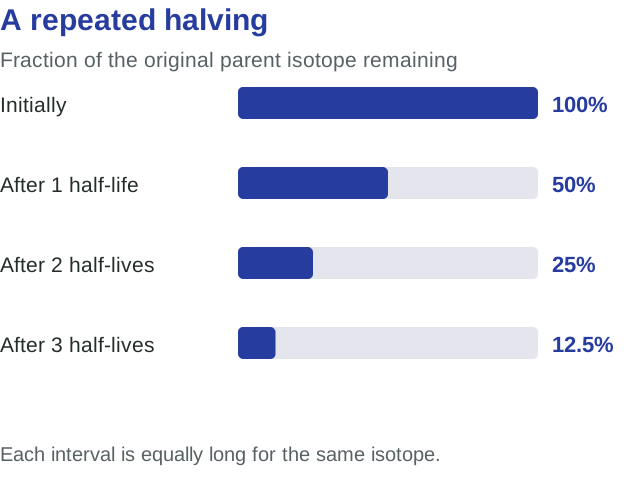
A repeated halving
Idealized decay of a large population. The bars show expected fractions, not a measurement of a rock. Dating also requires an appropriate isotope system and a defensible history of the sample.
Full-size diagram · Scientific background · Read the article
Our atoms have different histories
A selective overview of element origins. It does not assign a single birthplace to every element or imply that all atoms in a person were made in stars.
Full-size diagram · Scientific background · Read the article

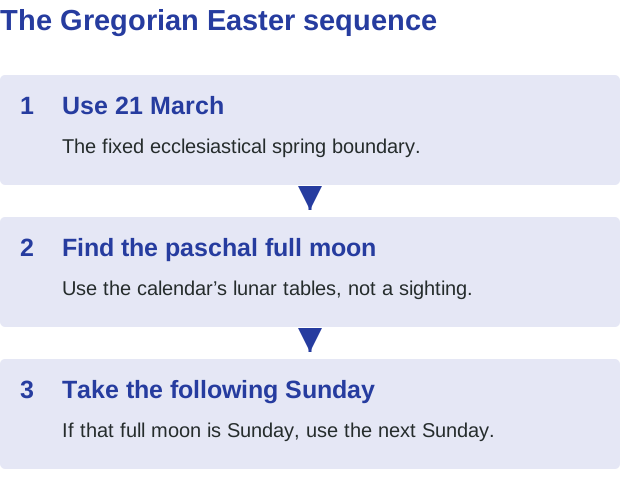
The Gregorian Easter sequence
An outline of the Gregorian rule used for Roman Catholic Easter. The table-defined paschal full moon is the first ecclesiastical full moon on or after 21 March; it can differ from the astronomical full moon. This is not a universal rule for every Christian calendar.
Full-size diagram · Scientific background · Read the article
A leaf transforms energy and matter
A simplified account of oxygenic photosynthesis. The diagram omits intermediate reactions, mineral nutrients, and water recycled within the chemistry. Plants also carry out cellular respiration.
Full-size diagram · Scientific background · Read the article

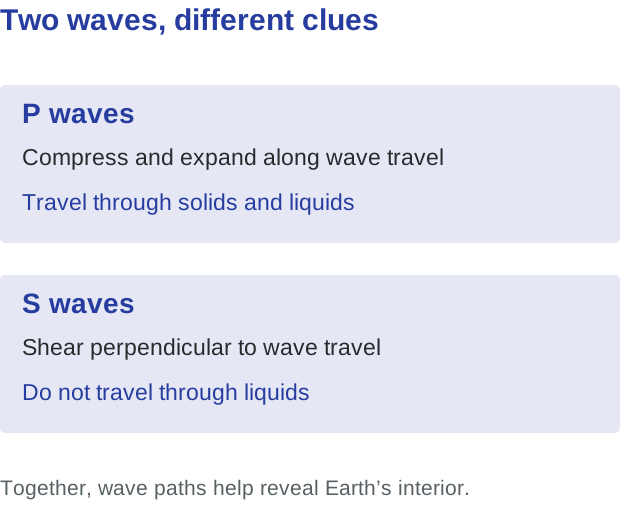
Two waves, different clues
A qualitative comparison of body waves. Real paths bend and waves can convert at boundaries; the diagram does not model an earthquake or predict local shaking.
Full-size diagram · Scientific background · Read the article
The Saints Atlas
Documentary photographs and historical portraits accompany these profiles. A reliquary, mask, covering, or portrait is identified in its caption; appearance alone cannot establish the condition of remains. The original reviewed files remain available through each image link. For faster display, the pages use proportionally resized WebP copies that preserve the full composition, with no cropping, retouching, intentional color changes, or AI alteration. The web copies retain the license and attribution linked below.
Saint Agnes of Montepulciano
Saint Agnes of Montepulciano in a 1507 painting associated with Domenico Beccafumi; photograph by Sailko.
Credit: Domenico Beccafumi; photograph by Sailko · CC BY-SA 4.0 · Image file

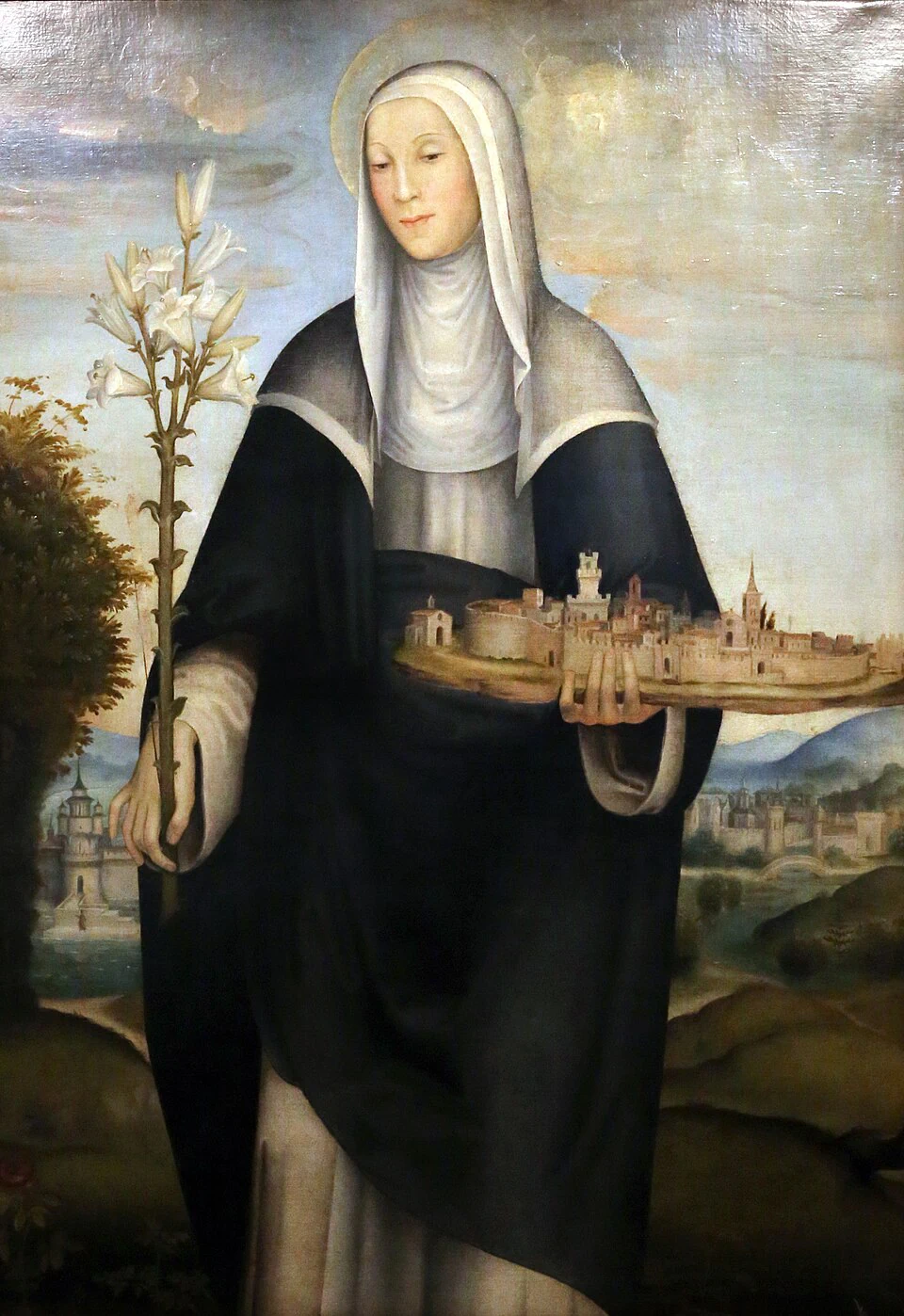
Source file copied unchanged by Saints and Science. The displayed file is byte-identical to Wikimedia Commons' 960 × 1398 pixel derivative; redistribution remains under CC BY-SA 4.0.
Web delivery: Saints and Science created proportionately resized WebP delivery copies at quality 82, or 80–76 where needed to keep the file smaller, for faster loading. The complete composition is retained, with no crop, enlargement, retouching, color adjustment, compositing, or AI alteration. Source ICC, EXIF, and XMP metadata are retained where available. Large ICC color profiles are color-managed into compact standard sRGB to preserve intended displayed colors without carrying oversized profiles; EXIF orientation is applied only if required for the original display orientation. The reviewed original remains available unchanged. Each copy retains the source image license and attribution.
Saint Albertus Magnus
The Virgin appearing to Saint Albert the Great, painted by Vicente Salvador Gómez, circa 1660.
Credit: Vicente Salvador Gómez · Public Domain Mark 1.0 · Image file

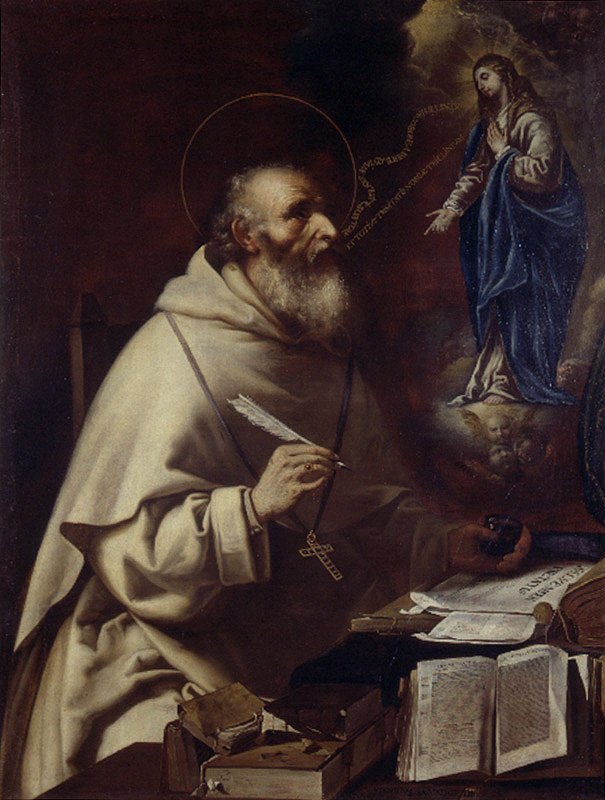
Source file copied unchanged by Saints and Science. Exact Wikimedia Commons original bytes; Corpus Files made no crop, resize, recompression, retouching, or content alteration.
Web delivery: Saints and Science created proportionately resized WebP delivery copies at quality 82, or 80–76 where needed to keep the file smaller, for faster loading. The complete composition is retained, with no crop, enlargement, retouching, color adjustment, compositing, or AI alteration. Source ICC, EXIF, and XMP metadata are retained where available. Large ICC color profiles are color-managed into compact standard sRGB to preserve intended displayed colors without carrying oversized profiles; EXIF orientation is applied only if required for the original display orientation. The reviewed original remains available unchanged. Each copy retains the source image license and attribution.
Blessed Alfredo Ildefonso Schuster
Ildefonso Schuster casting a ballot in Milan, 1953.
Credit: RotoFoto / Anefo; Nationaal Archief · CC0 1.0 · Image file

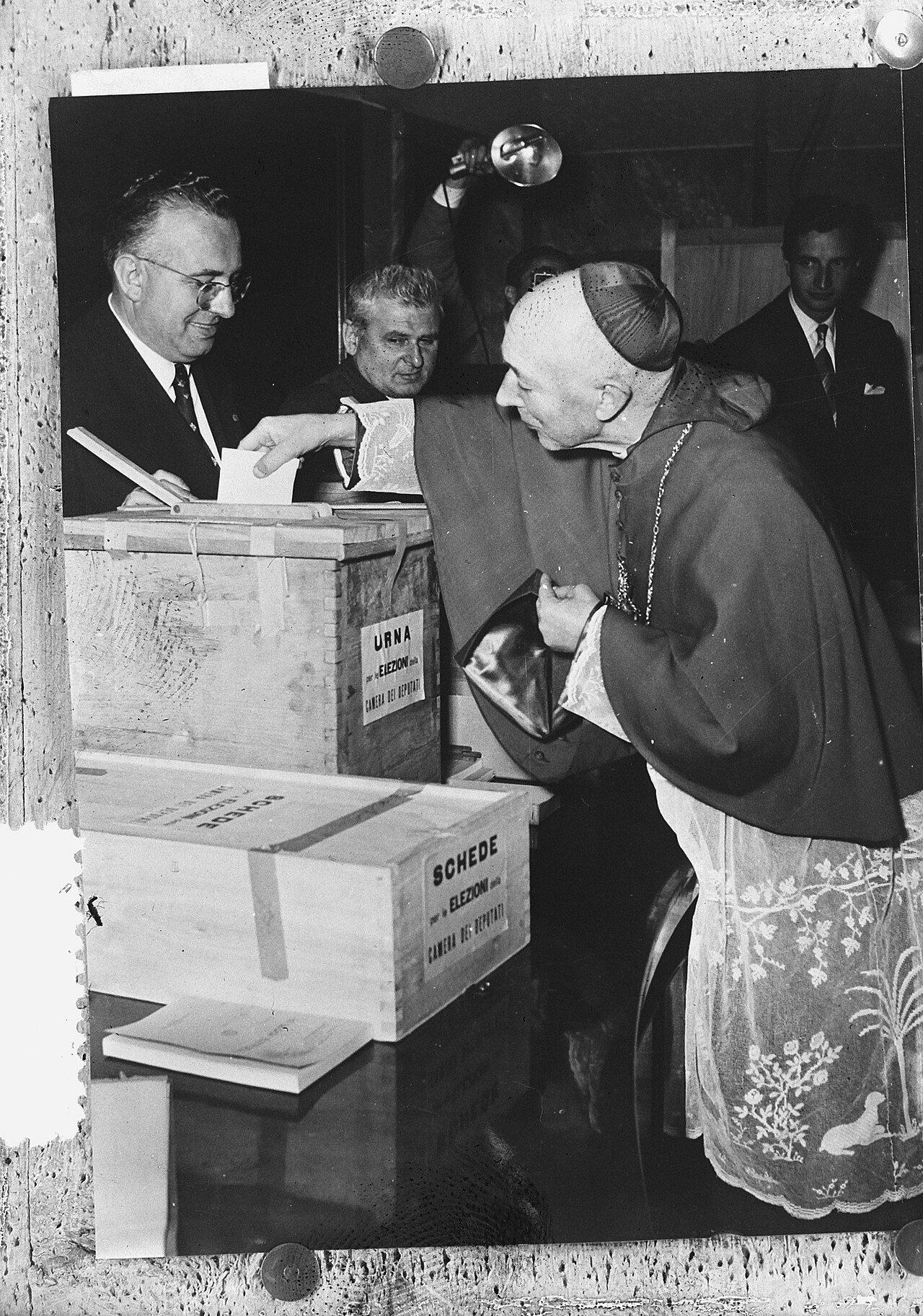
Source file copied unchanged by Saints and Science. Exact source image bytes retained. Wikimedia supplies this proportional display-size copy; no local cropping, retouching, compositing, or recompression.
Web delivery: Saints and Science created proportionately resized WebP delivery copies at quality 82, or 80–76 where needed to keep the file smaller, for faster loading. The complete composition is retained, with no crop, enlargement, retouching, color adjustment, compositing, or AI alteration. Source ICC, EXIF, and XMP metadata are retained where available. Large ICC color profiles are color-managed into compact standard sRGB to preserve intended displayed colors without carrying oversized profiles; EXIF orientation is applied only if required for the original display orientation. The reviewed original remains available unchanged. Each copy retains the source image license and attribution.
Saint Andrew Bobola
The reliquary identified as Andrew Bobola's in his Warsaw sanctuary.
Credit: Adrian Grycuk · CC BY-SA 3.0 pl · Image file

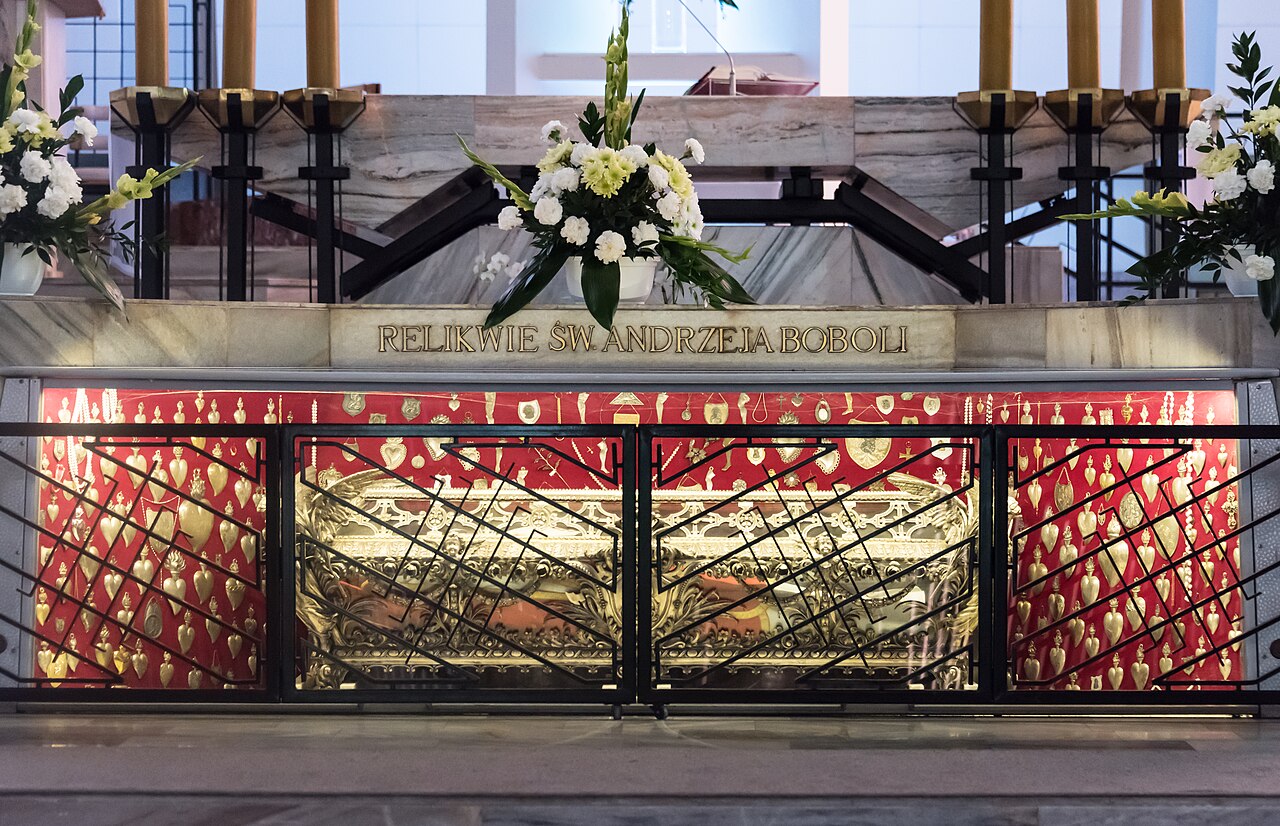
Source file copied unchanged by Saints and Science. Displayed copy is Wikimedia Commons’ upstream proportional thumbnail resize. Corpus Files downloaded it without additional crop, retouching, compositing, AI alteration or intentional color adjustment.
Web delivery: Saints and Science created proportionately resized WebP delivery copies at quality 82, or 80–76 where needed to keep the file smaller, for faster loading. The complete composition is retained, with no crop, enlargement, retouching, color adjustment, compositing, or AI alteration. Source ICC, EXIF, and XMP metadata are retained where available. Large ICC color profiles are color-managed into compact standard sRGB to preserve intended displayed colors without carrying oversized profiles; EXIF orientation is applied only if required for the original display orientation. The reviewed original remains available unchanged. Each copy retains the source image license and attribution.
Blessed Andrew Franchi
Andrew Franchi in a posthumous eighteenth-century engraving by Cosimo Zocchi after Giacinto Giusti, from a volume held by the Getty Research Institute.
Credit: Cosimo Zocchi, after Giacinto Giusti; Getty Research Institute scan · Public domain · Image file
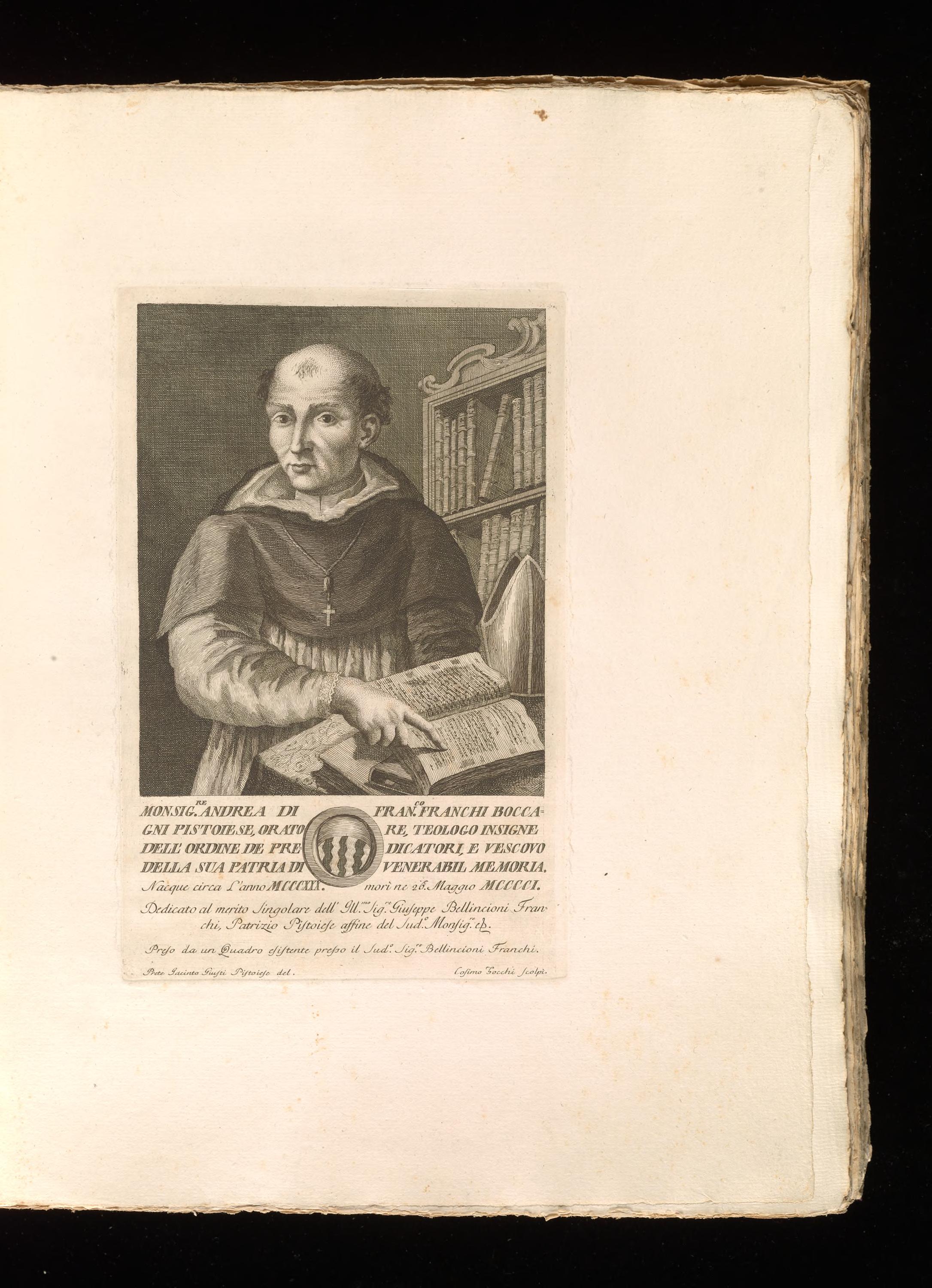
Source file copied unchanged by Saints and Science. The full scanned page supplied by Internet Archive BookReader is retained. No crop, retouching, recoloring, compositing or AI alteration.
Web delivery: Saints and Science created proportionately resized WebP delivery copies at quality 82, or 80–76 where needed to keep the file smaller, for faster loading. The complete composition is retained, with no crop, enlargement, retouching, color adjustment, compositing, or AI alteration. Source ICC, EXIF, and XMP metadata are retained where available. Large ICC color profiles are color-managed into compact standard sRGB to preserve intended displayed colors without carrying oversized profiles; EXIF orientation is applied only if required for the original display orientation. The reviewed original remains available unchanged. Each copy retains the source image license and attribution.
Saint Angela Merici
Angela Merici at prayer in the frontispiece of Bernard O’Reilly’s St. Angela Merici, and the Ursulines, published in New York in 1880. This copy belongs to the University of Toronto’s Kelly Library.
Credit: Unidentified historical engraver; Pollard & Moss, publishers; University of Toronto copy · Public domain · Image file
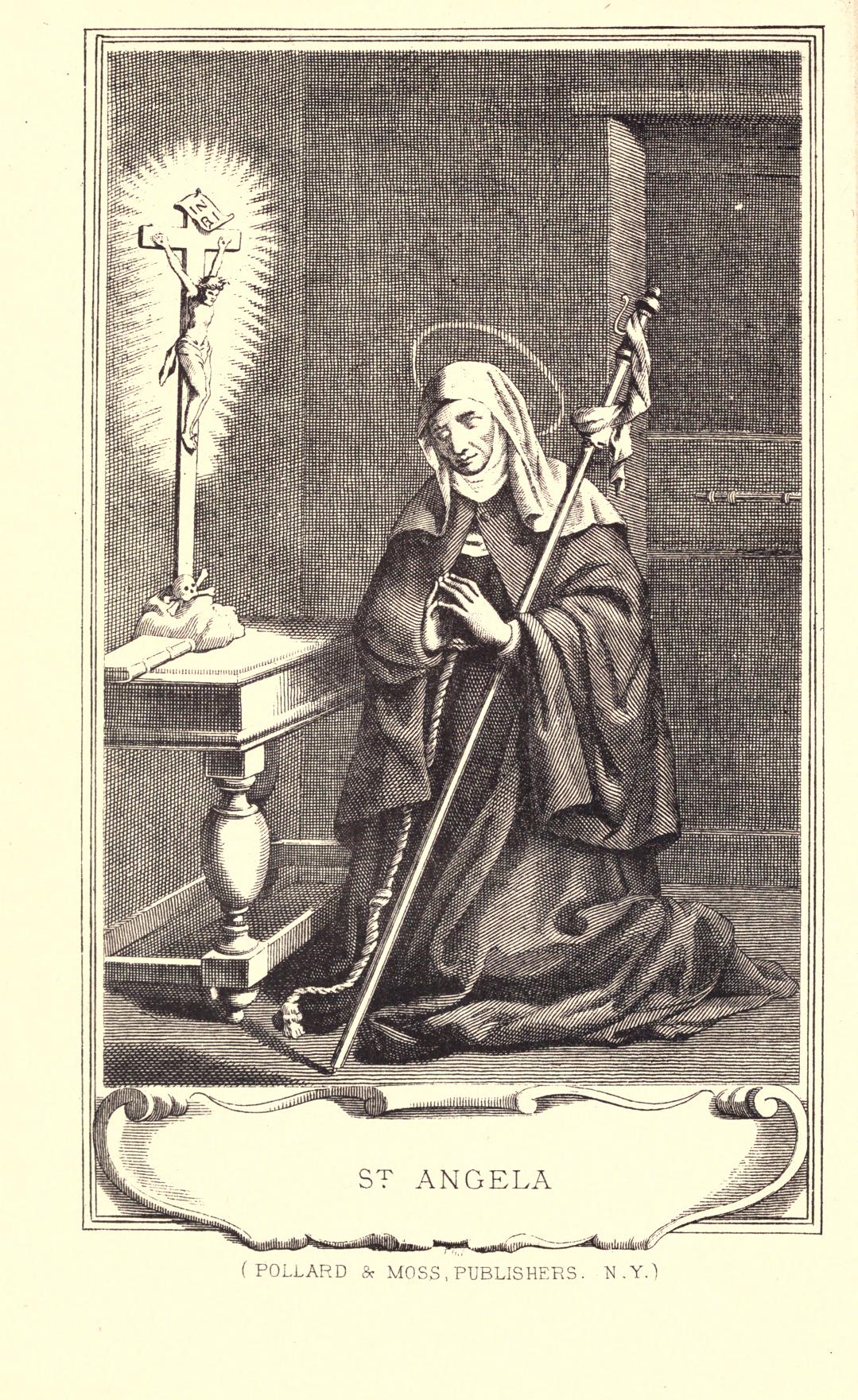
Source file copied unchanged by Saints and Science. The archive’s proportional BookReader JPEG, scale 2, is copied unchanged with the complete supplied page. No additional crop, retouching, color correction, compositing or AI alteration.
Web delivery: Saints and Science created proportionately resized WebP delivery copies at quality 82, or 80–76 where needed to keep the file smaller, for faster loading. The complete composition is retained, with no crop, enlargement, retouching, color adjustment, compositing, or AI alteration. Source ICC, EXIF, and XMP metadata are retained where available. Large ICC color profiles are color-managed into compact standard sRGB to preserve intended displayed colors without carrying oversized profiles; EXIF orientation is applied only if required for the original display orientation. The reviewed original remains available unchanged. Each copy retains the source image license and attribution.
Saint Angela of the Cross
Historical image of Angela of the Cross (1846–1932) as a young woman; photographer unknown.
Credit: Unknown photographer · Public domain · Image file

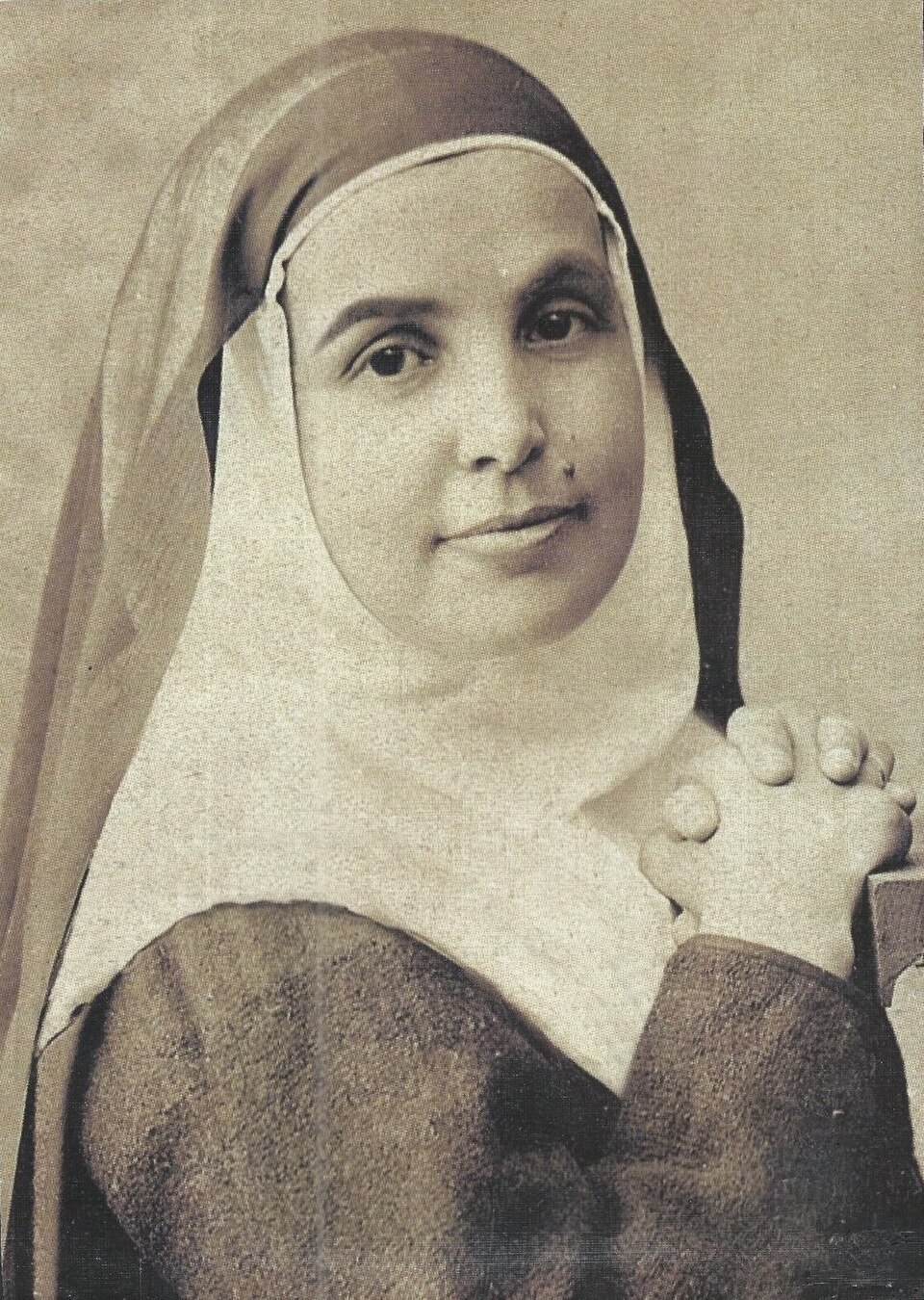
Source file copied unchanged by Saints and Science. The displayed copy was resized from the Commons source.
Web delivery: Saints and Science created proportionately resized WebP delivery copies at quality 82, or 80–76 where needed to keep the file smaller, for faster loading. The complete composition is retained, with no crop, enlargement, retouching, color adjustment, compositing, or AI alteration. Source ICC, EXIF, and XMP metadata are retained where available. Large ICC color profiles are color-managed into compact standard sRGB to preserve intended displayed colors without carrying oversized profiles; EXIF orientation is applied only if required for the original display orientation. The reviewed original remains available unchanged. Each copy retains the source image license and attribution.
Blessed Anna Maria Taigi
Anna Maria Taigi in the engraved frontispiece of her 1874 biography, from a copy held by the Library of Congress.
Credit: Unknown engraver; Library of Congress copy of Edward Healy Thompson’s 1874 biography · Public domain · Image file
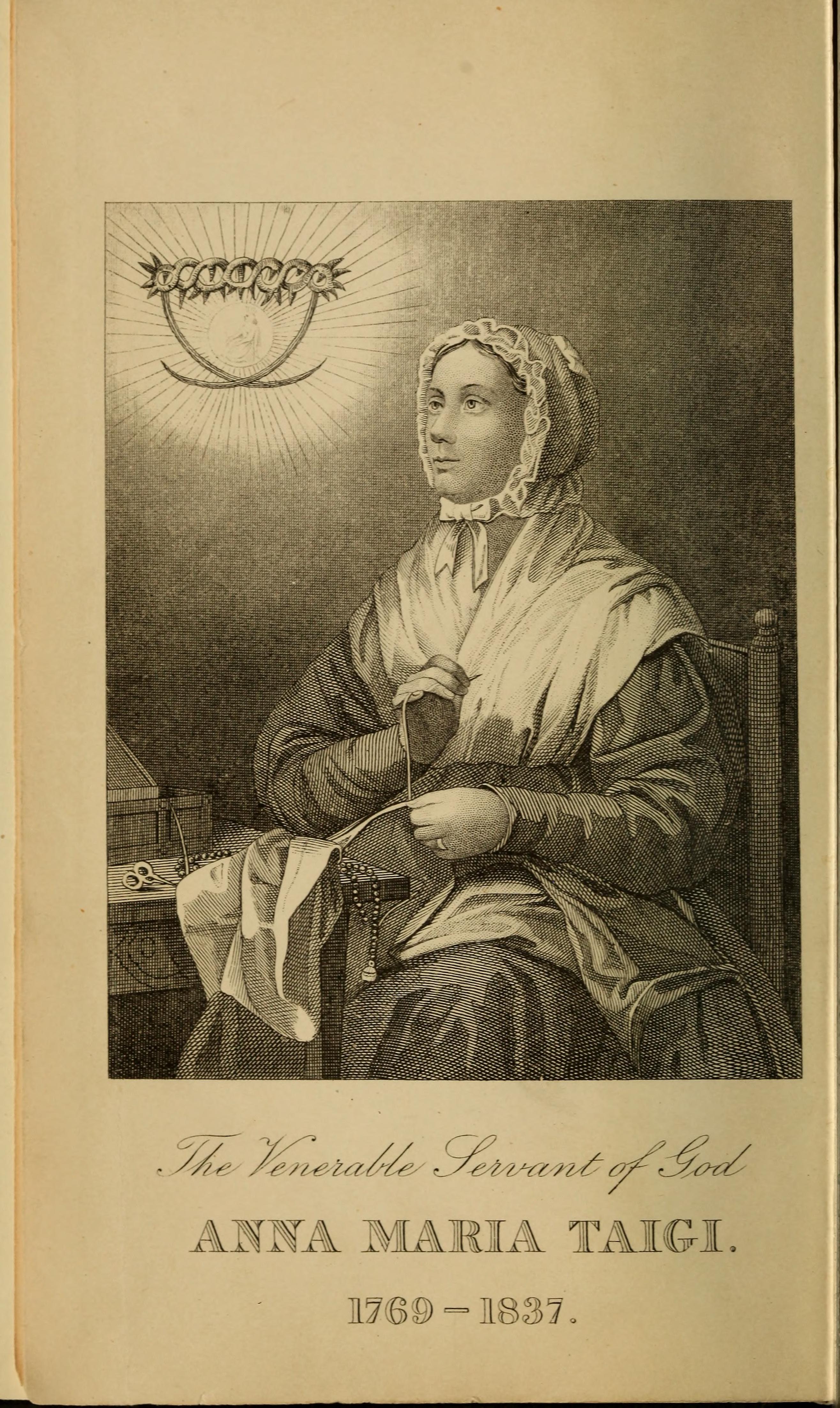
Source file copied unchanged by Saints and Science. Full source-provider scan of the frontispiece retained. No crop, retouching, recoloring, compositing or AI alteration.
Web delivery: Saints and Science created proportionately resized WebP delivery copies at quality 82, or 80–76 where needed to keep the file smaller, for faster loading. The complete composition is retained, with no crop, enlargement, retouching, color adjustment, compositing, or AI alteration. Source ICC, EXIF, and XMP metadata are retained where available. Large ICC color profiles are color-managed into compact standard sRGB to preserve intended displayed colors without carrying oversized profiles; EXIF orientation is applied only if required for the original display orientation. The reviewed original remains available unchanged. Each copy retains the source image license and attribution.
Blessed Anthony Vici of Stroncone
San Damiano in Assisi, drawn by Helen M. James for The Story of Assisi. Anthony of Stroncone died at this friary in 1461.
Credit: Helen M. James (1863–1900) · Public domain · Image file
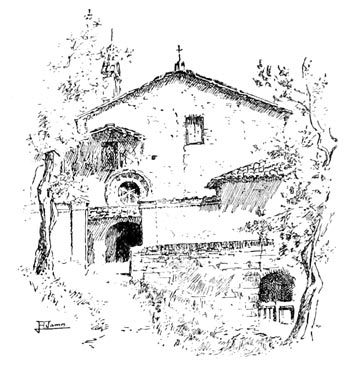
Source file copied unchanged by Saints and Science. Project Gutenberg’s already extracted drawing downloaded exactly as supplied. No local cropping, enhancement, recompression or alteration. Source image is 348 ×366 pixels; use a modest display size to preserve its line quality.
Web delivery: Saints and Science created proportionately resized WebP delivery copies at quality 82, or 80–76 where needed to keep the file smaller, for faster loading. The complete composition is retained, with no crop, enlargement, retouching, color adjustment, compositing, or AI alteration. Source ICC, EXIF, and XMP metadata are retained where available. Large ICC color profiles are color-managed into compact standard sRGB to preserve intended displayed colors without carrying oversized profiles; EXIF orientation is applied only if required for the original display orientation. The reviewed original remains available unchanged. Each copy retains the source image license and attribution.
Saint Anthony Zaccaria
The church dedicated to Saint Anthony Mary Zaccaria in Warsaw, Poland, photographed in July 2024.
Credit: Bartholomaeus · CC BY 4.0 · Image file

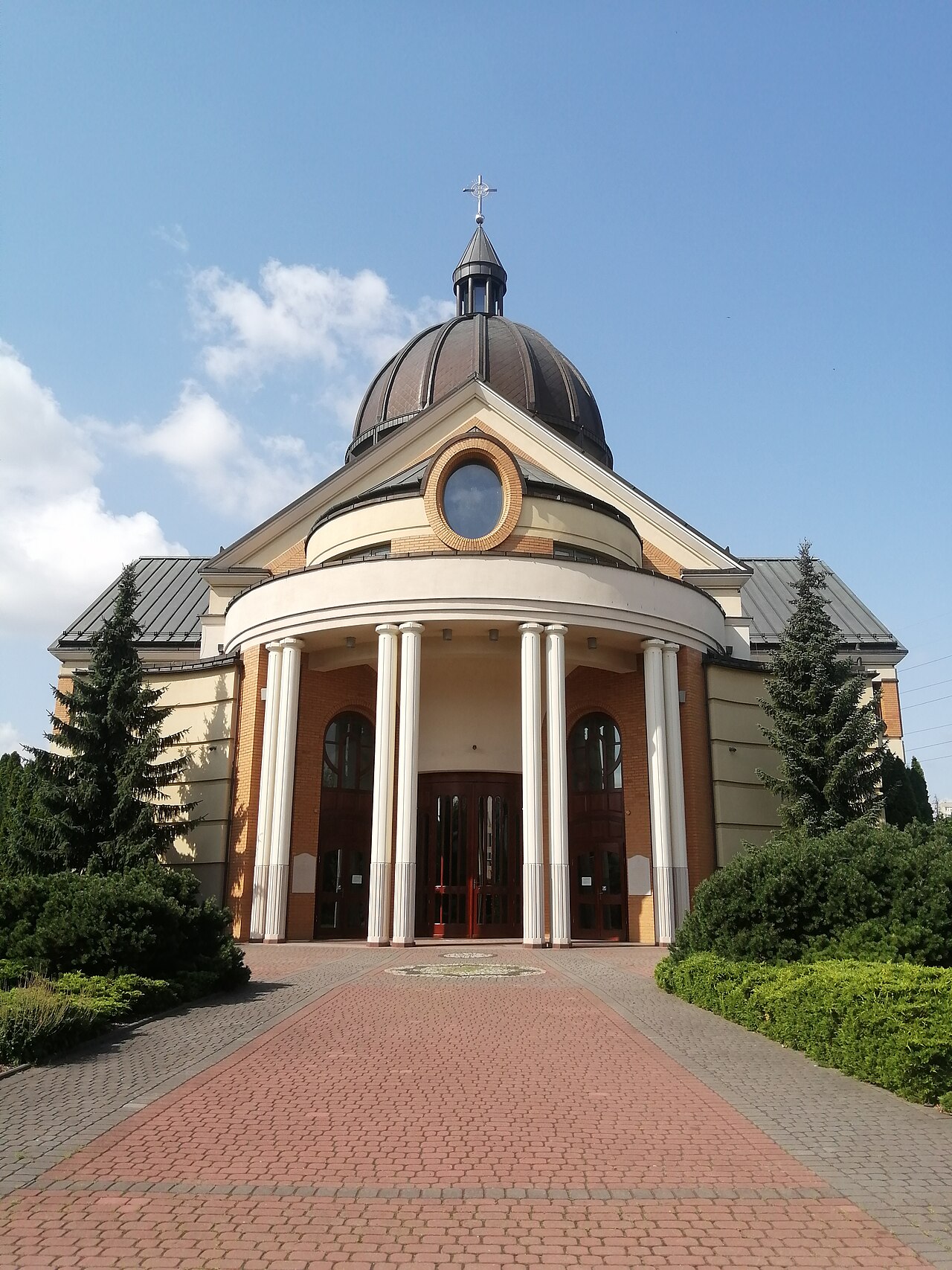
Source file copied unchanged by Saints and Science. Wikimedia Commons proportional JPEG web derivative copied unchanged. No local crop, retouching, recoloring, compositing, or AI alteration.
Web delivery: Saints and Science created proportionately resized WebP delivery copies at quality 82, or 80–76 where needed to keep the file smaller, for faster loading. The complete composition is retained, with no crop, enlargement, retouching, color adjustment, compositing, or AI alteration. Source ICC, EXIF, and XMP metadata are retained where available. Large ICC color profiles are color-managed into compact standard sRGB to preserve intended displayed colors without carrying oversized profiles; EXIF orientation is applied only if required for the original display orientation. The reviewed original remains available unchanged. Each copy retains the source image license and attribution.
Blessed Antonia of Florence
Antonia of Florence at prayer, in a French devotional print from the MAS collection in Antwerp.
Credit: Unknown artist; MAS Museum aan de Stroom, Antwerp · CC0 1.0 · Image file
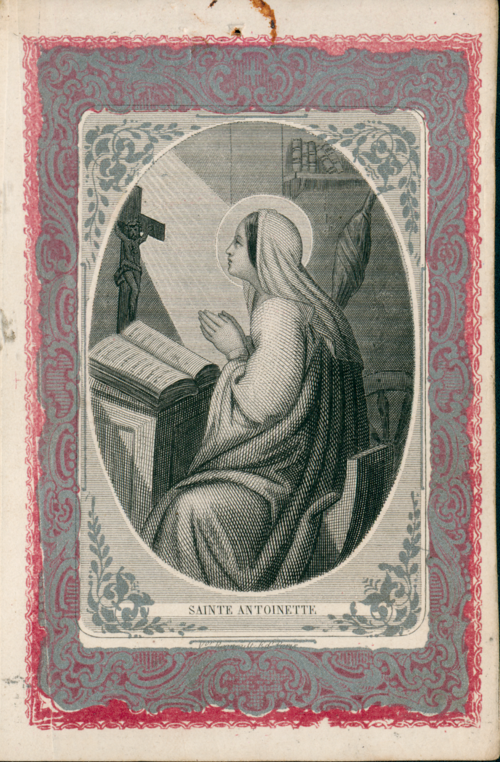
Source file copied unchanged by Saints and Science. Wikimedia Commons upstream full-sheet PNG web derivative of the museum TIFF, copied unchanged. No local crop, retouching, color adjustment, compositing, or AI alteration.
Web delivery: Saints and Science created proportionately resized WebP delivery copies at quality 82, or 80–76 where needed to keep the file smaller, for faster loading. The complete composition is retained, with no crop, enlargement, retouching, color adjustment, compositing, or AI alteration. Source ICC, EXIF, and XMP metadata are retained where available. Large ICC color profiles are color-managed into compact standard sRGB to preserve intended displayed colors without carrying oversized profiles; EXIF orientation is applied only if required for the original display orientation. The reviewed original remains available unchanged. Each copy retains the source image license and attribution.
Saint Antoninus of Florence
Bernardino Poccetti’s 1600–1605 preparatory drawing of Saint Antoninus kneeling before the crucifix in Orsanmichele, Florence, made as a study for a fresco from the saint’s life.
Credit: Bernardino Poccetti (1548–1612) · The Met Open Access / CC0 1.0 · Image file
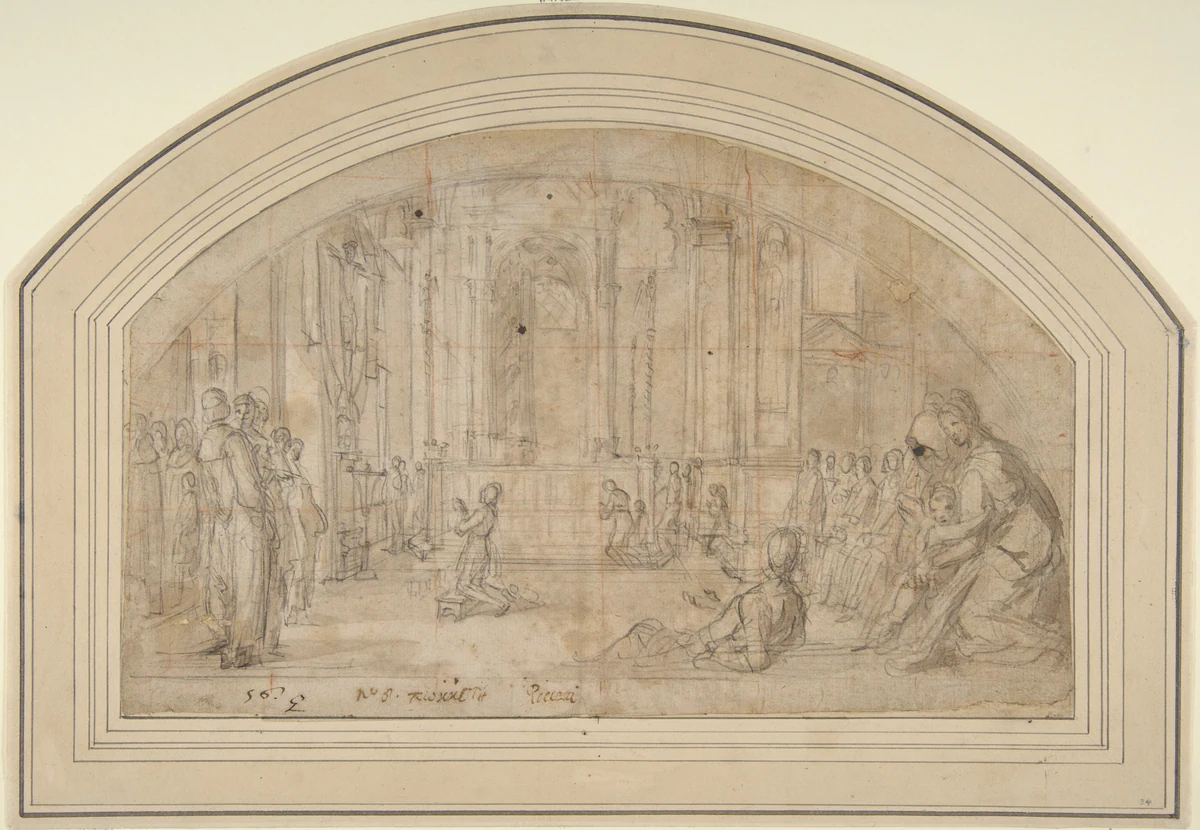
Source file copied unchanged by Saints and Science. Exact official Open Access primary-image JPEG bytes. Corpus Files made no crop, resize, recompression, color adjustment, retouching, compositing, or AI alteration. The museum file includes the full ruled surround, lower inscriptions, and the drawing’s red-chalk squaring. Publication does not imply Metropolitan Museum of Art endorsement.
Web delivery: Saints and Science created proportionately resized WebP delivery copies at quality 82, or 80–76 where needed to keep the file smaller, for faster loading. The complete composition is retained, with no crop, enlargement, retouching, color adjustment, compositing, or AI alteration. Source ICC, EXIF, and XMP metadata are retained where available. Large ICC color profiles are color-managed into compact standard sRGB to preserve intended displayed colors without carrying oversized profiles; EXIF orientation is applied only if required for the original display orientation. The reviewed original remains available unchanged. Each copy retains the source image license and attribution.
Saint Benedict the Moor
Attributed to José Montes de Oca, Saint Benedict of Palermo, c. 1734, polychrome and gilt wood with glass. Minneapolis Institute of Art, The John R. Van Derlip Fund, 2010.27.2.
Credit: Attributed to José Montes de Oca; object photograph supplied by the Minneapolis Institute of Art (individual photographer not credited) · Minneapolis Institute of Art Public Domain / Public Domain Mark 1.0 · Image file
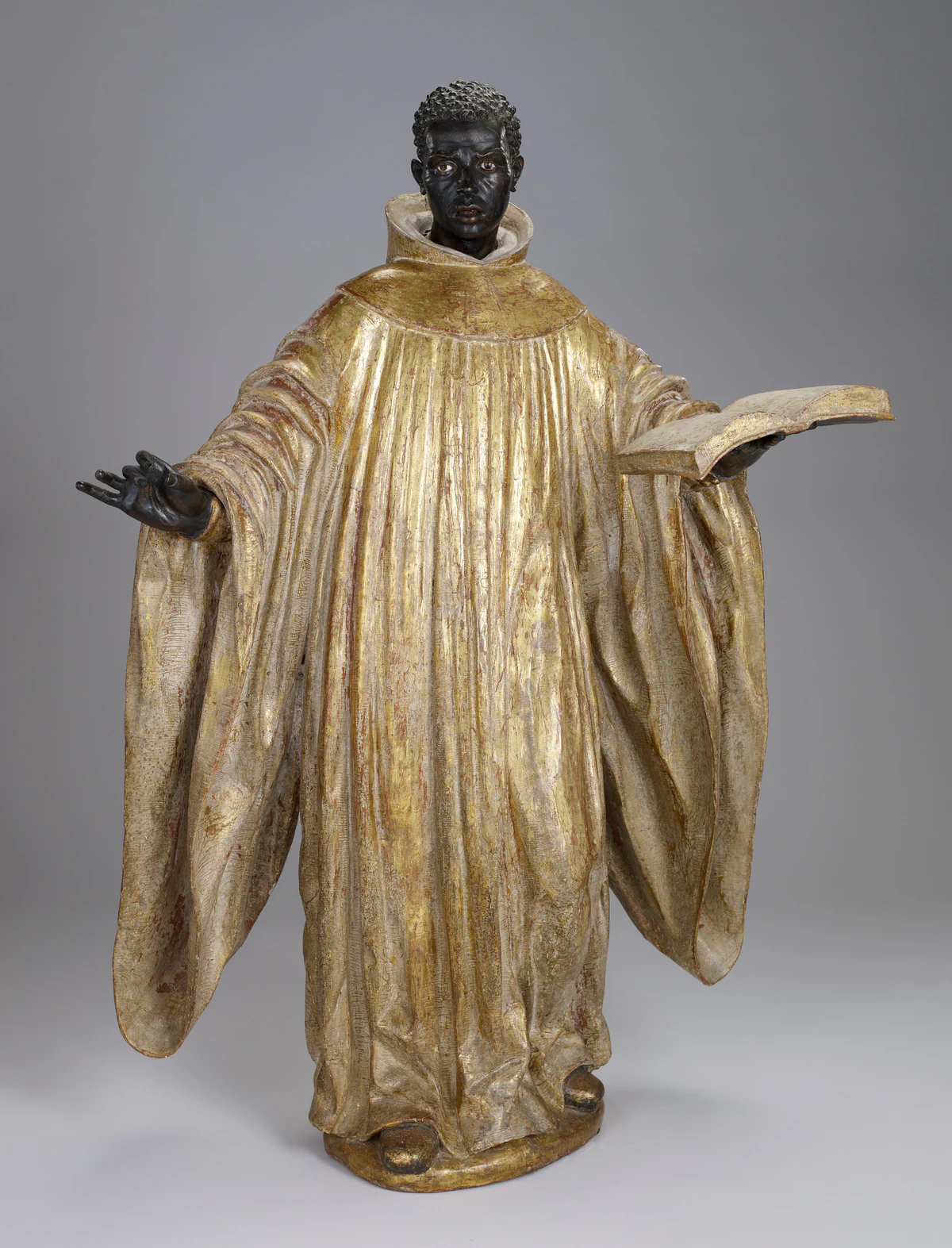
Source file copied unchanged by Saints and Science. Exact Minneapolis Institute of Art full-resolution primary JPEG. The museum publishes one front view; the complete figure, neutral background, open book, and visible cracks, wear, and material losses are preserved. No crop, rotation, retouching, color adjustment, or Corpus recompression. The museum publishes no object-specific conservation, treatment, or digital-alteration history. Credit does not imply endorsement.
Web delivery: Saints and Science created proportionately resized WebP delivery copies at quality 82, or 80–76 where needed to keep the file smaller, for faster loading. The complete composition is retained, with no crop, enlargement, retouching, color adjustment, compositing, or AI alteration. Source ICC, EXIF, and XMP metadata are retained where available. Large ICC color profiles are color-managed into compact standard sRGB to preserve intended displayed colors without carrying oversized profiles; EXIF orientation is applied only if required for the original display orientation. The reviewed original remains available unchanged. Each copy retains the source image license and attribution.
Saint Bernadette Soubirous
Bernadette Soubirous’s reliquary at Saint-Gildard, Nevers. Wax coverings form part of the presentation; this photograph does not show untreated tissue throughout.
Credit: Roock at Polish Wikipedia · CC BY-SA 3.0 · Image file

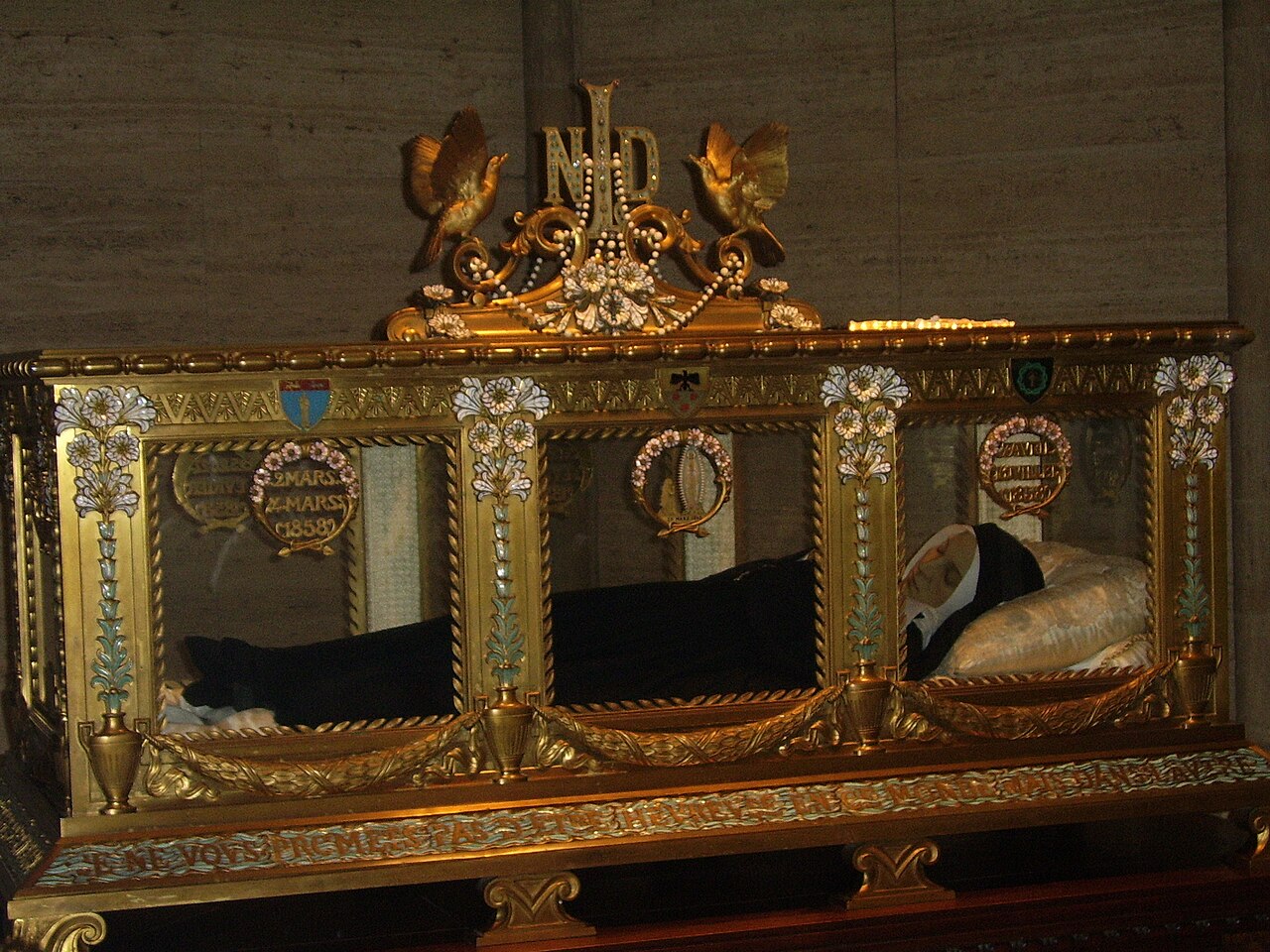
Source file copied unchanged by Saints and Science. Saved the Commons proportional web-size derivative where available; original bytes used when smaller. No local crop, retouching, compositing, AI alteration, or intentional color correction.
Web delivery: Saints and Science created proportionately resized WebP delivery copies at quality 82, or 80–76 where needed to keep the file smaller, for faster loading. The complete composition is retained, with no crop, enlargement, retouching, color adjustment, compositing, or AI alteration. Source ICC, EXIF, and XMP metadata are retained where available. Large ICC color profiles are color-managed into compact standard sRGB to preserve intended displayed colors without carrying oversized profiles; EXIF orientation is applied only if required for the original display orientation. The reviewed original remains available unchanged. Each copy retains the source image license and attribution.
Saint Bernardino of Siena
Bernardino of Siena, attributed to Jacopo Bellini.
Credit: Jacopo Bellini · Public domain · Image file

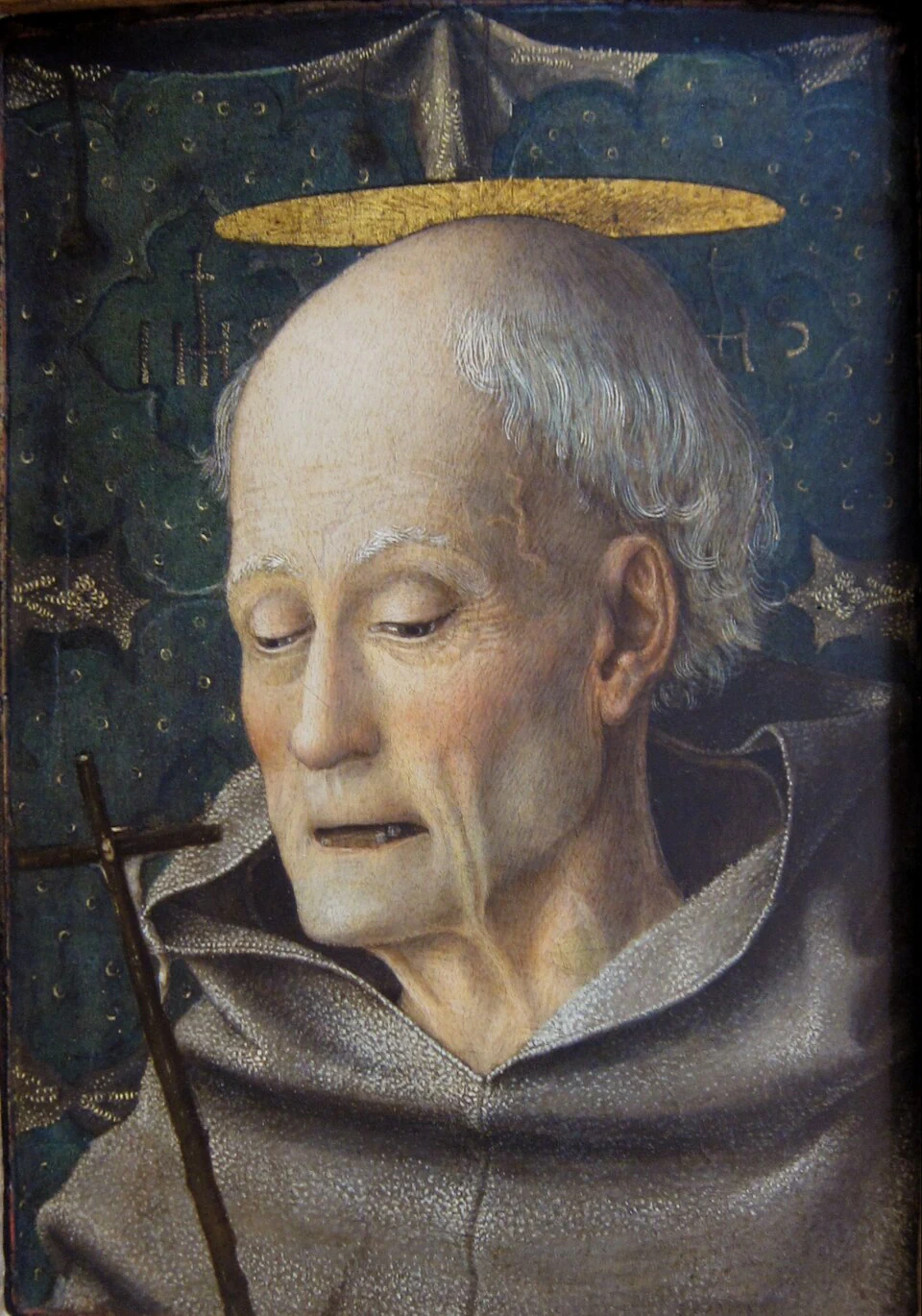
Source file copied unchanged by Saints and Science. The displayed copy was resized from the Commons source and re-encoded as JPEG for web delivery.
Web delivery: Saints and Science created proportionately resized WebP delivery copies at quality 82, or 80–76 where needed to keep the file smaller, for faster loading. The complete composition is retained, with no crop, enlargement, retouching, color adjustment, compositing, or AI alteration. Source ICC, EXIF, and XMP metadata are retained where available. Large ICC color profiles are color-managed into compact standard sRGB to preserve intended displayed colors without carrying oversized profiles; EXIF orientation is applied only if required for the original display orientation. The reviewed original remains available unchanged. Each copy retains the source image license and attribution.
Saint Bénézet
Pont Saint-Bénézet, the medieval Avignon bridge traditionally associated with Bénézet.
Credit: Véronique Pagnier · Public domain — creator's release · Image file

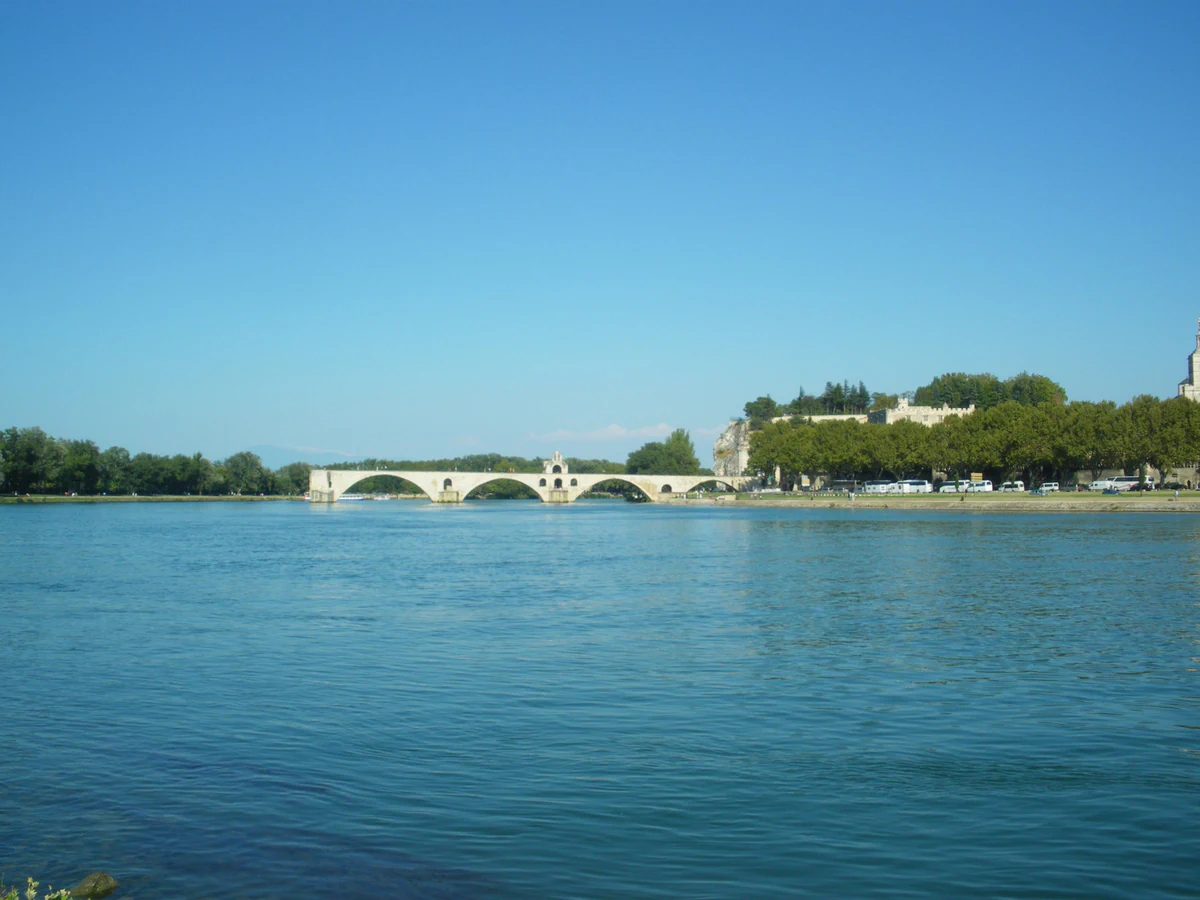
Source file copied unchanged by Saints and Science. Corpus Files proportionally resized the 3264 × 2448 Wikimedia Commons JPEG source to 1800 × 1350 pixels and JPEG re-encoded it at quality 86 with macOS sips for web delivery. No crop, manual rotation, retouching, compositing, content alteration, or AI alteration was made; metadata may have been normalized by re-encoding. The creator released the source into the public domain; no attribution or ShareAlike condition applies.
Web delivery: Saints and Science created proportionately resized WebP delivery copies at quality 82, or 80–76 where needed to keep the file smaller, for faster loading. The complete composition is retained, with no crop, enlargement, retouching, color adjustment, compositing, or AI alteration. Source ICC, EXIF, and XMP metadata are retained where available. Large ICC color profiles are color-managed into compact standard sRGB to preserve intended displayed colors without carrying oversized profiles; EXIF orientation is applied only if required for the original display orientation. The reviewed original remains available unchanged. Each copy retains the source image license and attribution.
Saint Camillus de Lellis
Saint Camillus de Lellis before Christ on the cross, 1783, line engraving by Fernando Selma after José Ximeno. Wellcome Collection, 4527i (V0031776).
Credit: Fernando Selma after José Ximeno; digital reproduction supplied by Wellcome Collection · Public Domain Mark 1.0 · Image file
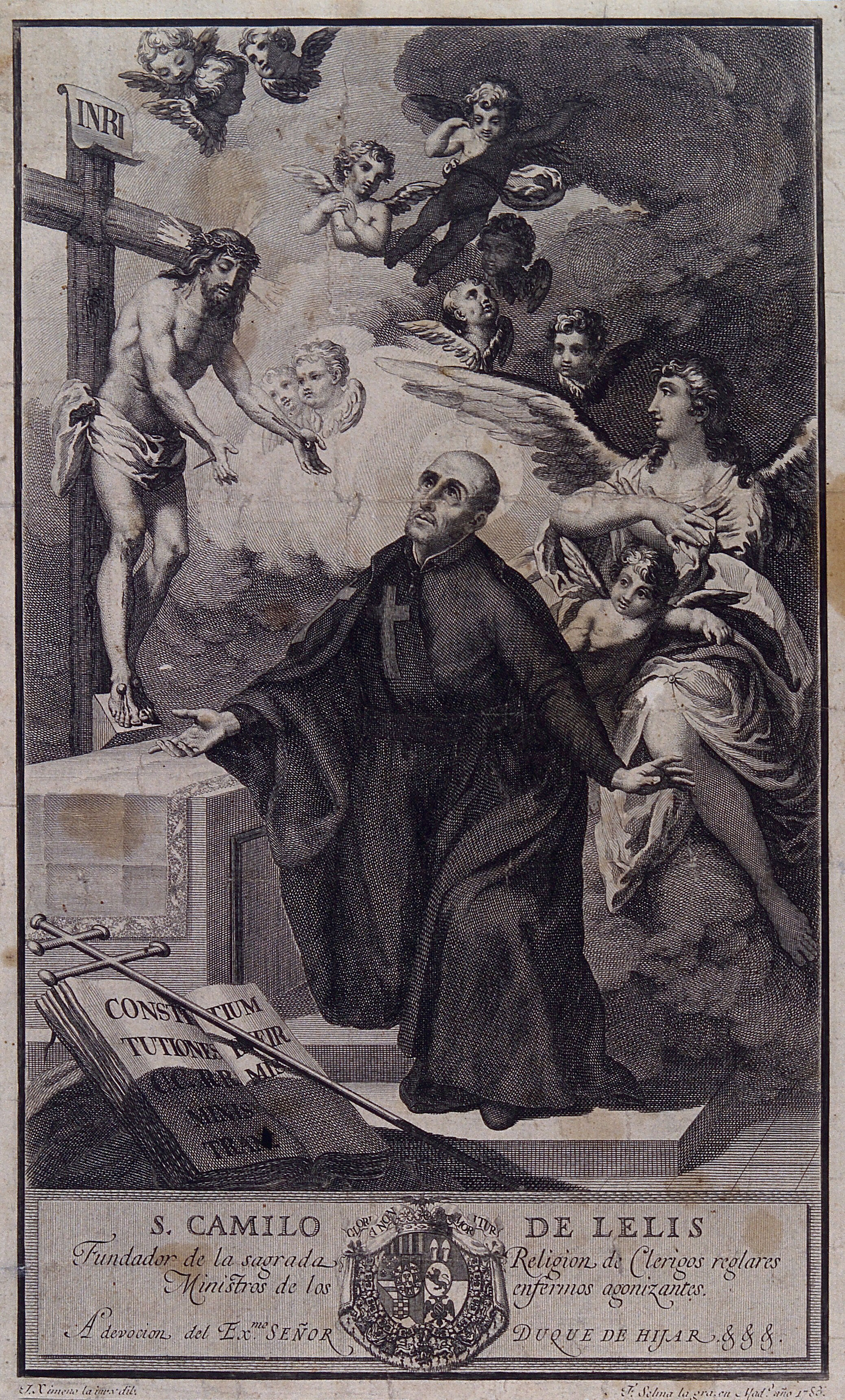
Source file copied unchanged by Saints and Science. Exact sole official Wellcome IIIF JPEG. The full sheet, border, title, maker lines, paper toning, and foxing are preserved. Corpus Files made no crop, resize, recompression, retouching, or other visual alteration, and no public conservation or digital-alteration history exists for this sheet. The engraving includes a non-graphic Crucifixion and partial nudity. Image: Wellcome Collection; credit does not imply endorsement. Public Domain Mark 1.0 permits commercial reuse with no ShareAlike condition and no required attribution; the editorial credit is retained voluntarily.
Web delivery: Saints and Science created proportionately resized WebP delivery copies at quality 82, or 80–76 where needed to keep the file smaller, for faster loading. The complete composition is retained, with no crop, enlargement, retouching, color adjustment, compositing, or AI alteration. Source ICC, EXIF, and XMP metadata are retained where available. Large ICC color profiles are color-managed into compact standard sRGB to preserve intended displayed colors without carrying oversized profiles; EXIF orientation is applied only if required for the original display orientation. The reviewed original remains available unchanged. Each copy retains the source image license and attribution.
Saint Carlo Acutis
Our Lady of Dolours, Chelsea, London, where Carlo Acutis was baptised in May 1991.
Credit: Stephen Craven · CC BY-SA 2.0 · Image file

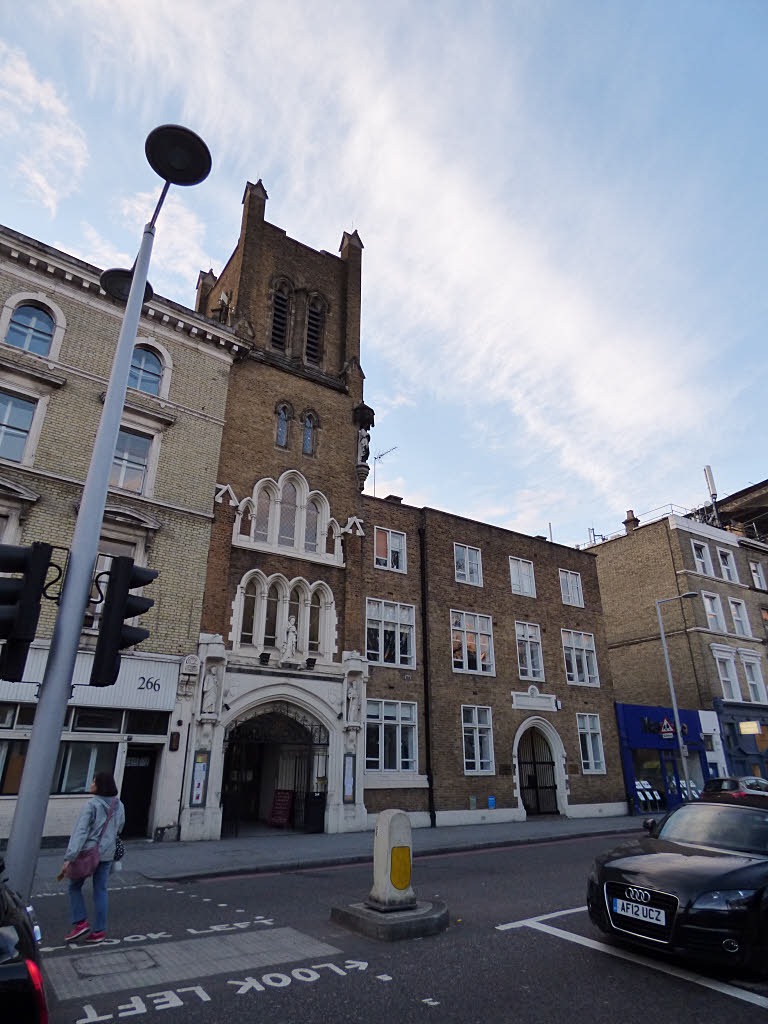
Source file copied unchanged by Saints and Science. Exact Geograph/Commons source image copied unchanged; no local edits.
Web delivery: Saints and Science created proportionately resized WebP delivery copies at quality 82, or 80–76 where needed to keep the file smaller, for faster loading. The complete composition is retained, with no crop, enlargement, retouching, color adjustment, compositing, or AI alteration. Source ICC, EXIF, and XMP metadata are retained where available. Large ICC color profiles are color-managed into compact standard sRGB to preserve intended displayed colors without carrying oversized profiles; EXIF orientation is applied only if required for the original display orientation. The reviewed original remains available unchanged. Each copy retains the source image license and attribution.
Saint Catherine de’ Ricci
Saint Catherine of Ricci. Engraving by C. Klauber (Catharina Klauber), Wellcome Collection, V0031848. A later devotional representation of the mystical marriage, not a documentary image.
Credit: Catharina Klauber; Wellcome Collection digitization · CC BY 4.0 · Image file

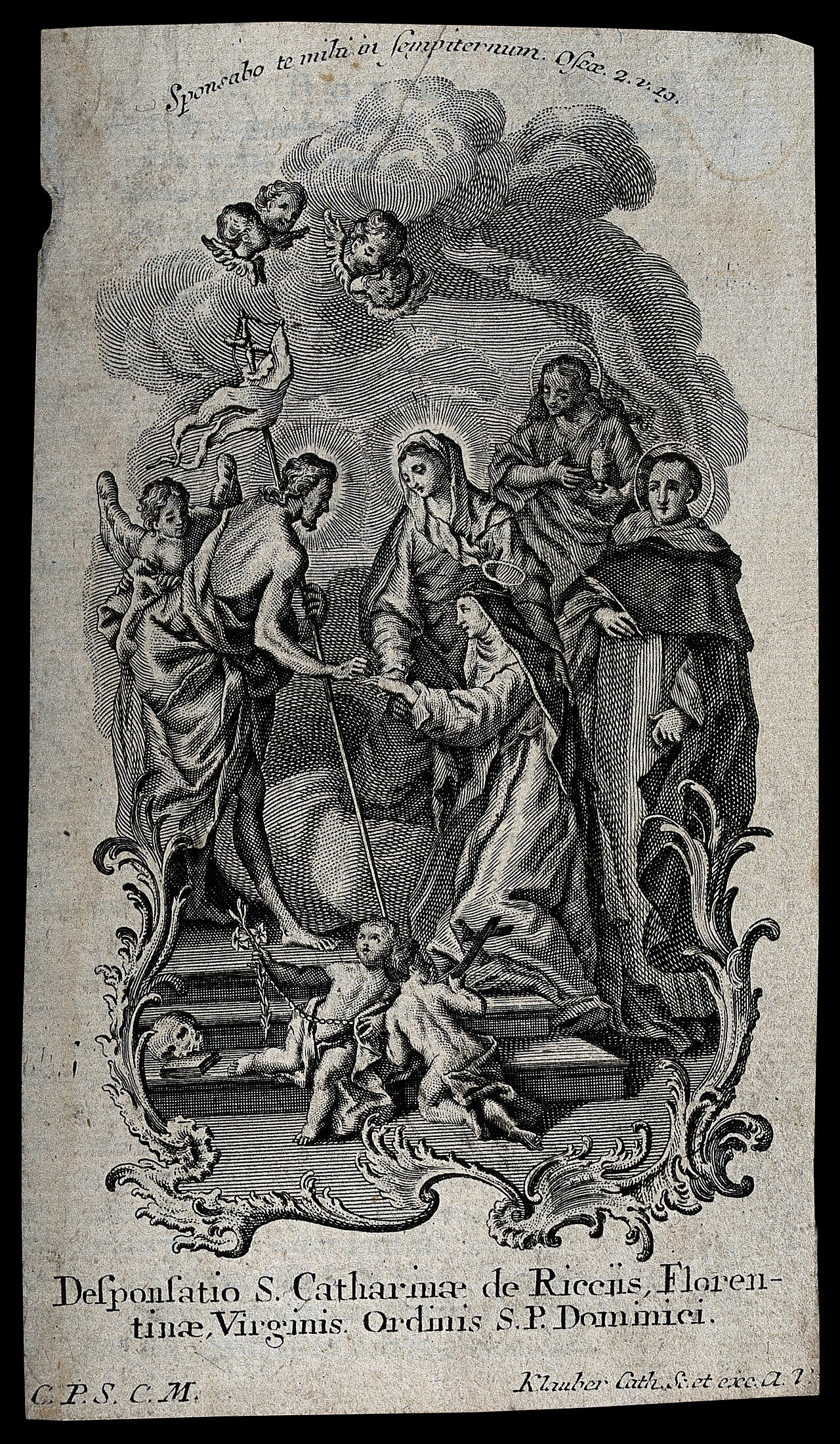
Source file copied unchanged by Saints and Science. Saved the Commons proportional web-size derivative where available; original bytes used when smaller. No local crop, retouching, compositing, AI alteration, or intentional color correction.
Web delivery: Saints and Science created proportionately resized WebP delivery copies at quality 82, or 80–76 where needed to keep the file smaller, for faster loading. The complete composition is retained, with no crop, enlargement, retouching, color adjustment, compositing, or AI alteration. Source ICC, EXIF, and XMP metadata are retained where available. Large ICC color profiles are color-managed into compact standard sRGB to preserve intended displayed colors without carrying oversized profiles; EXIF orientation is applied only if required for the original display orientation. The reviewed original remains available unchanged. Each copy retains the source image license and attribution.
Saint Catherine Labouré
The vested reliquary display attributed to Catherine Labouré in the Chapel of the Miraculous Medal, Paris. Appearance alone cannot establish the material condition beneath the clothing or display surfaces.
Credit: André Leroux · Public domain · Image file

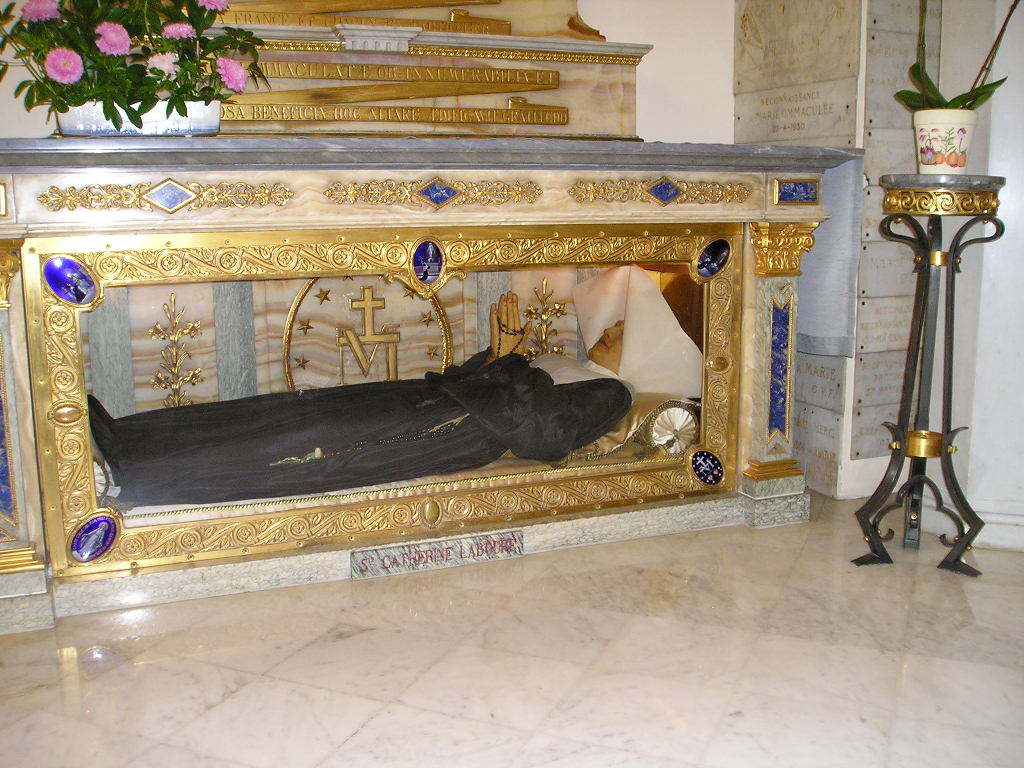
Source file copied unchanged by Saints and Science. Saved the Commons proportional web-size derivative where available; original bytes used when smaller. No local crop, retouching, compositing, AI alteration, or intentional color correction.
Web delivery: Saints and Science created proportionately resized WebP delivery copies at quality 82, or 80–76 where needed to keep the file smaller, for faster loading. The complete composition is retained, with no crop, enlargement, retouching, color adjustment, compositing, or AI alteration. Source ICC, EXIF, and XMP metadata are retained where available. Large ICC color profiles are color-managed into compact standard sRGB to preserve intended displayed colors without carrying oversized profiles; EXIF orientation is applied only if required for the original display orientation. The reviewed original remains available unchanged. Each copy retains the source image license and attribution.
Saint Catherine of Bologna
Saint Catherine of Bologna, illuminated folio from the Gualenghi-d’Este Hours, about 1469, by Guglielmo Giraldi. Tempera colors, gold paint, gold leaf, and ink. The J. Paul Getty Museum, Ms. Ludwig IX 13 (83.ML.109), fol. 185v.
Credit: Guglielmo Giraldi · The J. Paul Getty Museum Open Content / CC0 1.0 · Image file
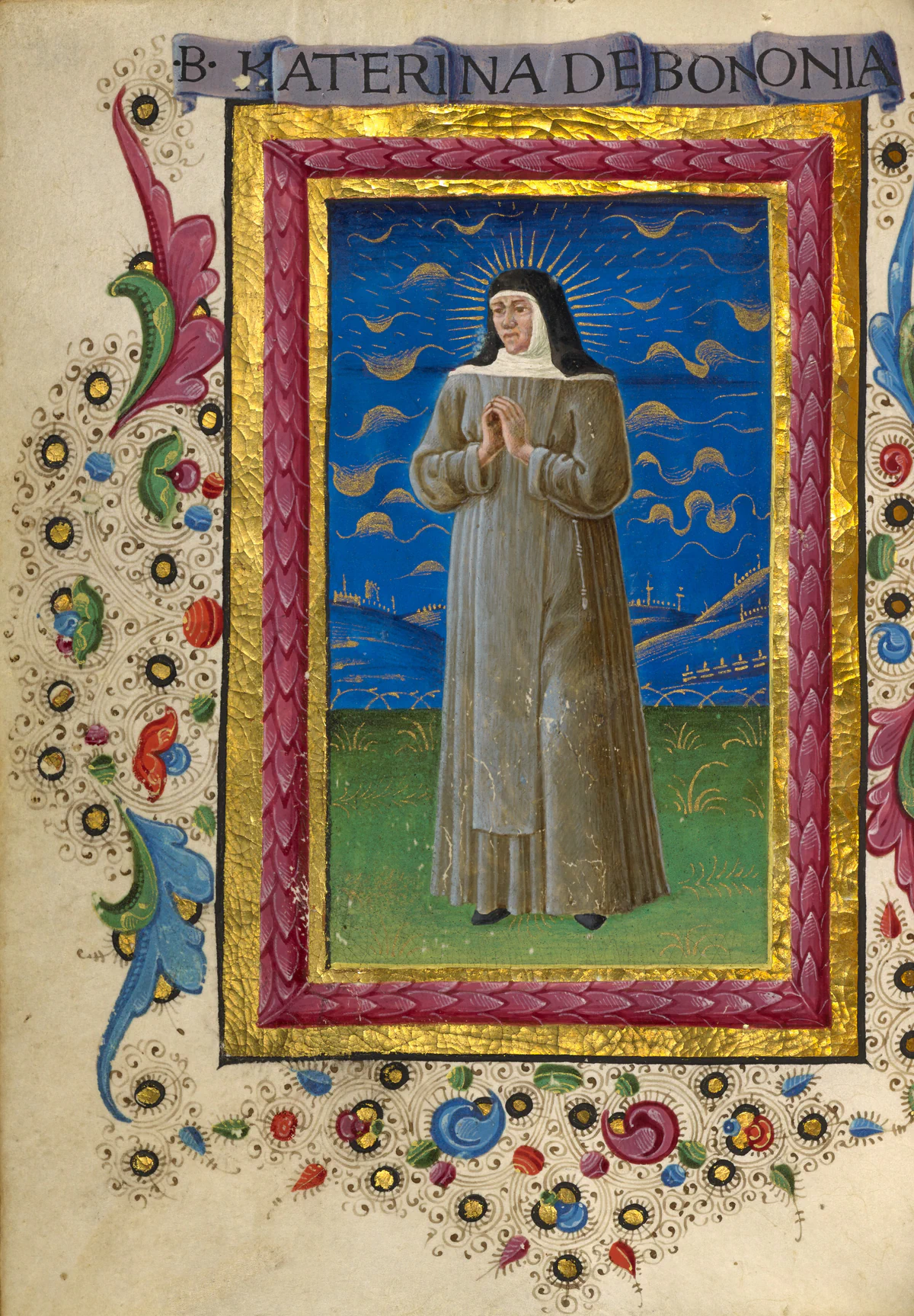
Source file copied unchanged by Saints and Science. Exact official Getty IIIF JPEG. One view. The full supplied folio and visible historic abrasion and pigment loss are preserved. Corpus Files made no crop, correction, cleanup, or other edit, and no conservation or digital-retouch note is published. Image: The J. Paul Getty Museum, Los Angeles. Credit does not imply endorsement.
Web delivery: Saints and Science created proportionately resized WebP delivery copies at quality 82, or 80–76 where needed to keep the file smaller, for faster loading. The complete composition is retained, with no crop, enlargement, retouching, color adjustment, compositing, or AI alteration. Source ICC, EXIF, and XMP metadata are retained where available. Large ICC color profiles are color-managed into compact standard sRGB to preserve intended displayed colors without carrying oversized profiles; EXIF orientation is applied only if required for the original display orientation. The reviewed original remains available unchanged. Each copy retains the source image license and attribution.
Saint Catherine of Genoa
The Catholic Church of Saint Catherine of Genoa in Hamilton Heights, Manhattan, a parish dedicated to her memory. Photograph by Beyond My Ken, July 2014.
Credit: Beyond My Ken · CC BY-SA 4.0 · Image file

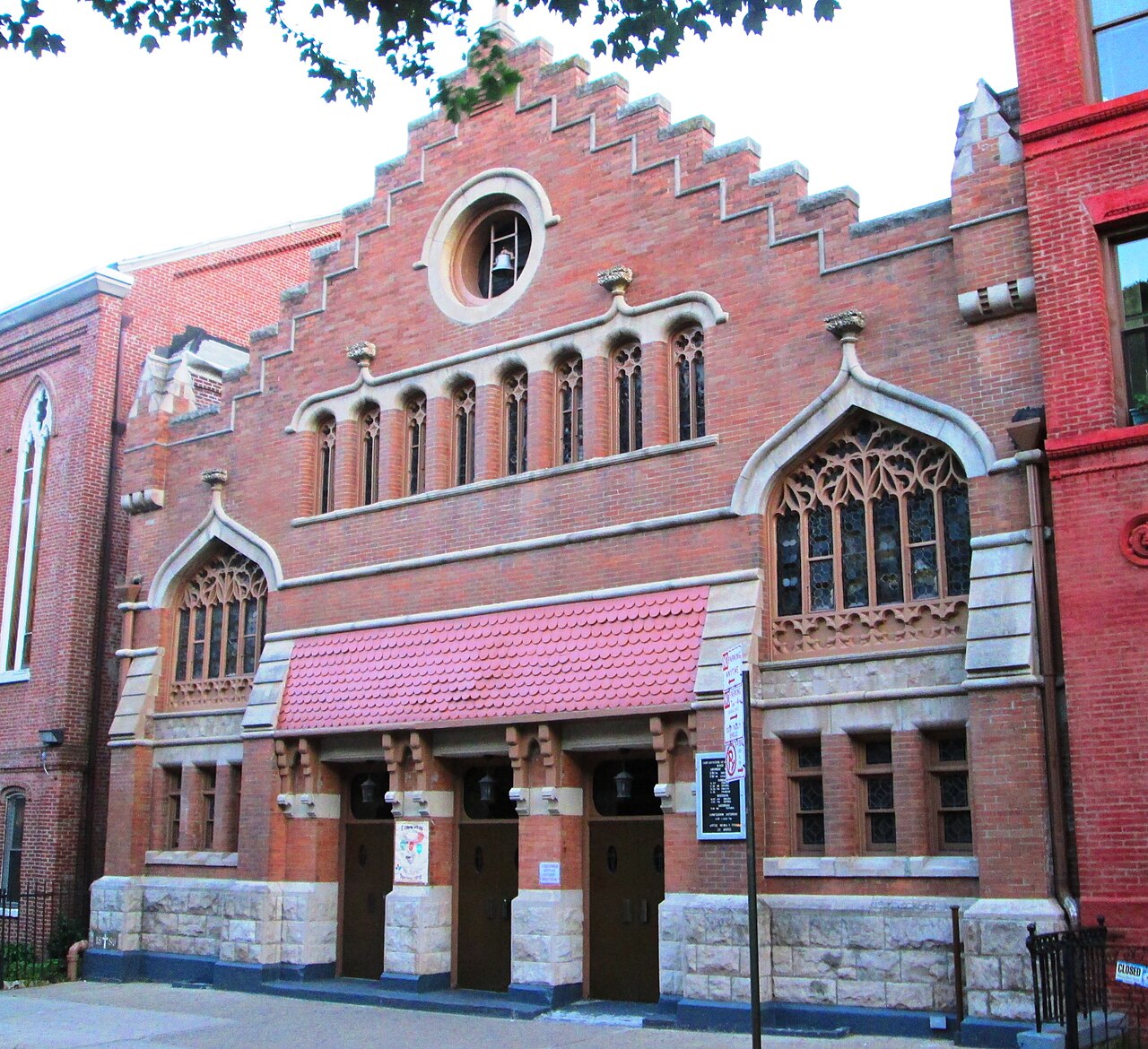
Source file copied unchanged by Saints and Science. The supplied Commons proportional1280-pixel JPEG is copied unchanged. No additional crop, retouching, color correction, compositing or AI alteration.
Web delivery: Saints and Science created proportionately resized WebP delivery copies at quality 82, or 80–76 where needed to keep the file smaller, for faster loading. The complete composition is retained, with no crop, enlargement, retouching, color adjustment, compositing, or AI alteration. Source ICC, EXIF, and XMP metadata are retained where available. Large ICC color profiles are color-managed into compact standard sRGB to preserve intended displayed colors without carrying oversized profiles; EXIF orientation is applied only if required for the original display orientation. The reviewed original remains available unchanged. Each copy retains the source image license and attribution.
Saint Catherine of Siena
Giovanni di Paolo’s The Miraculous Communion of Saint Catherine of Siena, a tempera-and-gold panel from a narrative cycle commissioned after Catherine’s 1461 canonization. It presents the reported episode as devotional art.
Credit: Giovanni di Paolo (Giovanni di Paolo di Grazia) · The Met Open Access / CC0 1.0 · Image file
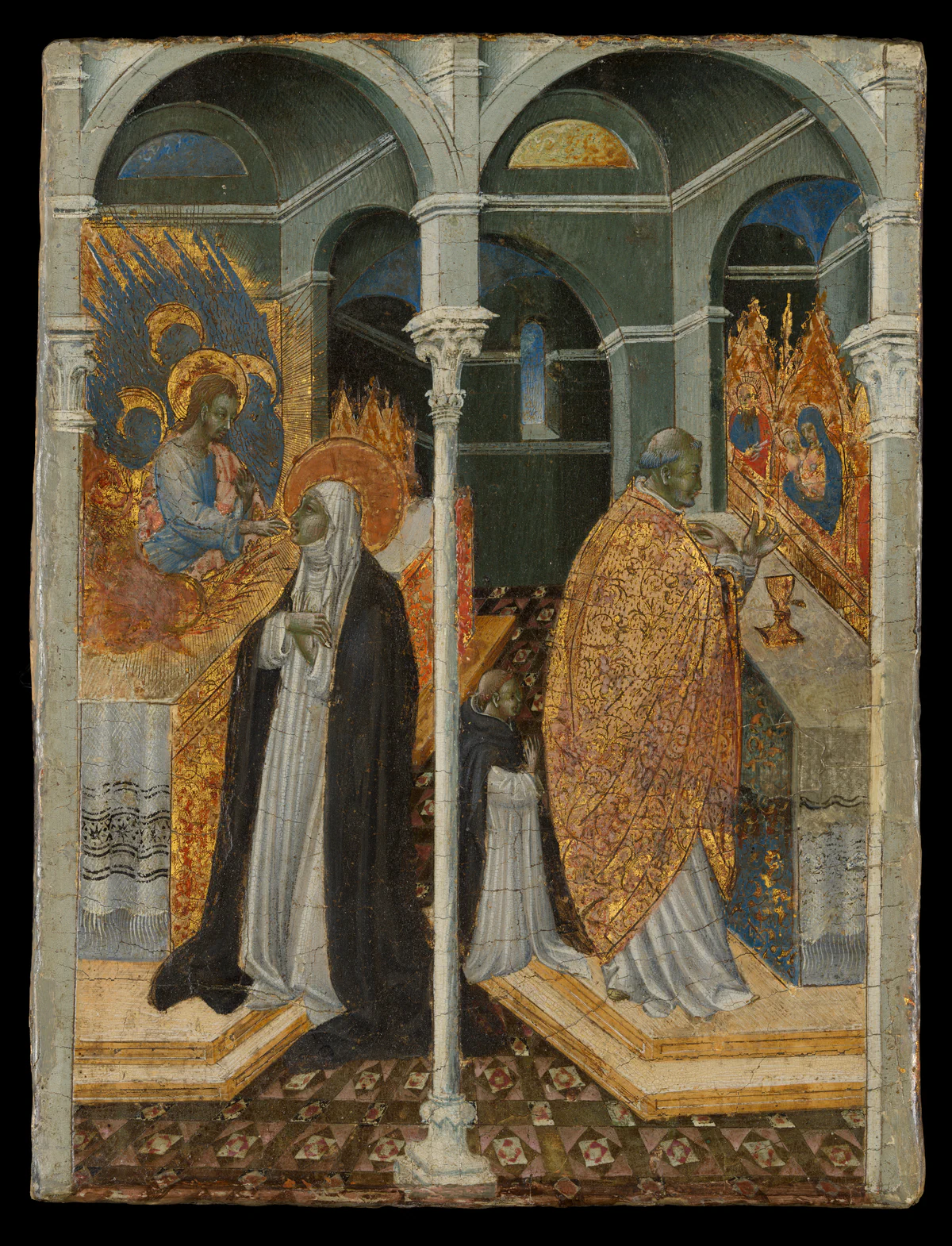
Source file copied unchanged by Saints and Science. Exact official primary-image bytes from The Met Open Access file; no Corpus Files crop, resize, recompression, retouching, compositing, restoration, or AI processing. Publication does not imply Metropolitan Museum of Art endorsement.
Web delivery: Saints and Science created proportionately resized WebP delivery copies at quality 82, or 80–76 where needed to keep the file smaller, for faster loading. The complete composition is retained, with no crop, enlargement, retouching, color adjustment, compositing, or AI alteration. Source ICC, EXIF, and XMP metadata are retained where available. Large ICC color profiles are color-managed into compact standard sRGB to preserve intended displayed colors without carrying oversized profiles; EXIF orientation is applied only if required for the original display orientation. The reviewed original remains available unchanged. Each copy retains the source image license and attribution.
Saint Cecilia
Saint Cecilia at the organ, painted by Guercino in 1649, in the Dulwich Picture Gallery.
Credit: Guercino · Public Domain Mark 1.0 · Image file

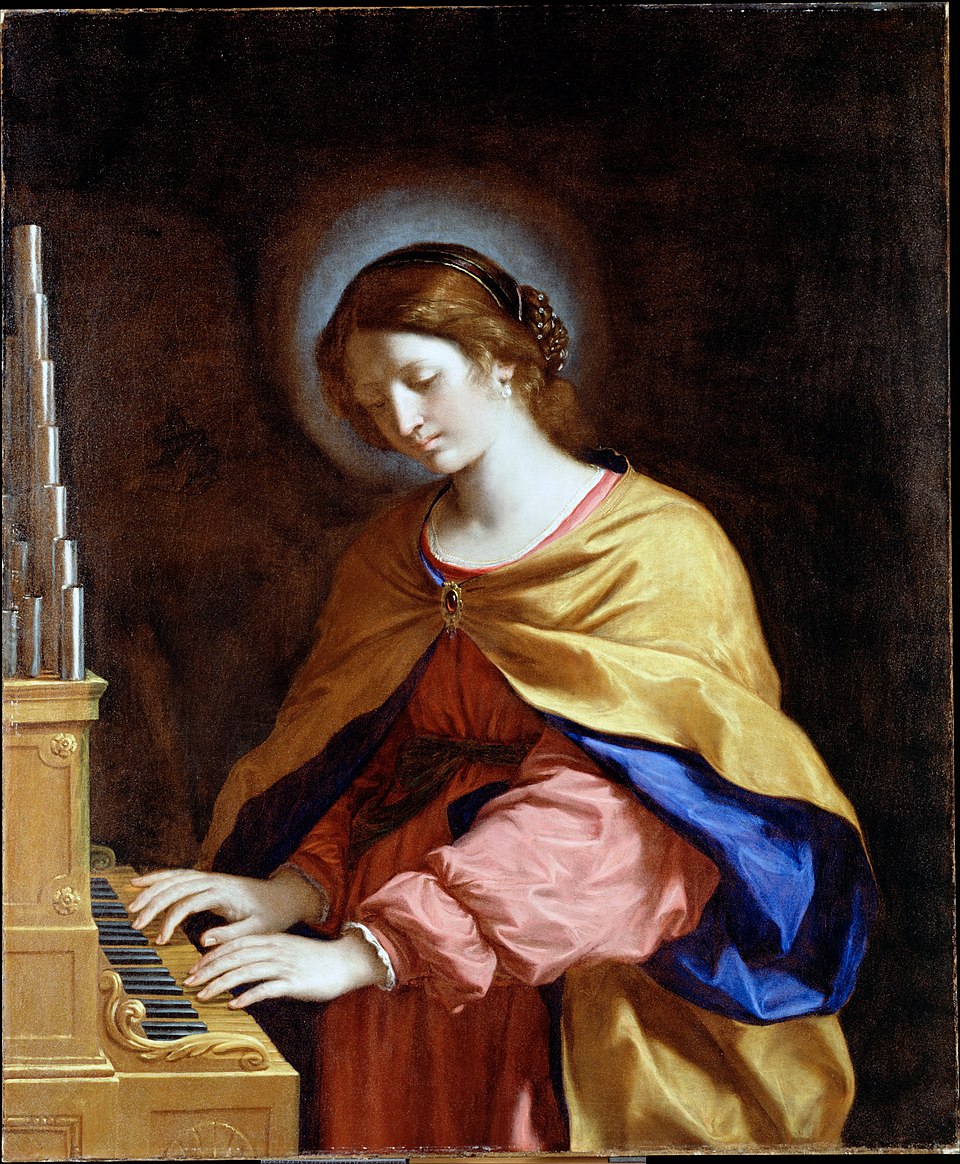
Source file copied unchanged by Saints and Science. The displayed copy corresponds to the Commons 960 × 1164 pixel derivative and was JPEG re-encoded; decoded pixels are near-identical to the current derivative.
Web delivery: Saints and Science created proportionately resized WebP delivery copies at quality 82, or 80–76 where needed to keep the file smaller, for faster loading. The complete composition is retained, with no crop, enlargement, retouching, color adjustment, compositing, or AI alteration. Source ICC, EXIF, and XMP metadata are retained where available. Large ICC color profiles are color-managed into compact standard sRGB to preserve intended displayed colors without carrying oversized profiles; EXIF orientation is applied only if required for the original display orientation. The reviewed original remains available unchanged. Each copy retains the source image license and attribution.
Saint Charbel Makhlouf
A statue and devotional banner of Charbel Makhlouf at the Saint Maron monastery complex in Annaya, photographed in 2015.
Credit: LLEW · CC BY-SA 4.0 · Image file

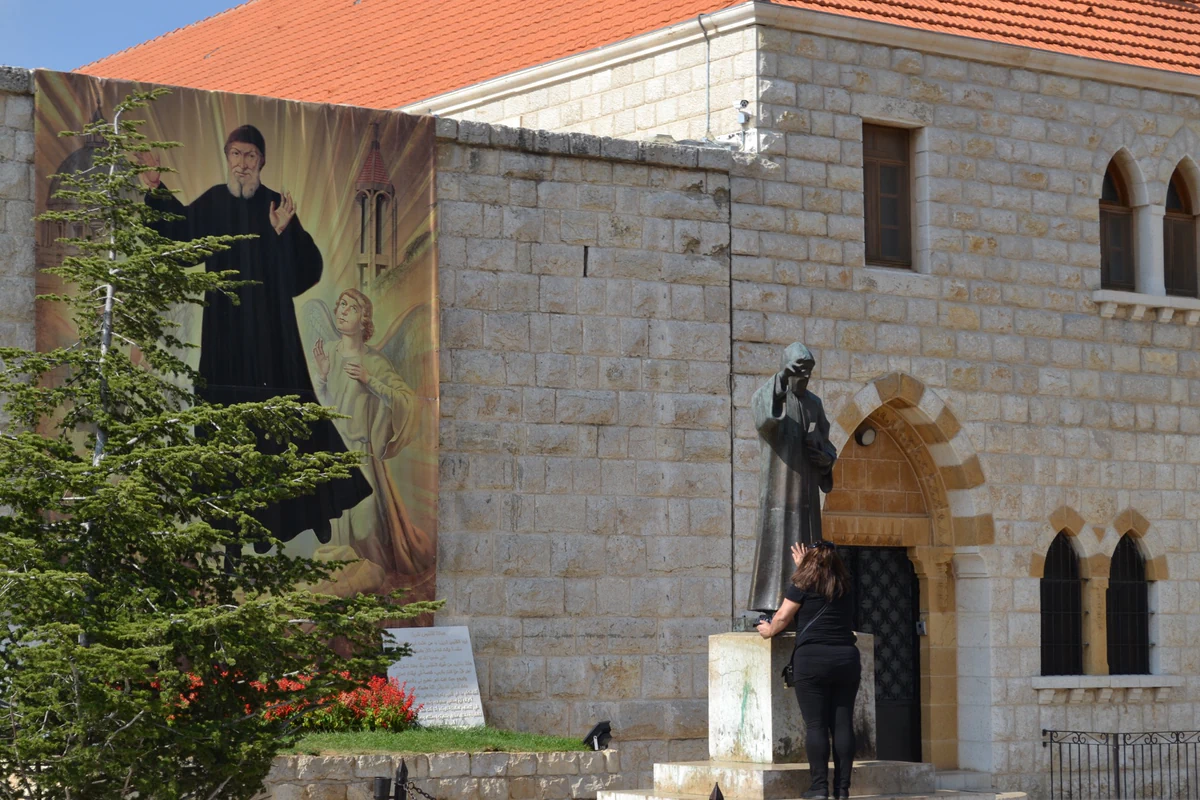
Source file copied unchanged by Saints and Science. Corpus Files proportionally resized the 4608 × 3072 Wikimedia Commons JPEG source to 1800 × 1200 pixels and JPEG re-encoded it at quality 86 with macOS sips for web delivery. No crop, manual rotation, retouching, compositing, content alteration, or AI alteration was made; metadata may have been normalized by re-encoding. Redistribution remains under CC BY-SA 4.0; ShareAlike applies to adaptations.
Web delivery: Saints and Science created proportionately resized WebP delivery copies at quality 82, or 80–76 where needed to keep the file smaller, for faster loading. The complete composition is retained, with no crop, enlargement, retouching, color adjustment, compositing, or AI alteration. Source ICC, EXIF, and XMP metadata are retained where available. Large ICC color profiles are color-managed into compact standard sRGB to preserve intended displayed colors without carrying oversized profiles; EXIF orientation is applied only if required for the original display orientation. The reviewed original remains available unchanged. Each copy retains the source image license and attribution.
Saint Charles Borromeo
Christ with Saint Ambrose, Saint Mary, Saint Charles Borromeo, Saint Thomas the Apostle and angels. P. Aquila after Carlo Maratta, 1693; Wellcome Collection, 10812i. A UK-held historical etching, not a photograph of the Italian altarpiece or Borromeo’s remains.
Credit: P. Aquila after Carlo Maratta; Wellcome Collection digitization · Public Domain Mark · Image file
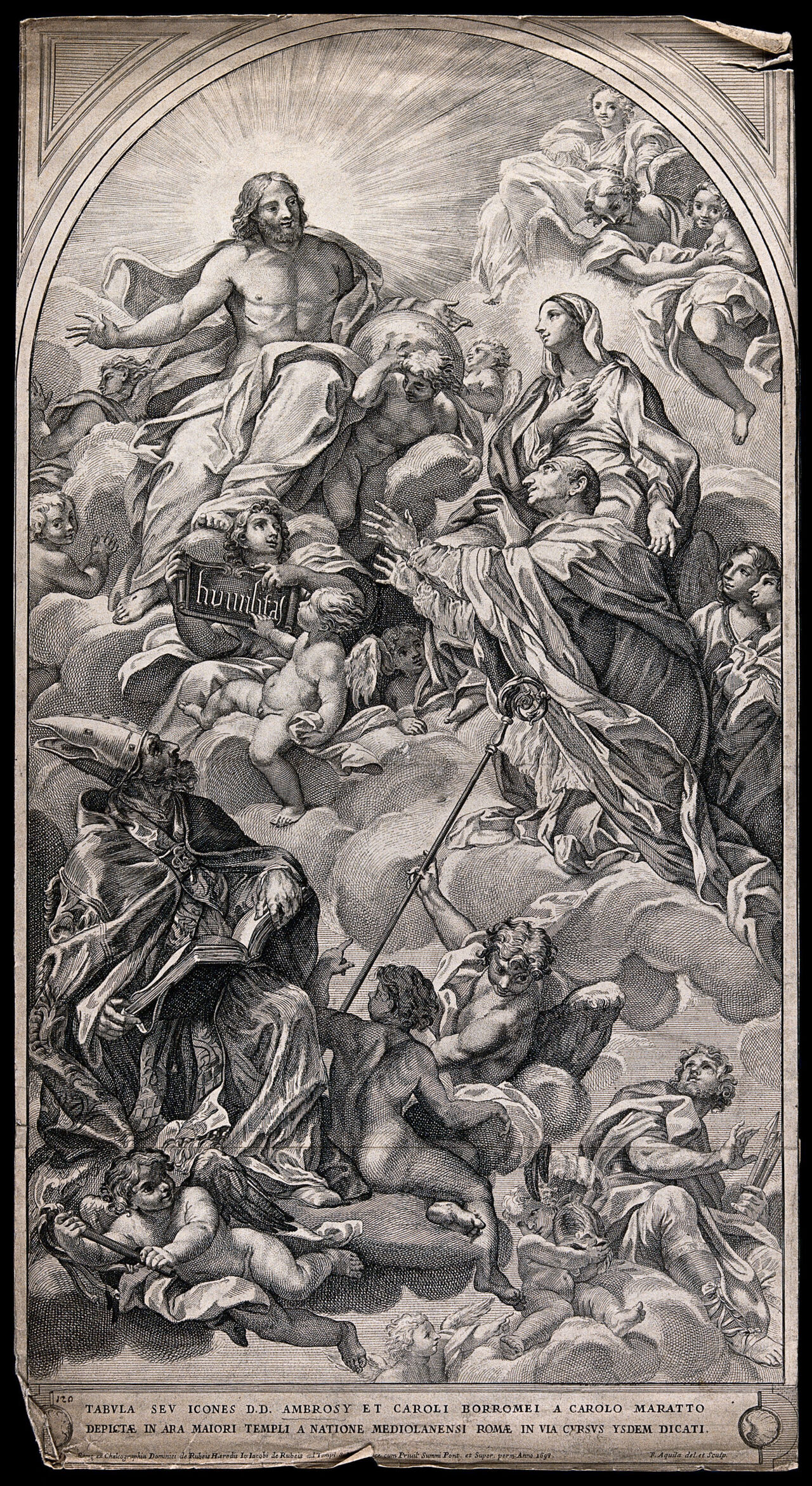
Source file copied unchanged by Saints and Science. Saved Wellcome’s proportional 1280-pixel IIIF web derivative, full sheet retained. No additional crop, retouching, compositing, AI alteration, or color correction.
Web delivery: Saints and Science created proportionately resized WebP delivery copies at quality 82, or 80–76 where needed to keep the file smaller, for faster loading. The complete composition is retained, with no crop, enlargement, retouching, color adjustment, compositing, or AI alteration. Source ICC, EXIF, and XMP metadata are retained where available. Large ICC color profiles are color-managed into compact standard sRGB to preserve intended displayed colors without carrying oversized profiles; EXIF orientation is applied only if required for the original display orientation. The reviewed original remains available unchanged. Each copy retains the source image license and attribution.
Saint Clare of Assisi
Lippo Memmi’s Saint Clare (ca. 1330), a tempera-and-gold panel showing Clare in the habit of the Poor Clares with a book and flaming lamp. The Met identifies it as a reframed pinnacle from an altarpiece made around 1325–30 for San Francesco in San Gimignano.
Credit: Lippo Memmi (Filippo di Memmo) · The Met Open Access / CC0 1.0 · Image file
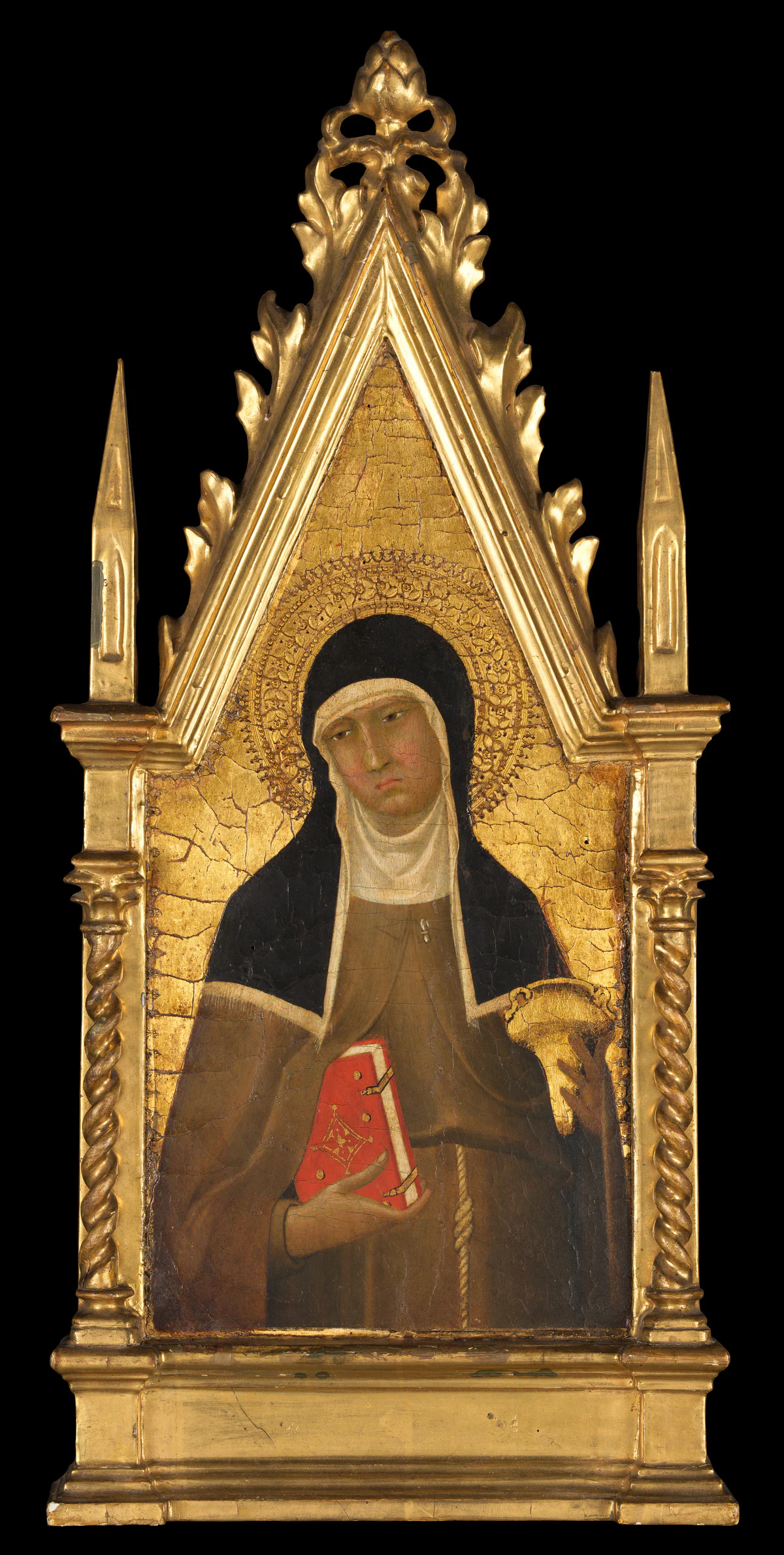
Source file copied unchanged by Saints and Science. Exact official primary-image bytes from The Met Open Access file; no Corpus Files crop, resize, recompression, retouching, compositing, restoration, or AI processing. Publication does not imply Metropolitan Museum of Art endorsement.
Web delivery: Saints and Science created proportionately resized WebP delivery copies at quality 82, or 80–76 where needed to keep the file smaller, for faster loading. The complete composition is retained, with no crop, enlargement, retouching, color adjustment, compositing, or AI alteration. Source ICC, EXIF, and XMP metadata are retained where available. Large ICC color profiles are color-managed into compact standard sRGB to preserve intended displayed colors without carrying oversized profiles; EXIF orientation is applied only if required for the original display orientation. The reviewed original remains available unchanged. Each copy retains the source image license and attribution.
Saint Clare of Montefalco
Saint Clare of Montefalco, August 17, from Les Images de tous les saints et saintes de l’année, 1636, etching by Jacques Callot, published by Israël Henriet. The Metropolitan Museum of Art, 17.50.17-371(280).
Credit: Jacques Callot; published by Israël Henriet; official digital reproduction by The Metropolitan Museum of Art · The Met Open Access / CC0 1.0 · Image file
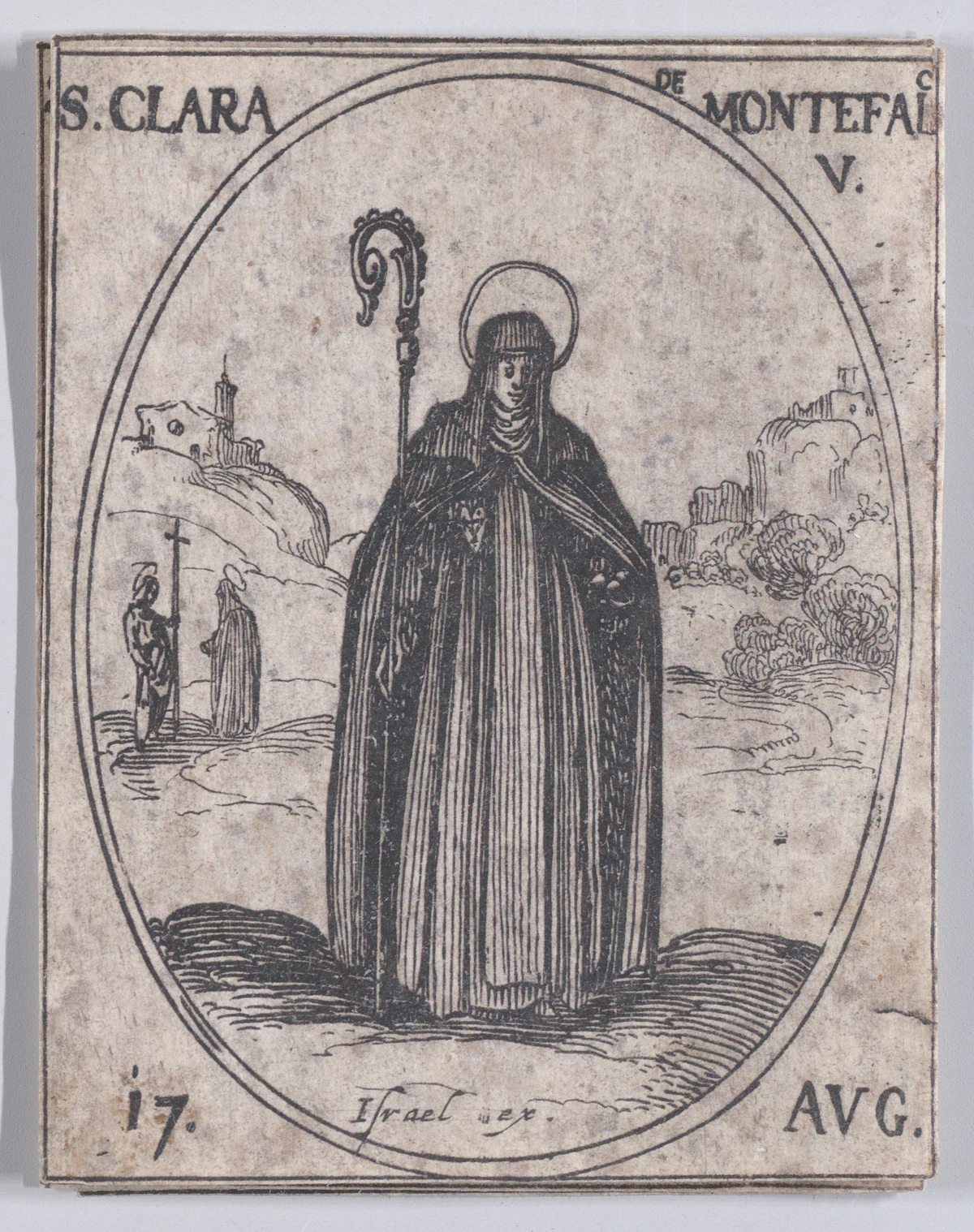
Source file copied unchanged by Saints and Science. Exact sole Met Open Access primary JPEG. The full current sheet, inscriptions, spotting, and paper toning are preserved. The museum records that this oval was originally one of four scenes on a larger plate, so the print’s physical separation and current-sheet history are disclosed here. Corpus Files made no crop, resize, recompression, retouching, or other visual alteration, and no public conservation or digital-alteration note exists for this impression. Use does not imply Metropolitan Museum of Art endorsement. CC0 1.0 permits commercial reuse and modification, carries no ShareAlike condition, and does not legally require attribution; the editorial credit is retained voluntarily.
Web delivery: Saints and Science created proportionately resized WebP delivery copies at quality 82, or 80–76 where needed to keep the file smaller, for faster loading. The complete composition is retained, with no crop, enlargement, retouching, color adjustment, compositing, or AI alteration. Source ICC, EXIF, and XMP metadata are retained where available. Large ICC color profiles are color-managed into compact standard sRGB to preserve intended displayed colors without carrying oversized profiles; EXIF orientation is applied only if required for the original display orientation. The reviewed original remains available unchanged. Each copy retains the source image license and attribution.
Saint Coloman of Stockerau
The 1739 public monument to Saint Coloman in Stockerau, photographed on 20 October 2024.
Credit: C. Stadler (Bwag) · CC BY-SA 4.0 · Image file

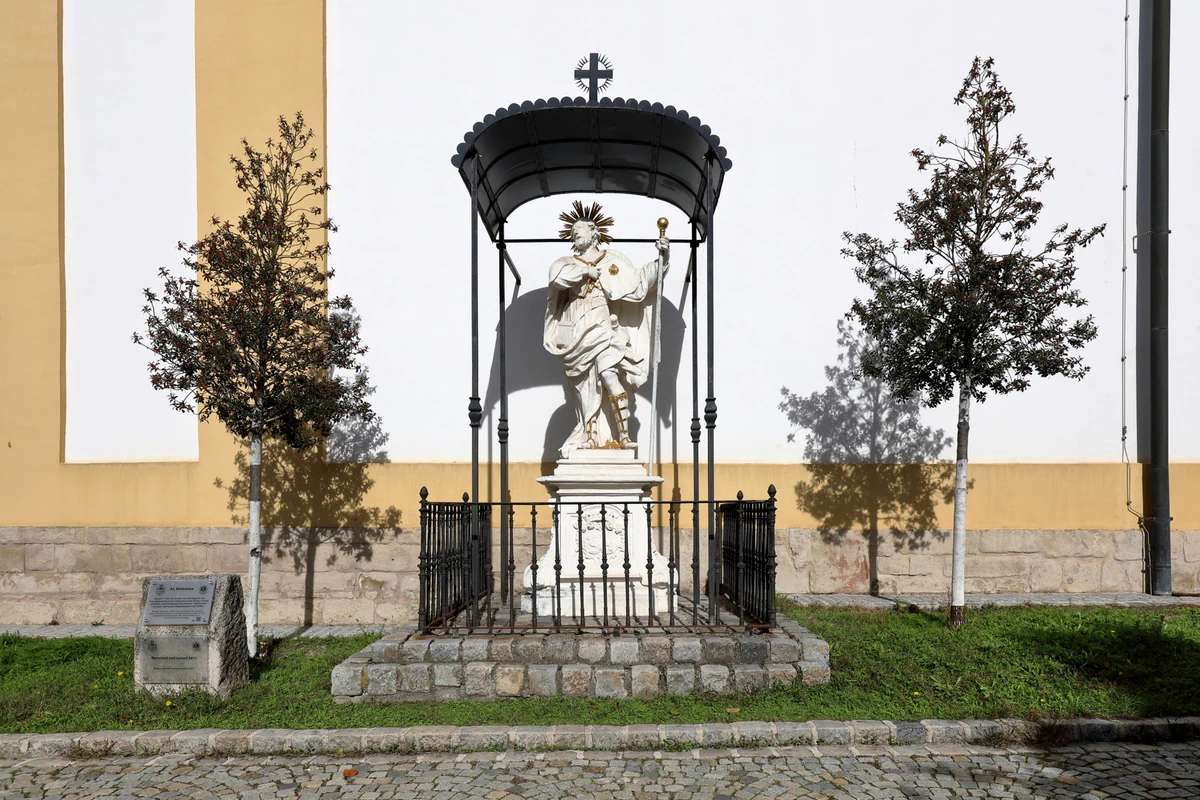
Source file copied unchanged by Saints and Science. The creator's source metadata records Canon Digital Photo Professional processing. Corpus Files proportionally resized the 5700 × 3800 Wikimedia Commons JPEG source to 1800 × 1200 pixels and JPEG re-encoded it at quality 86 with macOS sips for web delivery. No crop, manual rotation, retouching, compositing, content alteration, or AI alteration was made; metadata may have been normalized by re-encoding. Redistribution remains under CC BY-SA 4.0; ShareAlike applies to adaptations.
Web delivery: Saints and Science created proportionately resized WebP delivery copies at quality 82, or 80–76 where needed to keep the file smaller, for faster loading. The complete composition is retained, with no crop, enlargement, retouching, color adjustment, compositing, or AI alteration. Source ICC, EXIF, and XMP metadata are retained where available. Large ICC color profiles are color-managed into compact standard sRGB to preserve intended displayed colors without carrying oversized profiles; EXIF orientation is applied only if required for the original display orientation. The reviewed original remains available unchanged. Each copy retains the source image license and attribution.
Saint Conrad of Piacenza
Giovanni Lanfranco’s Saint Conrad Confalonieri, about 1618, at the Musée des Beaux-Arts in Lyon. Conrad is represented as a Franciscan hermit at prayer.
Credit: Giovanni Lanfranco; photograph by Rama · Public Domain Mark 1.0 · Image file

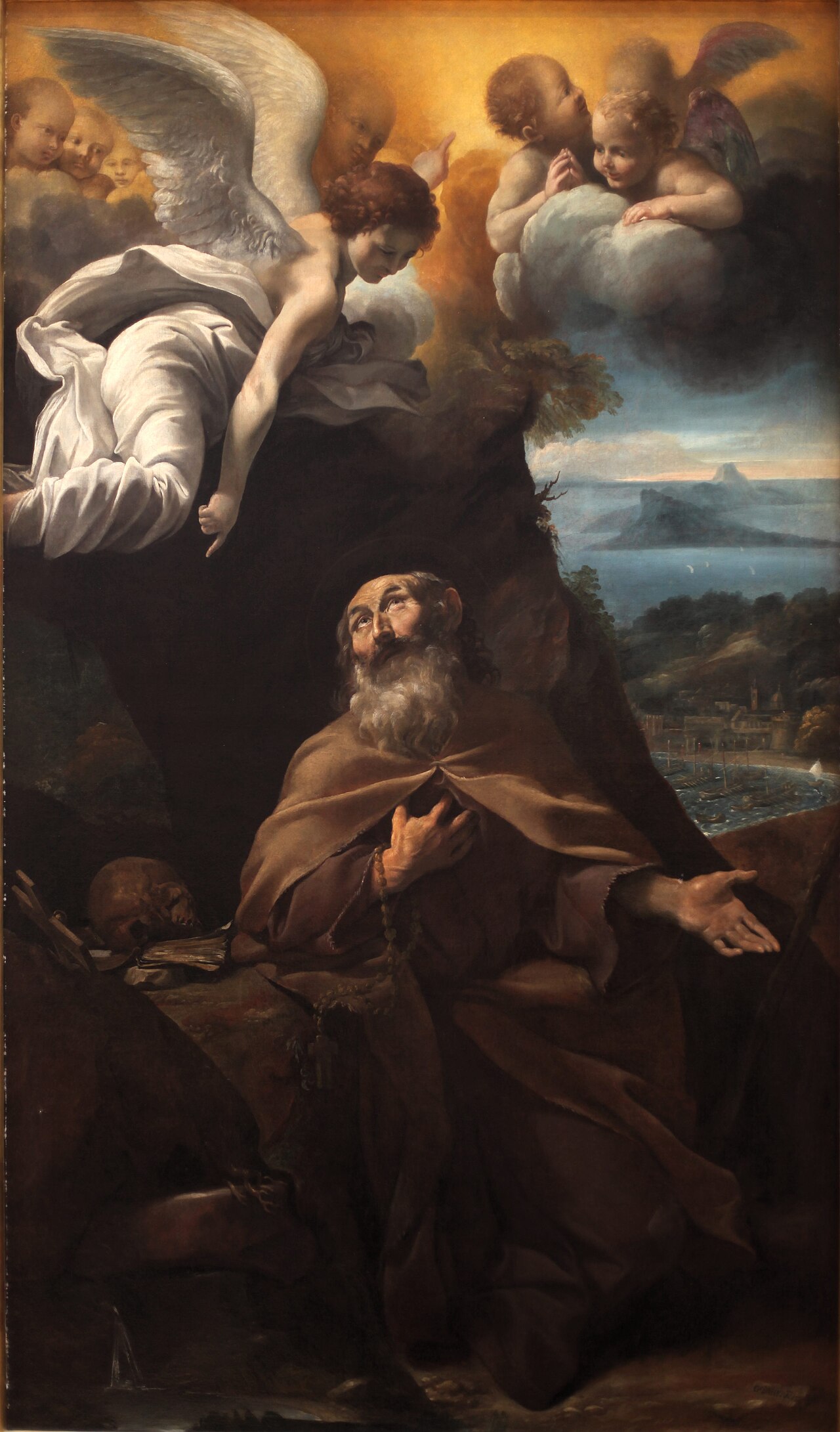
Source file copied unchanged by Saints and Science. The supplied Commons proportional 1280-pixel JPEG is copied unchanged. No additional crop, retouching, color correction, compositing or AI alteration.
Web delivery: Saints and Science created proportionately resized WebP delivery copies at quality 82, or 80–76 where needed to keep the file smaller, for faster loading. The complete composition is retained, with no crop, enlargement, retouching, color adjustment, compositing, or AI alteration. Source ICC, EXIF, and XMP metadata are retained where available. Large ICC color profiles are color-managed into compact standard sRGB to preserve intended displayed colors without carrying oversized profiles; EXIF orientation is applied only if required for the original display orientation. The reviewed original remains available unchanged. Each copy retains the source image license and attribution.
Saint Cuthbert
Cuthbert discovers a timber washed in with the tide, from a late-twelfth-century manuscript of his life.
Credit: British Library digitization · CC0 1.0 · Image file

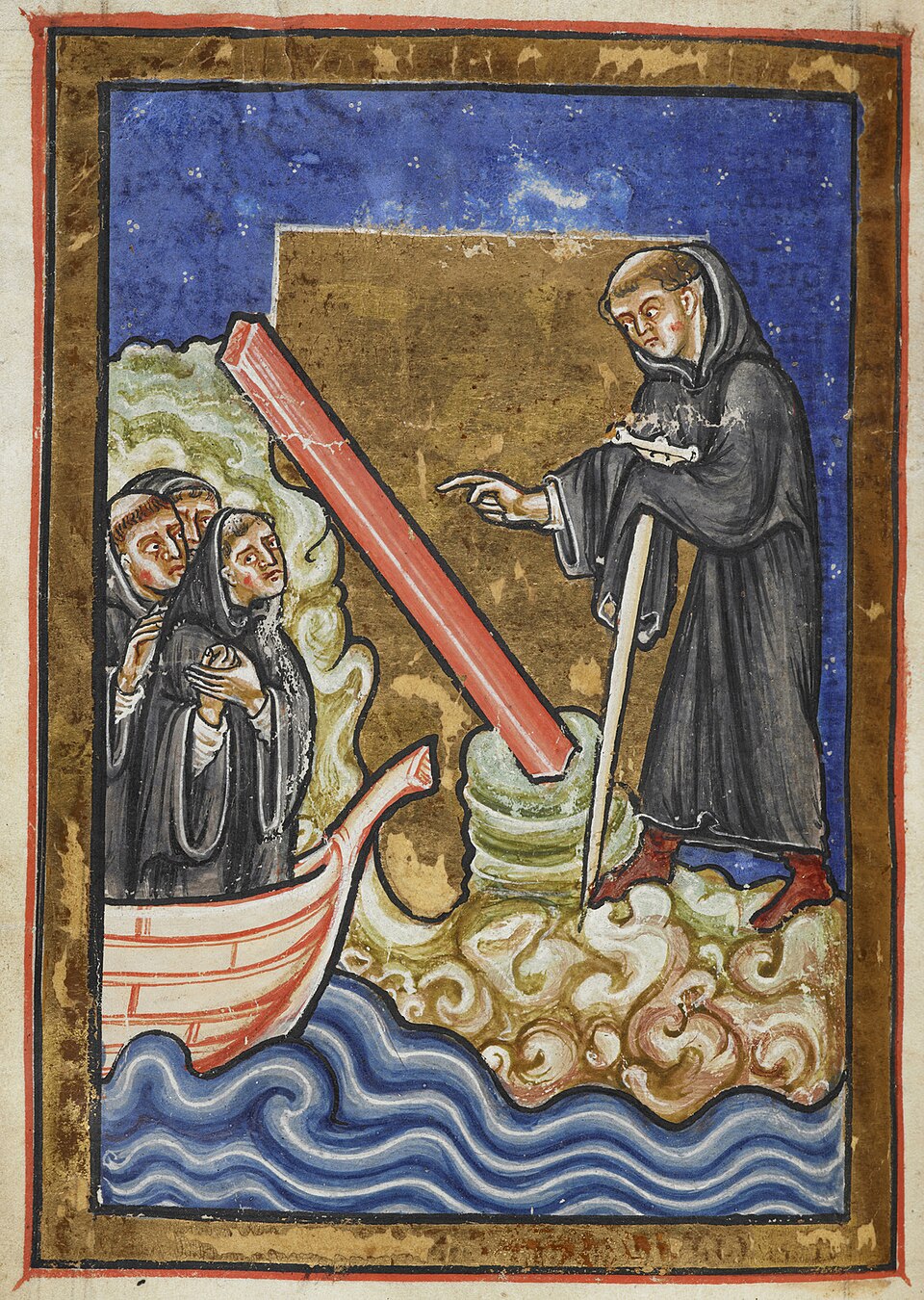
Source file copied unchanged by Saints and Science. The displayed copy was resized from the Commons source.
Web delivery: Saints and Science created proportionately resized WebP delivery copies at quality 82, or 80–76 where needed to keep the file smaller, for faster loading. The complete composition is retained, with no crop, enlargement, retouching, color adjustment, compositing, or AI alteration. Source ICC, EXIF, and XMP metadata are retained where available. Large ICC color profiles are color-managed into compact standard sRGB to preserve intended displayed colors without carrying oversized profiles; EXIF orientation is applied only if required for the original display orientation. The reviewed original remains available unchanged. Each copy retains the source image license and attribution.
Saint Didacus of Alcalá
Francisco de Zurbarán, San Diego de Alcalá, circa 1645–1650 per the Museo Lázaro Galdiano object record; the Commons record dates it 1651–1653.
Credit: Francisco de Zurbarán · Artwork in the public domain; digital reproduction released under CC0 1.0 · Image file

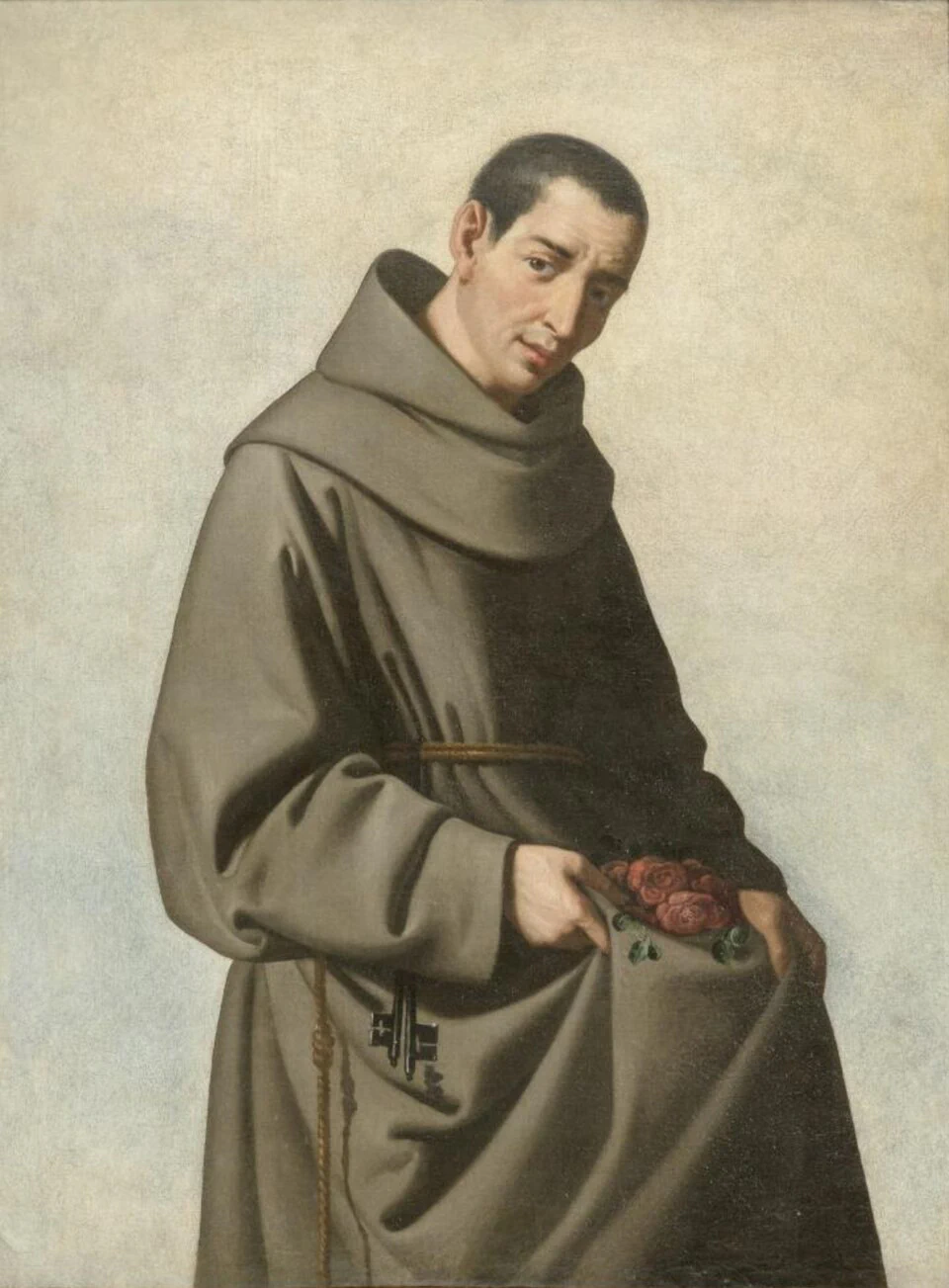
Source file copied unchanged by Saints and Science. The displayed copy is byte-identical to the Commons 960 × 1303 derivative.
Web delivery: Saints and Science created proportionately resized WebP delivery copies at quality 82, or 80–76 where needed to keep the file smaller, for faster loading. The complete composition is retained, with no crop, enlargement, retouching, color adjustment, compositing, or AI alteration. Source ICC, EXIF, and XMP metadata are retained where available. Large ICC color profiles are color-managed into compact standard sRGB to preserve intended displayed colors without carrying oversized profiles; EXIF orientation is applied only if required for the original display orientation. The reviewed original remains available unchanged. Each copy retains the source image license and attribution.
Saint Dulce of the Poor
Clergy at the 2011 beatification ceremony for Dulce de Souza Lopes Pontes in Salvador, Bahia.
Credit: Manu Dias / Secom (Agecom Bahia) · CC BY 2.0 · Image file

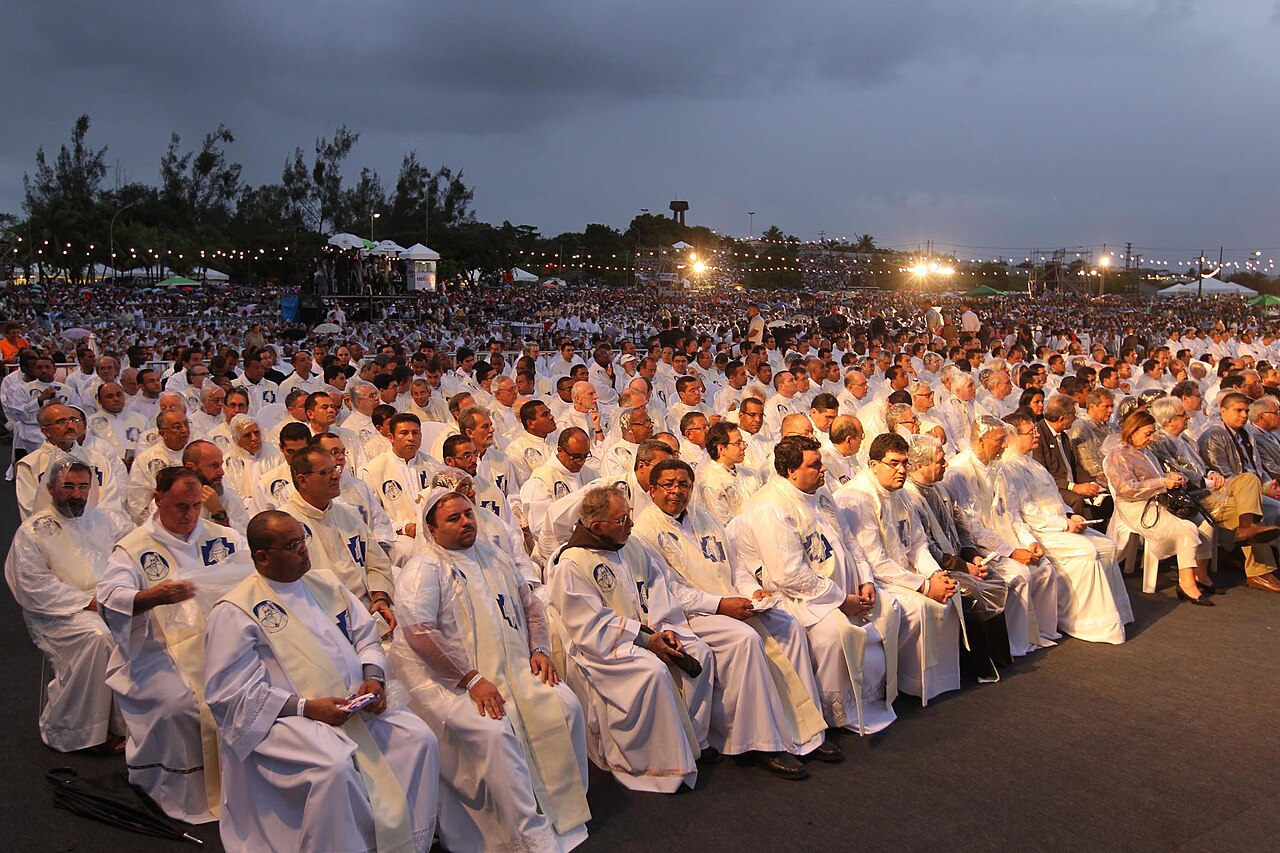
Source file copied unchanged by Saints and Science. Displayed copy is Wikimedia Commons’ upstream proportional thumbnail resize. Corpus Files downloaded it without additional crop, retouching, compositing, AI alteration or intentional color adjustment.
Web delivery: Saints and Science created proportionately resized WebP delivery copies at quality 82, or 80–76 where needed to keep the file smaller, for faster loading. The complete composition is retained, with no crop, enlargement, retouching, color adjustment, compositing, or AI alteration. Source ICC, EXIF, and XMP metadata are retained where available. Large ICC color profiles are color-managed into compact standard sRGB to preserve intended displayed colors without carrying oversized profiles; EXIF orientation is applied only if required for the original display orientation. The reviewed original remains available unchanged. Each copy retains the source image license and attribution.
Saint Edward the Confessor
The chapel and shrine of Edward the Confessor in Westminster Abbey.
Credit: amanderson2 · CC BY 2.0 · Image file

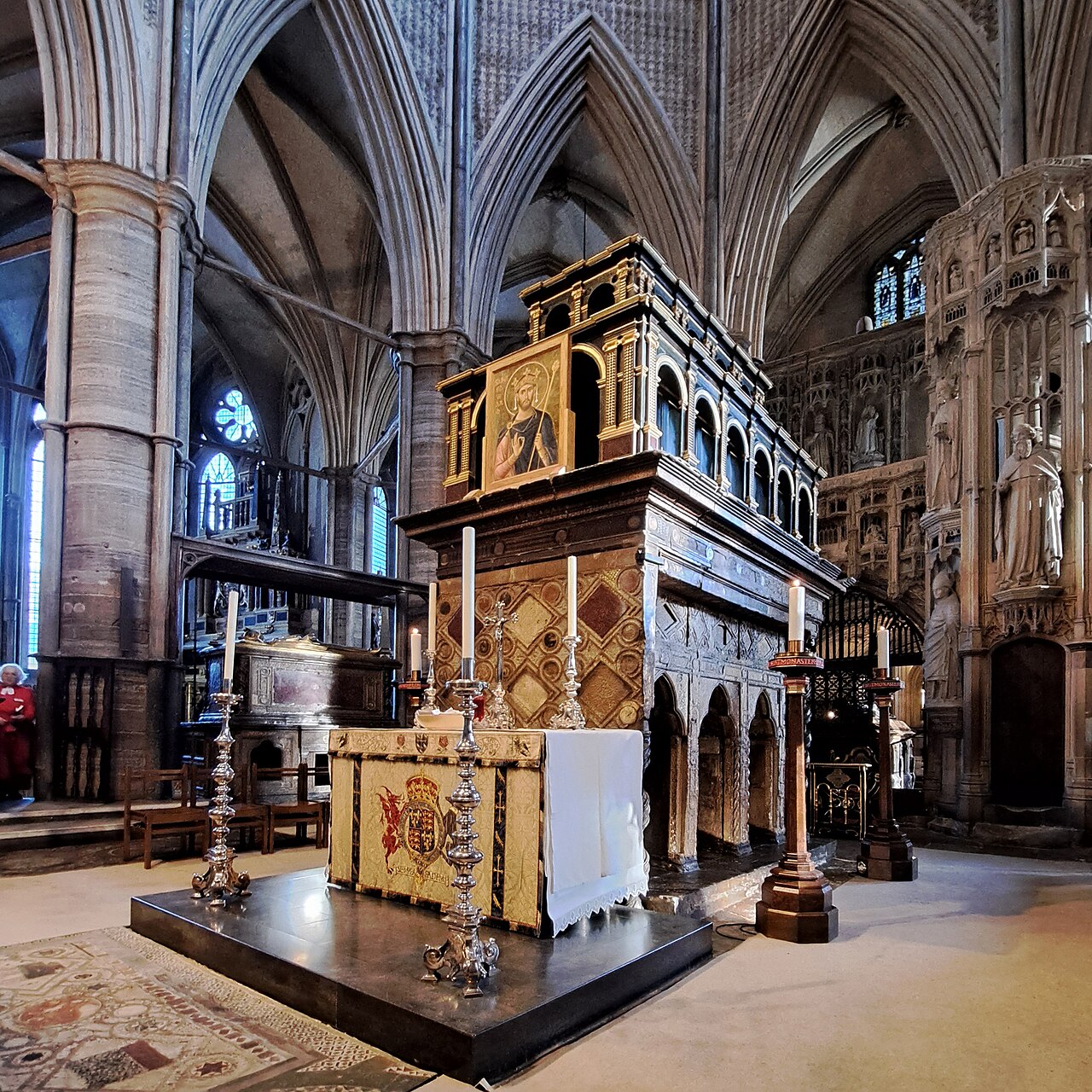
Source file copied unchanged by Saints and Science. Displayed copy is Wikimedia Commons’ upstream proportional thumbnail resize. Corpus Files downloaded it without additional crop, retouching, compositing, AI alteration or intentional color adjustment.
Web delivery: Saints and Science created proportionately resized WebP delivery copies at quality 82, or 80–76 where needed to keep the file smaller, for faster loading. The complete composition is retained, with no crop, enlargement, retouching, color adjustment, compositing, or AI alteration. Source ICC, EXIF, and XMP metadata are retained where available. Large ICC color profiles are color-managed into compact standard sRGB to preserve intended displayed colors without carrying oversized profiles; EXIF orientation is applied only if required for the original display orientation. The reviewed original remains available unchanged. Each copy retains the source image license and attribution.
Saint Elizabeth of Portugal
Jacques Callot, St. Elizabeth of Portugal; St. Zoe; St. Isaiah, Prophet; St. Edelburge. R. L. Baumfeld Collection, National Gallery of Art, 1969.15.697. The full sheet is retained; Elizabeth is one of four devotional scenes.
Credit: Jacques Callot · CC0 · Image file

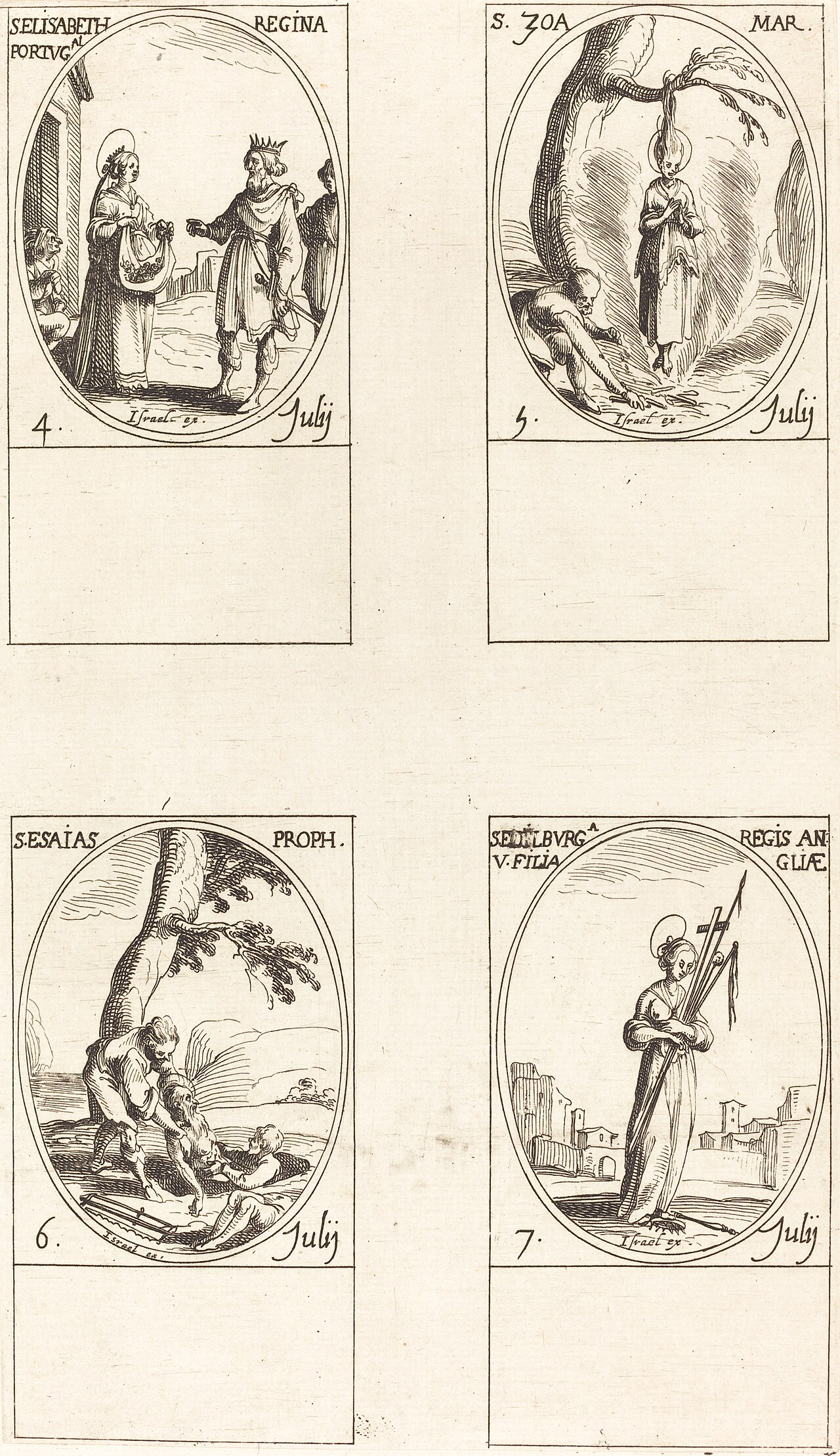
Source file copied unchanged by Saints and Science. Saved the Commons proportional web-size derivative where available; original bytes used when smaller. No local crop, retouching, compositing, AI alteration, or intentional color correction.
Web delivery: Saints and Science created proportionately resized WebP delivery copies at quality 82, or 80–76 where needed to keep the file smaller, for faster loading. The complete composition is retained, with no crop, enlargement, retouching, color adjustment, compositing, or AI alteration. Source ICC, EXIF, and XMP metadata are retained where available. Large ICC color profiles are color-managed into compact standard sRGB to preserve intended displayed colors without carrying oversized profiles; EXIF orientation is applied only if required for the original display orientation. The reviewed original remains available unchanged. Each copy retains the source image license and attribution.
Saint Eustochia Smeralda Calafato
A historical devotional print catalogued as Eustochia Calafato in the MAS collection, Antwerp. It depicts a religious figure at prayer beneath Mary and the Christ Child.
Credit: Unknown artist; MAS Museum aan de Stroom, Antwerp · CC0 1.0 · Image file

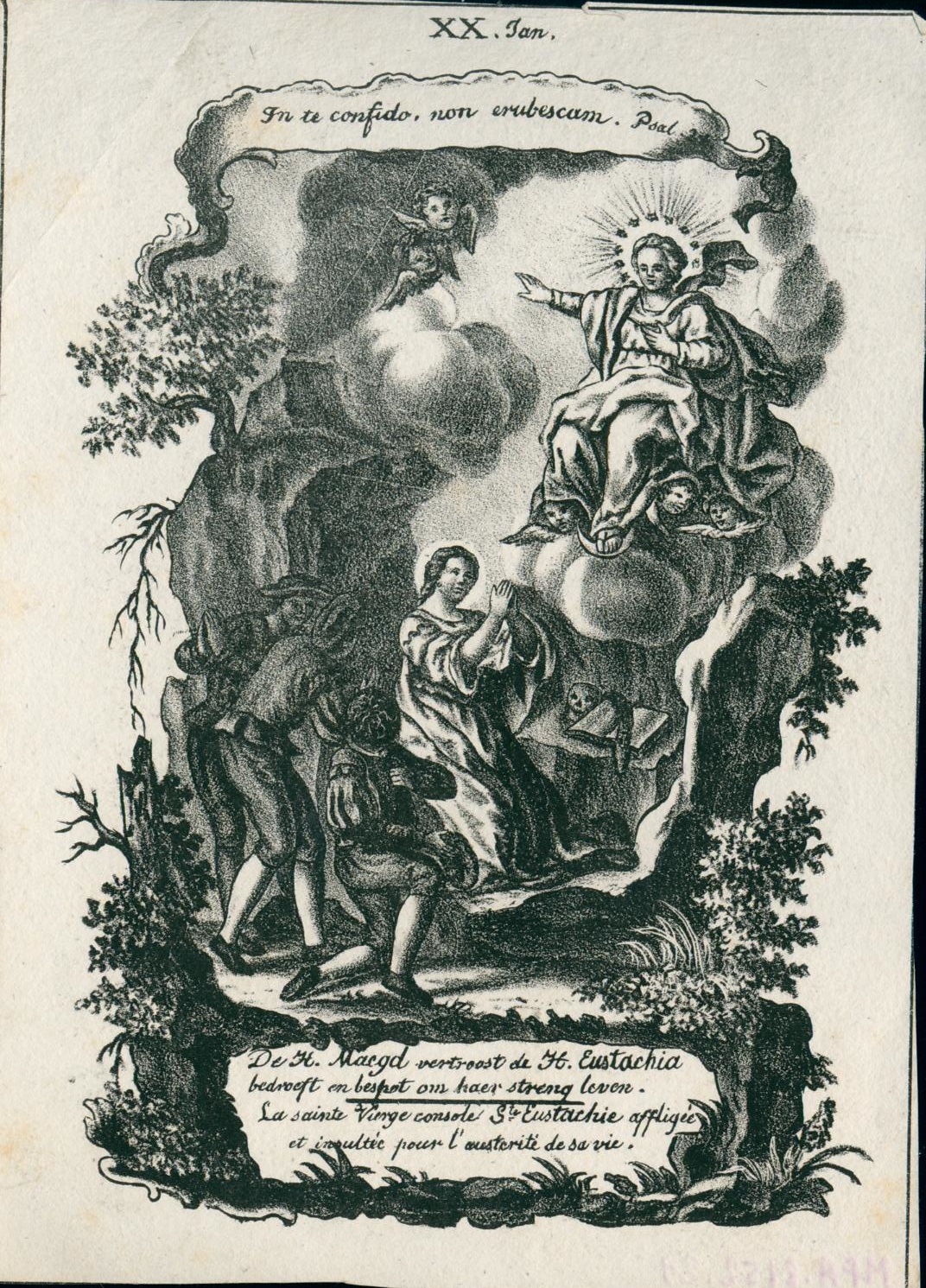
Source file copied unchanged by Saints and Science. Selected source image copied unchanged; no crop, retouching, recoloring, compositing, or AI alteration.
Web delivery: Saints and Science created proportionately resized WebP delivery copies at quality 82, or 80–76 where needed to keep the file smaller, for faster loading. The complete composition is retained, with no crop, enlargement, retouching, color adjustment, compositing, or AI alteration. Source ICC, EXIF, and XMP metadata are retained where available. Large ICC color profiles are color-managed into compact standard sRGB to preserve intended displayed colors without carrying oversized profiles; EXIF orientation is applied only if required for the original display orientation. The reviewed original remains available unchanged. Each copy retains the source image license and attribution.
Saint Frances of Rome
Santa Francesca Romana Clothed by the Virgin, attributed to Antonio da Viterbo the Elder, about 1445. This devotional panel is held by The Metropolitan Museum of Art.
Credit: Antonio da Viterbo the Elder; The Metropolitan Museum of Art · The Met Open Access / CC0 1.0 · Image file
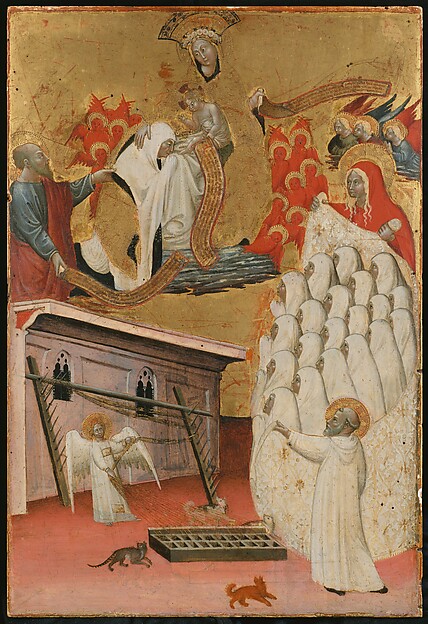
Source file copied unchanged by Saints and Science. The museum’s supplied web-large JPEG is copied unchanged. No crop, retouching, color correction, compositing or AI alteration by Saints and Science.
Web delivery: Saints and Science created proportionately resized WebP delivery copies at quality 82, or 80–76 where needed to keep the file smaller, for faster loading. The complete composition is retained, with no crop, enlargement, retouching, color adjustment, compositing, or AI alteration. Source ICC, EXIF, and XMP metadata are retained where available. Large ICC color profiles are color-managed into compact standard sRGB to preserve intended displayed colors without carrying oversized profiles; EXIF orientation is applied only if required for the original display orientation. The reviewed original remains available unchanged. Each copy retains the source image license and attribution.
Saint Francis de Sales
Historical portrait of Francis de Sales, bishop of Geneva.
Credit: Unknown artist; reproduction photographed by Benjamin Gavaudo · Public Domain Mark 1.0 · Image file

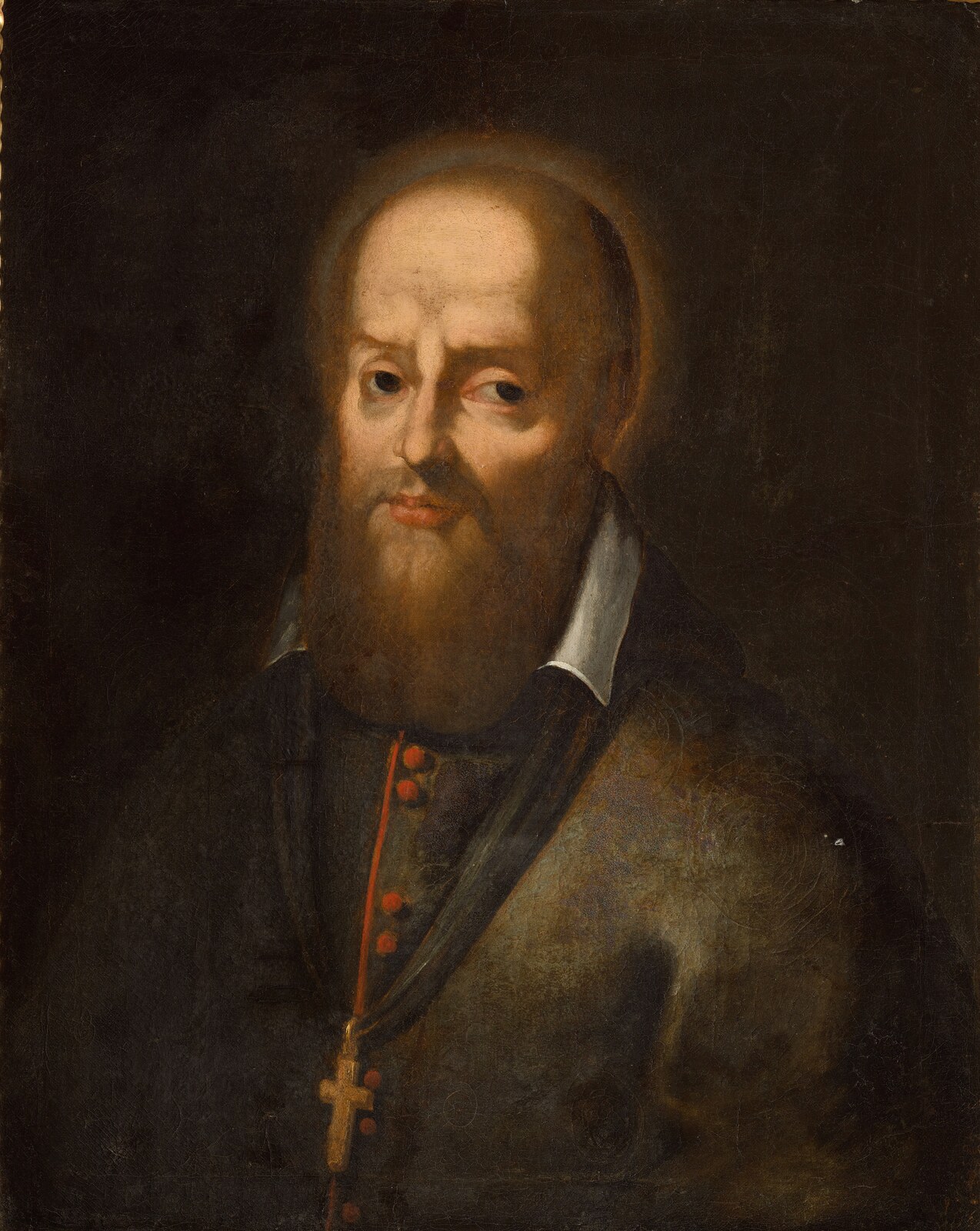
Source file copied unchanged by Saints and Science. The displayed copy was resized to 1274 × 1600 pixels and re-encoded as an optimized JPEG for web delivery.
Web delivery: Saints and Science created proportionately resized WebP delivery copies at quality 82, or 80–76 where needed to keep the file smaller, for faster loading. The complete composition is retained, with no crop, enlargement, retouching, color adjustment, compositing, or AI alteration. Source ICC, EXIF, and XMP metadata are retained where available. Large ICC color profiles are color-managed into compact standard sRGB to preserve intended displayed colors without carrying oversized profiles; EXIF orientation is applied only if required for the original display orientation. The reviewed original remains available unchanged. Each copy retains the source image license and attribution.
Saint Francis of Paola
Francis of Paola in Giovanni Domenico Tiepolo's The Immaculate Conception with Saint Lawrence and Saint Francis of Paola, circa 1775–1780; photograph by Ji-Elle.
Credit: Giovanni Domenico Tiepolo; photograph by Ji-Elle · CC BY-SA 3.0 · Image file

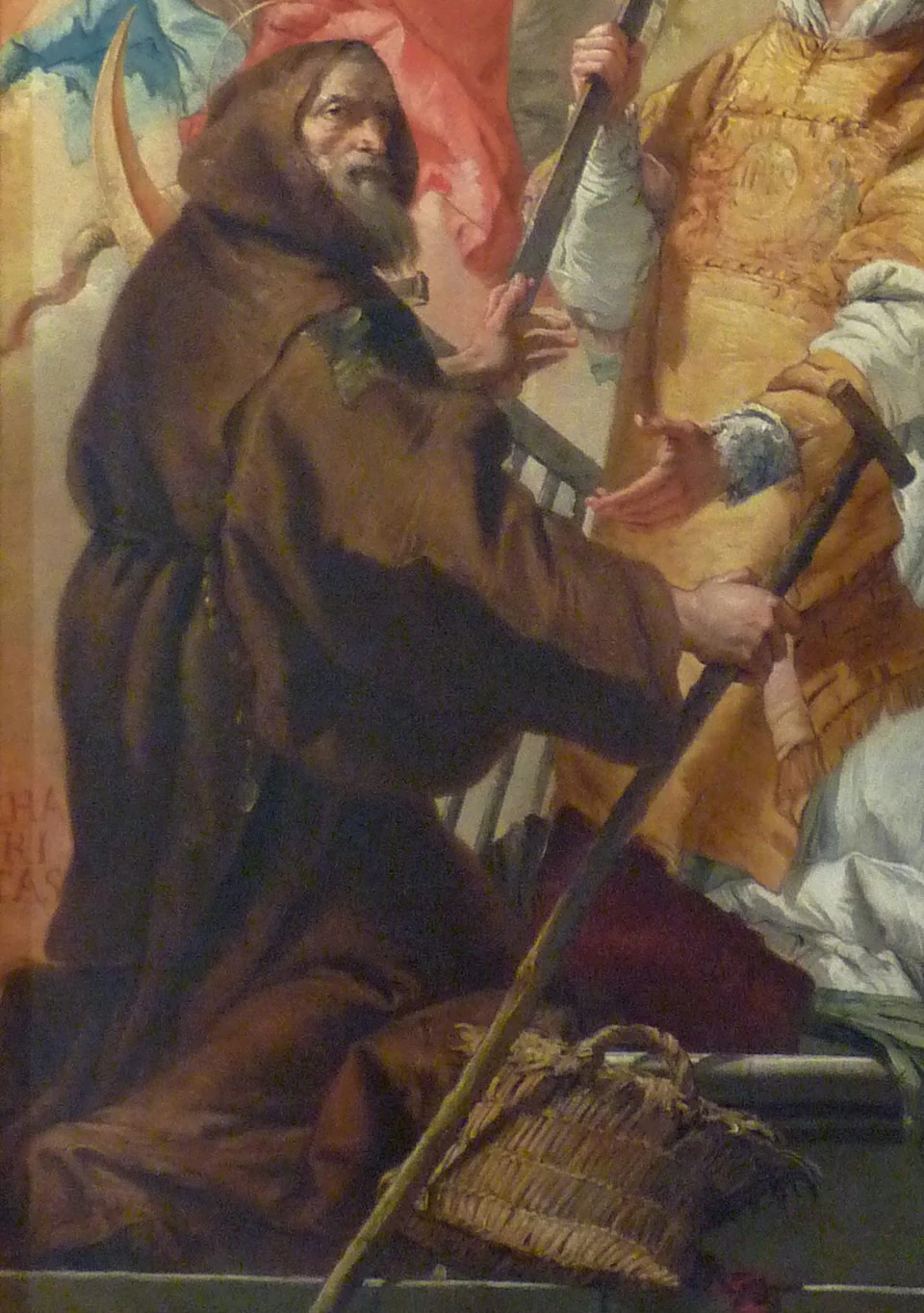
Source file copied unchanged by Saints and Science. The displayed copy corresponds to the Commons 960 × 1364 pixel derivative and was JPEG re-encoded; decoded pixels are near-identical. Redistribution remains under CC BY-SA 3.0.
Web delivery: Saints and Science created proportionately resized WebP delivery copies at quality 82, or 80–76 where needed to keep the file smaller, for faster loading. The complete composition is retained, with no crop, enlargement, retouching, color adjustment, compositing, or AI alteration. Source ICC, EXIF, and XMP metadata are retained where available. Large ICC color profiles are color-managed into compact standard sRGB to preserve intended displayed colors without carrying oversized profiles; EXIF orientation is applied only if required for the original display orientation. The reviewed original remains available unchanged. Each copy retains the source image license and attribution.
Saint Francis Xavier
The silver casket associated with Francis Xavier’s remains at the Basilica of Bom Jesus, Old Goa. This distant view documents the display setting, not an anatomical condition.
Credit: Rohini · CC BY 3.0 · Image file

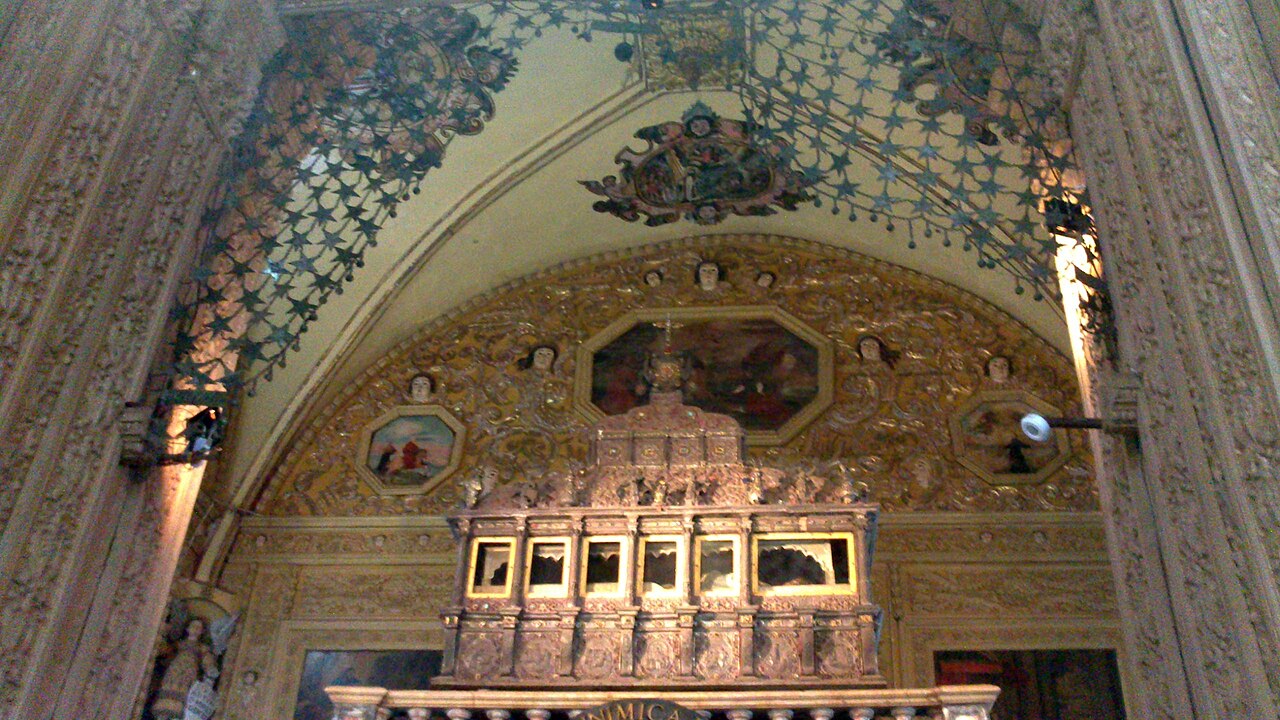
Source file copied unchanged by Saints and Science. Downloaded the Wikimedia Commons upstream proportional web-size image. No additional crop, retouching, compositing, AI generation or intentional color alteration by Corpus Files. Source-side processing, where evident in the file record, remains part of the supplied photograph.
Web delivery: Saints and Science created proportionately resized WebP delivery copies at quality 82, or 80–76 where needed to keep the file smaller, for faster loading. The complete composition is retained, with no crop, enlargement, retouching, color adjustment, compositing, or AI alteration. Source ICC, EXIF, and XMP metadata are retained where available. Large ICC color profiles are color-managed into compact standard sRGB to preserve intended displayed colors without carrying oversized profiles; EXIF orientation is applied only if required for the original display orientation. The reviewed original remains available unchanged. Each copy retains the source image license and attribution.
Saint Germaine Cousin
The 1854 reliquary of Germaine Cousin in the church of Mary Magdalene, Pibrac.
Credit: Didier Descouens · CC BY-SA 4.0 · Image file

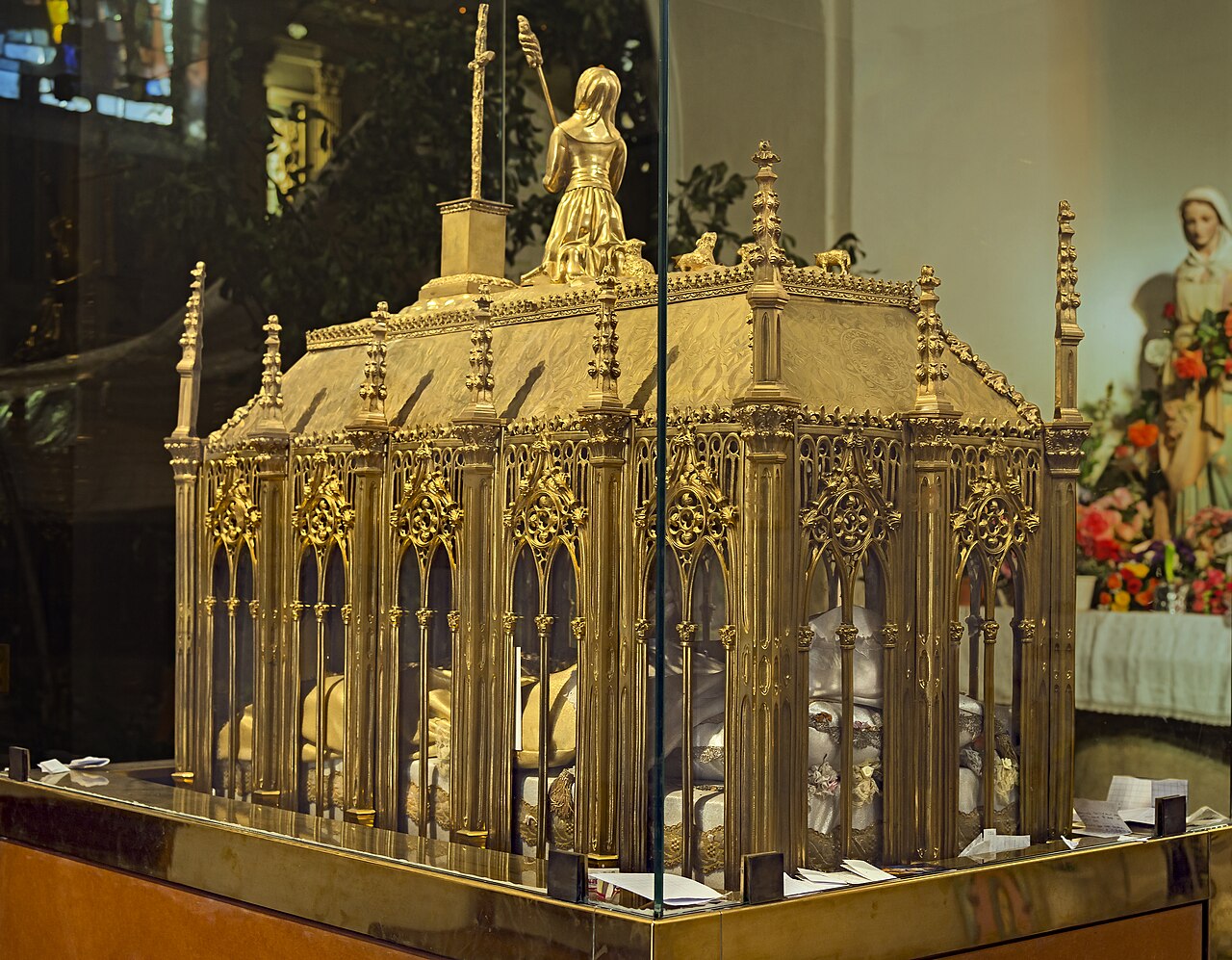
Source file copied unchanged by Saints and Science. Displayed copy is Wikimedia Commons’ upstream proportional thumbnail resize. Corpus Files downloaded it without additional crop, retouching, compositing, AI alteration or intentional color adjustment.
Web delivery: Saints and Science created proportionately resized WebP delivery copies at quality 82, or 80–76 where needed to keep the file smaller, for faster loading. The complete composition is retained, with no crop, enlargement, retouching, color adjustment, compositing, or AI alteration. Source ICC, EXIF, and XMP metadata are retained where available. Large ICC color profiles are color-managed into compact standard sRGB to preserve intended displayed colors without carrying oversized profiles; EXIF orientation is applied only if required for the original display orientation. The reviewed original remains available unchanged. Each copy retains the source image license and attribution.
Saint Guthlac of Crowland
Crowland Abbey, the historic site associated with Guthlac.
Credit: Patw68 · CC BY-SA 4.0 · Image file

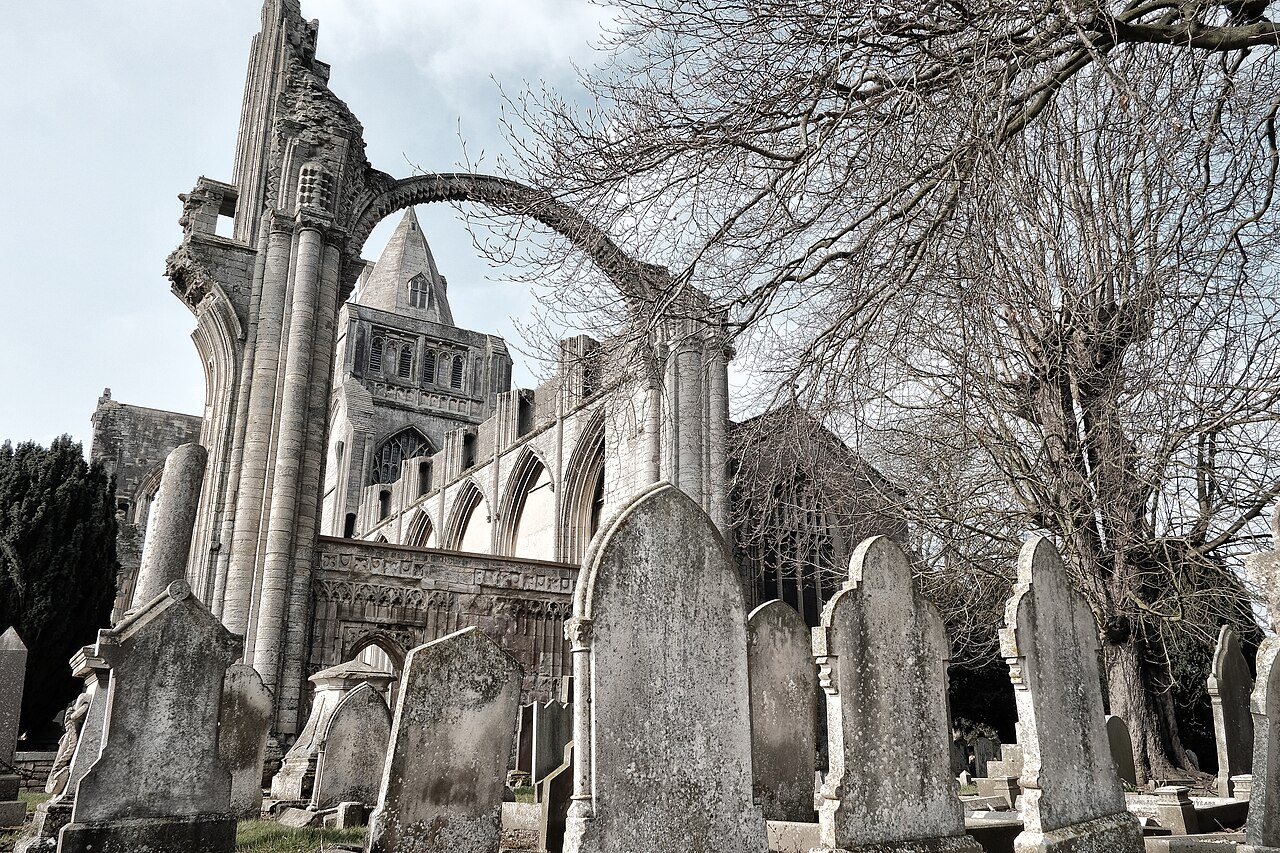
Source file copied unchanged by Saints and Science. Displayed copy is Wikimedia Commons’ upstream proportional thumbnail resize. Corpus Files downloaded it without additional crop, retouching, compositing, AI alteration or intentional color adjustment.
Web delivery: Saints and Science created proportionately resized WebP delivery copies at quality 82, or 80–76 where needed to keep the file smaller, for faster loading. The complete composition is retained, with no crop, enlargement, retouching, color adjustment, compositing, or AI alteration. Source ICC, EXIF, and XMP metadata are retained where available. Large ICC color profiles are color-managed into compact standard sRGB to preserve intended displayed colors without carrying oversized profiles; EXIF orientation is applied only if required for the original display orientation. The reviewed original remains available unchanged. Each copy retains the source image license and attribution.
Blessed Helen Enselmini
The Arcella sanctuary in a nineteenth-century engraving of its former neoclassical church. Helen Enselmini belonged to the earlier Franciscan community at this site in Padua.
Credit: Unknown nineteenth-century engraver · Public domain · Image file

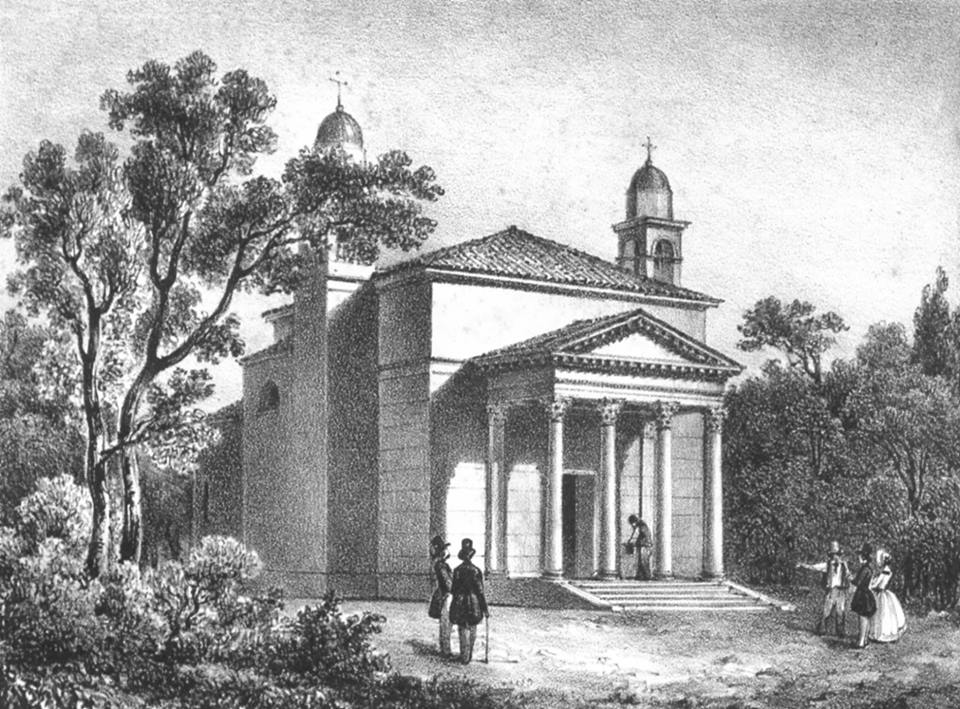
Source file copied unchanged by Saints and Science. Original Commons JPEG copied unchanged. No local crop, retouching, recoloring, compositing, or AI alteration.
Web delivery: Saints and Science created proportionately resized WebP delivery copies at quality 82, or 80–76 where needed to keep the file smaller, for faster loading. The complete composition is retained, with no crop, enlargement, retouching, color adjustment, compositing, or AI alteration. Source ICC, EXIF, and XMP metadata are retained where available. Large ICC color profiles are color-managed into compact standard sRGB to preserve intended displayed colors without carrying oversized profiles; EXIF orientation is applied only if required for the original display orientation. The reviewed original remains available unchanged. Each copy retains the source image license and attribution.
Blessed Herculanus of Piegaro
Lucca’s Cathedral of San Martino in a photograph published in 1899. Herculanus preached in the cathedral during the siege of 1430.
Credit: Historical photographer unrecorded; published by Leader Scott in The Cathedral Builders (1899) · Public domain (published 1899) · Image file
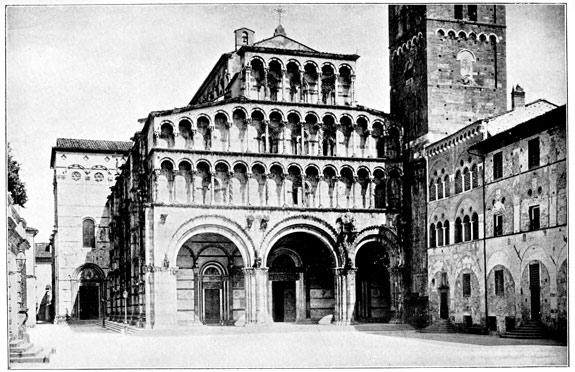
Source file copied unchanged by Saints and Science. Project Gutenberg’s already extracted image downloaded exactly as supplied. No local cropping, enhancement, recompression or alteration. Source image is 575 × 372 pixels; display without aggressive enlargement.
Web delivery: Saints and Science created proportionately resized WebP delivery copies at quality 82, or 80–76 where needed to keep the file smaller, for faster loading. The complete composition is retained, with no crop, enlargement, retouching, color adjustment, compositing, or AI alteration. Source ICC, EXIF, and XMP metadata are retained where available. Large ICC color profiles are color-managed into compact standard sRGB to preserve intended displayed colors without carrying oversized profiles; EXIF orientation is applied only if required for the original display orientation. The reviewed original remains available unchanged. Each copy retains the source image license and attribution.
Saint Hugh of Lincoln
Saint Hugh’s Choir inside Lincoln Cathedral.
Credit: Michael D Beckwith · CC0 · Image file

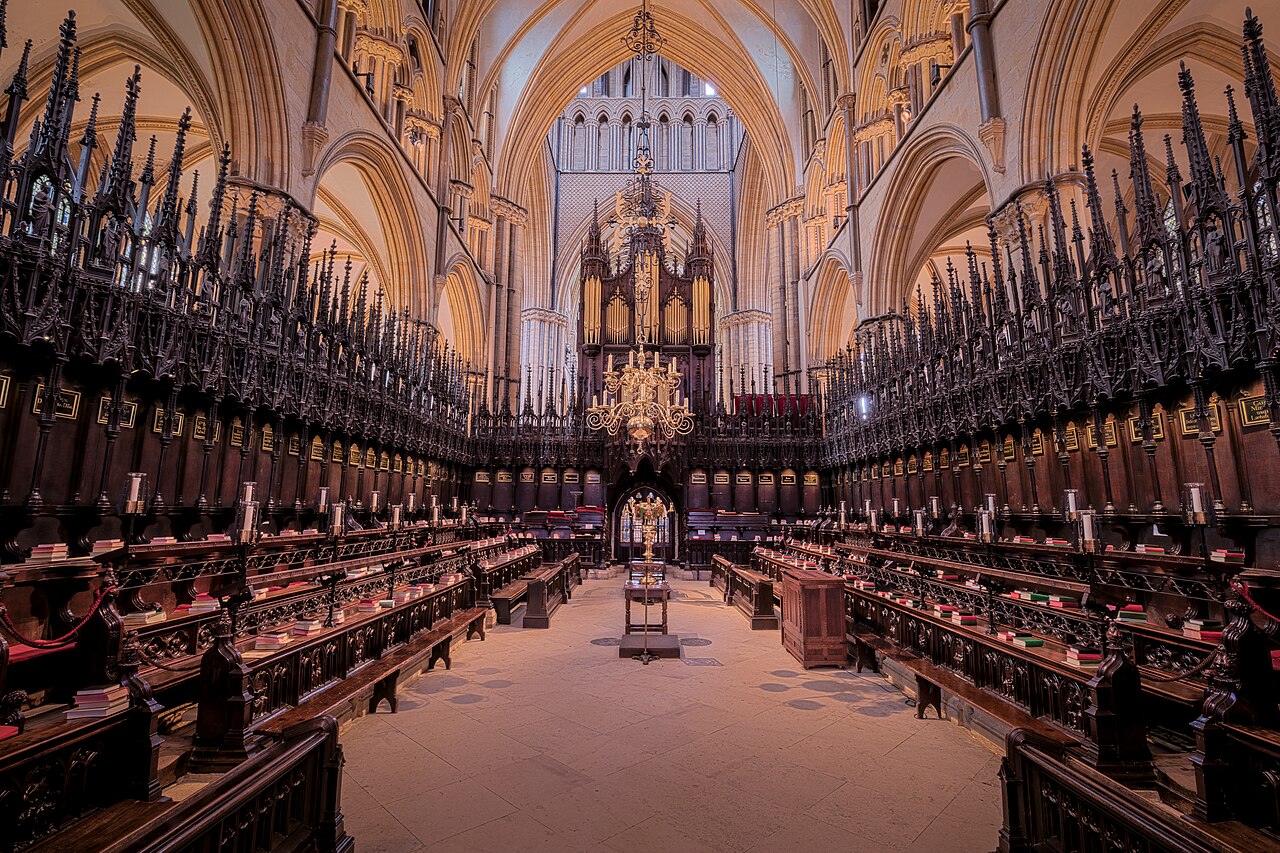
Source file copied unchanged by Saints and Science. Displayed copy is Wikimedia Commons’ upstream proportional thumbnail resize. Corpus Files downloaded it without additional crop, retouching, compositing, AI alteration or intentional color adjustment.
Web delivery: Saints and Science created proportionately resized WebP delivery copies at quality 82, or 80–76 where needed to keep the file smaller, for faster loading. The complete composition is retained, with no crop, enlargement, retouching, color adjustment, compositing, or AI alteration. Source ICC, EXIF, and XMP metadata are retained where available. Large ICC color profiles are color-managed into compact standard sRGB to preserve intended displayed colors without carrying oversized profiles; EXIF orientation is applied only if required for the original display orientation. The reviewed original remains available unchanged. Each copy retains the source image license and attribution.
Blessed Idesbald
Bernard Picart (named on the object as printmaker), Portret van Idesbald van der Gracht [Portrait of Idesbald van der Gracht], 1714, engraving and etching on paper. Rijksmuseum, RP-P-2020-6660.
Credit: Bernard Picart (named on the object as printmaker) · Rijksmuseum Public Domain / Public Domain Mark 1.0 · Image file
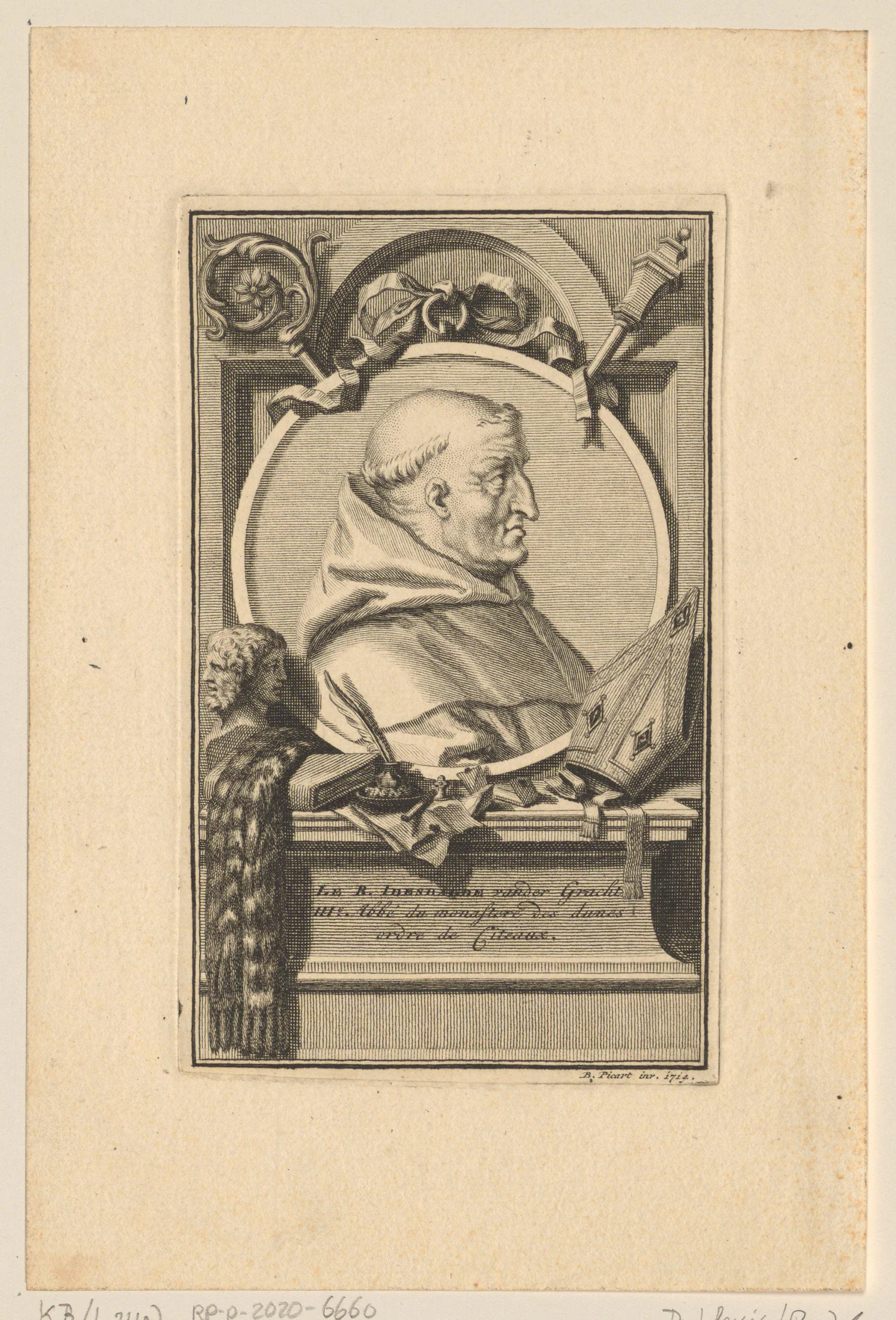
Source file copied unchanged by Saints and Science. Exact sole Rijksmuseum IIIF recto JPEG. The full current sheet is preserved, including plate borders, French lower-margin text, maker inscription, paper tone and foxing, sheet edges, and handwritten collection annotations; it must not be cropped to the plate. No rotation, retouching, color adjustment, or Corpus recompression. The catalog records a stamped verso collector’s mark, Lugt 240, but publishes no verso image. No object-specific conservation, treatment, crop, or digitization history is disclosed. Credit does not imply endorsement.
Web delivery: Saints and Science created proportionately resized WebP delivery copies at quality 82, or 80–76 where needed to keep the file smaller, for faster loading. The complete composition is retained, with no crop, enlargement, retouching, color adjustment, compositing, or AI alteration. Source ICC, EXIF, and XMP metadata are retained where available. Large ICC color profiles are color-managed into compact standard sRGB to preserve intended displayed colors without carrying oversized profiles; EXIF orientation is applied only if required for the original display orientation. The reviewed original remains available unchanged. Each copy retains the source image license and attribution.
Blessed Imelda Lambertini
A devotional card of Imelda Lambertini published by Boumard et Fils in 1923.
Credit: Boumard et Fils (uitgever) · CC0 · Image file
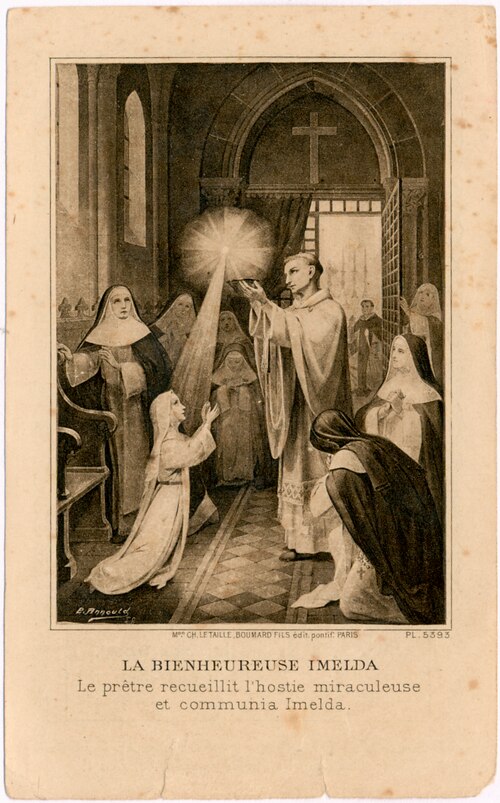
Source file copied unchanged by Saints and Science. Displayed copy is Wikimedia Commons’ upstream proportional thumbnail resize. Corpus Files downloaded it without additional crop, retouching, compositing, AI alteration or intentional color adjustment.
Web delivery: Saints and Science created proportionately resized WebP delivery copies at quality 82, or 80–76 where needed to keep the file smaller, for faster loading. The complete composition is retained, with no crop, enlargement, retouching, color adjustment, compositing, or AI alteration. Source ICC, EXIF, and XMP metadata are retained where available. Large ICC color profiles are color-managed into compact standard sRGB to preserve intended displayed colors without carrying oversized profiles; EXIF orientation is applied only if required for the original display orientation. The reviewed original remains available unchanged. Each copy retains the source image license and attribution.
Saint Isidore the Laborer
Anonymous Cusco School, Saint Isidore the Farmer, eighteenth century; photograph by the Wikimedia contributor Dozenist.
Credit: Anonymous, Cusco School; photograph by Dozenist · CC BY 2.0 · Image file

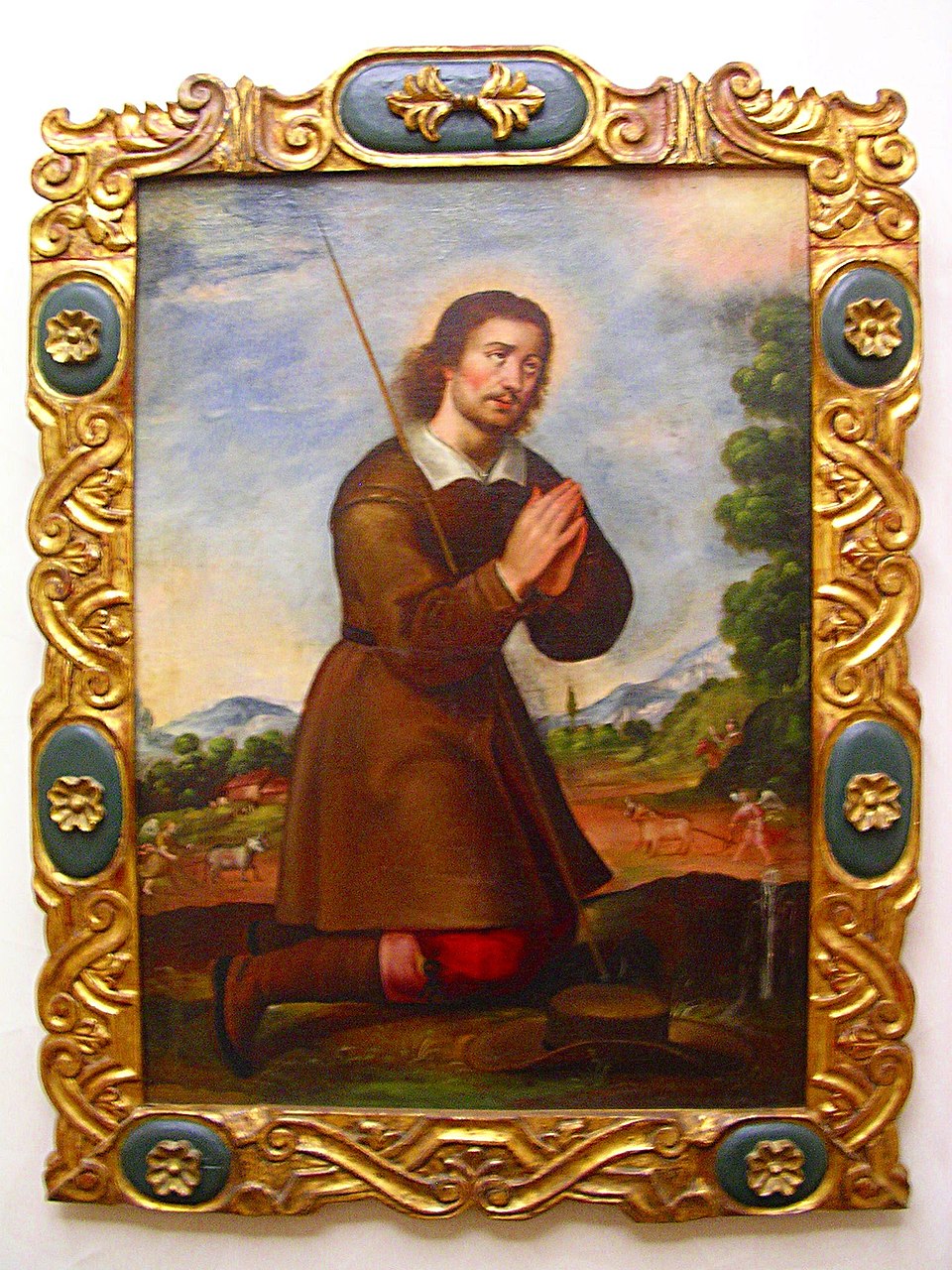
Source file copied unchanged by Saints and Science. The displayed copy is a resized and JPEG re-encoded derivative of Dozenist's photograph, near-pixel-identical to the current Commons 960-pixel rendition.
Web delivery: Saints and Science created proportionately resized WebP delivery copies at quality 82, or 80–76 where needed to keep the file smaller, for faster loading. The complete composition is retained, with no crop, enlargement, retouching, color adjustment, compositing, or AI alteration. Source ICC, EXIF, and XMP metadata are retained where available. Large ICC color profiles are color-managed into compact standard sRGB to preserve intended displayed colors without carrying oversized profiles; EXIF orientation is applied only if required for the original display orientation. The reviewed original remains available unchanged. Each copy retains the source image license and attribution.
Saint James of the Marches
James of the Marches, painted by Francisco de Zurbarán.
Credit: Francisco de Zurbarán · Public domain · Image file

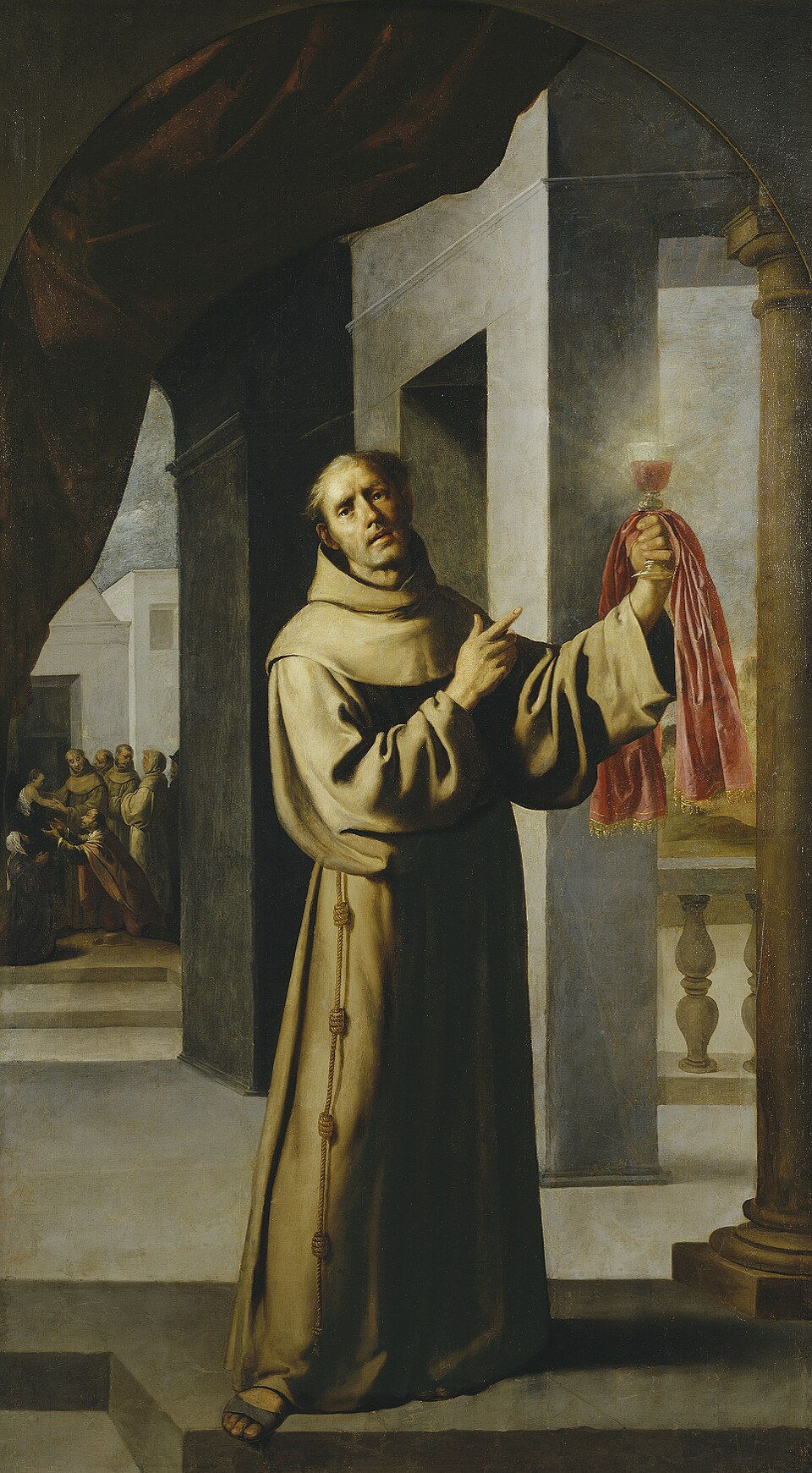
Source file copied unchanged by Saints and Science. The displayed copy was resized from the Commons source.
Web delivery: Saints and Science created proportionately resized WebP delivery copies at quality 82, or 80–76 where needed to keep the file smaller, for faster loading. The complete composition is retained, with no crop, enlargement, retouching, color adjustment, compositing, or AI alteration. Source ICC, EXIF, and XMP metadata are retained where available. Large ICC color profiles are color-managed into compact standard sRGB to preserve intended displayed colors without carrying oversized profiles; EXIF orientation is applied only if required for the original display orientation. The reviewed original remains available unchanged. Each copy retains the source image license and attribution.
Saint Jeanne de Lestonnac
An eighteenth-century devotional portrait of Jeanne de Lestonnac from the Order of the Company of Mary.
Credit: Unidentified artist · Public domain · Image file

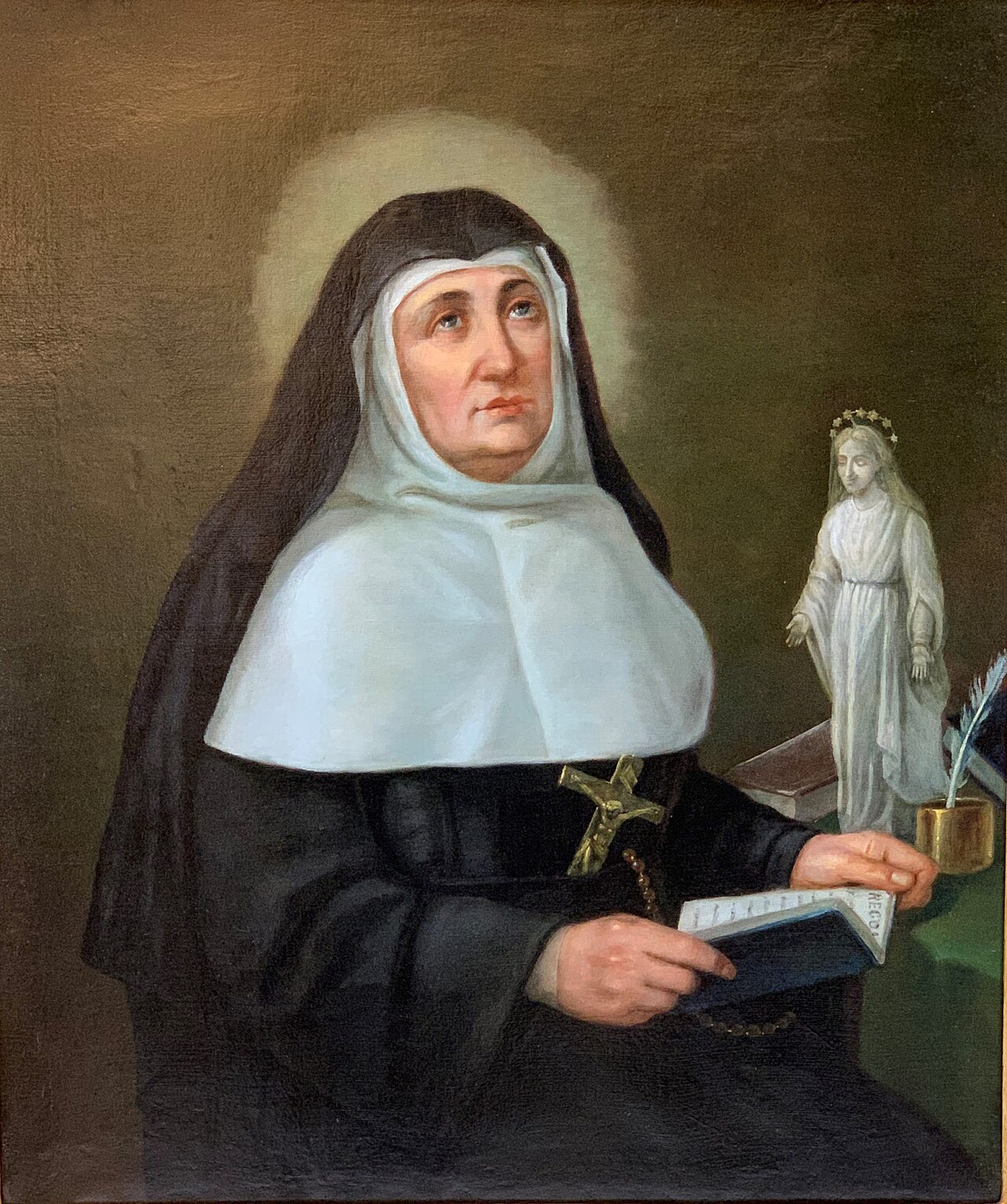
Source file copied unchanged by Saints and Science. Displayed copy is Wikimedia Commons’ upstream proportional thumbnail resize. Corpus Files downloaded it without additional crop, retouching, compositing, AI alteration or intentional color adjustment.
Web delivery: Saints and Science created proportionately resized WebP delivery copies at quality 82, or 80–76 where needed to keep the file smaller, for faster loading. The complete composition is retained, with no crop, enlargement, retouching, color adjustment, compositing, or AI alteration. Source ICC, EXIF, and XMP metadata are retained where available. Large ICC color profiles are color-managed into compact standard sRGB to preserve intended displayed colors without carrying oversized profiles; EXIF orientation is applied only if required for the original display orientation. The reviewed original remains available unchanged. Each copy retains the source image license and attribution.
Saint Joaquina Vedruna de Mas
Joaquina de Vedruna in Francesc Morell i Cornet's 1903 painted portrait, which the source record says was based on a retouched photograph.
Credit: Francesc Morell i Cornet · Public Domain Mark 1.0 · Image file

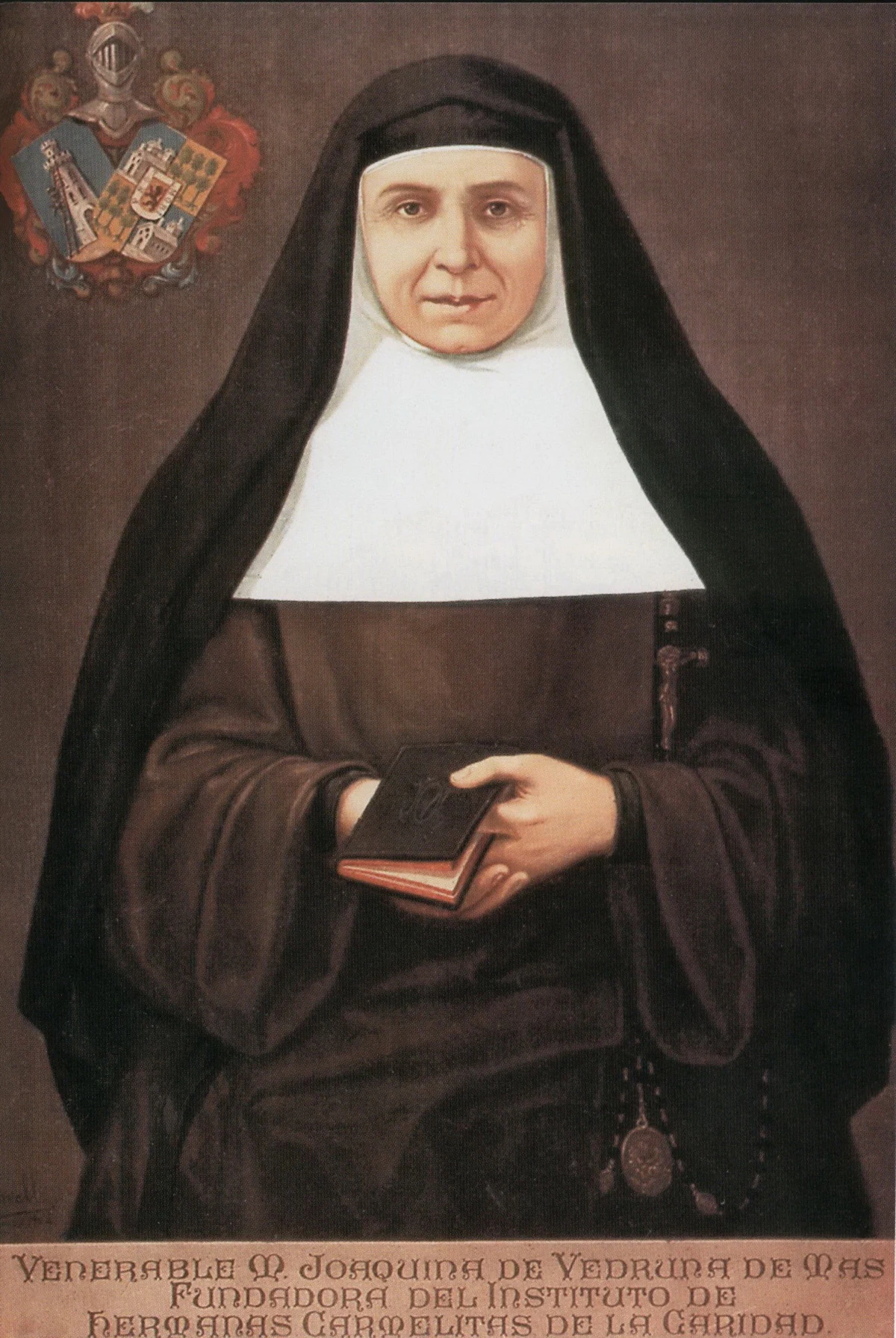
Source file copied unchanged by Saints and Science. The source description says the painting was based on a retouched original photograph, and embedded metadata records ACD Systems scan processing; the exact earlier retouching is not documented. Corpus Files proportionally resized the 1484 × 2215 Wikimedia Commons scan source to 1206 × 1800 pixels and JPEG re-encoded it at quality 86 with macOS sips for web delivery. No crop, manual rotation, retouching, compositing, content alteration, or AI alteration was made; metadata may have been normalized by re-encoding. The underlying 1903 painting and its faithful reproduction are marked public domain; no attribution or ShareAlike condition applies.
Web delivery: Saints and Science created proportionately resized WebP delivery copies at quality 82, or 80–76 where needed to keep the file smaller, for faster loading. The complete composition is retained, with no crop, enlargement, retouching, color adjustment, compositing, or AI alteration. Source ICC, EXIF, and XMP metadata are retained where available. Large ICC color profiles are color-managed into compact standard sRGB to preserve intended displayed colors without carrying oversized profiles; EXIF orientation is applied only if required for the original display orientation. The reviewed original remains available unchanged. Each copy retains the source image license and attribution.
Saint John Bosco
John Bosco in a portrait reproduced in The Venerable Don Bosco, published in Philadelphia in 1916.
Credit: Portrait photographer unrecorded; reproduced in M. S. Pine, The Venerable Don Bosco (1916) · Public domain (US publication, 1916) · Image file

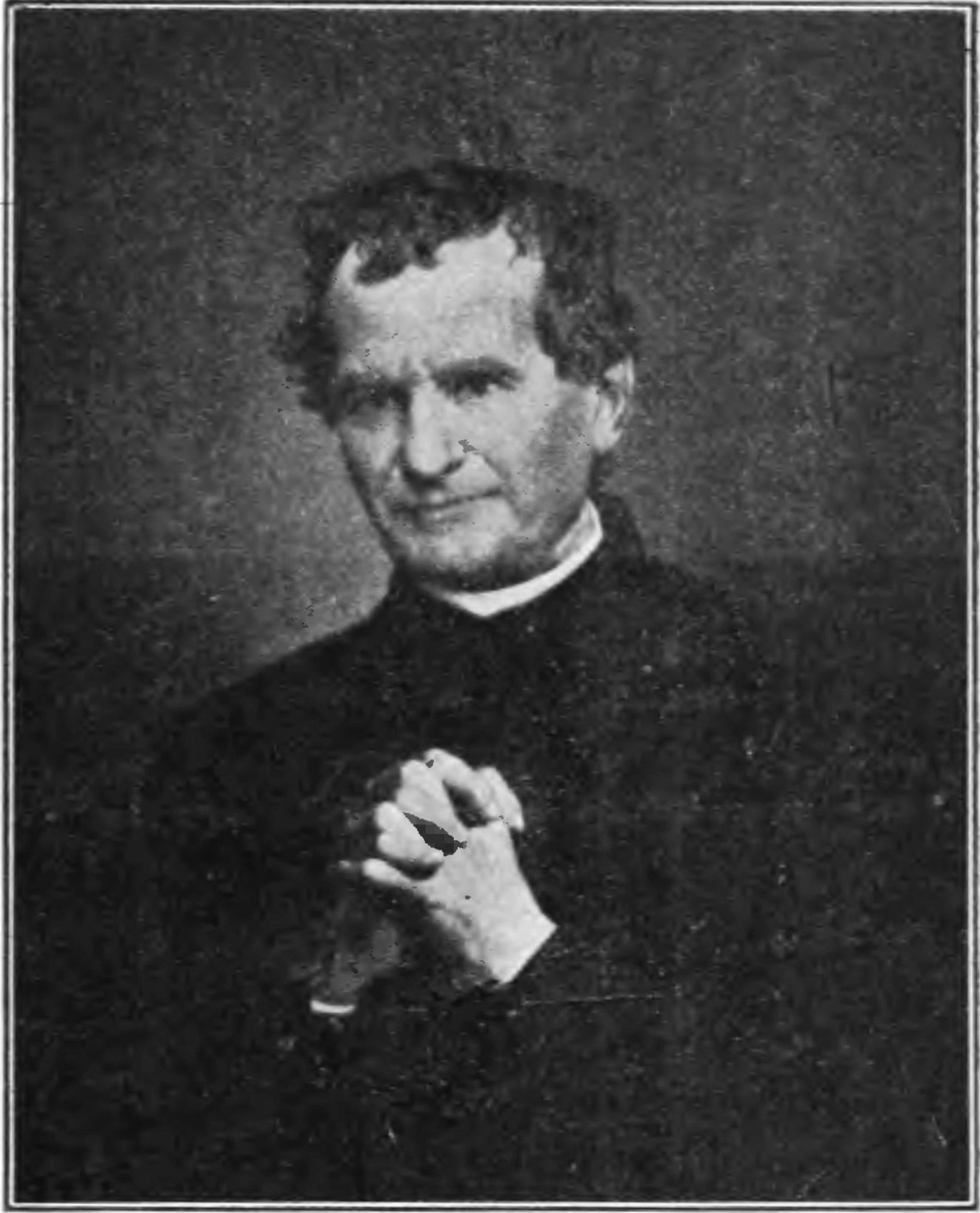
Source file copied unchanged by Saints and Science. Historical book image extracted upstream and served unchanged from Commons. No local edits or cropping.
Web delivery: Saints and Science created proportionately resized WebP delivery copies at quality 82, or 80–76 where needed to keep the file smaller, for faster loading. The complete composition is retained, with no crop, enlargement, retouching, color adjustment, compositing, or AI alteration. Source ICC, EXIF, and XMP metadata are retained where available. Large ICC color profiles are color-managed into compact standard sRGB to preserve intended displayed colors without carrying oversized profiles; EXIF orientation is applied only if required for the original display orientation. The reviewed original remains available unchanged. Each copy retains the source image license and attribution.
Saint John Neumann
John Neumann’s conserved relic display in Philadelphia, photographed in January 2007. The face is a wax mask; this predates the change of vestments recorded in December 2007.
Credit: Original uploader was Dgf32 at en.wikipedia · CC BY-SA 3.0 · Image file

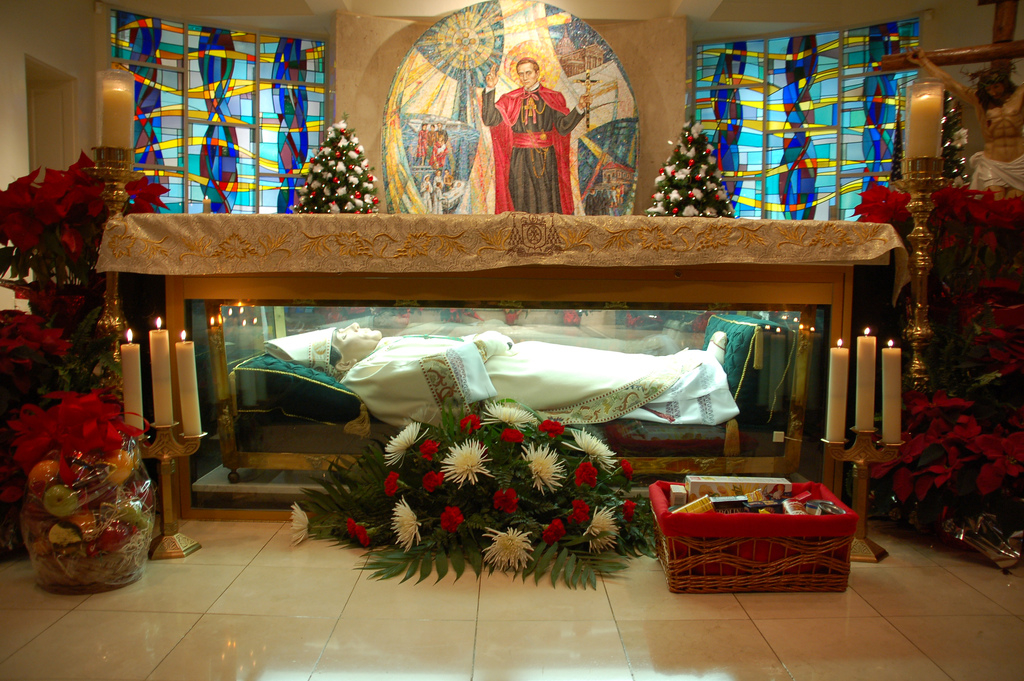
Source file copied unchanged by Saints and Science. Saved the Commons proportional web-size derivative where available; original bytes used when smaller. No local crop, retouching, compositing, AI alteration, or intentional color correction.
Web delivery: Saints and Science created proportionately resized WebP delivery copies at quality 82, or 80–76 where needed to keep the file smaller, for faster loading. The complete composition is retained, with no crop, enlargement, retouching, color adjustment, compositing, or AI alteration. Source ICC, EXIF, and XMP metadata are retained where available. Large ICC color profiles are color-managed into compact standard sRGB to preserve intended displayed colors without carrying oversized profiles; EXIF orientation is applied only if required for the original display orientation. The reviewed original remains available unchanged. Each copy retains the source image license and attribution.
Saint John of the Cross
John of the Cross, 1656, traditionally attributed to Francisco de Zurbarán; attribution is uncertain.
Credit: Artist unknown; traditionally attributed to Zurbarán · Public domain · Image file

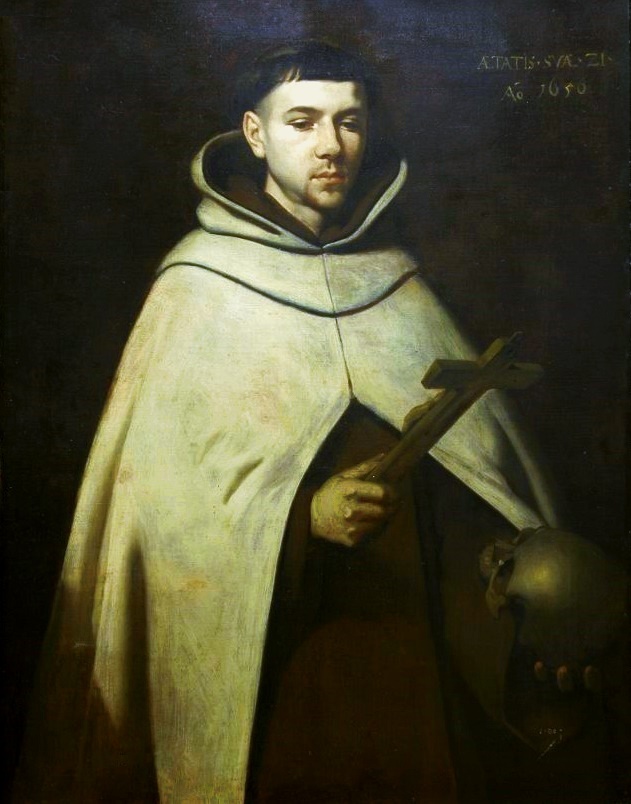
Source file copied unchanged by Saints and Science. Exact Wikimedia Commons original bytes; Corpus Files made no crop, resize, recompression, retouching, or content alteration.
Web delivery: Saints and Science created proportionately resized WebP delivery copies at quality 82, or 80–76 where needed to keep the file smaller, for faster loading. The complete composition is retained, with no crop, enlargement, retouching, color adjustment, compositing, or AI alteration. Source ICC, EXIF, and XMP metadata are retained where available. Large ICC color profiles are color-managed into compact standard sRGB to preserve intended displayed colors without carrying oversized profiles; EXIF orientation is applied only if required for the original display orientation. The reviewed original remains available unchanged. Each copy retains the source image license and attribution.
Saint John Southworth
John Southworth’s vested reliquary display in Westminster Cathedral. The visible metallic face covering and vested form should not be read as an untreated intact body.
Credit: Ethan Doyle White · CC BY-SA 4.0 · Image file

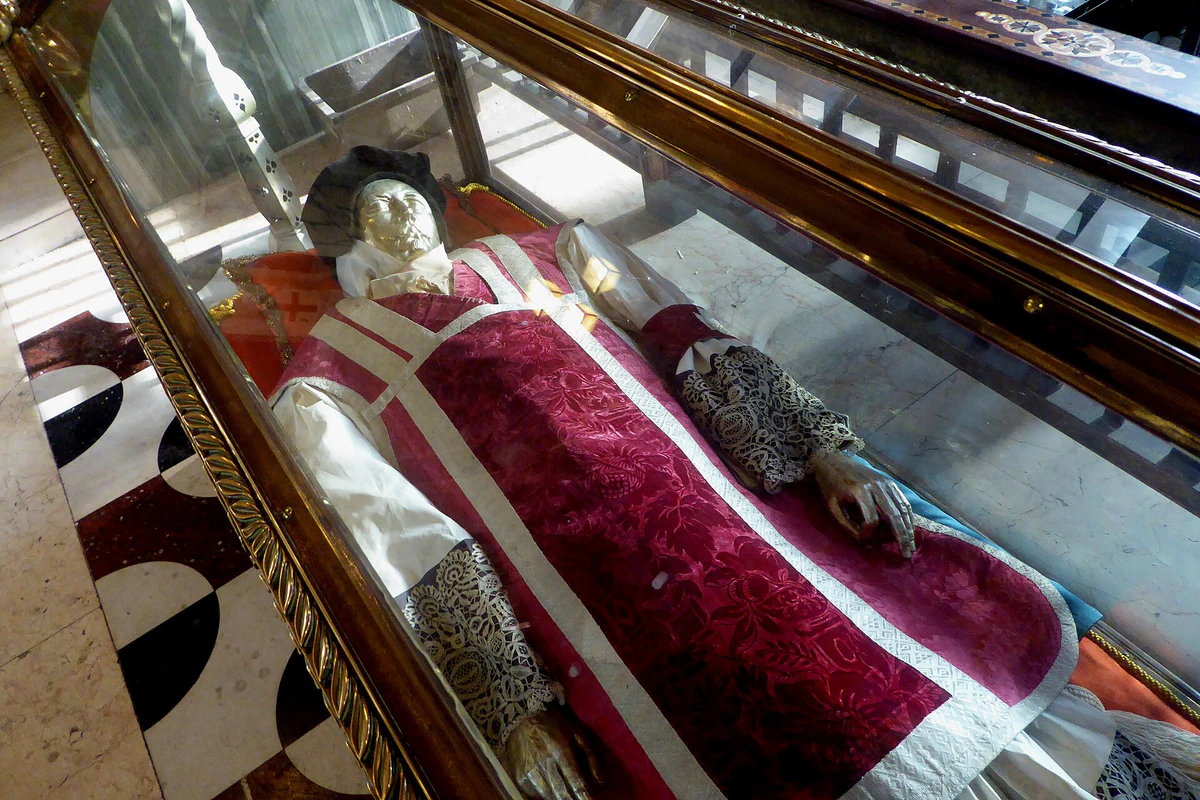
Source file copied unchanged by Saints and Science. Wikimedia Commons generated this 1920 × 1280 pixel resize from the source photograph; no further changes were made for this site.
Web delivery: Saints and Science created proportionately resized WebP delivery copies at quality 82, or 80–76 where needed to keep the file smaller, for faster loading. The complete composition is retained, with no crop, enlargement, retouching, color adjustment, compositing, or AI alteration. Source ICC, EXIF, and XMP metadata are retained where available. Large ICC color profiles are color-managed into compact standard sRGB to preserve intended displayed colors without carrying oversized profiles; EXIF orientation is applied only if required for the original display orientation. The reviewed original remains available unchanged. Each copy retains the source image license and attribution.
Saint John Vianney
John Vianney’s vested reliquary display at Ars-sur-Formans, photographed in 2005. The visible face, hands and clothing are not a measurement of untreated tissue.
Credit: Herwig Reidlinger · CC BY-SA 3.0 · Image file

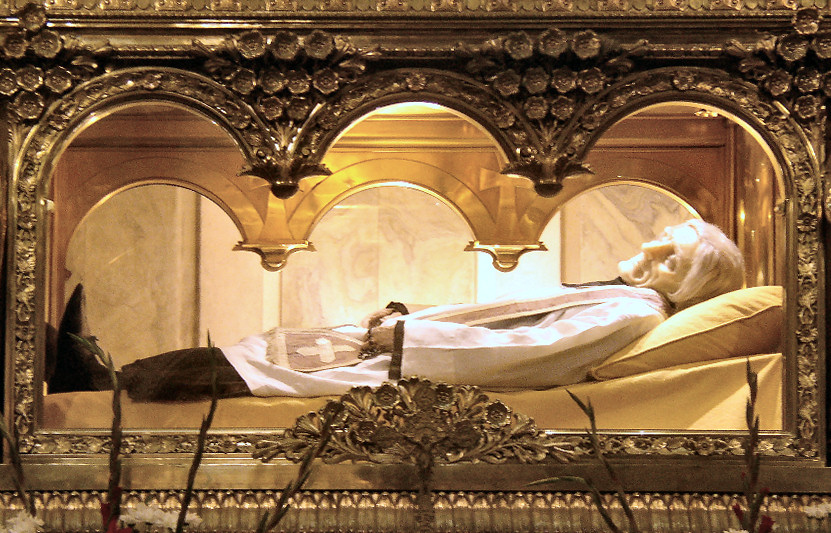
Source file copied unchanged by Saints and Science. Saved the Commons proportional web-size derivative where available; original bytes used when smaller. No local crop, retouching, compositing, AI alteration, or intentional color correction.
Web delivery: Saints and Science created proportionately resized WebP delivery copies at quality 82, or 80–76 where needed to keep the file smaller, for faster loading. The complete composition is retained, with no crop, enlargement, retouching, color adjustment, compositing, or AI alteration. Source ICC, EXIF, and XMP metadata are retained where available. Large ICC color profiles are color-managed into compact standard sRGB to preserve intended displayed colors without carrying oversized profiles; EXIF orientation is applied only if required for the original display orientation. The reviewed original remains available unchanged. Each copy retains the source image license and attribution.
Saint John XXIII
Pope John XXIII in an archival portrait from his pontificate, 1958–1963.
Credit: Unknown photographer / Anefo; Nationaal Archief and Spaarnestad Photo · CC0 1.0 · Image file

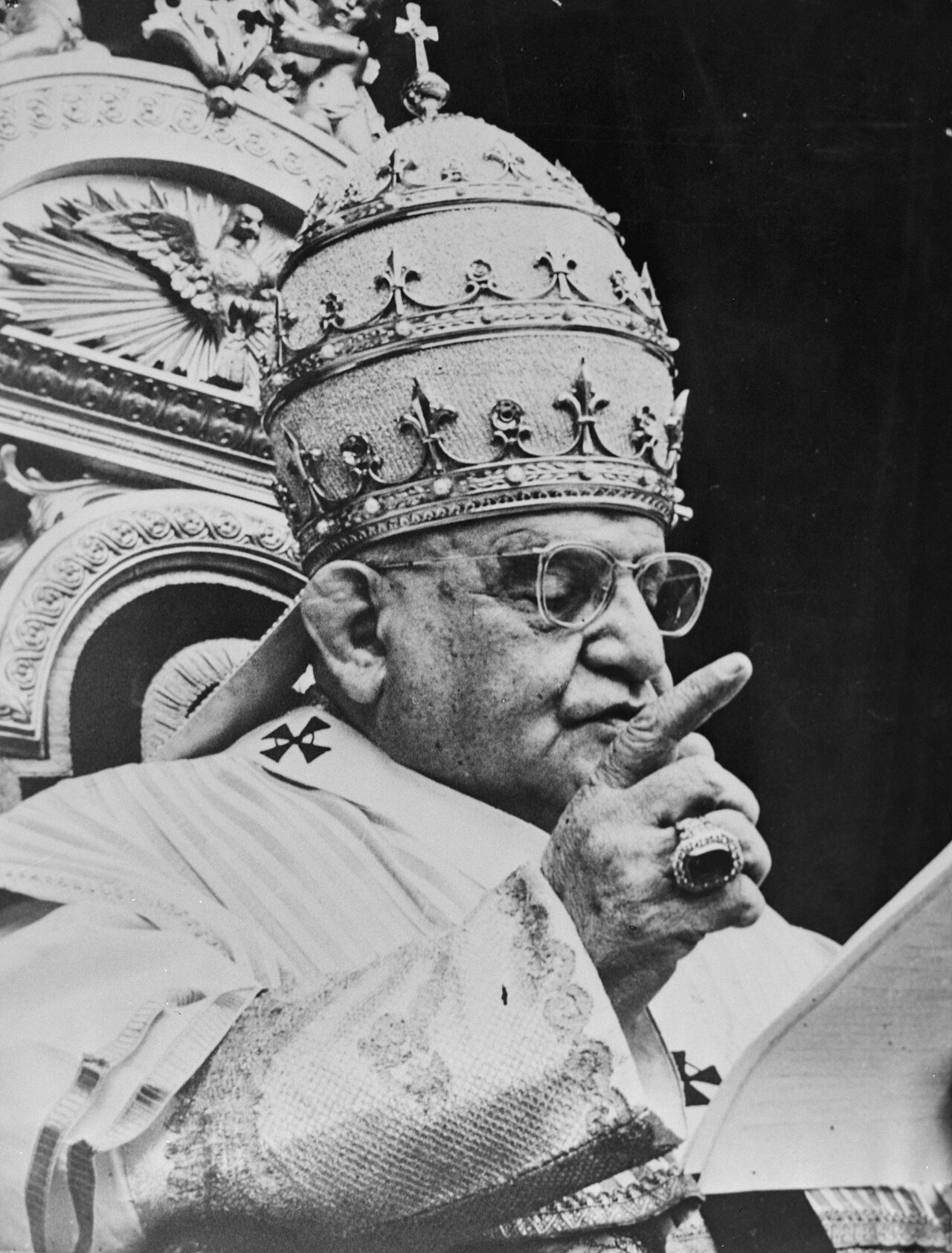
Source file copied unchanged by Saints and Science. The selected Commons source was already cropped upstream. Its crop is retained; only the source-provided proportional display-size copy is used, with no local edits.
Web delivery: Saints and Science created proportionately resized WebP delivery copies at quality 82, or 80–76 where needed to keep the file smaller, for faster loading. The complete composition is retained, with no crop, enlargement, retouching, color adjustment, compositing, or AI alteration. Source ICC, EXIF, and XMP metadata are retained where available. Large ICC color profiles are color-managed into compact standard sRGB to preserve intended displayed colors without carrying oversized profiles; EXIF orientation is applied only if required for the original display orientation. The reviewed original remains available unchanged. Each copy retains the source image license and attribution.
Saint Josaphat Kuntsevych
The Basilica of Saint Josaphat in Milwaukee, viewed from the northeast in 1969. The parish and church were named for Saint Josaphat Kuntsevych, also known as John Kuncevic.
Credit: Jack E. Boucher, Historic American Buildings Survey · Public domain (U.S. Government / HABS) · Image file
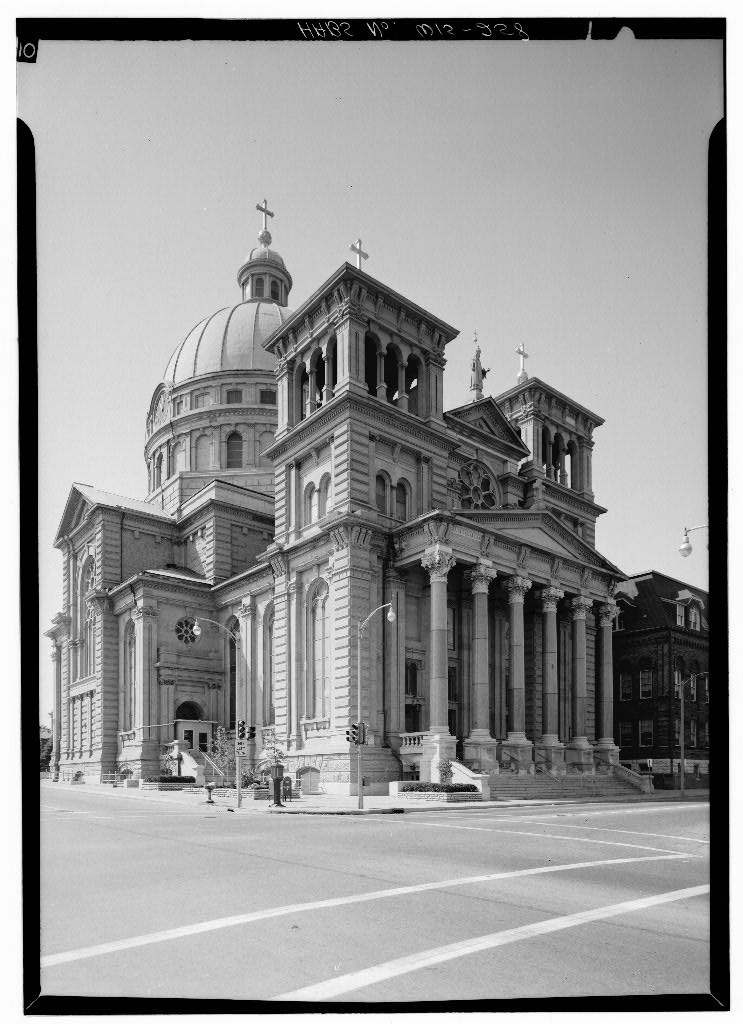
Source file copied unchanged by Saints and Science. Exact 743×1024 Library of Congress higher-resolution service JPEG retained byte-for-byte. LOC digitized the original large-format negative, produced a 3629×5000, 700-dpi grayscale TIFF master, and generated this proportional 1024-pixel JFIF service derivative at approximately 8:1 compression; the original negative border and edge notation remain visible. Corpus Files made no crop, rotation, tonal adjustment, retouching, metadata change, recompression, compositing, or AI alteration.
Web delivery: Saints and Science created proportionately resized WebP delivery copies at quality 82, or 80–76 where needed to keep the file smaller, for faster loading. The complete composition is retained, with no crop, enlargement, retouching, color adjustment, compositing, or AI alteration. Source ICC, EXIF, and XMP metadata are retained where available. Large ICC color profiles are color-managed into compact standard sRGB to preserve intended displayed colors without carrying oversized profiles; EXIF orientation is applied only if required for the original display orientation. The reviewed original remains available unchanged. Each copy retains the source image license and attribution.
Saint Julie Billiart
Portrait of Julie Billiart, circa 1830.
Credit: Unknown artist · Public Domain Mark 1.0 · Image file

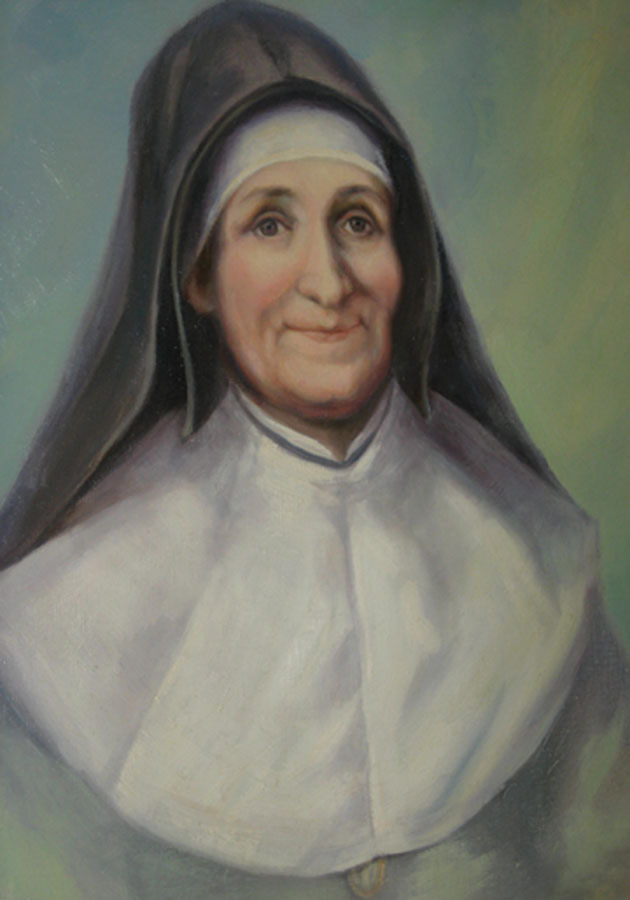
Source file copied unchanged by Saints and Science. Exact Wikimedia Commons original bytes; Corpus Files made no crop, resize, recompression, retouching, or content alteration.
Web delivery: Saints and Science created proportionately resized WebP delivery copies at quality 82, or 80–76 where needed to keep the file smaller, for faster loading. The complete composition is retained, with no crop, enlargement, retouching, color adjustment, compositing, or AI alteration. Source ICC, EXIF, and XMP metadata are retained where available. Large ICC color profiles are color-managed into compact standard sRGB to preserve intended displayed colors without carrying oversized profiles; EXIF orientation is applied only if required for the original display orientation. The reviewed original remains available unchanged. Each copy retains the source image license and attribution.
Saint Kateri Tekakwitha
Claude Chauchetière's posthumous painted portrait of Kateri Tekakwitha. It supplies historical person context and does not depict the relic attributed to her at Midland.
Credit: Claude Chauchetière, S.J. · Public domain · Image file

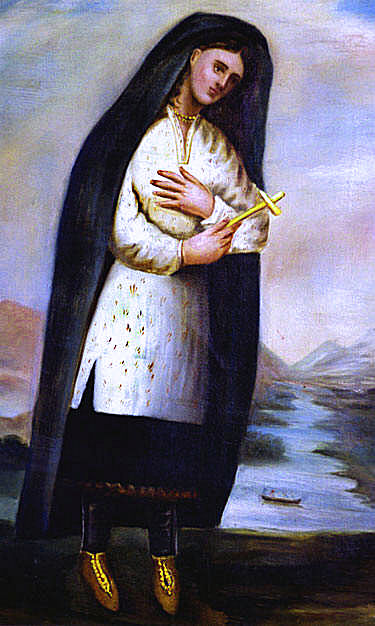
Source file copied unchanged by Saints and Science. Exact 375×626 Commons JPEG retained byte-for-byte and not upscaled; Corpus Files made no crop, resize, recompression, cleanup, retouching, compositing, or AI alteration. Voluntary creator and source credit retained.
Web delivery: Saints and Science created proportionately resized WebP delivery copies at quality 82, or 80–76 where needed to keep the file smaller, for faster loading. The complete composition is retained, with no crop, enlargement, retouching, color adjustment, compositing, or AI alteration. Source ICC, EXIF, and XMP metadata are retained where available. Large ICC color profiles are color-managed into compact standard sRGB to preserve intended displayed colors without carrying oversized profiles; EXIF orientation is applied only if required for the original display orientation. The reviewed original remains available unchanged. Each copy retains the source image license and attribution.
Saint Leonardo Murialdo
Saint-Sulpice in Paris. Murialdo spent 1865–1866 studying at the Saint-Sulpice seminary.
Credit: Ibex73 · CC BY-SA 4.0 · Image file

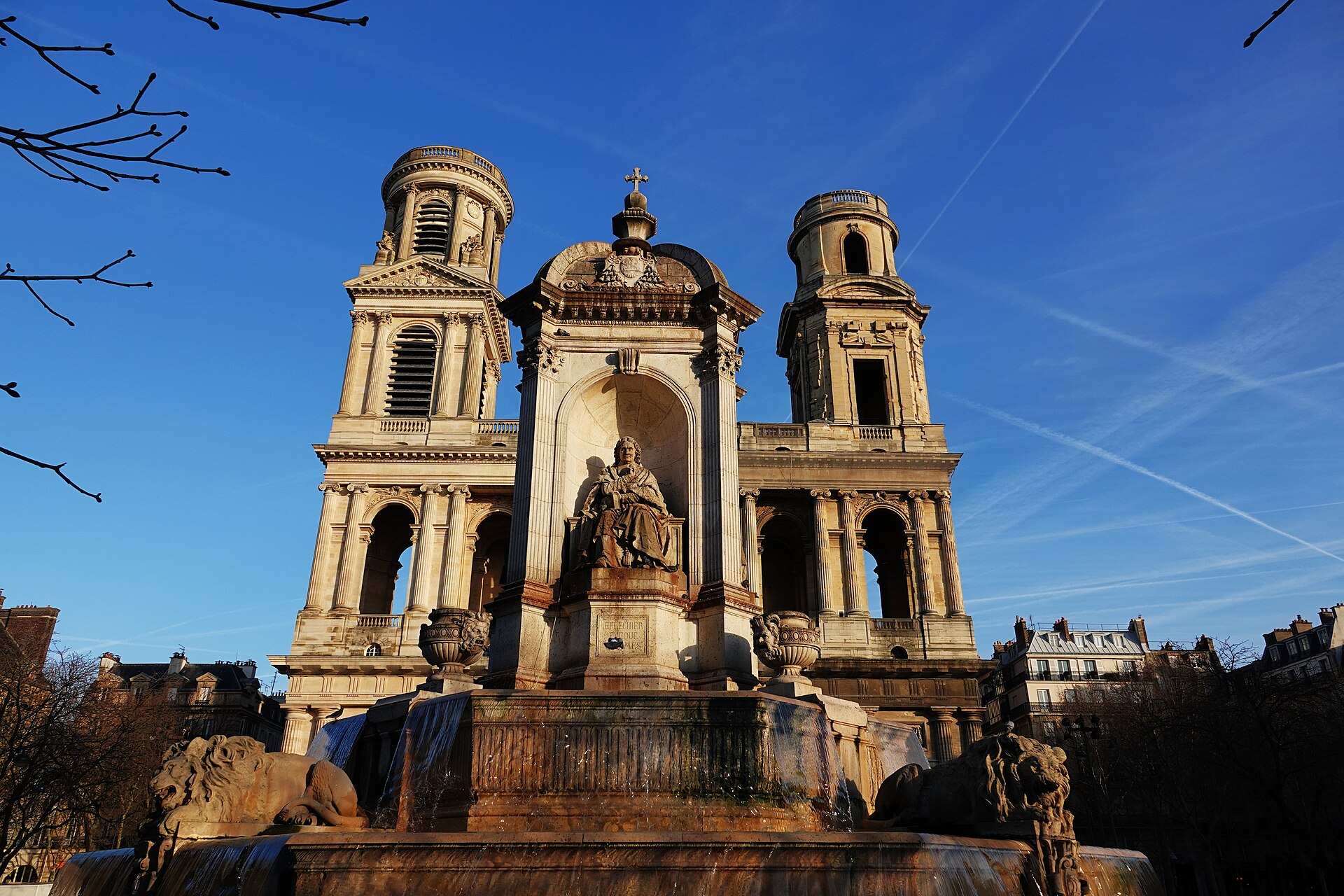
Source file copied unchanged by Saints and Science. Exact source image bytes retained. Wikimedia supplies this proportional display-size copy; no local cropping, retouching, compositing, or recompression.
Web delivery: Saints and Science created proportionately resized WebP delivery copies at quality 82, or 80–76 where needed to keep the file smaller, for faster loading. The complete composition is retained, with no crop, enlargement, retouching, color adjustment, compositing, or AI alteration. Source ICC, EXIF, and XMP metadata are retained where available. Large ICC color profiles are color-managed into compact standard sRGB to preserve intended displayed colors without carrying oversized profiles; EXIF orientation is applied only if required for the original display orientation. The reviewed original remains available unchanged. Each copy retains the source image license and attribution.
Saint Louis Bertrand
Louis Bertrand, painted by Francisco de Zurbarán circa 1640.
Credit: Francisco de Zurbarán · Public Domain Mark 1.0 · Image file

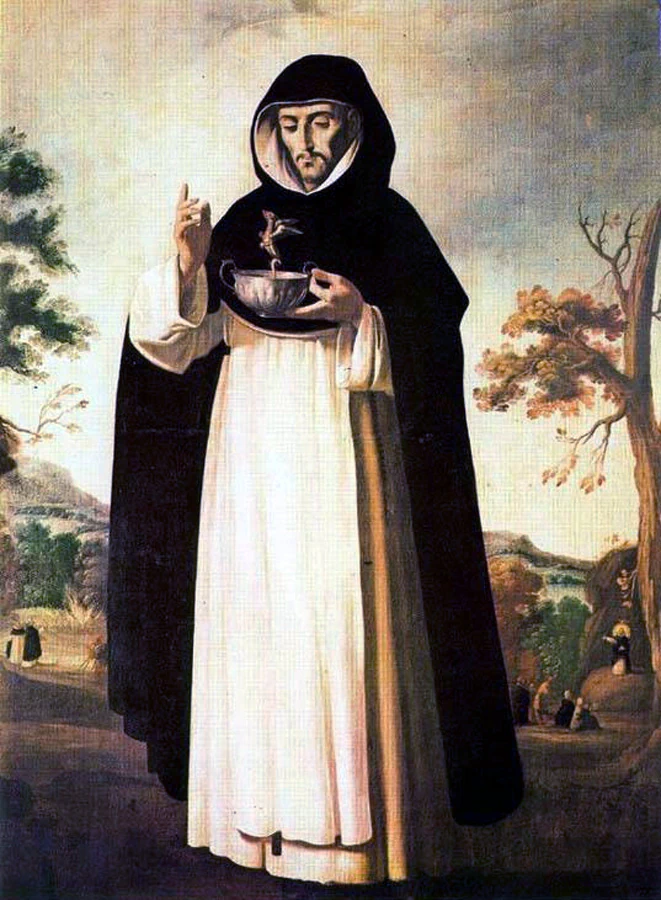
Source file copied unchanged by Saints and Science. Exact Wikimedia Commons original bytes; Corpus Files made no crop, resize, recompression, retouching, or content alteration.
Web delivery: Saints and Science created proportionately resized WebP delivery copies at quality 82, or 80–76 where needed to keep the file smaller, for faster loading. The complete composition is retained, with no crop, enlargement, retouching, color adjustment, compositing, or AI alteration. Source ICC, EXIF, and XMP metadata are retained where available. Large ICC color profiles are color-managed into compact standard sRGB to preserve intended displayed colors without carrying oversized profiles; EXIF orientation is applied only if required for the original display orientation. The reviewed original remains available unchanged. Each copy retains the source image license and attribution.
Saint Lucy Filippini
Lucy Filippini in an anonymous nineteenth-century devotional portrait, holding a crucifix and an open book.
Credit: Unknown nineteenth-century devotional artist · Public domain · Image file

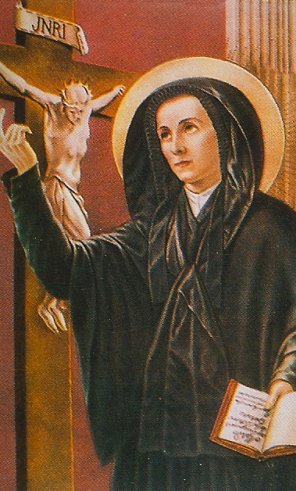
Source file copied unchanged by Saints and Science. Current original Commons JPEG copied unchanged; no local crop, retouching, recoloring, compositing, or AI alteration. Commons records an earlier border crop by another contributor.
Web delivery: Saints and Science created proportionately resized WebP delivery copies at quality 82, or 80–76 where needed to keep the file smaller, for faster loading. The complete composition is retained, with no crop, enlargement, retouching, color adjustment, compositing, or AI alteration. Source ICC, EXIF, and XMP metadata are retained where available. Large ICC color profiles are color-managed into compact standard sRGB to preserve intended displayed colors without carrying oversized profiles; EXIF orientation is applied only if required for the original display orientation. The reviewed original remains available unchanged. Each copy retains the source image license and attribution.
Saint Lucy of Syracuse
Francisco de Zurbarán, Saint Lucy, c. 1625–1630. Chester Dale Collection, National Gallery of Art, Washington, DC, 1943.7.11. A devotional painting, not a portrait from life or an image of relics.
Credit: Francisco de Zurbarán · CC0 · Image file

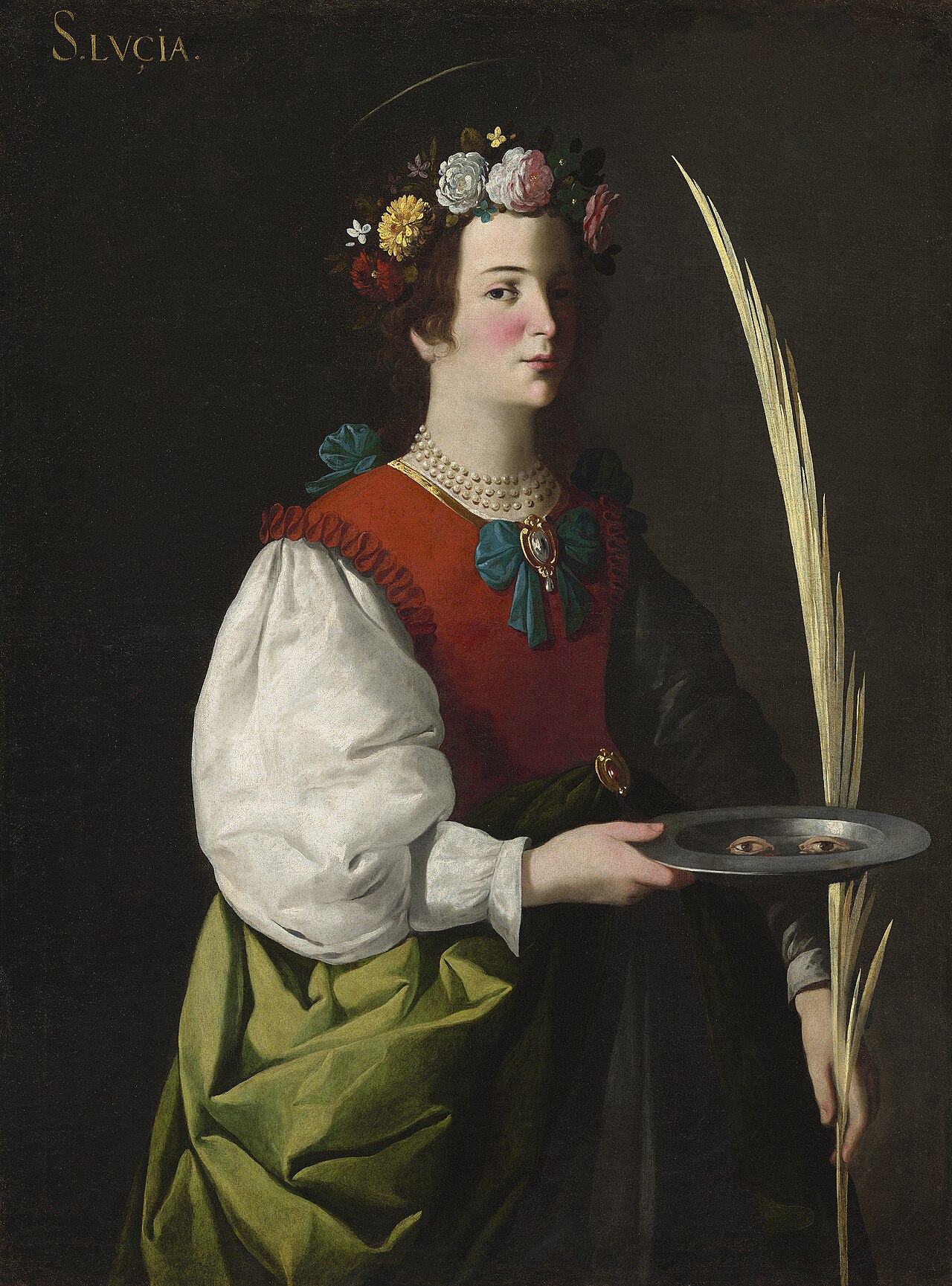
Source file copied unchanged by Saints and Science. Saved the Commons proportional web-size derivative where available; original bytes used when smaller. No local crop, retouching, compositing, AI alteration, or intentional color correction.
Web delivery: Saints and Science created proportionately resized WebP delivery copies at quality 82, or 80–76 where needed to keep the file smaller, for faster loading. The complete composition is retained, with no crop, enlargement, retouching, color adjustment, compositing, or AI alteration. Source ICC, EXIF, and XMP metadata are retained where available. Large ICC color profiles are color-managed into compact standard sRGB to preserve intended displayed colors without carrying oversized profiles; EXIF orientation is applied only if required for the original display orientation. The reviewed original remains available unchanged. Each copy retains the source image license and attribution.
Saint Luigi Orione
A mosaic portrait of Luigi Orione on the exterior of the Orionist Sisters’ care home in Koło, Poland.
Credit: Photograph: CudPotwórca; mosaic artist unrecorded · Photograph: public domain · Image file

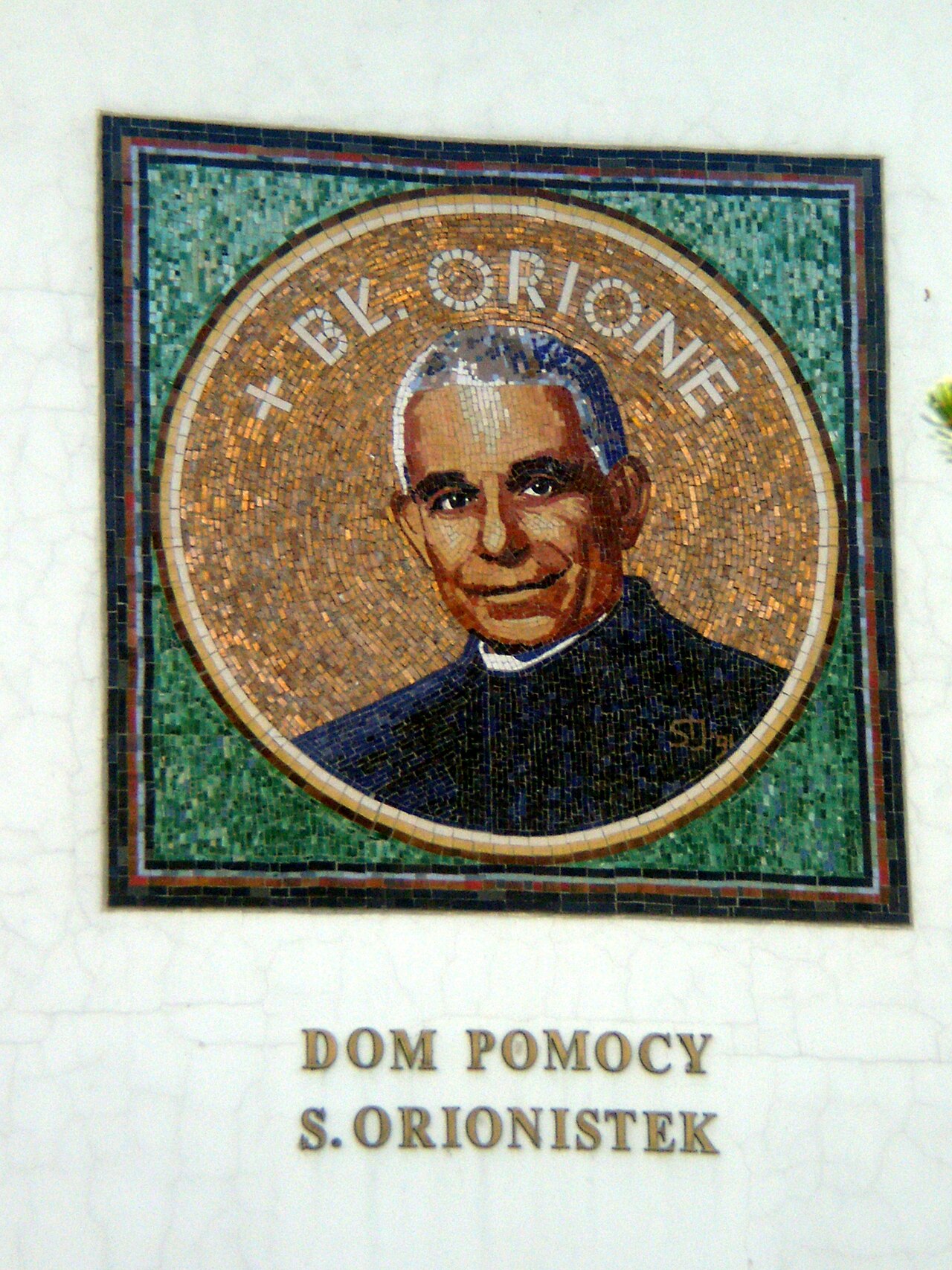
Source file copied unchanged by Saints and Science. Exact source image bytes retained. Wikimedia supplies this proportional display-size copy; no local cropping, retouching, compositing, or recompression.
Web delivery: Saints and Science created proportionately resized WebP delivery copies at quality 82, or 80–76 where needed to keep the file smaller, for faster loading. The complete composition is retained, with no crop, enlargement, retouching, color adjustment, compositing, or AI alteration. Source ICC, EXIF, and XMP metadata are retained where available. Large ICC color profiles are color-managed into compact standard sRGB to preserve intended displayed colors without carrying oversized profiles; EXIF orientation is applied only if required for the original display orientation. The reviewed original remains available unchanged. Each copy retains the source image license and attribution.
Saint Madeleine Sophie Barat
The reliquary identified as Madeleine Sophie Barat's in Saint-François-Xavier, Paris.
Credit: Guilhem Vellut from Paris, France · CC BY 2.0 · Image file

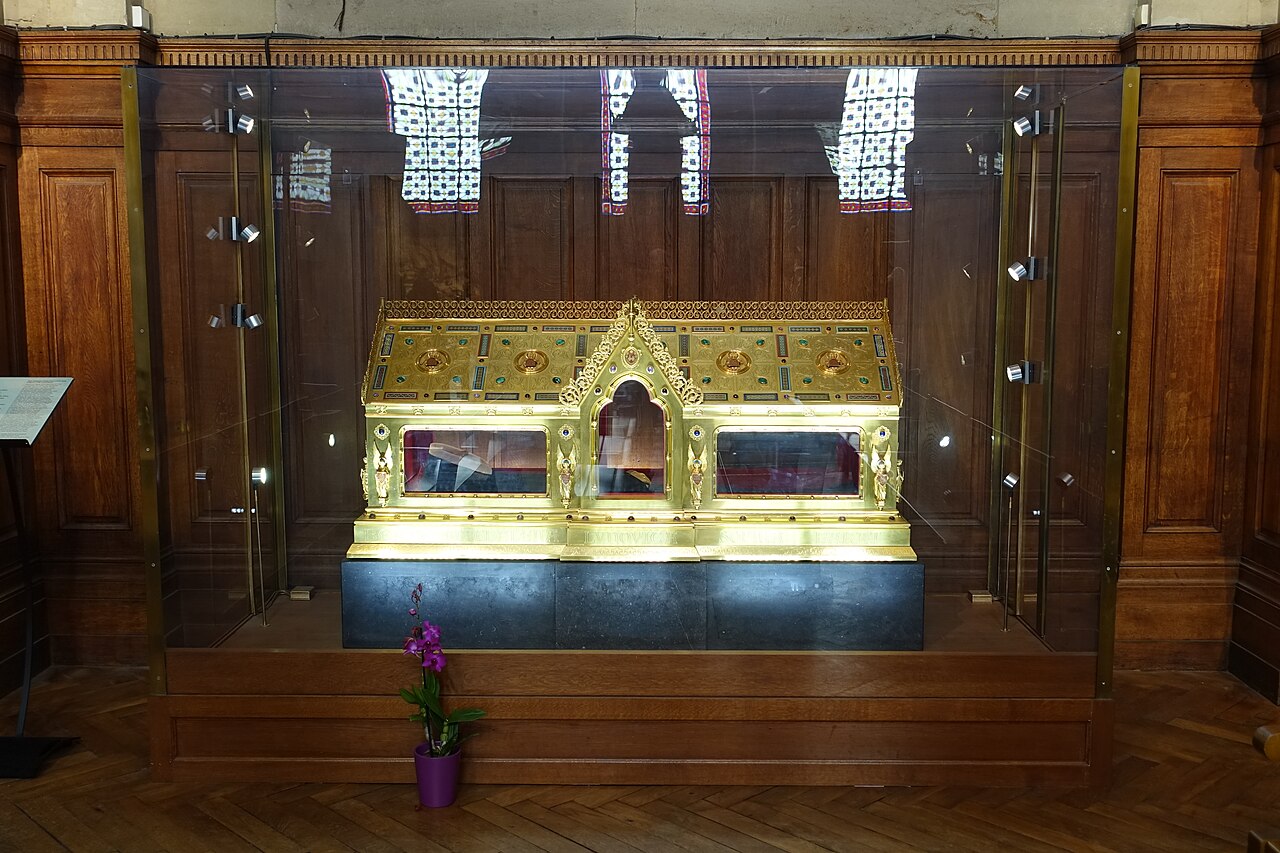
Source file copied unchanged by Saints and Science. Displayed copy is Wikimedia Commons’ upstream proportional thumbnail resize. Corpus Files downloaded it without additional crop, retouching, compositing, AI alteration or intentional color adjustment.
Web delivery: Saints and Science created proportionately resized WebP delivery copies at quality 82, or 80–76 where needed to keep the file smaller, for faster loading. The complete composition is retained, with no crop, enlargement, retouching, color adjustment, compositing, or AI alteration. Source ICC, EXIF, and XMP metadata are retained where available. Large ICC color profiles are color-managed into compact standard sRGB to preserve intended displayed colors without carrying oversized profiles; EXIF orientation is applied only if required for the original display orientation. The reviewed original remains available unchanged. Each copy retains the source image license and attribution.
Blessed Mafalda of Portugal
Mafalda of Portugal, Queen of Castile, in António de Holanda’s Genealogy of the Kings of Portugal (1530–1534).
Credit: António de Holanda · Public domain · Image file

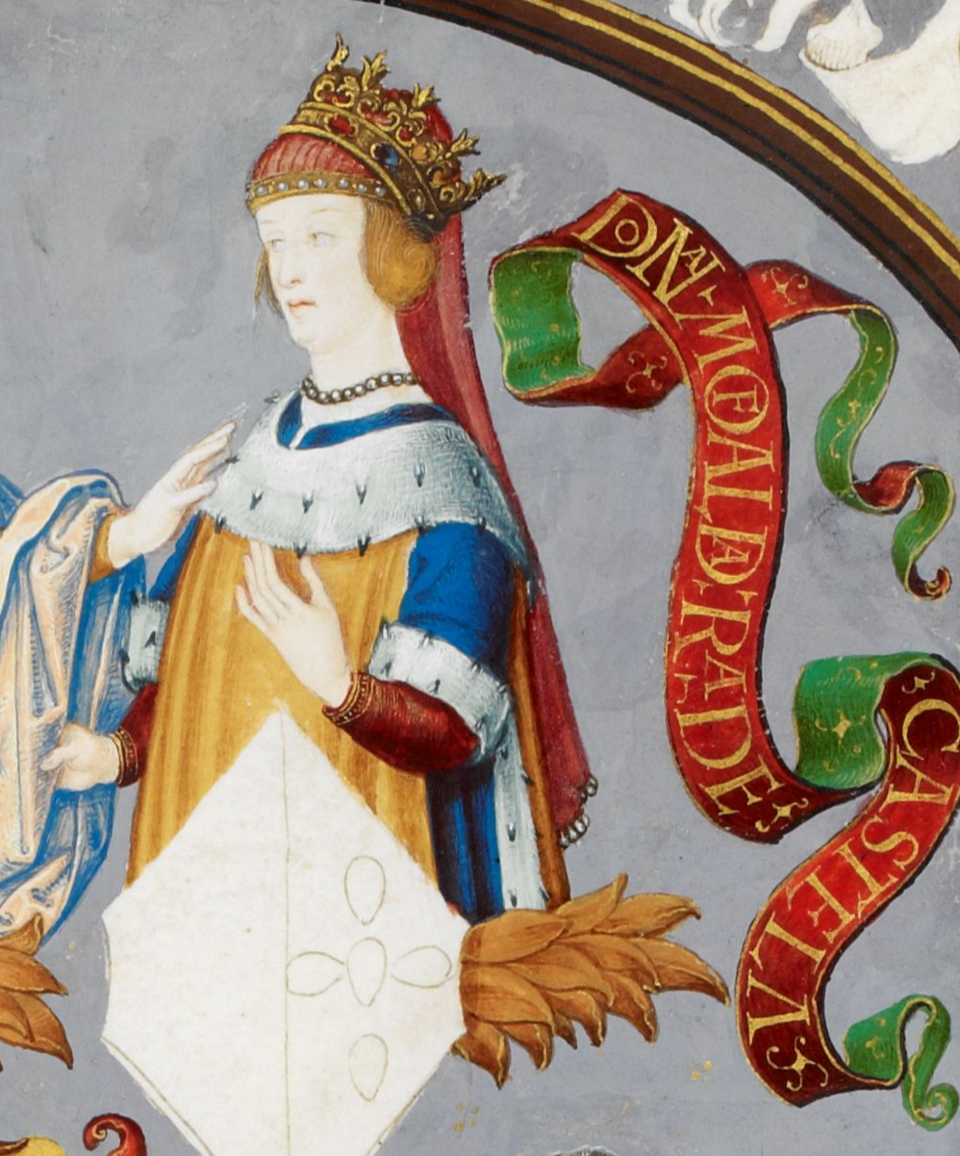
Source file copied unchanged by Saints and Science. The displayed copy is a 960 × 1156 resize of the 998 × 1202 source and differs from the current Commons 960-pixel derivative by at most one channel value.
Web delivery: Saints and Science created proportionately resized WebP delivery copies at quality 82, or 80–76 where needed to keep the file smaller, for faster loading. The complete composition is retained, with no crop, enlargement, retouching, color adjustment, compositing, or AI alteration. Source ICC, EXIF, and XMP metadata are retained where available. Large ICC color profiles are color-managed into compact standard sRGB to preserve intended displayed colors without carrying oversized profiles; EXIF orientation is applied only if required for the original display orientation. The reviewed original remains available unchanged. Each copy retains the source image license and attribution.
Saint Margaret Mary Alacoque
The reliquary identified as Margaret Mary Alacoque's in the Visitation chapel, Paray-le-Monial.
Credit: Benjamin Smith · CC BY-SA 4.0 · Image file

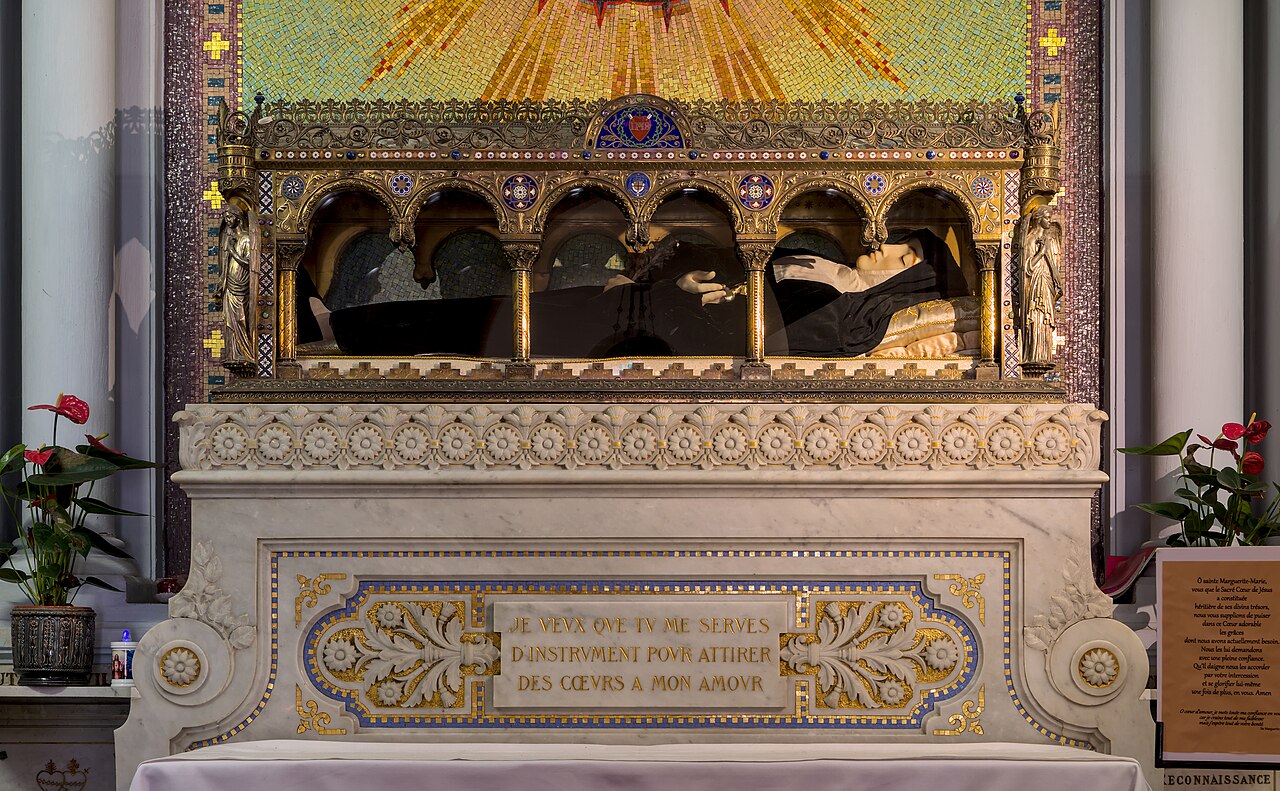
Source file copied unchanged by Saints and Science. Displayed copy is Wikimedia Commons’ upstream proportional thumbnail resize. Corpus Files downloaded it without additional crop, retouching, compositing, AI alteration or intentional color adjustment.
Web delivery: Saints and Science created proportionately resized WebP delivery copies at quality 82, or 80–76 where needed to keep the file smaller, for faster loading. The complete composition is retained, with no crop, enlargement, retouching, color adjustment, compositing, or AI alteration. Source ICC, EXIF, and XMP metadata are retained where available. Large ICC color profiles are color-managed into compact standard sRGB to preserve intended displayed colors without carrying oversized profiles; EXIF orientation is applied only if required for the original display orientation. The reviewed original remains available unchanged. Each copy retains the source image license and attribution.
Saint Margaret of Castello
Margaret of Castello in a devotional etching by J. and J. Klauber, from the Wellcome Collection in London.
Credit: J. and J. Klauber; Wellcome Collection · CC BY 4.0 · Image file

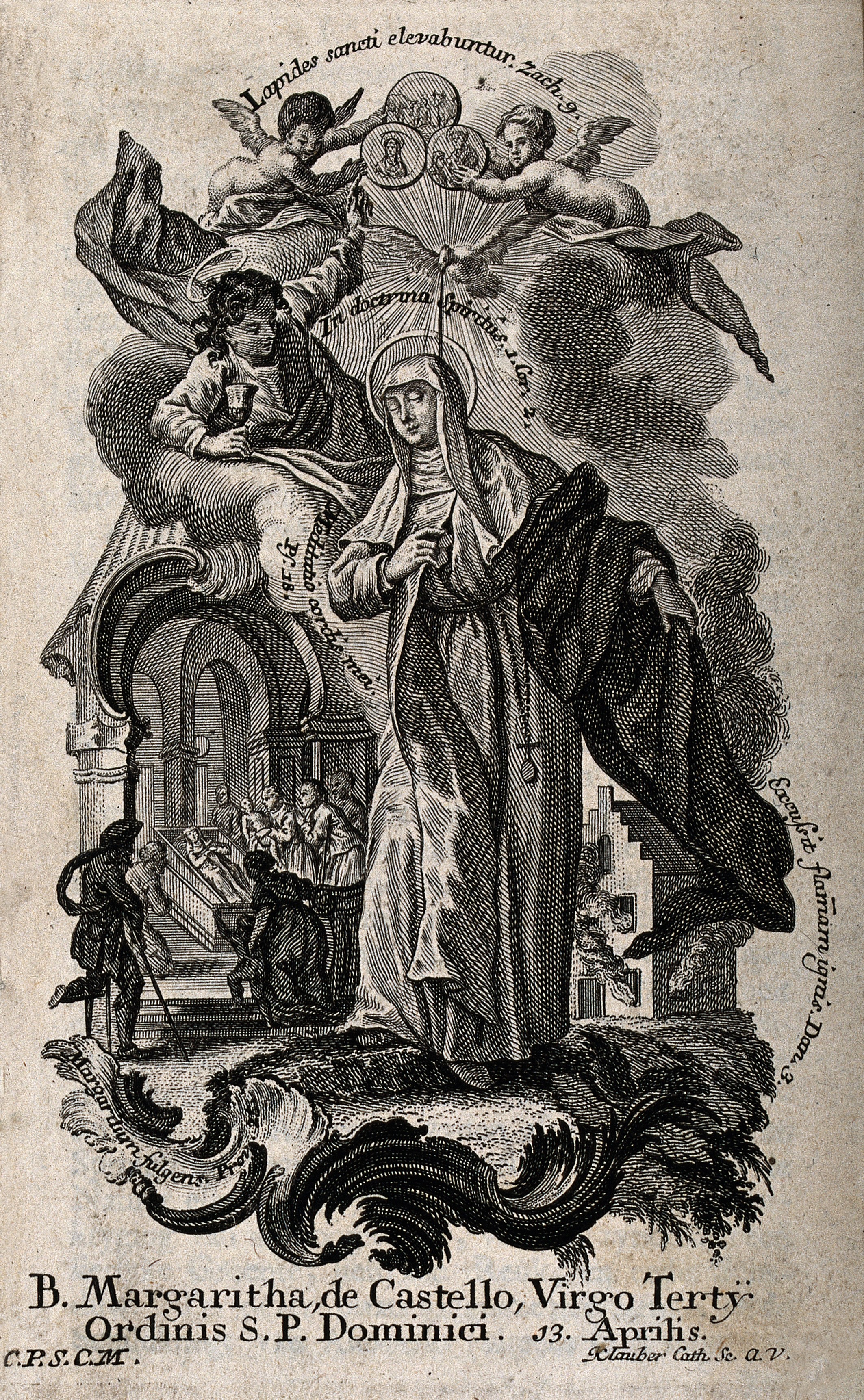
Source file copied unchanged by Saints and Science. Selected source image copied unchanged; no crop, retouching, recoloring, compositing, or AI alteration.
Web delivery: Saints and Science created proportionately resized WebP delivery copies at quality 82, or 80–76 where needed to keep the file smaller, for faster loading. The complete composition is retained, with no crop, enlargement, retouching, color adjustment, compositing, or AI alteration. Source ICC, EXIF, and XMP metadata are retained where available. Large ICC color profiles are color-managed into compact standard sRGB to preserve intended displayed colors without carrying oversized profiles; EXIF orientation is applied only if required for the original display orientation. The reviewed original remains available unchanged. Each copy retains the source image license and attribution.
Saint Margaret of Cortona
Gaspare Traversi’s Saint Margaret of Cortona, about 1758. The painting is held by The Metropolitan Museum of Art in New York.
Credit: Gaspare Traversi; The Metropolitan Museum of Art · The Met Open Access / CC0 1.0 · Image file
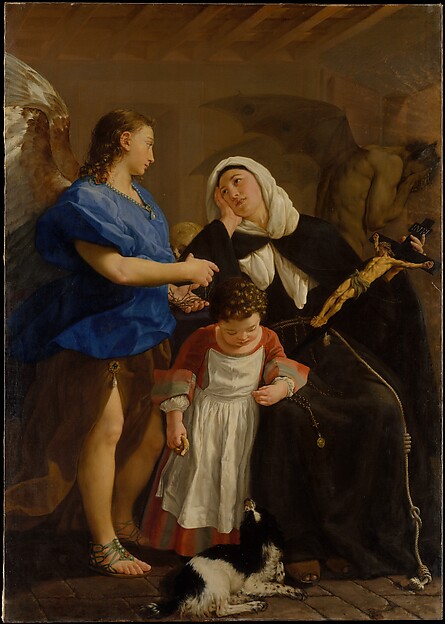
Source file copied unchanged by Saints and Science. The museum’s supplied web-large JPEG is copied unchanged. No crop, retouching, color correction, compositing or AI alteration by Saints and Science.
Web delivery: Saints and Science created proportionately resized WebP delivery copies at quality 82, or 80–76 where needed to keep the file smaller, for faster loading. The complete composition is retained, with no crop, enlargement, retouching, color adjustment, compositing, or AI alteration. Source ICC, EXIF, and XMP metadata are retained where available. Large ICC color profiles are color-managed into compact standard sRGB to preserve intended displayed colors without carrying oversized profiles; EXIF orientation is applied only if required for the original display orientation. The reviewed original remains available unchanged. Each copy retains the source image license and attribution.
Saint Maria Domenica Mazzarello
Maria Domenica Mazzarello in a portrait reproduced in The Venerable Don Bosco, published in Philadelphia in 1916.
Credit: Portrait photographer unrecorded; reproduced in M. S. Pine, The Venerable Don Bosco (1916) · Public domain (US publication, 1916) · Image file

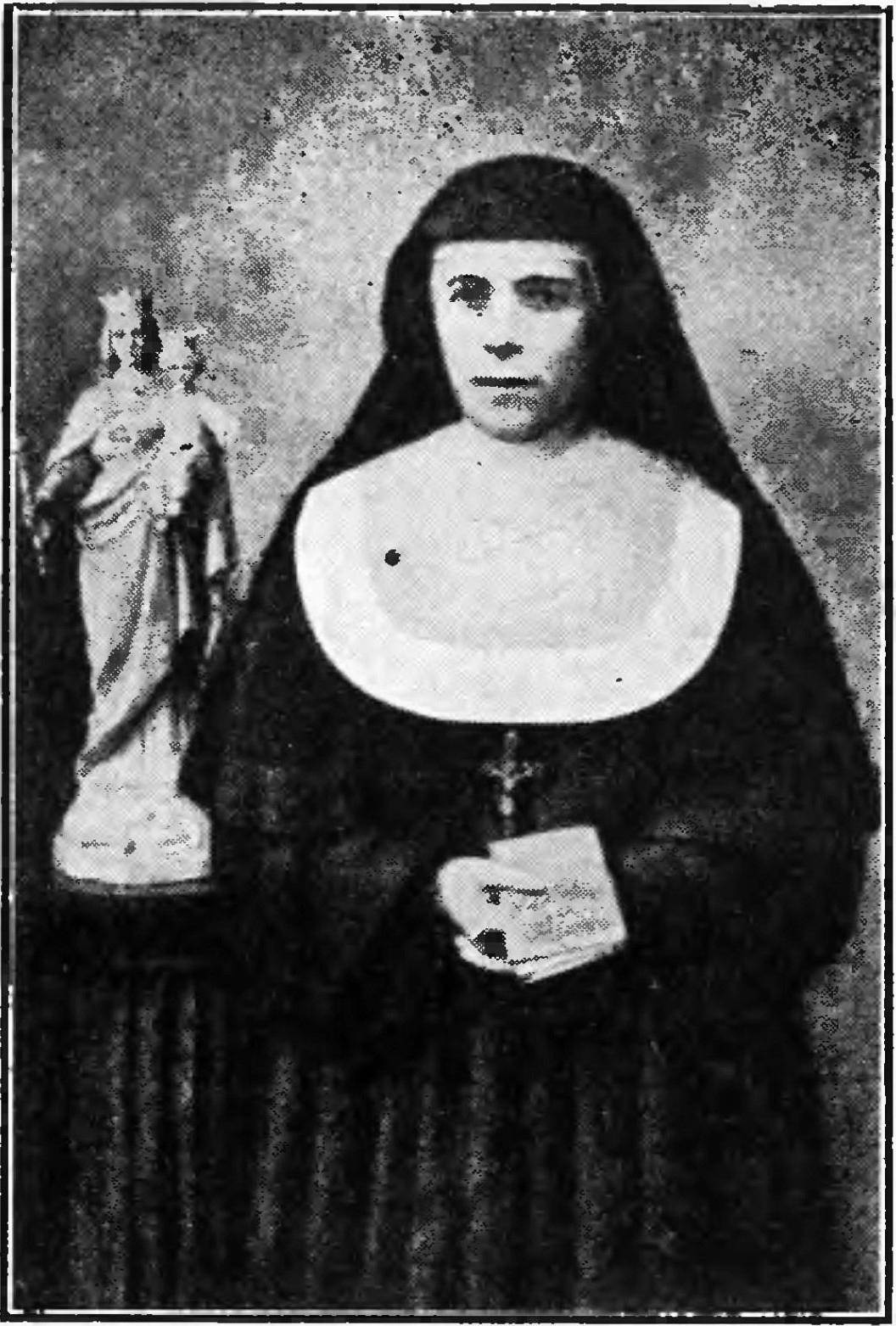
Source file copied unchanged by Saints and Science. Historical book image extracted upstream and served unchanged from Commons. No local edits or cropping.
Web delivery: Saints and Science created proportionately resized WebP delivery copies at quality 82, or 80–76 where needed to keep the file smaller, for faster loading. The complete composition is retained, with no crop, enlargement, retouching, color adjustment, compositing, or AI alteration. Source ICC, EXIF, and XMP metadata are retained where available. Large ICC color profiles are color-managed into compact standard sRGB to preserve intended displayed colors without carrying oversized profiles; EXIF orientation is applied only if required for the original display orientation. The reviewed original remains available unchanged. Each copy retains the source image license and attribution.
Saint Maria Goretti
St Maria Goretti Church in Ribbleton, Preston, England—a parish named in her honour.
Credit: Rept0n1x · CC BY-SA 3.0 · Image file

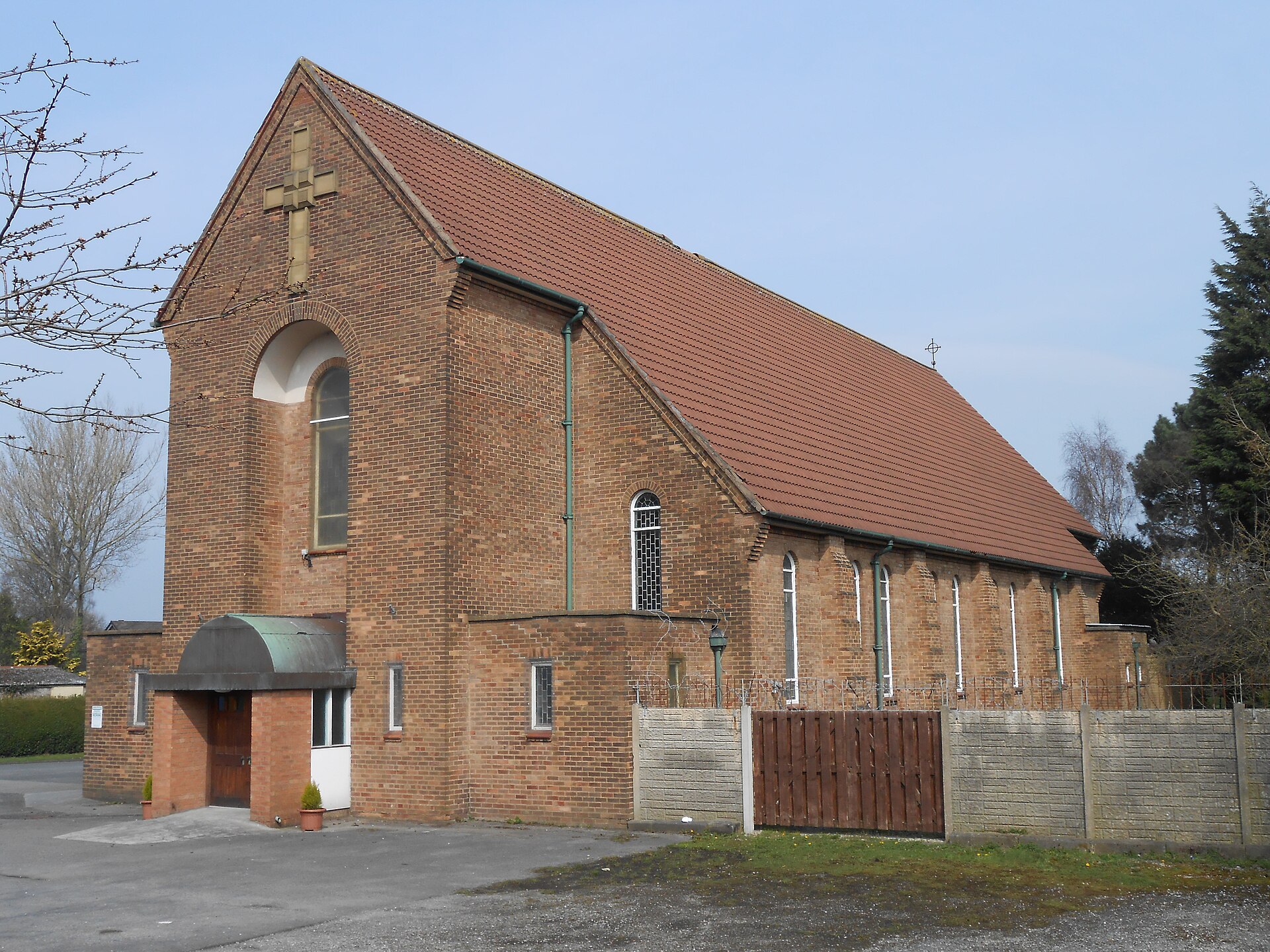
Source file copied unchanged by Saints and Science. Exact source image bytes retained. Wikimedia supplies this proportional display-size copy; no local cropping, retouching, compositing, or recompression.
Web delivery: Saints and Science created proportionately resized WebP delivery copies at quality 82, or 80–76 where needed to keep the file smaller, for faster loading. The complete composition is retained, with no crop, enlargement, retouching, color adjustment, compositing, or AI alteration. Source ICC, EXIF, and XMP metadata are retained where available. Large ICC color profiles are color-managed into compact standard sRGB to preserve intended displayed colors without carrying oversized profiles; EXIF orientation is applied only if required for the original display orientation. The reviewed original remains available unchanged. Each copy retains the source image license and attribution.
Saint Martin de Porres
The historic dome and interior of Santo Domingo in Lima.
Credit: Diego Delso · CC BY-SA 4.0 · Image file

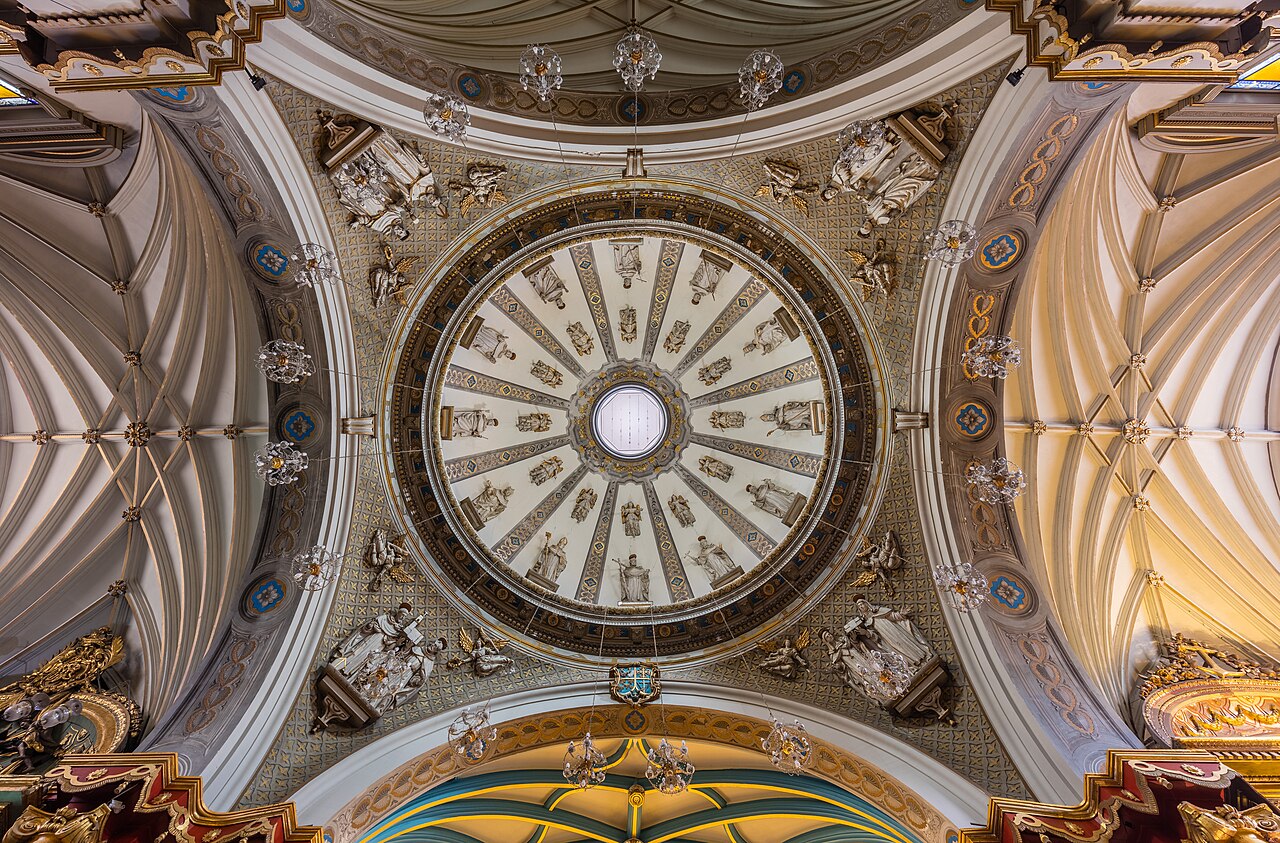
Source file copied unchanged by Saints and Science. Displayed copy is Wikimedia Commons’ upstream proportional thumbnail resize. Corpus Files downloaded it without additional crop, retouching, compositing, AI alteration or intentional color adjustment.
Web delivery: Saints and Science created proportionately resized WebP delivery copies at quality 82, or 80–76 where needed to keep the file smaller, for faster loading. The complete composition is retained, with no crop, enlargement, retouching, color adjustment, compositing, or AI alteration. Source ICC, EXIF, and XMP metadata are retained where available. Large ICC color profiles are color-managed into compact standard sRGB to preserve intended displayed colors without carrying oversized profiles; EXIF orientation is applied only if required for the original display orientation. The reviewed original remains available unchanged. Each copy retains the source image license and attribution.
Saint Mary Magdalene de' Pazzi
Mary Magdalene de’ Pazzi in a seventeenth-century miniature by Josefa de Óbidos, in the Museu Nacional de Arte Antiga, Lisbon.
Credit: Josefa de Óbidos · Public domain · Image file

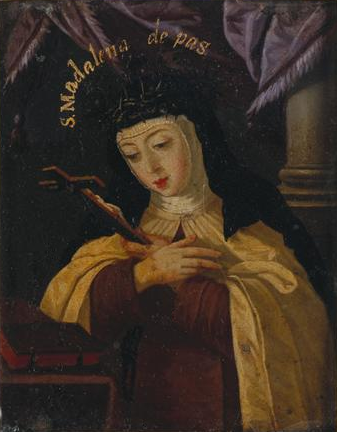
Source file copied unchanged by Saints and Science. No changes detected; displayed file is byte-for-byte identical to the Commons source.
Web delivery: Saints and Science created proportionately resized WebP delivery copies at quality 82, or 80–76 where needed to keep the file smaller, for faster loading. The complete composition is retained, with no crop, enlargement, retouching, color adjustment, compositing, or AI alteration. Source ICC, EXIF, and XMP metadata are retained where available. Large ICC color profiles are color-managed into compact standard sRGB to preserve intended displayed colors without carrying oversized profiles; EXIF orientation is applied only if required for the original display orientation. The reviewed original remains available unchanged. Each copy retains the source image license and attribution.
Saint Narcisa de Jesús
The Sanctuary of Narcisa de Jesús in Nobol, Ecuador, photographed on 3 November 2015.
Credit: Edjoerv · CC BY-SA 4.0 · Image file

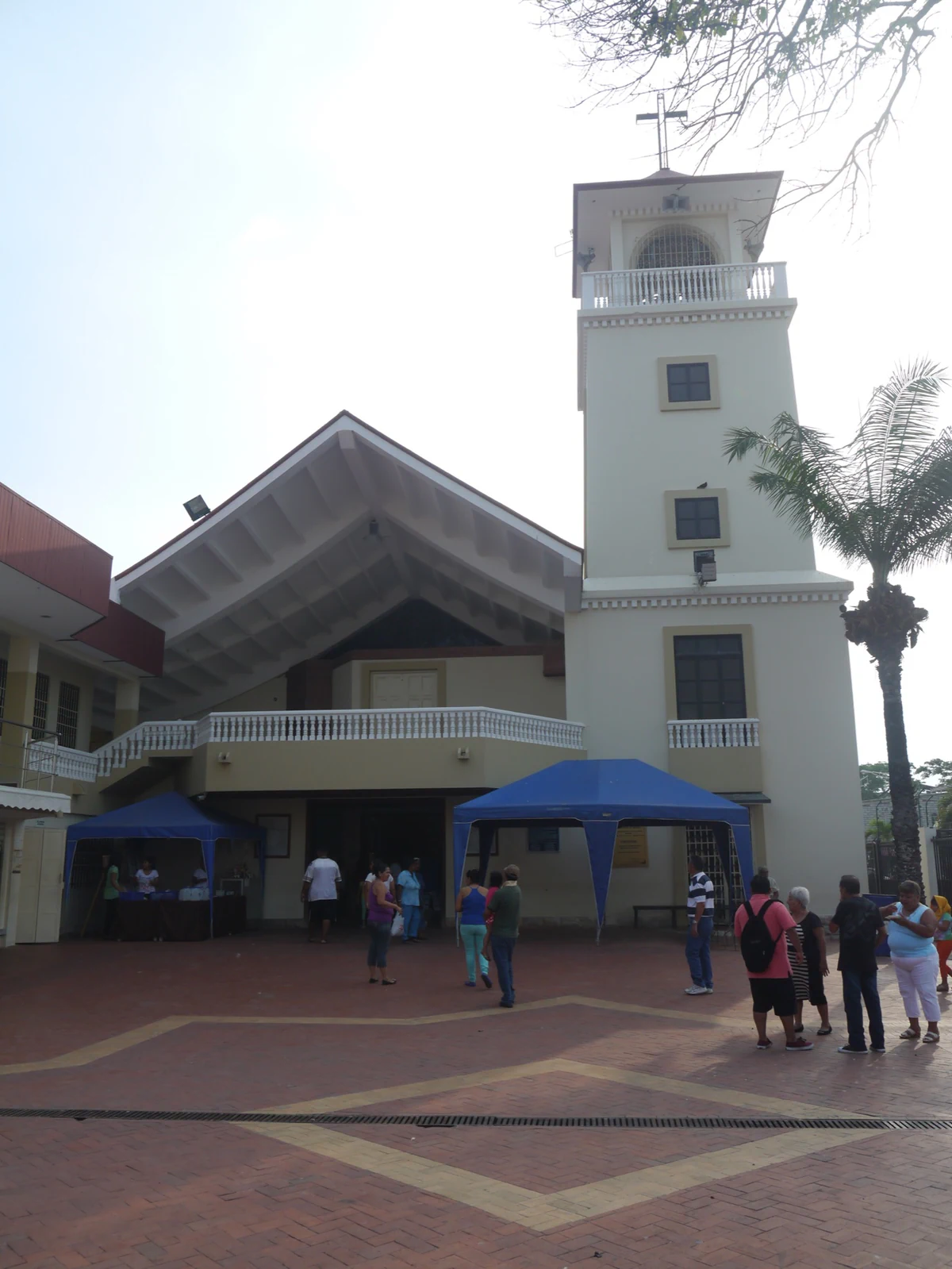
Source file copied unchanged by Saints and Science. The creator's source uses EXIF Orientation 8 for portrait display. Corpus Files proportionally resized the 4592 × 3448 Wikimedia Commons JPEG source to 1351 × 1800 displayed pixels (1800 × 1351 stored matrix; EXIF Orientation 8 retained) and JPEG re-encoded it at quality 86 with macOS sips for web delivery. No crop, manual rotation, retouching, compositing, content alteration, or AI alteration was made; metadata may have been normalized by re-encoding. Redistribution remains under CC BY-SA 4.0; ShareAlike applies to adaptations.
Web delivery: Saints and Science created proportionately resized WebP delivery copies at quality 82, or 80–76 where needed to keep the file smaller, for faster loading. The complete composition is retained, with no crop, enlargement, retouching, color adjustment, compositing, or AI alteration. Source ICC, EXIF, and XMP metadata are retained where available. Large ICC color profiles are color-managed into compact standard sRGB to preserve intended displayed colors without carrying oversized profiles; EXIF orientation is applied only if required for the original display orientation. The reviewed original remains available unchanged. Each copy retains the source image license and attribution.
Saint Nicholas of Tolentino
Giovanni di Paolo’s The Exultation of Saint Nicholas of Tolentino, about 1450, in The Metropolitan Museum of Art’s Robert Lehman Collection.
Credit: Giovanni di Paolo (Giovanni di Paolo di Grazia); The Metropolitan Museum of Art · The Met Open Access / CC0 1.0 · Image file
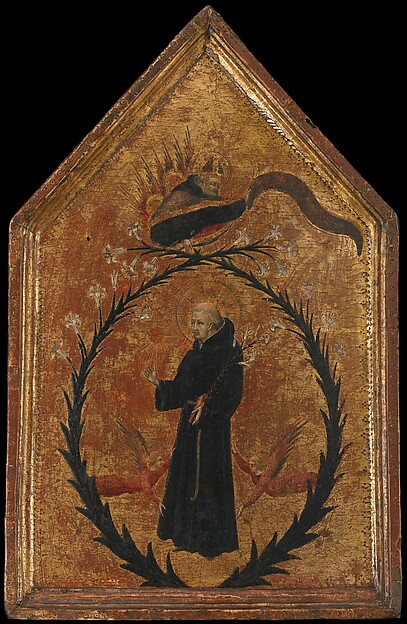
Source file copied unchanged by Saints and Science. The museum’s supplied web-large JPEG is copied unchanged. No crop, retouching, color correction, compositing or AI alteration by Saints and Science.
Web delivery: Saints and Science created proportionately resized WebP delivery copies at quality 82, or 80–76 where needed to keep the file smaller, for faster loading. The complete composition is retained, with no crop, enlargement, retouching, color adjustment, compositing, or AI alteration. Source ICC, EXIF, and XMP metadata are retained where available. Large ICC color profiles are color-managed into compact standard sRGB to preserve intended displayed colors without carrying oversized profiles; EXIF orientation is applied only if required for the original display orientation. The reviewed original remains available unchanged. Each copy retains the source image license and attribution.
Blessed Osanna Andreasi
Francesco Bonsignori, Beata Osanna Andreasi, c. 1519, reproduced in Julia Cartwright Ady’s 1903 London book. The historical printed reproduction depicts a painting held in Mantua.
Credit: Francesco Bonsignori · Public domain · Image file

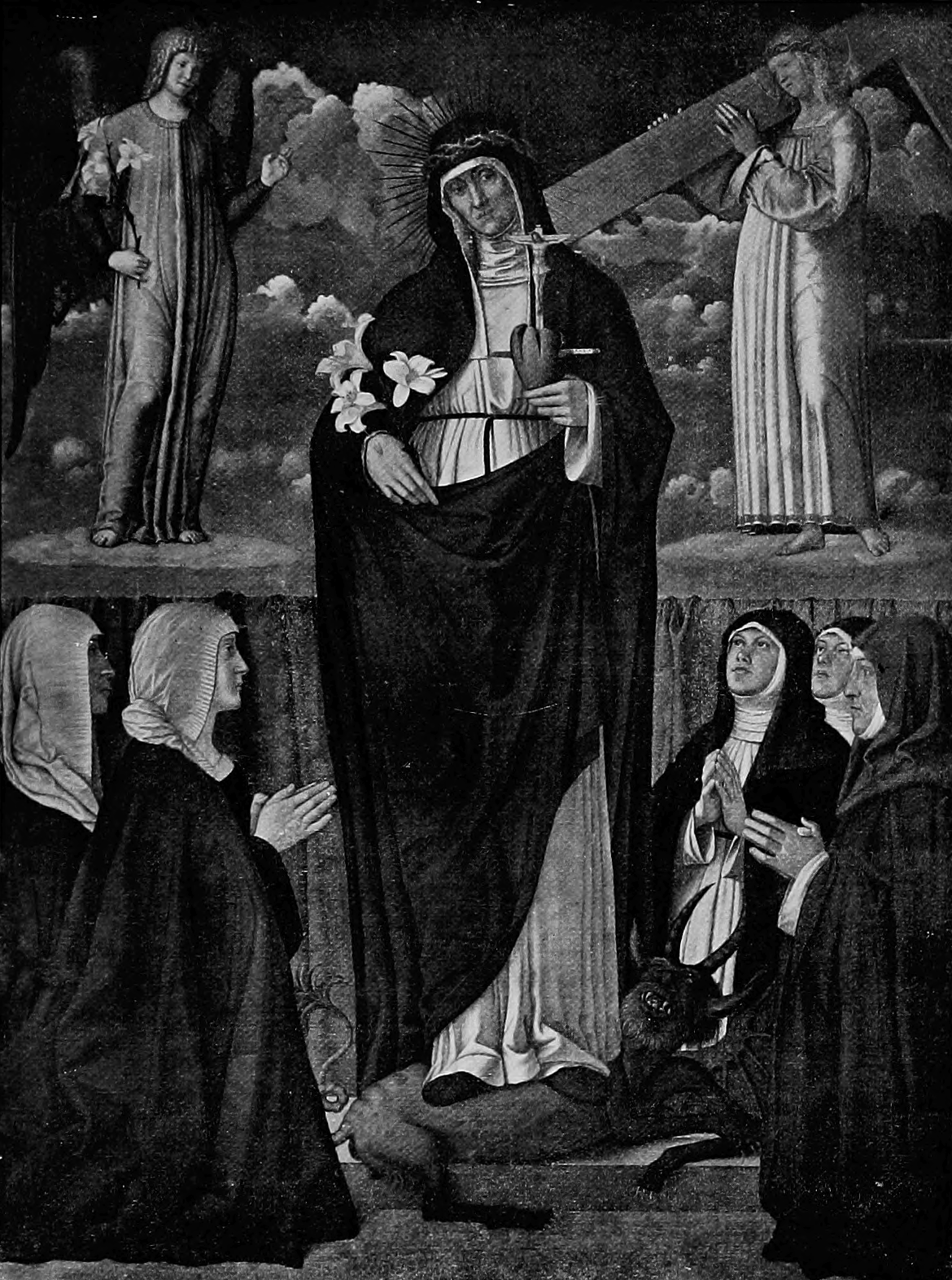
Source file copied unchanged by Saints and Science. Exact archived 2011 Commons PNG bytes, representing the stated 1903 London book reproduction. No local crop, retouching, compositing, AI alteration or color correction.
Web delivery: Saints and Science created proportionately resized WebP delivery copies at quality 82, or 80–76 where needed to keep the file smaller, for faster loading. The complete composition is retained, with no crop, enlargement, retouching, color adjustment, compositing, or AI alteration. Source ICC, EXIF, and XMP metadata are retained where available. Large ICC color profiles are color-managed into compact standard sRGB to preserve intended displayed colors without carrying oversized profiles; EXIF orientation is applied only if required for the original display orientation. The reviewed original remains available unchanged. Each copy retains the source image license and attribution.
Saint Pacificus of San Severino
Pacificus of San Severino in an eighteenth-century devotional etching from the Upart-Dauscha Collection in Greenville, South Carolina.
Credit: Unknown engraver; image published by Anchorite, Upart-Dauscha Collection · Public Domain Mark 1.0 · Image file

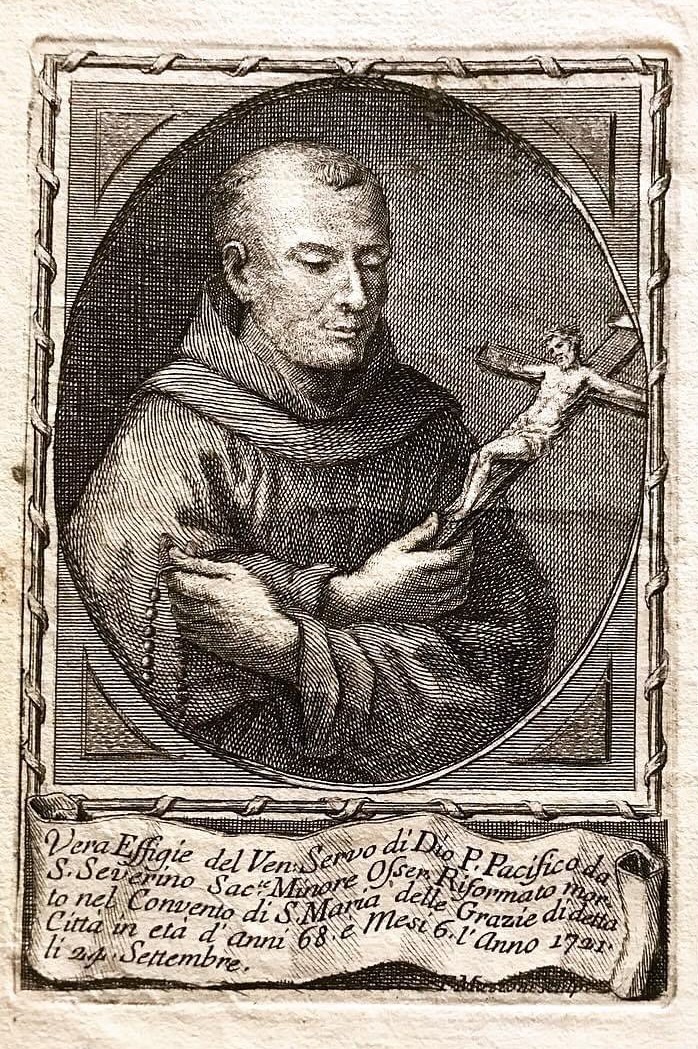
Source file copied unchanged by Saints and Science. Selected source image copied unchanged; no crop, retouching, recoloring, compositing, or AI alteration.
Web delivery: Saints and Science created proportionately resized WebP delivery copies at quality 82, or 80–76 where needed to keep the file smaller, for faster loading. The complete composition is retained, with no crop, enlargement, retouching, color adjustment, compositing, or AI alteration. Source ICC, EXIF, and XMP metadata are retained where available. Large ICC color profiles are color-managed into compact standard sRGB to preserve intended displayed colors without carrying oversized profiles; EXIF orientation is applied only if required for the original display orientation. The reviewed original remains available unchanged. Each copy retains the source image license and attribution.
Saint Padre Pio
St Mary of the Angels, Dublin, home of Ireland’s National Shrine of St Pio.
Credit: Andreas F. Borchert · CC BY-SA 4.0 · Image file

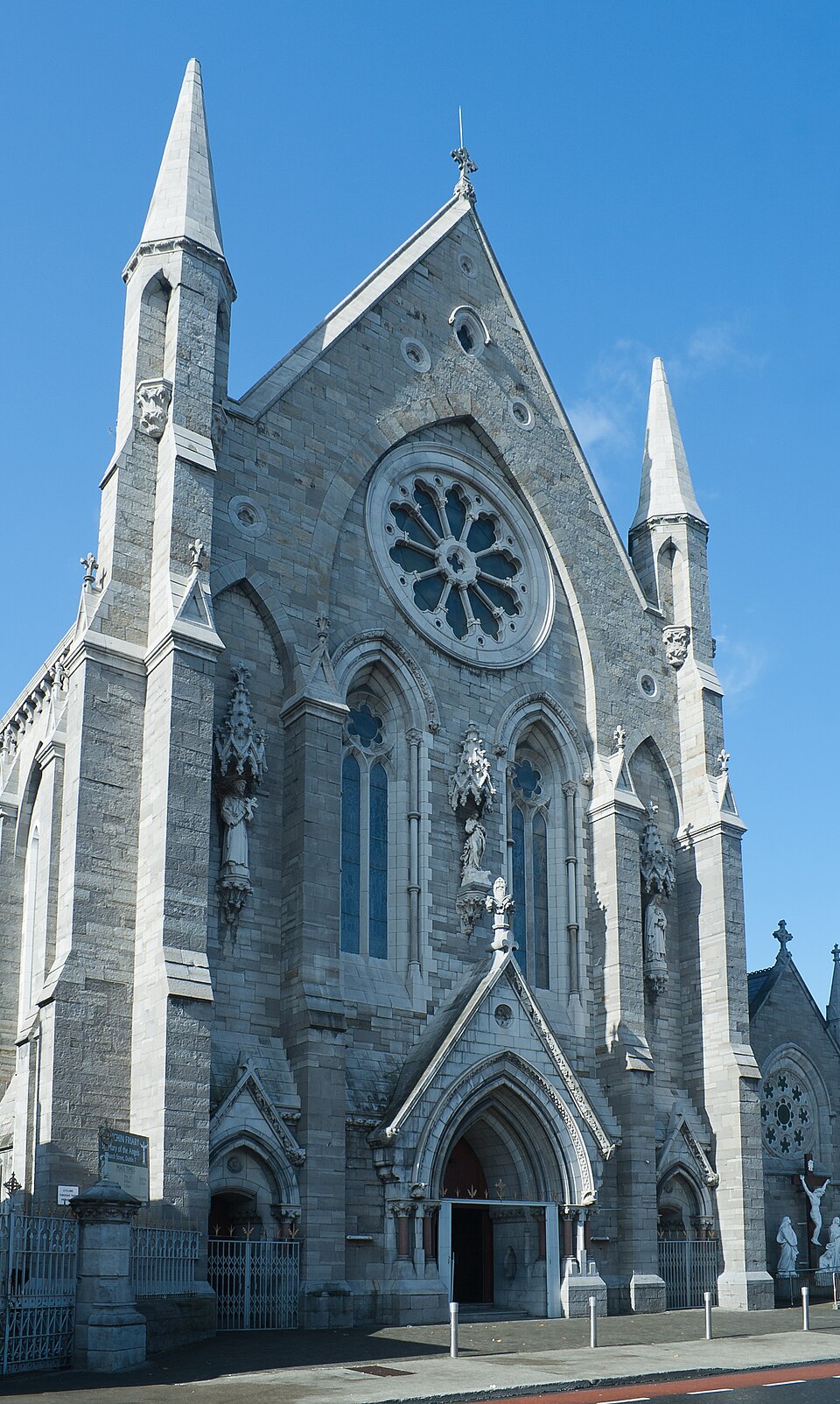
Source file copied unchanged by Saints and Science. Exact source image bytes retained. Wikimedia supplies this proportional display-size copy; no local cropping, retouching, compositing, or recompression.
Web delivery: Saints and Science created proportionately resized WebP delivery copies at quality 82, or 80–76 where needed to keep the file smaller, for faster loading. The complete composition is retained, with no crop, enlargement, retouching, color adjustment, compositing, or AI alteration. Source ICC, EXIF, and XMP metadata are retained where available. Large ICC color profiles are color-managed into compact standard sRGB to preserve intended displayed colors without carrying oversized profiles; EXIF orientation is applied only if required for the original display orientation. The reviewed original remains available unchanged. Each copy retains the source image license and attribution.
Saint Paola Frassinetti
The Chapel of Saint Paula Frassinetti in São Sebastião do Paraíso, Brazil.
Credit: Túllio F · CC BY-SA 4.0 · Image file

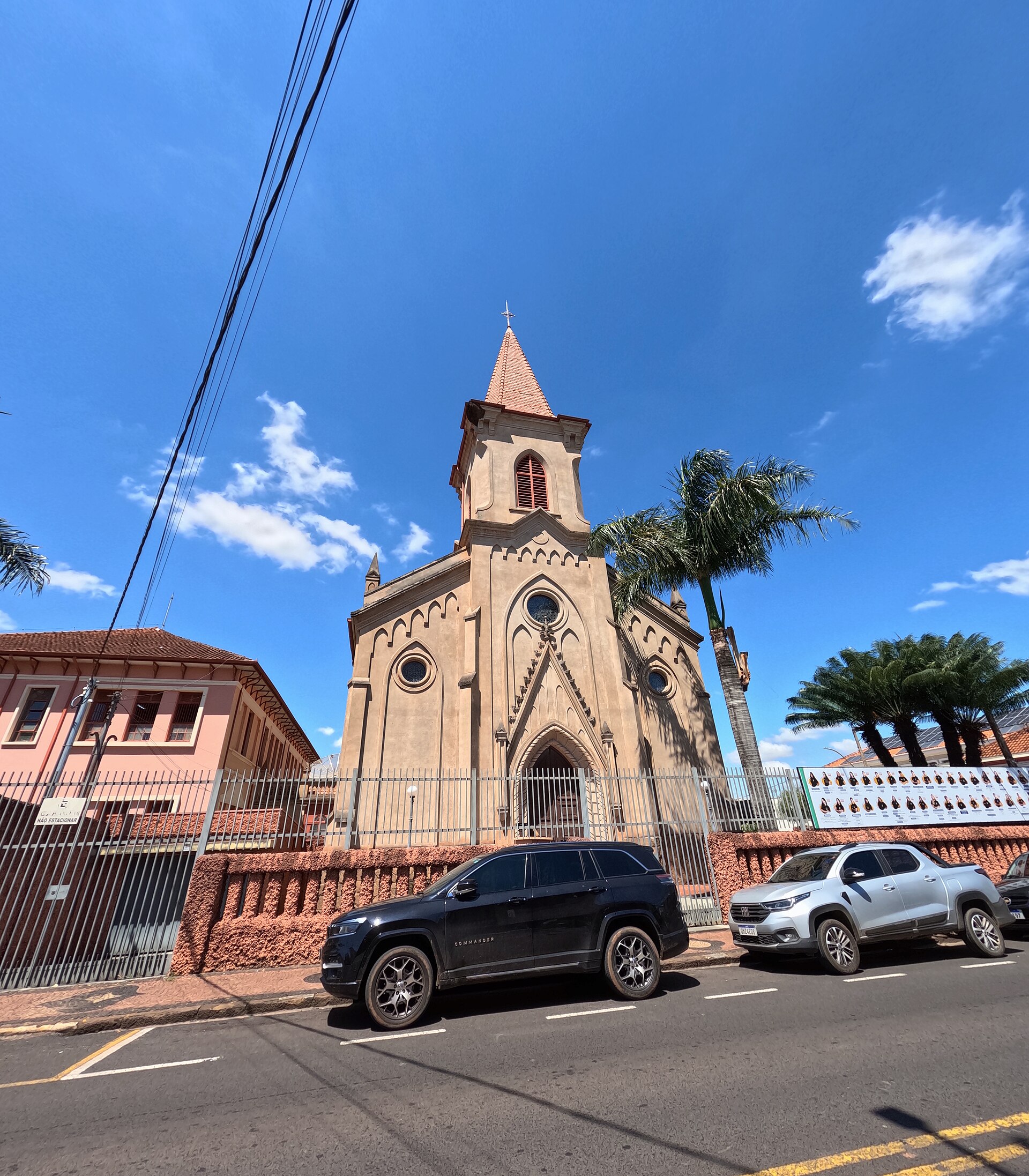
Source file copied unchanged by Saints and Science. Exact source image bytes retained. Wikimedia supplies this proportional display-size copy; no local cropping, retouching, compositing, or recompression.
Web delivery: Saints and Science created proportionately resized WebP delivery copies at quality 82, or 80–76 where needed to keep the file smaller, for faster loading. The complete composition is retained, with no crop, enlargement, retouching, color adjustment, compositing, or AI alteration. Source ICC, EXIF, and XMP metadata are retained where available. Large ICC color profiles are color-managed into compact standard sRGB to preserve intended displayed colors without carrying oversized profiles; EXIF orientation is applied only if required for the original display orientation. The reviewed original remains available unchanged. Each copy retains the source image license and attribution.
Saint Peregrine Laziosi
Saint Peregrine Laziosi with the Crucifix and instruments of the Passion, 1717–c.1770, engraving and etching by Johann Christoph Winkler, whose name appears on the print. Rijksmuseum, RP-P-1909-6157. The surviving sheet was trimmed within the plate mark; the museum’s digital file is a cropped institutional derivative.
Credit: Johann Christoph Winkler (printmaker and publisher; named on object) · Rijksmuseum Public Domain / Public Domain Mark 1.0 · Image file
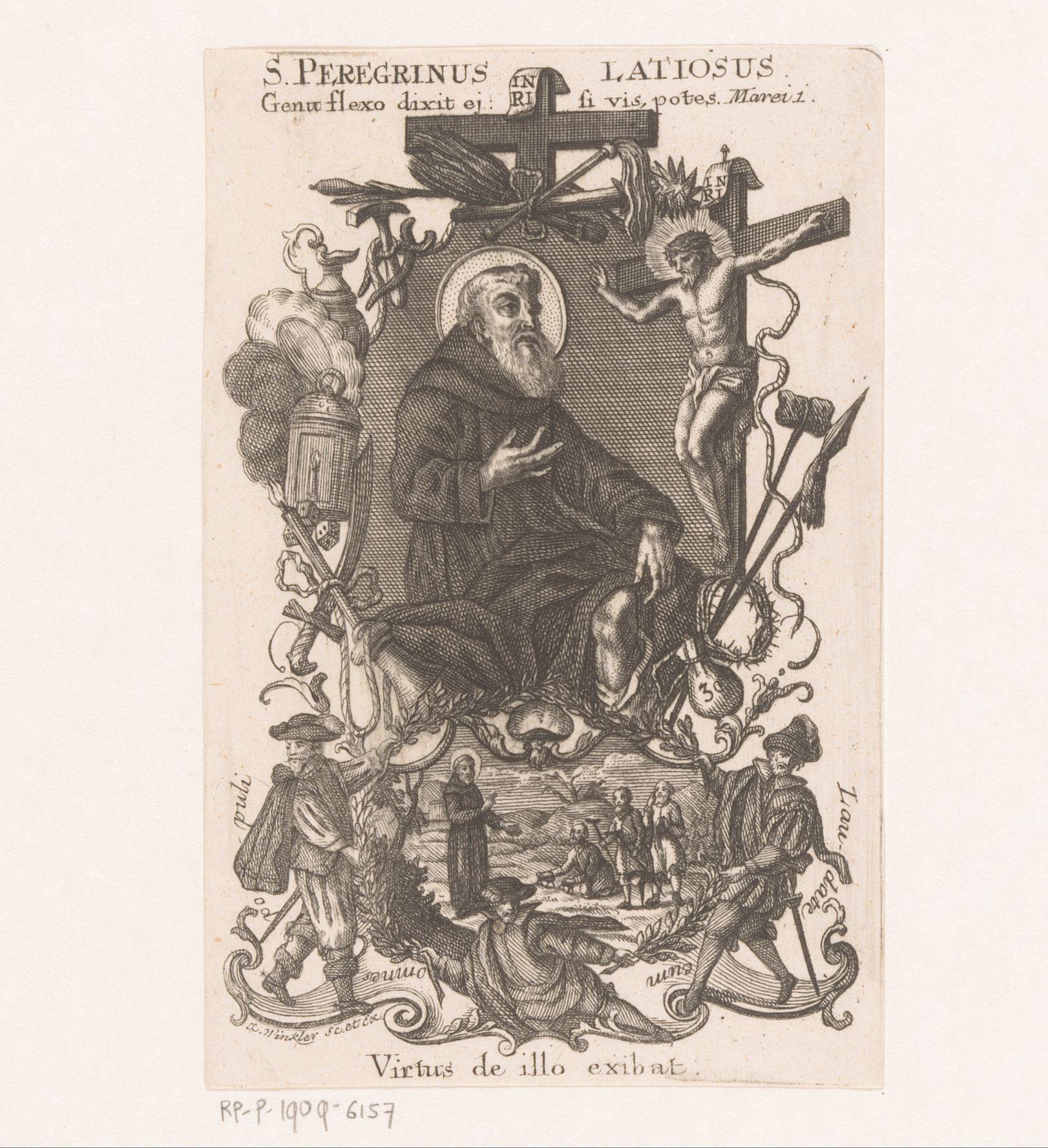
Source file copied unchanged by Saints and Science. Exact official Rijksmuseum IIIF JPEG. One recto; no digitized verso exists. The physical sheet was trimmed within the plate mark and the delivery filename records an Original-Cropped institutional derivative. The full surviving recto, inscription, and inventory mark are preserved. Corpus Files made no further crop or retouch. The print contains non-graphic Crucifixion wounds, instruments of the Passion, and a possibly sick or injured figure. Credit does not imply endorsement.
Web delivery: Saints and Science created proportionately resized WebP delivery copies at quality 82, or 80–76 where needed to keep the file smaller, for faster loading. The complete composition is retained, with no crop, enlargement, retouching, color adjustment, compositing, or AI alteration. Source ICC, EXIF, and XMP metadata are retained where available. Large ICC color profiles are color-managed into compact standard sRGB to preserve intended displayed colors without carrying oversized profiles; EXIF orientation is applied only if required for the original display orientation. The reviewed original remains available unchanged. Each copy retains the source image license and attribution.
Saint Peter Julian Eymard
An anonymous albumen portrait of Peter Julian Eymard, made before his death in 1868 and reproduced as the frontispiece of an 1886 Italian volume; Rijksmuseum object RP-F-2001-7-666-1.
Credit: Anonymous photographer; Rijksmuseum digitization · Public-domain work; digital file released under CC0 1.0 · Image file

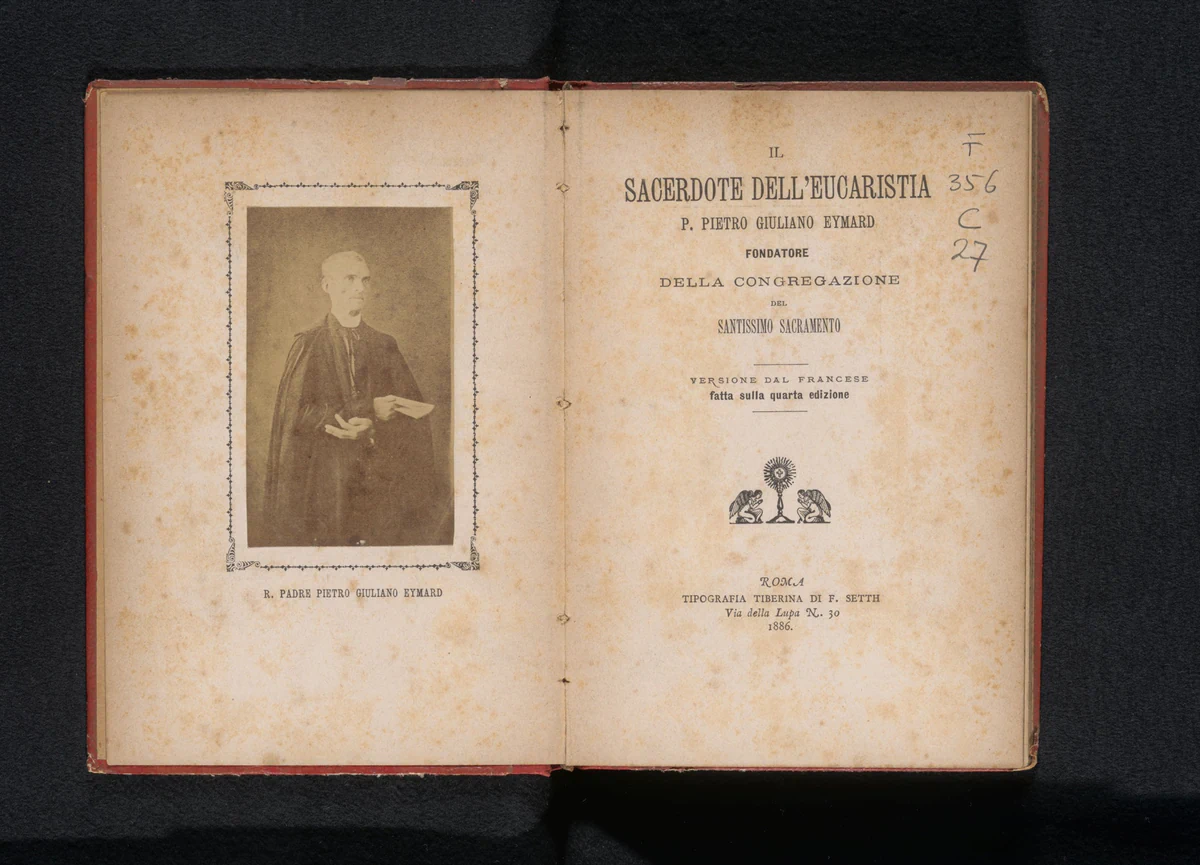
Source file copied unchanged by Saints and Science. The complete digitized book opening, including the frontispiece, title page, binding, and markings, was retained without cropping. Corpus Files proportionally resized the 6282 × 4526 Wikimedia Commons/Rijksmuseum JPEG source to 1800 × 1297 pixels and JPEG re-encoded it at quality 86 with macOS sips for web delivery. No crop, manual rotation, retouching, compositing, content alteration, or AI alteration was made; metadata may have been normalized by re-encoding. The historical object is public domain and the digital file is released under CC0 1.0; no attribution or ShareAlike condition applies.
Web delivery: Saints and Science created proportionately resized WebP delivery copies at quality 82, or 80–76 where needed to keep the file smaller, for faster loading. The complete composition is retained, with no crop, enlargement, retouching, color adjustment, compositing, or AI alteration. Source ICC, EXIF, and XMP metadata are retained where available. Large ICC color profiles are color-managed into compact standard sRGB to preserve intended displayed colors without carrying oversized profiles; EXIF orientation is applied only if required for the original display orientation. The reviewed original remains available unchanged. Each copy retains the source image license and attribution.
Saint Philip Neri
Carlo Dolci’s posthumous portrait Saint Philip Neri (1515–1595), painted in 1645 or 1646; oil on canvas.
Credit: Carlo Dolci · The Met Open Access / CC0 1.0 · Image file
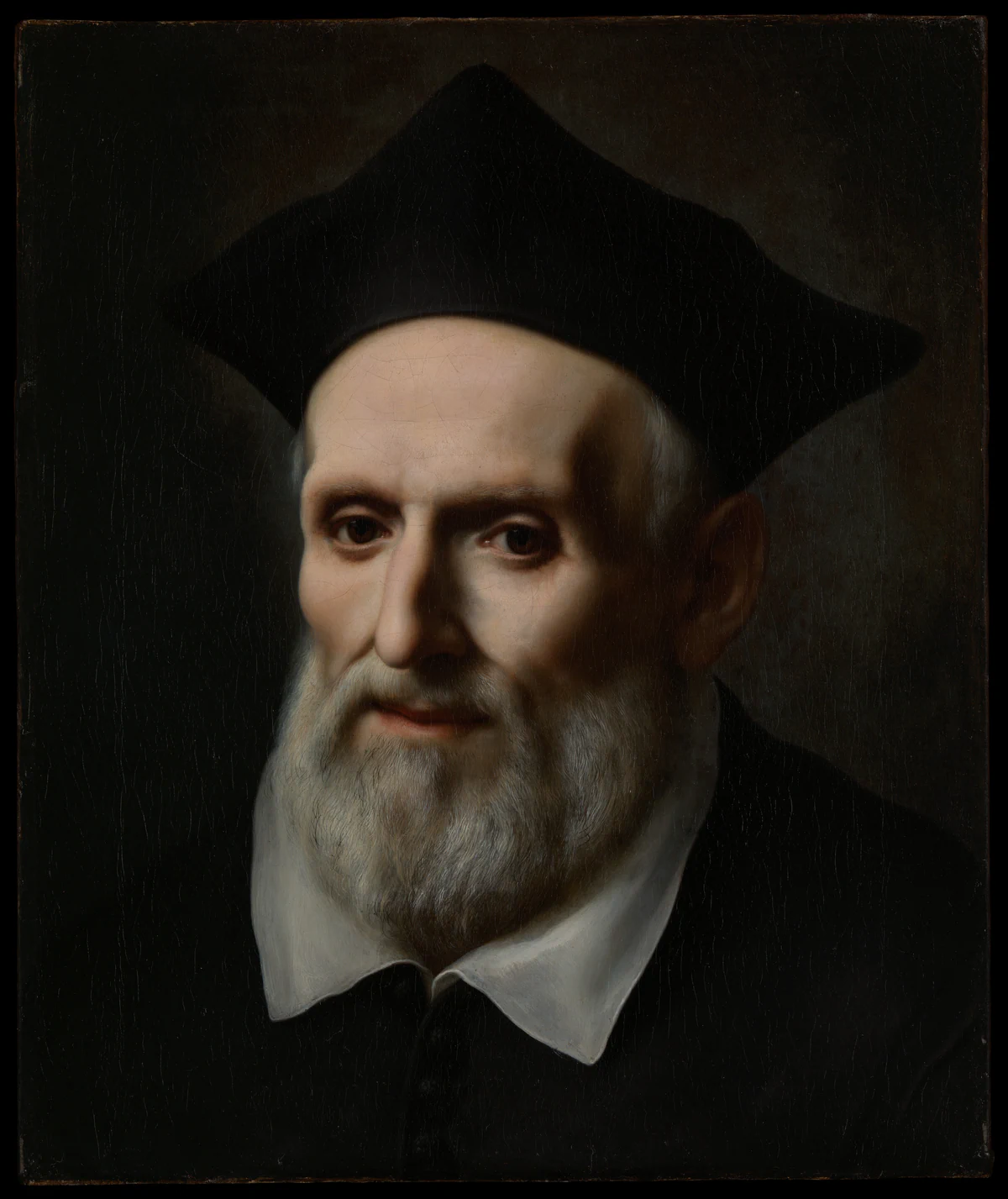
Source file copied unchanged by Saints and Science. Exact official primary-image bytes from The Met Open Access file; no Corpus Files crop, resize, recompression, retouching, compositing, restoration, or AI processing. Publication does not imply Metropolitan Museum of Art endorsement.
Web delivery: Saints and Science created proportionately resized WebP delivery copies at quality 82, or 80–76 where needed to keep the file smaller, for faster loading. The complete composition is retained, with no crop, enlargement, retouching, color adjustment, compositing, or AI alteration. Source ICC, EXIF, and XMP metadata are retained where available. Large ICC color profiles are color-managed into compact standard sRGB to preserve intended displayed colors without carrying oversized profiles; EXIF orientation is applied only if required for the original display orientation. The reviewed original remains available unchanged. Each copy retains the source image license and attribution.
Saint Pope Pius X
Th. Russer, Pius X., 1903, pastel and gouache on cardboard. National Museum, H2-183 146.
Credit: Th. Russer (artwork); R. Boček (image) · CC BY 4.0 · Image file
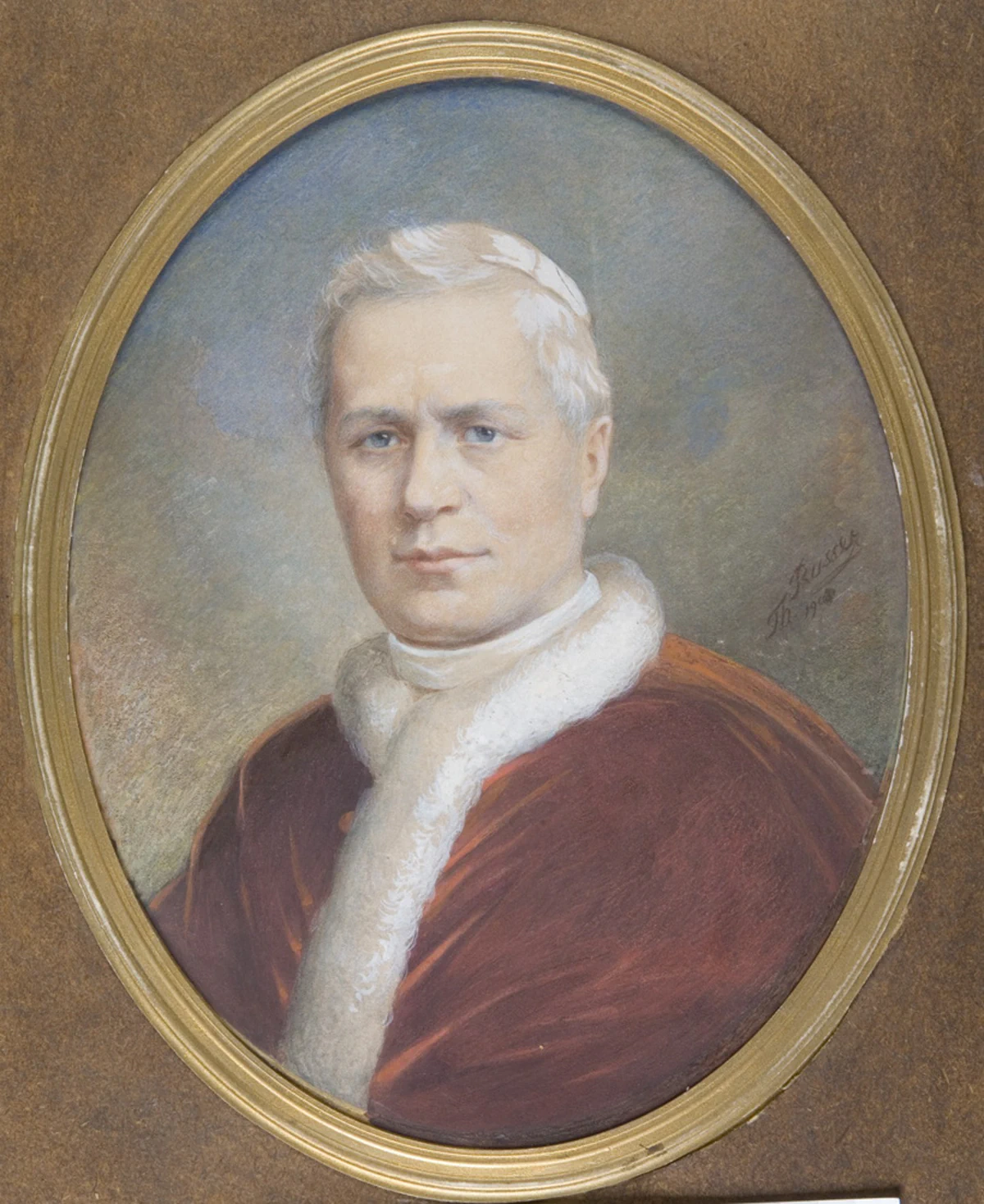
Source file copied unchanged by Saints and Science. Exact original institutional JPEG from the National Museum via eSbírky; Corpus Files made no crop, resize, recompression, retouching, color adjustment, compositing, or AI alteration. A separate signature-and-date detail was inspected. The item record publishes no treatment, crop, retouching, or other digital-alteration history. Credit does not imply National Museum endorsement.
Web delivery: Saints and Science created proportionately resized WebP delivery copies at quality 82, or 80–76 where needed to keep the file smaller, for faster loading. The complete composition is retained, with no crop, enlargement, retouching, color adjustment, compositing, or AI alteration. Source ICC, EXIF, and XMP metadata are retained where available. Large ICC color profiles are color-managed into compact standard sRGB to preserve intended displayed colors without carrying oversized profiles; EXIF orientation is applied only if required for the original display orientation. The reviewed original remains available unchanged. Each copy retains the source image license and attribution.
Saint Rita of Cascia
Saint Rita of Cascia receiving a thorn from Christ’s crown, 1736, line engraving by Johann Jakob Frey the Elder after Giacinto Brandi. Wellcome Collection, 3490i (V0031636).
Credit: Johann Jakob Frey the Elder after Giacinto Brandi · Wellcome Collection Public Domain / Public Domain Mark 1.0 · Image file
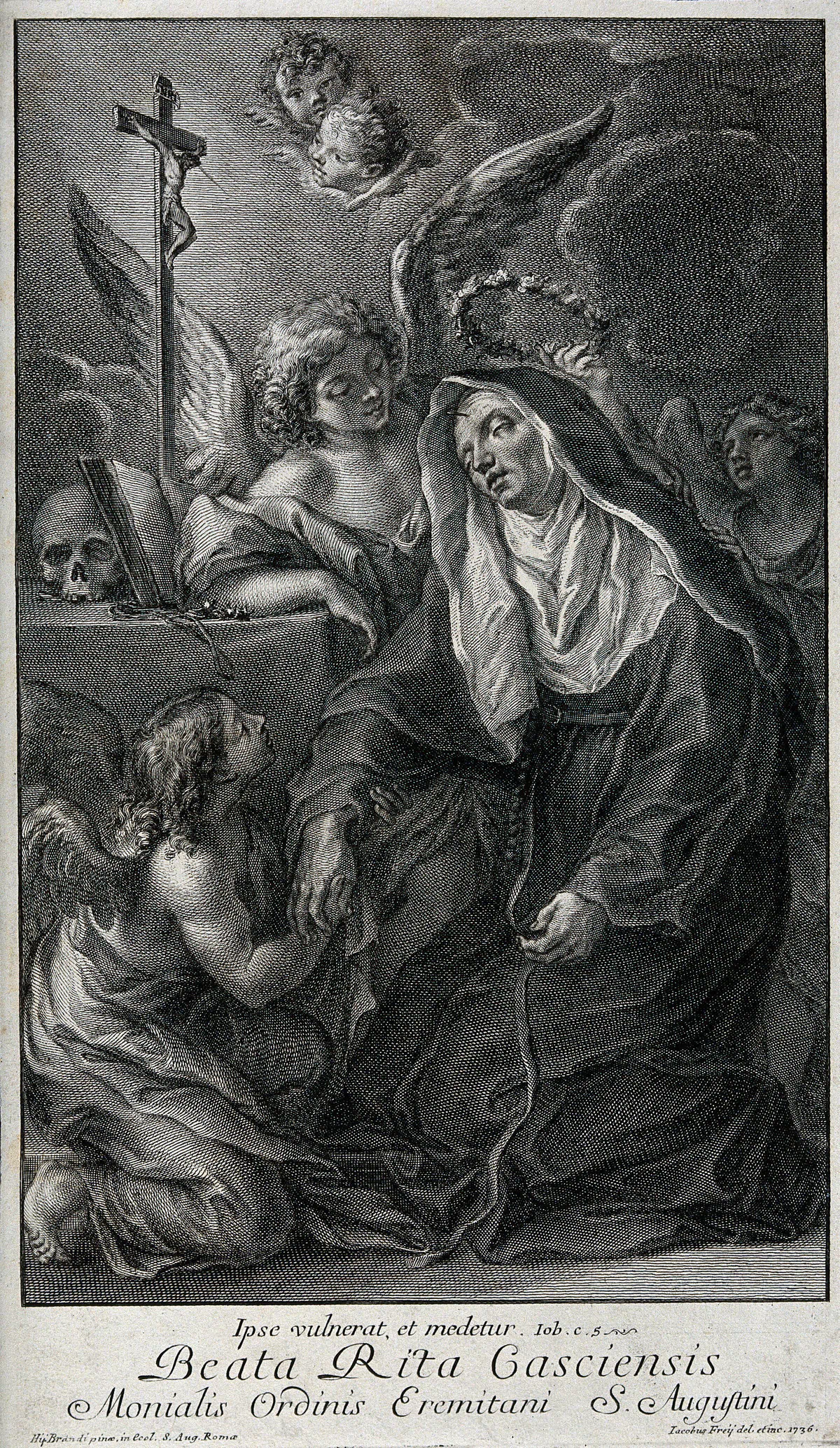
Source file copied unchanged by Saints and Science. Exact official full monochrome institutional JPEG. One view; the complete plate border and lettering are preserved. No alteration, conservation, or crop note is published, so none is inferred. Corpus Files made no crop, retouch, or colorization. The engraving shows a non-graphic thorn wound, a Crucifixion, and a skull memento mori. Image: Wellcome Collection. Credit does not imply endorsement.
Web delivery: Saints and Science created proportionately resized WebP delivery copies at quality 82, or 80–76 where needed to keep the file smaller, for faster loading. The complete composition is retained, with no crop, enlargement, retouching, color adjustment, compositing, or AI alteration. Source ICC, EXIF, and XMP metadata are retained where available. Large ICC color profiles are color-managed into compact standard sRGB to preserve intended displayed colors without carrying oversized profiles; EXIF orientation is applied only if required for the original display orientation. The reviewed original remains available unchanged. Each copy retains the source image license and attribution.
Saint Romuald
Pseudo-Palmeruccio, Saint Romuald, possibly ca. 1320–30; tempera on wood with gold ground.
Credit: Pseudo-Palmeruccio · The Met Open Access / CC0 1.0 · Image file
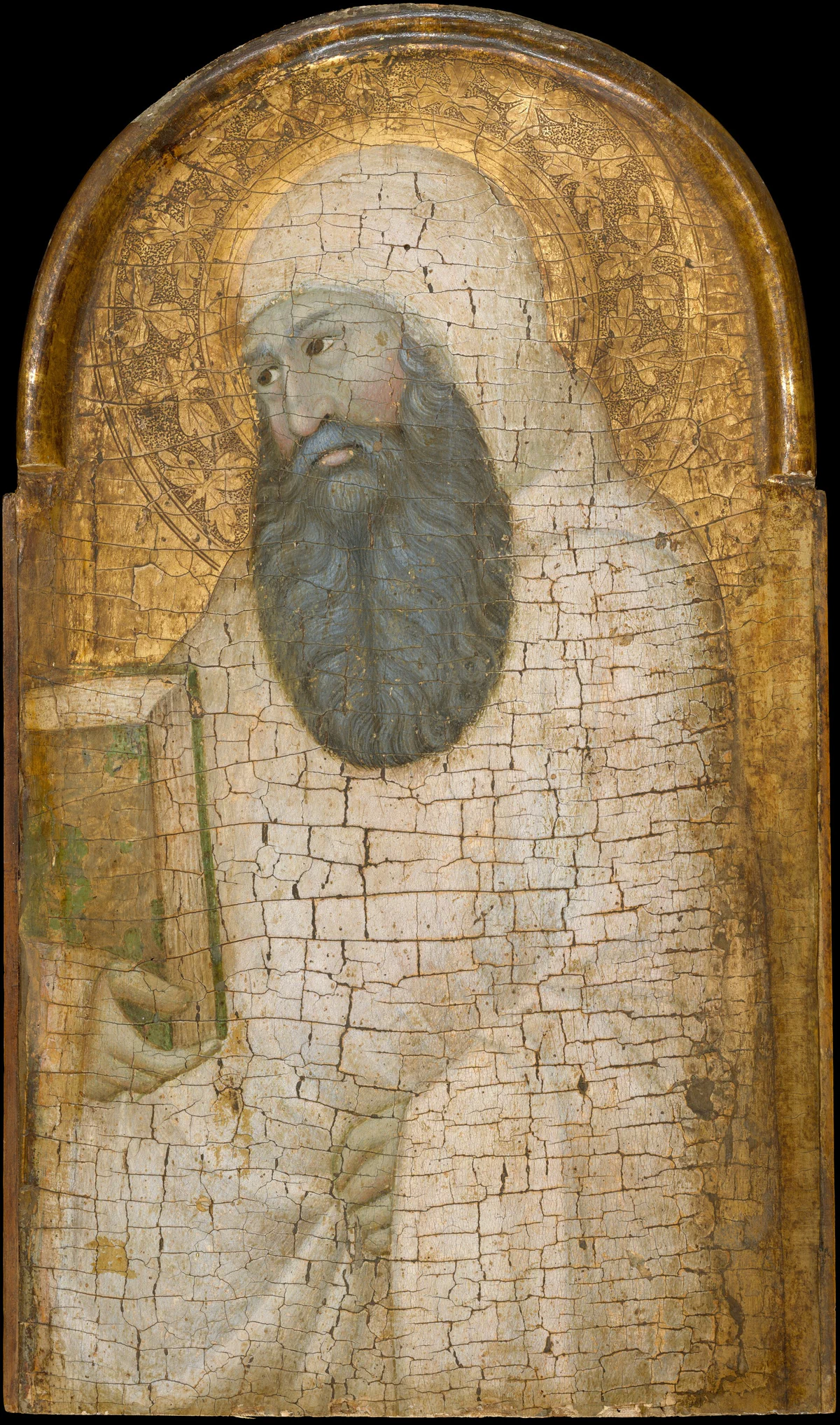
Source file copied unchanged by Saints and Science. Exact official primary-image bytes from The Met Open Access file; no Corpus Files crop, resize, recompression, retouching, compositing, restoration, or AI processing. Publication does not imply Metropolitan Museum of Art endorsement.
Web delivery: Saints and Science created proportionately resized WebP delivery copies at quality 82, or 80–76 where needed to keep the file smaller, for faster loading. The complete composition is retained, with no crop, enlargement, retouching, color adjustment, compositing, or AI alteration. Source ICC, EXIF, and XMP metadata are retained where available. Large ICC color profiles are color-managed into compact standard sRGB to preserve intended displayed colors without carrying oversized profiles; EXIF orientation is applied only if required for the original display orientation. The reviewed original remains available unchanged. Each copy retains the source image license and attribution.
Saint Rose of Lima
Rose of Lima, painted by Claudio Coello around 1685, in the Museo Nacional del Prado.
Credit: Claudio Coello · Public domain · Image file

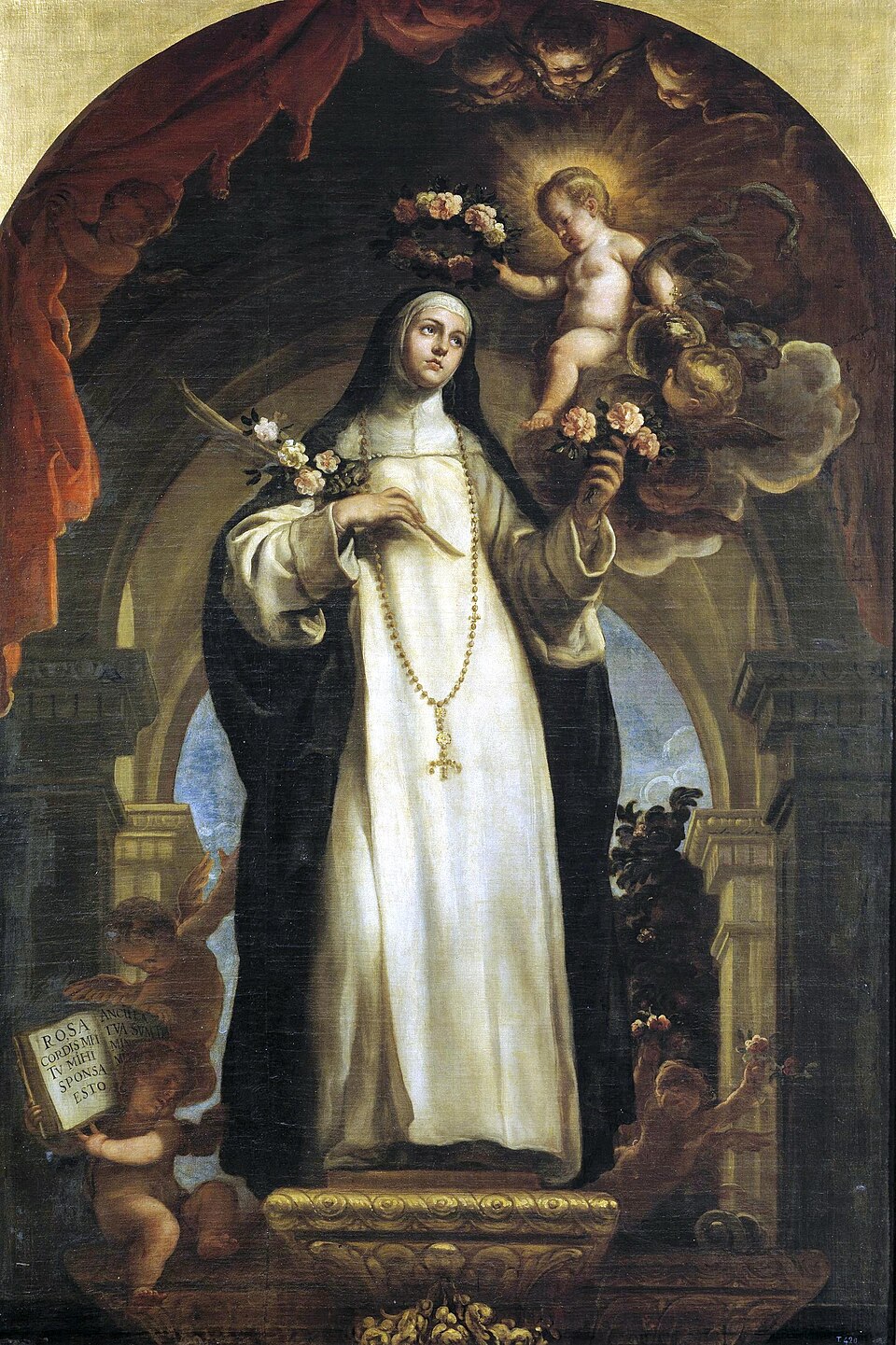
Source file copied unchanged by Saints and Science. The displayed copy is byte-for-byte identical to the current Commons 960 × 1441 derivative resized from the 1966 × 2952 source.
Web delivery: Saints and Science created proportionately resized WebP delivery copies at quality 82, or 80–76 where needed to keep the file smaller, for faster loading. The complete composition is retained, with no crop, enlargement, retouching, color adjustment, compositing, or AI alteration. Source ICC, EXIF, and XMP metadata are retained where available. Large ICC color profiles are color-managed into compact standard sRGB to preserve intended displayed colors without carrying oversized profiles; EXIF orientation is applied only if required for the original display orientation. The reviewed original remains available unchanged. Each copy retains the source image license and attribution.
Saint Rose of Viterbo
Pope Pius VI venerating the body of Saint Rose of Viterbo during his 1798 visit, engraved by Pietro Bonato after Luigi Scotti; probably Rome, about 1801. Wellcome Collection, 7147i (V0032973).
Credit: Pietro Bonato after Luigi Scotti; digital reproduction supplied by Wellcome Collection · Public Domain Mark 1.0 · Image file
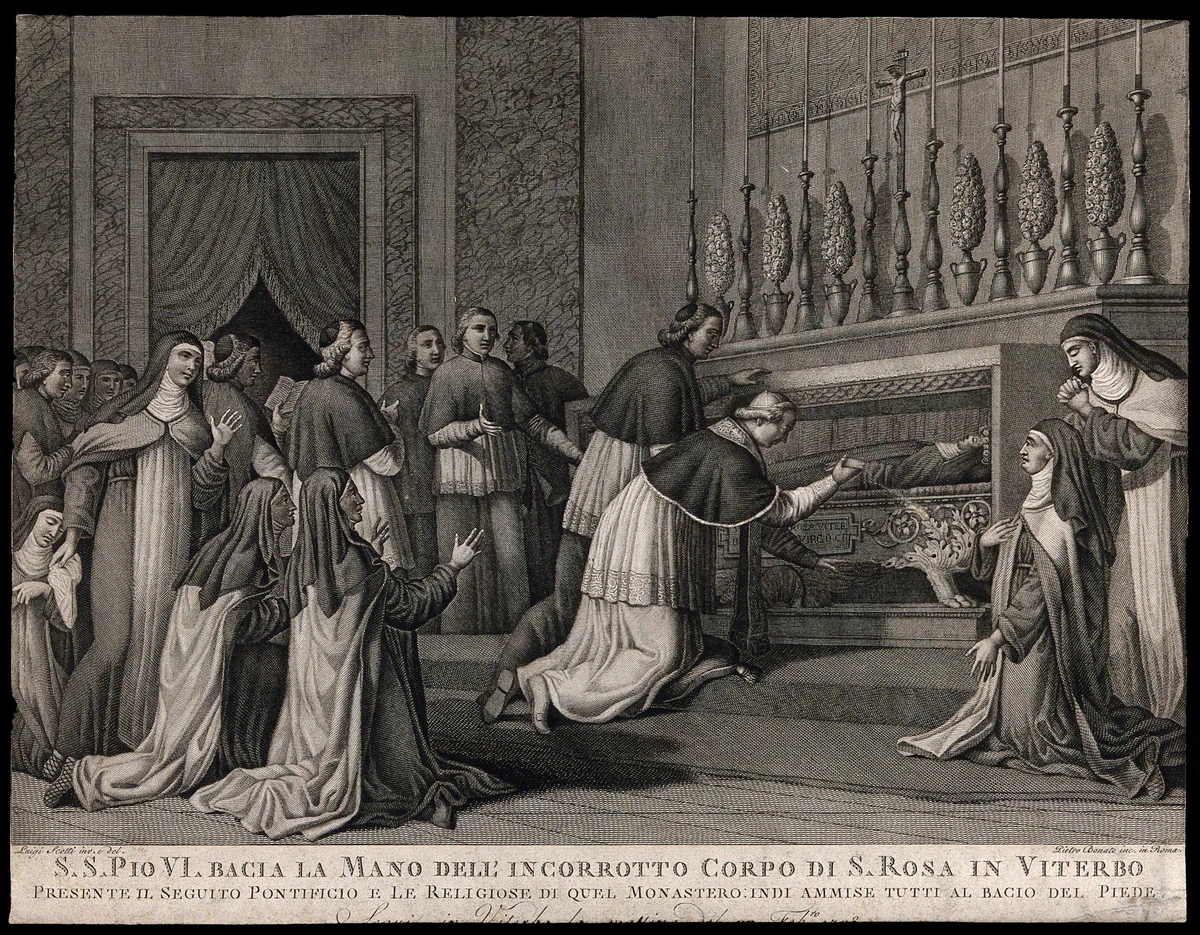
Source file copied unchanged by Saints and Science. Exact sole official Wellcome IIIF JPEG. The full surviving sheet, lettering, black institutional surround, irregular edges, and age wear are preserved. Corpus Files made no crop, resize, recompression, retouching, or other visual alteration, and the record catalogues no trim, crop, conservation, or digital alteration. The depicted event is the 1798 papal visit; the print itself is catalogued as probably Rome, about 1801, and the two dates should not be conflated. The visible recumbent body is shown non-graphically. Image: Wellcome Collection; credit does not imply endorsement. Public Domain Mark 1.0 permits commercial reuse with no ShareAlike condition and no required attribution; the editorial credit is retained voluntarily.
Web delivery: Saints and Science created proportionately resized WebP delivery copies at quality 82, or 80–76 where needed to keep the file smaller, for faster loading. The complete composition is retained, with no crop, enlargement, retouching, color adjustment, compositing, or AI alteration. Source ICC, EXIF, and XMP metadata are retained where available. Large ICC color profiles are color-managed into compact standard sRGB to preserve intended displayed colors without carrying oversized profiles; EXIF orientation is applied only if required for the original display orientation. The reviewed original remains available unchanged. Each copy retains the source image license and attribution.
Saint Rose Philippine Duchesne
Devotional portrait of Rose Philippine Duchesne from the late nineteenth or early twentieth century.
Credit: Anonymous · Public Domain Mark 1.0 · Image file

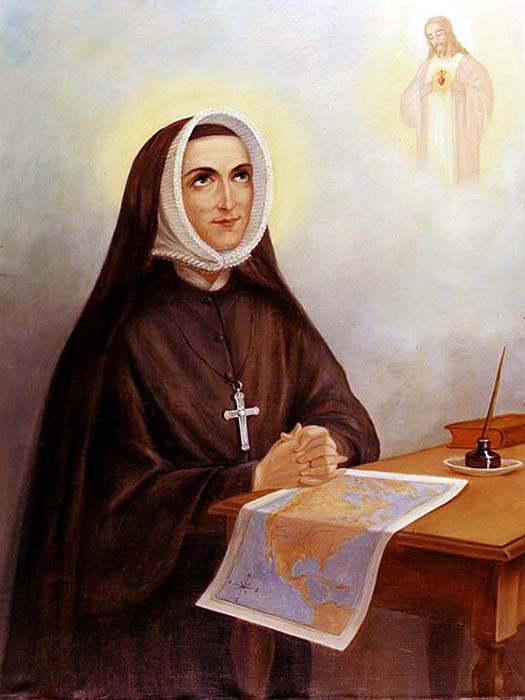
Source file copied unchanged by Saints and Science. Exact Wikimedia Commons original bytes; Corpus Files made no crop, resize, recompression, retouching, or content alteration.
Web delivery: Saints and Science created proportionately resized WebP delivery copies at quality 82, or 80–76 where needed to keep the file smaller, for faster loading. The complete composition is retained, with no crop, enlargement, retouching, color adjustment, compositing, or AI alteration. Source ICC, EXIF, and XMP metadata are retained where available. Large ICC color profiles are color-managed into compact standard sRGB to preserve intended displayed colors without carrying oversized profiles; EXIF orientation is applied only if required for the original display orientation. The reviewed original remains available unchanged. Each copy retains the source image license and attribution.
Saint Salvador of Horta
José Juárez, Miracles of the Blessed Salvador of Horta, seventeenth century, Museo Nacional de Arte, Mexico, accession 18572.
Credit: José Juárez · Public Domain Mark 1.0 · Image file

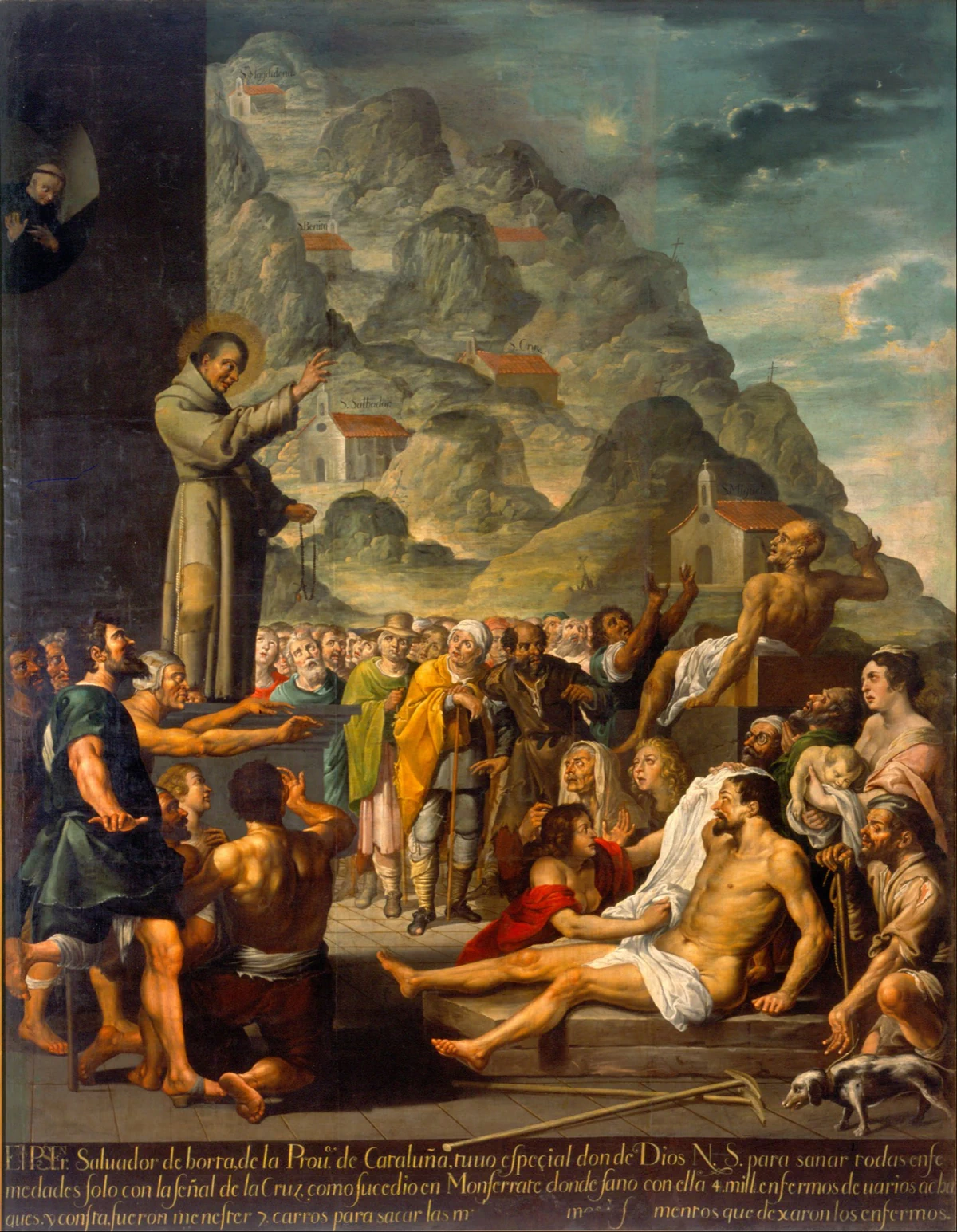
Source file copied unchanged by Saints and Science. Corpus Files proportionally resized the 1993 × 2565 Wikimedia Commons/Google Art Project JPEG source to 1398 × 1800 pixels and JPEG re-encoded it at quality 86 with macOS sips for web delivery. No crop, manual rotation, retouching, compositing, content alteration, or AI alteration was made; metadata may have been normalized by re-encoding. The artwork and faithful digital reproduction are marked public domain; no attribution or ShareAlike condition applies.
Web delivery: Saints and Science created proportionately resized WebP delivery copies at quality 82, or 80–76 where needed to keep the file smaller, for faster loading. The complete composition is retained, with no crop, enlargement, retouching, color adjustment, compositing, or AI alteration. Source ICC, EXIF, and XMP metadata are retained where available. Large ICC color profiles are color-managed into compact standard sRGB to preserve intended displayed colors without carrying oversized profiles; EXIF orientation is applied only if required for the original display orientation. The reviewed original remains available unchanged. Each copy retains the source image license and attribution.
Silvan of Dubrovnik
Display associated with Saint Silvan in the Church of Saint Blaise, Dubrovnik.
Credit: Z thomas · CC BY-SA 4.0 · Image file

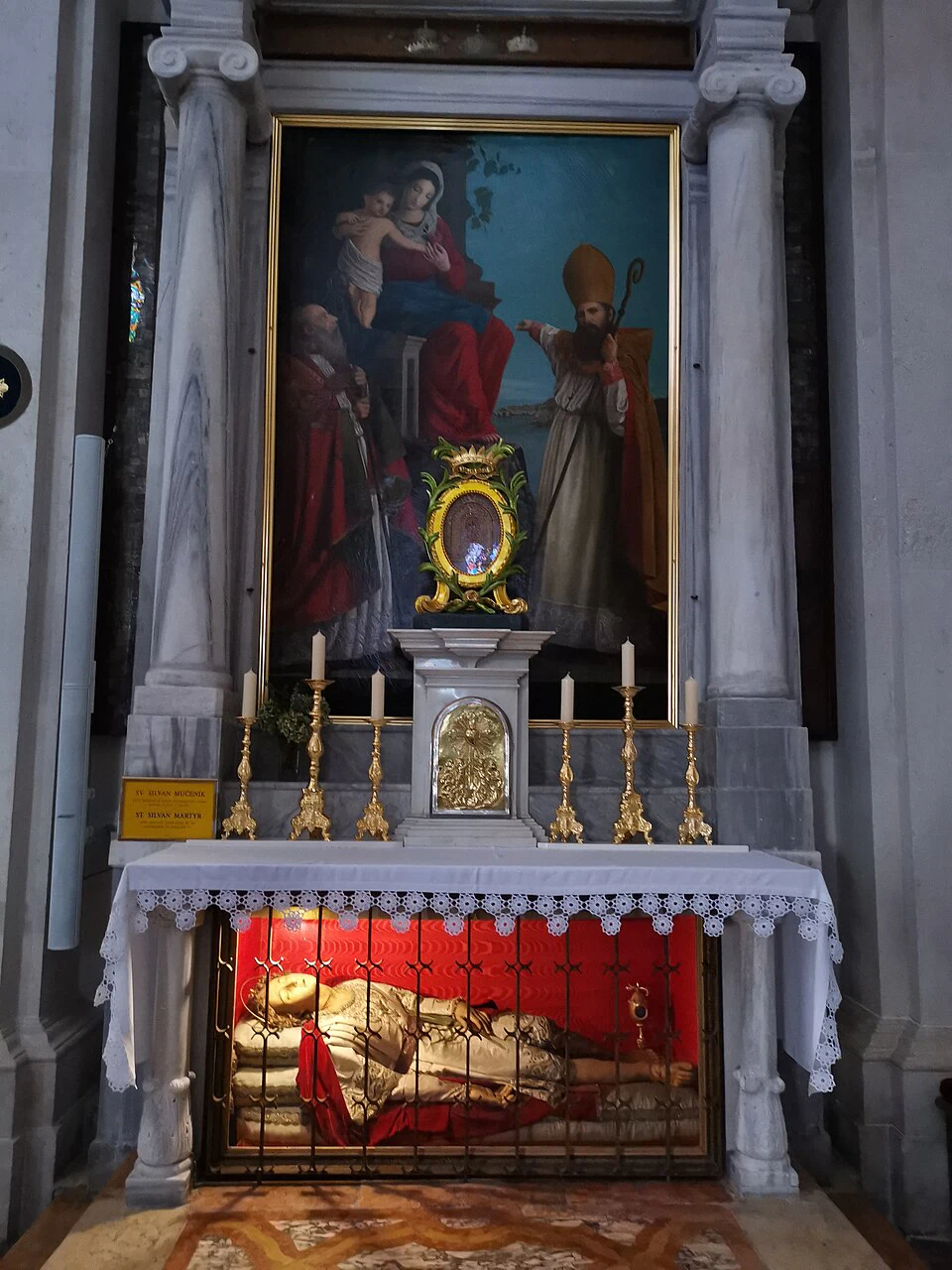
Source file copied unchanged by Saints and Science. The displayed copy was resized from the Commons source; redistribution remains under CC BY-SA 4.0.
Web delivery: Saints and Science created proportionately resized WebP delivery copies at quality 82, or 80–76 where needed to keep the file smaller, for faster loading. The complete composition is retained, with no crop, enlargement, retouching, color adjustment, compositing, or AI alteration. Source ICC, EXIF, and XMP metadata are retained where available. Large ICC color profiles are color-managed into compact standard sRGB to preserve intended displayed colors without carrying oversized profiles; EXIF orientation is applied only if required for the original display orientation. The reviewed original remains available unchanged. Each copy retains the source image license and attribution.
Saint Sperandia
Sperandia stands at upper right, holding lilies and a crucifix behind the kneeling bishop, in this detail of Lorenzo Lotto’s Cingoli altarpiece. The Alinari photograph was published in Bernhard Berenson’s Lorenzo Lotto in 1901.
Credit: Lorenzo Lotto (painting); Alinari (historical photograph); Getty Research Institute (book scan) · Public domain · Image file
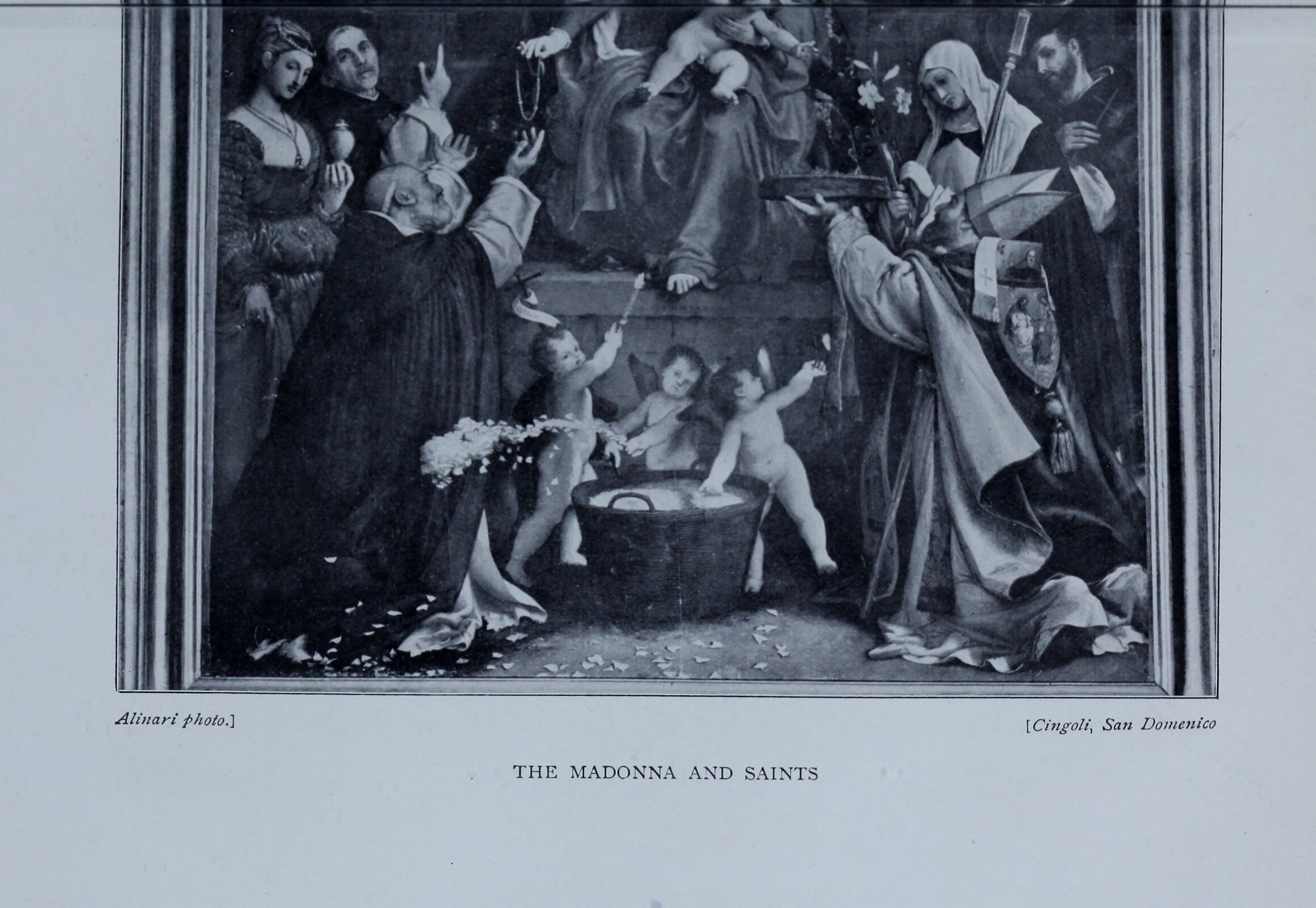
Source file copied unchanged by Saints and Science. The source’s foldout plate was scanned in two parts. Selected the complete lower plate scan that includes Sperandia; Internet Archive’s IIIF service rotated that page 90 degrees and proportionally resized it for upright display. Delivered those source-provider JPEG bytes unchanged. No local crop, retouching, recoloring, compositing, or AI alteration.
Web delivery: Saints and Science created proportionately resized WebP delivery copies at quality 82, or 80–76 where needed to keep the file smaller, for faster loading. The complete composition is retained, with no crop, enlargement, retouching, color adjustment, compositing, or AI alteration. Source ICC, EXIF, and XMP metadata are retained where available. Large ICC color profiles are color-managed into compact standard sRGB to preserve intended displayed colors without carrying oversized profiles; EXIF orientation is applied only if required for the original display orientation. The reviewed original remains available unchanged. Each copy retains the source image license and attribution.
Blessed Stephen Nehmé
The convent at Kfifan associated with Estephàn Nehmé.
Credit: Evilscaught · CC BY 3.0 · Image file

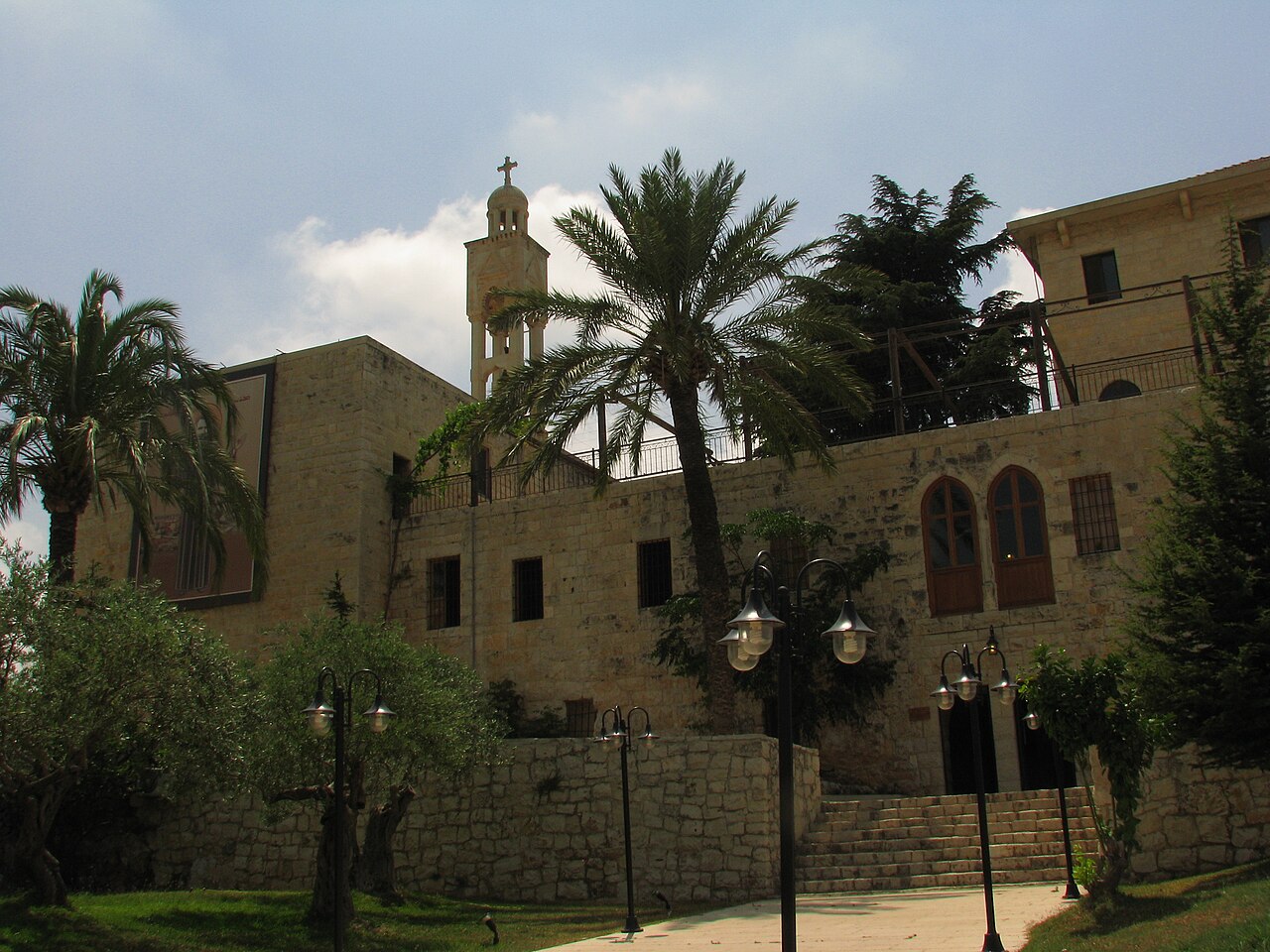
Source file copied unchanged by Saints and Science. Displayed copy is Wikimedia Commons’ upstream proportional thumbnail resize. Corpus Files downloaded it without additional crop, retouching, compositing, AI alteration or intentional color adjustment.
Web delivery: Saints and Science created proportionately resized WebP delivery copies at quality 82, or 80–76 where needed to keep the file smaller, for faster loading. The complete composition is retained, with no crop, enlargement, retouching, color adjustment, compositing, or AI alteration. Source ICC, EXIF, and XMP metadata are retained where available. Large ICC color profiles are color-managed into compact standard sRGB to preserve intended displayed colors without carrying oversized profiles; EXIF orientation is applied only if required for the original display orientation. The reviewed original remains available unchanged. Each copy retains the source image license and attribution.
Saint Teresa Margaret of the Sacred Heart
Pietro Leone Bombelli’s engraved portrait of Teresa Margaret in an 1806 biography. The book is held by the Johns Hopkins University Sheridan Libraries in Baltimore.
Credit: Pietro Leone Bombelli; Johns Hopkins University Sheridan Libraries copy · Public domain · Image file
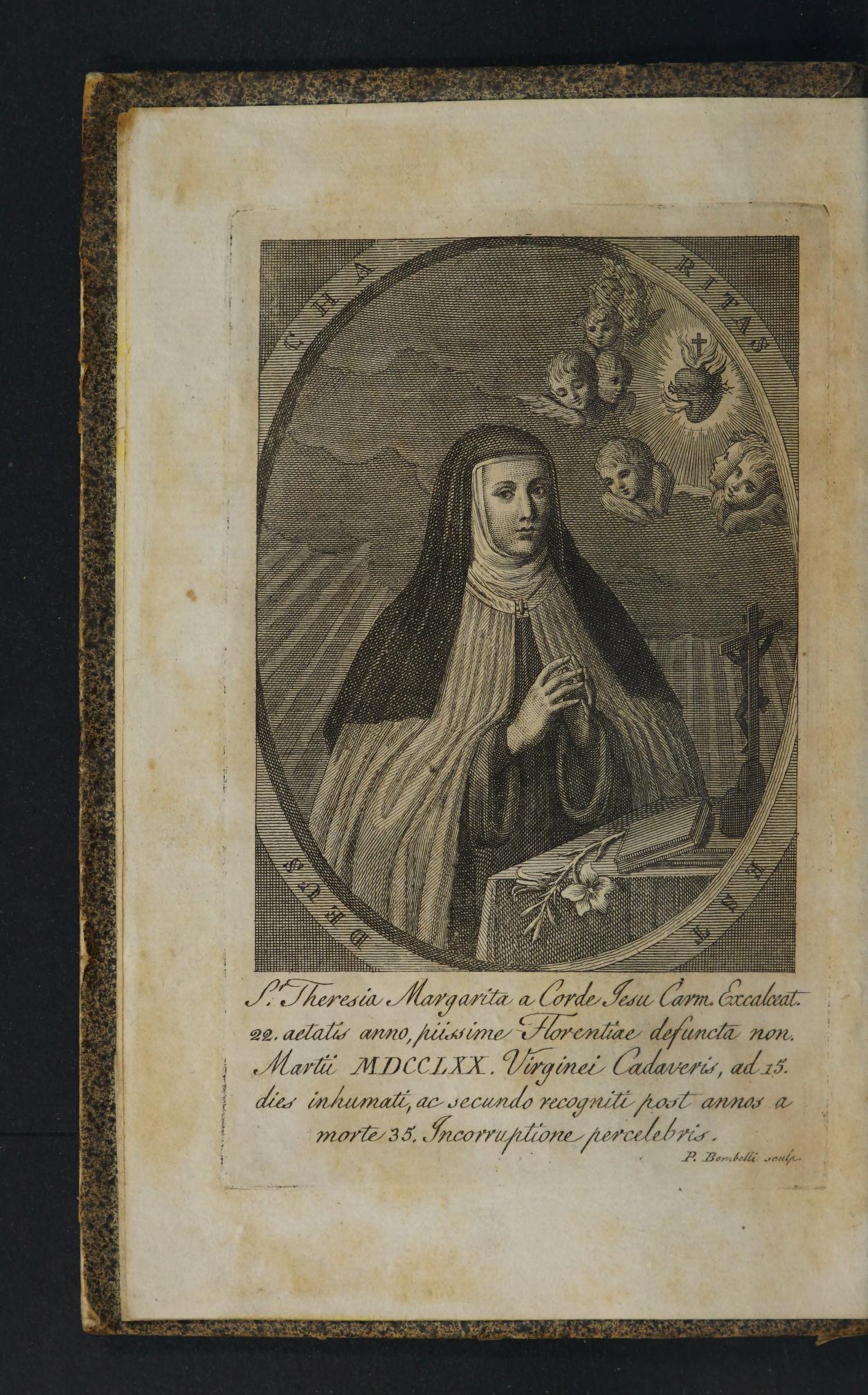
Source file copied unchanged by Saints and Science. The archive’s proportional BookReader JPEG, scale2, is copied unchanged with the complete supplied page. No additional crop, retouching, color correction, compositing or AI alteration.
Web delivery: Saints and Science created proportionately resized WebP delivery copies at quality 82, or 80–76 where needed to keep the file smaller, for faster loading. The complete composition is retained, with no crop, enlargement, retouching, color adjustment, compositing, or AI alteration. Source ICC, EXIF, and XMP metadata are retained where available. Large ICC color profiles are color-managed into compact standard sRGB to preserve intended displayed colors without carrying oversized profiles; EXIF orientation is applied only if required for the original display orientation. The reviewed original remains available unchanged. Each copy retains the source image license and attribution.
Saint Teresa of Ávila
François Guillaume Ménageot, The Virgin Placing St. Teresa of Avila Under the Protection of St. Joseph, ca. 1787. Saint Teresa kneels at lower right in this preparatory sketch; it is not a life portrait or documentary image. The Met, 1991.48.
Credit: François Guillaume Ménageot (French, 1744–1816) · The Met Open Access / CC0 1.0 · Image file
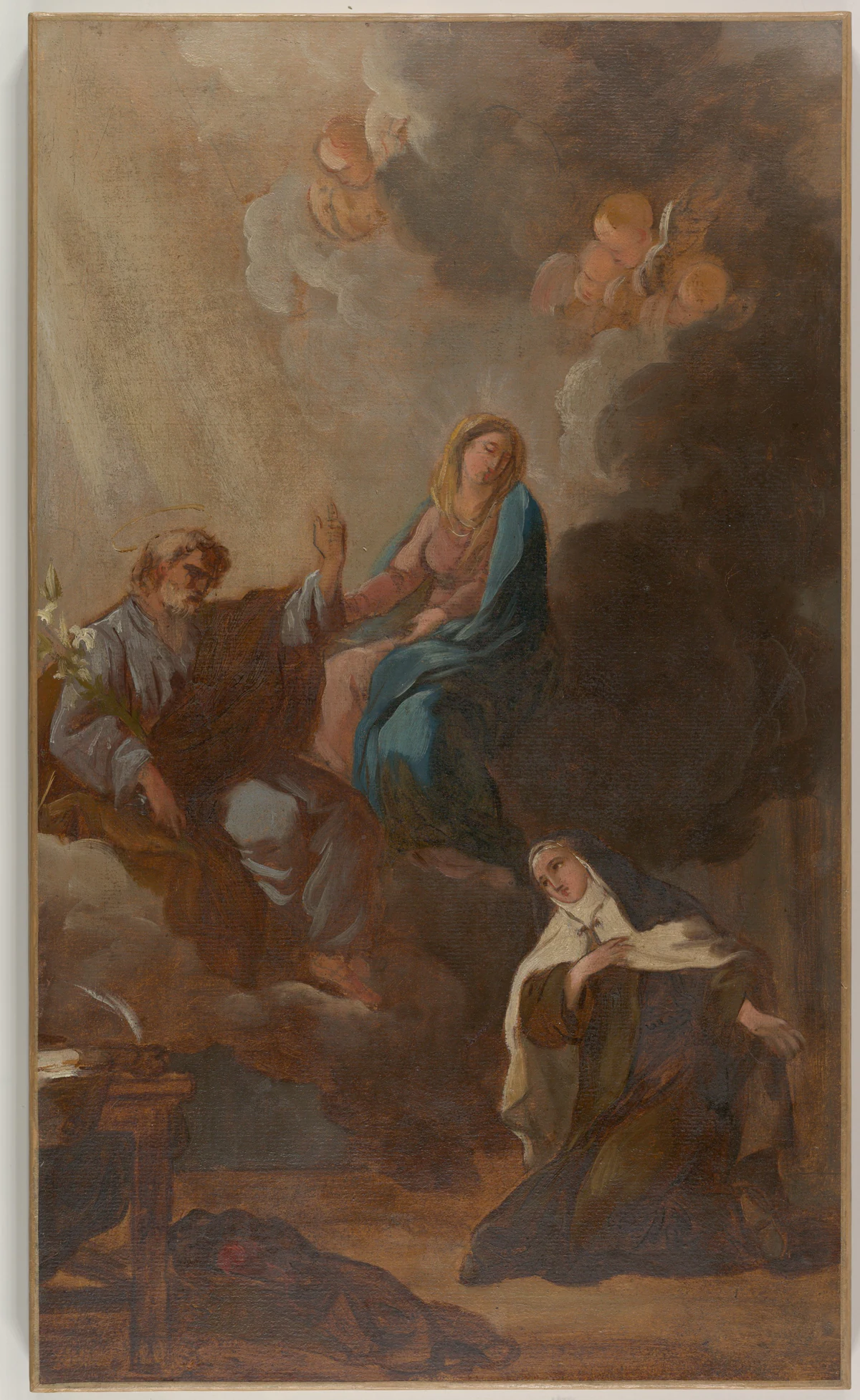
Source file copied unchanged by Saints and Science. Exact official Open Access primary-image JPEG bytes (2447 × 3985), preserving the full rectangular work and Teresa, the Virgin, Joseph, and surrounding composition. Corpus Files made no crop, resize, recompression, color adjustment, retouching, compositing, or AI alteration. The work is oil paint over pen and brown ink on paper mounted on canvas; infrared examination records a transferred underdrawing that the artist did not follow exactly. The public record supplies no further modern treatment history. Publication does not imply Metropolitan Museum of Art endorsement.
Web delivery: Saints and Science created proportionately resized WebP delivery copies at quality 82, or 80–76 where needed to keep the file smaller, for faster loading. The complete composition is retained, with no crop, enlargement, retouching, color adjustment, compositing, or AI alteration. Source ICC, EXIF, and XMP metadata are retained where available. Large ICC color profiles are color-managed into compact standard sRGB to preserve intended displayed colors without carrying oversized profiles; EXIF orientation is applied only if required for the original display orientation. The reviewed original remains available unchanged. Each copy retains the source image license and attribution.
Saint Ubald of Gubbio
The Collégiale Saint-Thiébaut in Thann, France, a place of devotion to Ubald of Gubbio, whose name is rendered locally as Thiébaut.
Credit: Gzen92 · CC BY-SA 4.0 · Image file

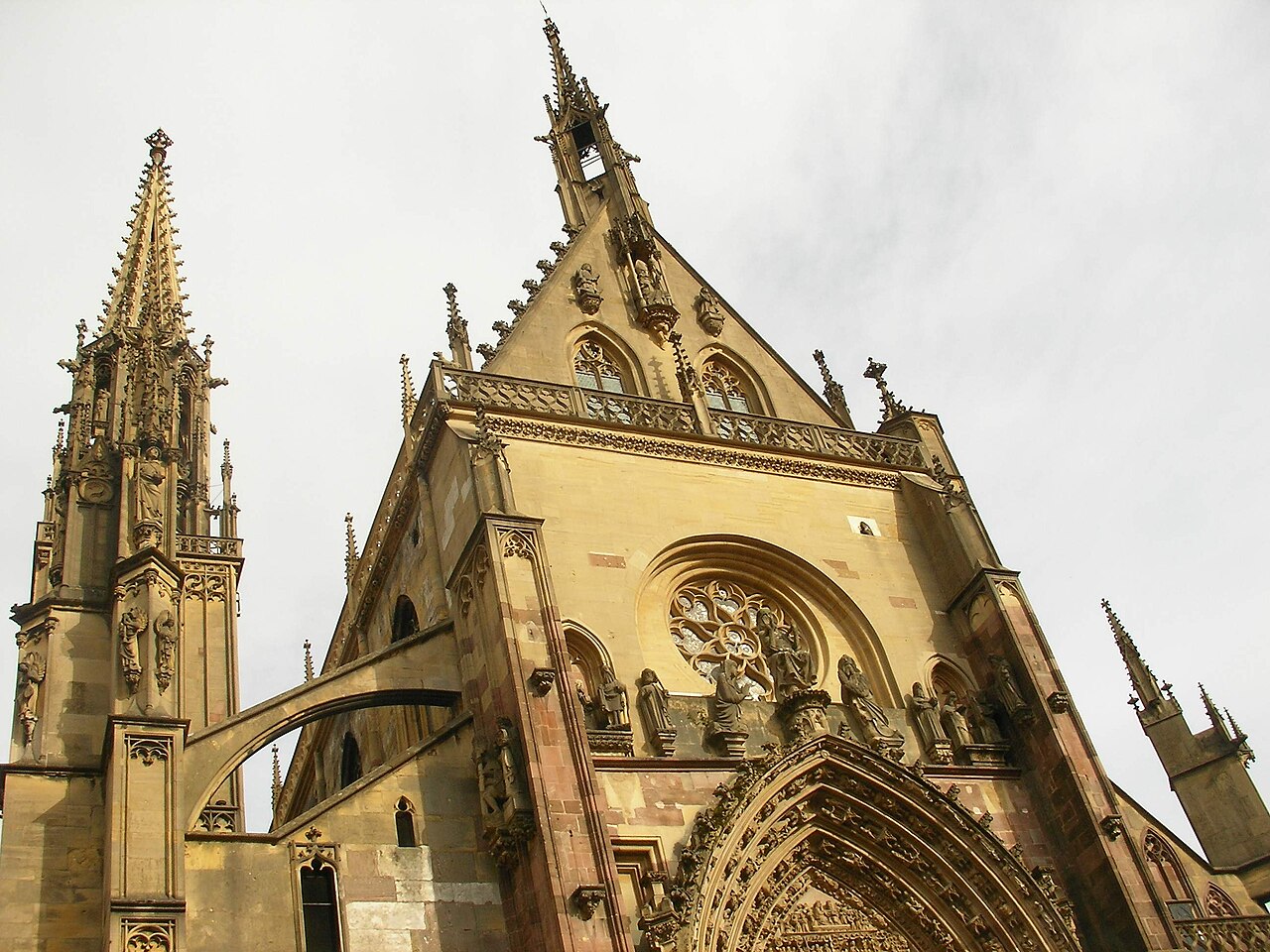
Source file copied unchanged by Saints and Science. The supplied Commons proportional1280-pixel JPEG is copied unchanged. No additional crop, retouching, color correction, compositing or AI alteration.
Web delivery: Saints and Science created proportionately resized WebP delivery copies at quality 82, or 80–76 where needed to keep the file smaller, for faster loading. The complete composition is retained, with no crop, enlargement, retouching, color adjustment, compositing, or AI alteration. Source ICC, EXIF, and XMP metadata are retained where available. Large ICC color profiles are color-managed into compact standard sRGB to preserve intended displayed colors without carrying oversized profiles; EXIF orientation is applied only if required for the original display orientation. The reviewed original remains available unchanged. Each copy retains the source image license and attribution.
Saint Ursula Ledóchowska
The room identified as Ursula Ledóchowska’s in the religious house at Pniewy.
Credit: Albertus teolog · CC BY-SA 4.0 · Image file

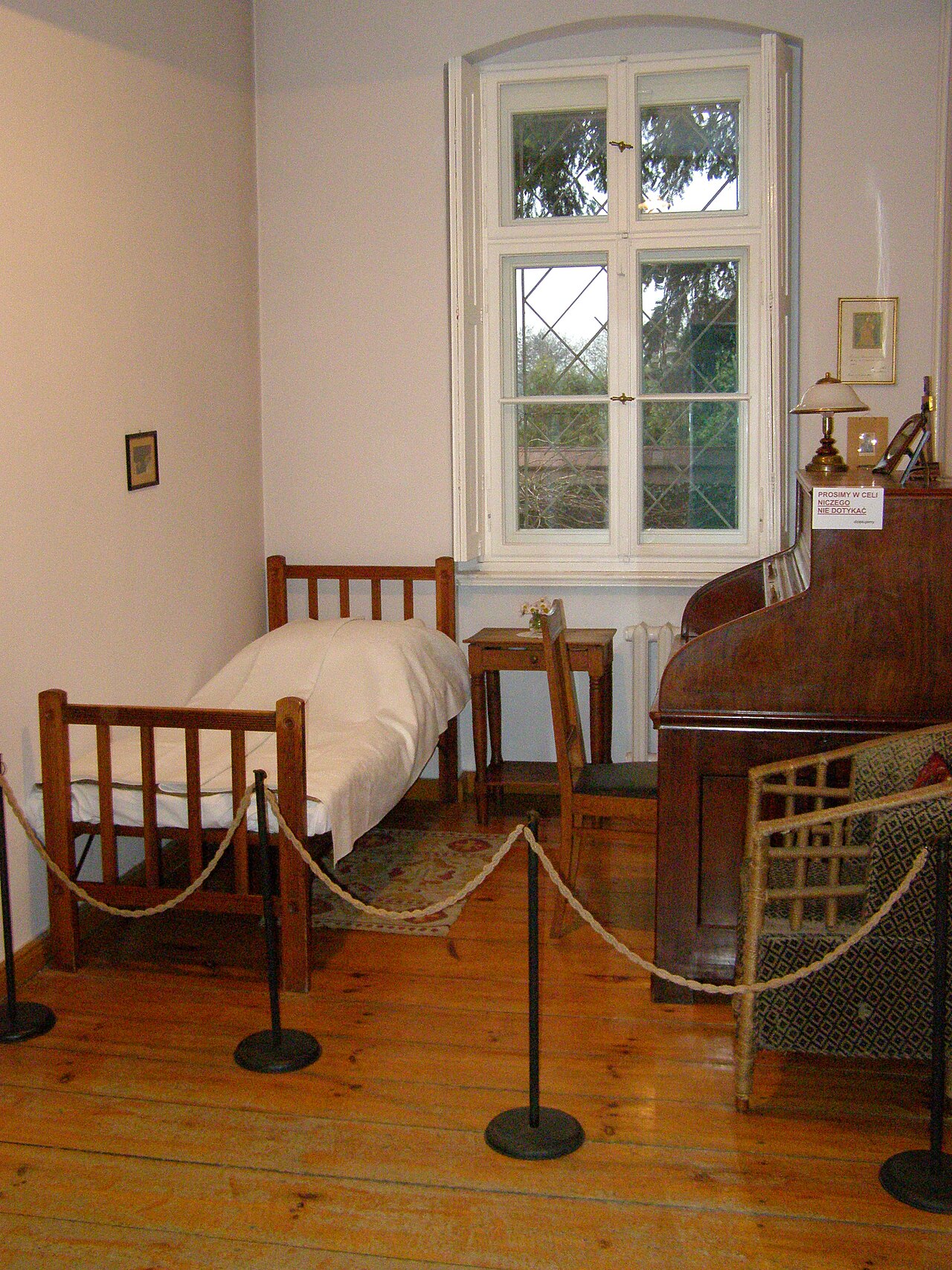
Source file copied unchanged by Saints and Science. Displayed copy is Wikimedia Commons’ upstream proportional thumbnail resize. Corpus Files downloaded it without additional crop, retouching, compositing, AI alteration or intentional color adjustment.
Web delivery: Saints and Science created proportionately resized WebP delivery copies at quality 82, or 80–76 where needed to keep the file smaller, for faster loading. The complete composition is retained, with no crop, enlargement, retouching, color adjustment, compositing, or AI alteration. Source ICC, EXIF, and XMP metadata are retained where available. Large ICC color profiles are color-managed into compact standard sRGB to preserve intended displayed colors without carrying oversized profiles; EXIF orientation is applied only if required for the original display orientation. The reviewed original remains available unchanged. Each copy retains the source image license and attribution.
Venerable María de Jesús of Ágreda
Anonymous eighteenth-century portrait identified as Mary of Jesus of Ágreda, in the Museo Nacional del Virreinato, Mexico.
Credit: Anonymous artist · Public domain · Image file

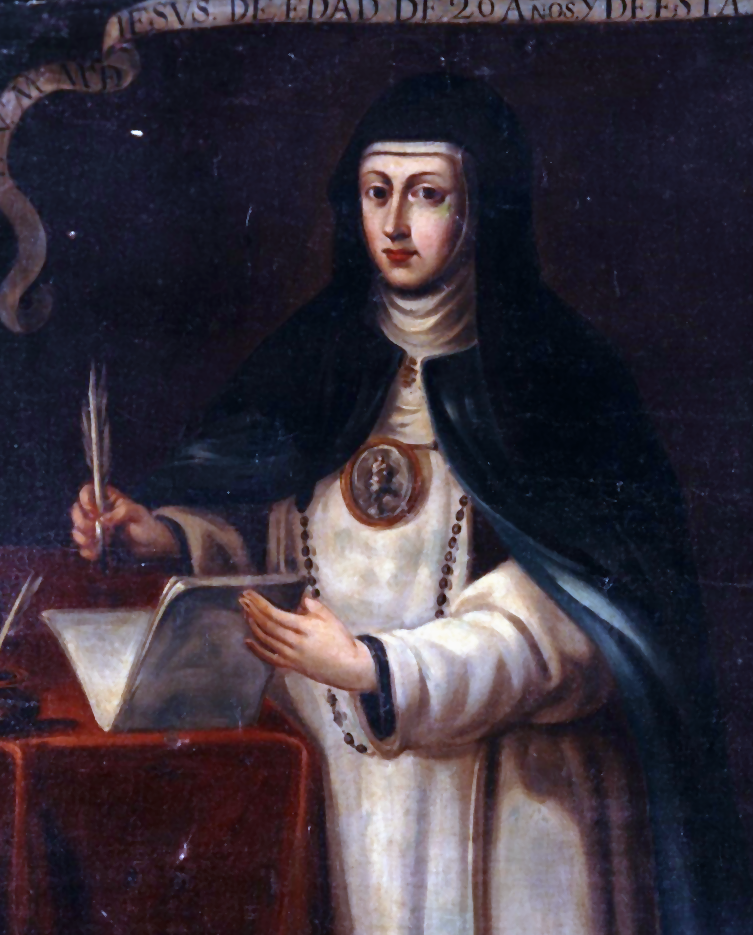
Source file copied unchanged by Saints and Science. No changes detected; displayed file is byte-for-byte identical to the Commons source.
Web delivery: Saints and Science created proportionately resized WebP delivery copies at quality 82, or 80–76 where needed to keep the file smaller, for faster loading. The complete composition is retained, with no crop, enlargement, retouching, color adjustment, compositing, or AI alteration. Source ICC, EXIF, and XMP metadata are retained where available. Large ICC color profiles are color-managed into compact standard sRGB to preserve intended displayed colors without carrying oversized profiles; EXIF orientation is applied only if required for the original display orientation. The reviewed original remains available unchanged. Each copy retains the source image license and attribution.
Saint Veronica Giuliani
Veronica Giuliani with Christ in Josef Zenker’s nineteenth-century altarpiece at Saint Anton in Munich, photographed by Ricardalovesmonuments.
Credit: Josef Zenker; photograph by Ricardalovesmonuments · CC BY 4.0 · Image file

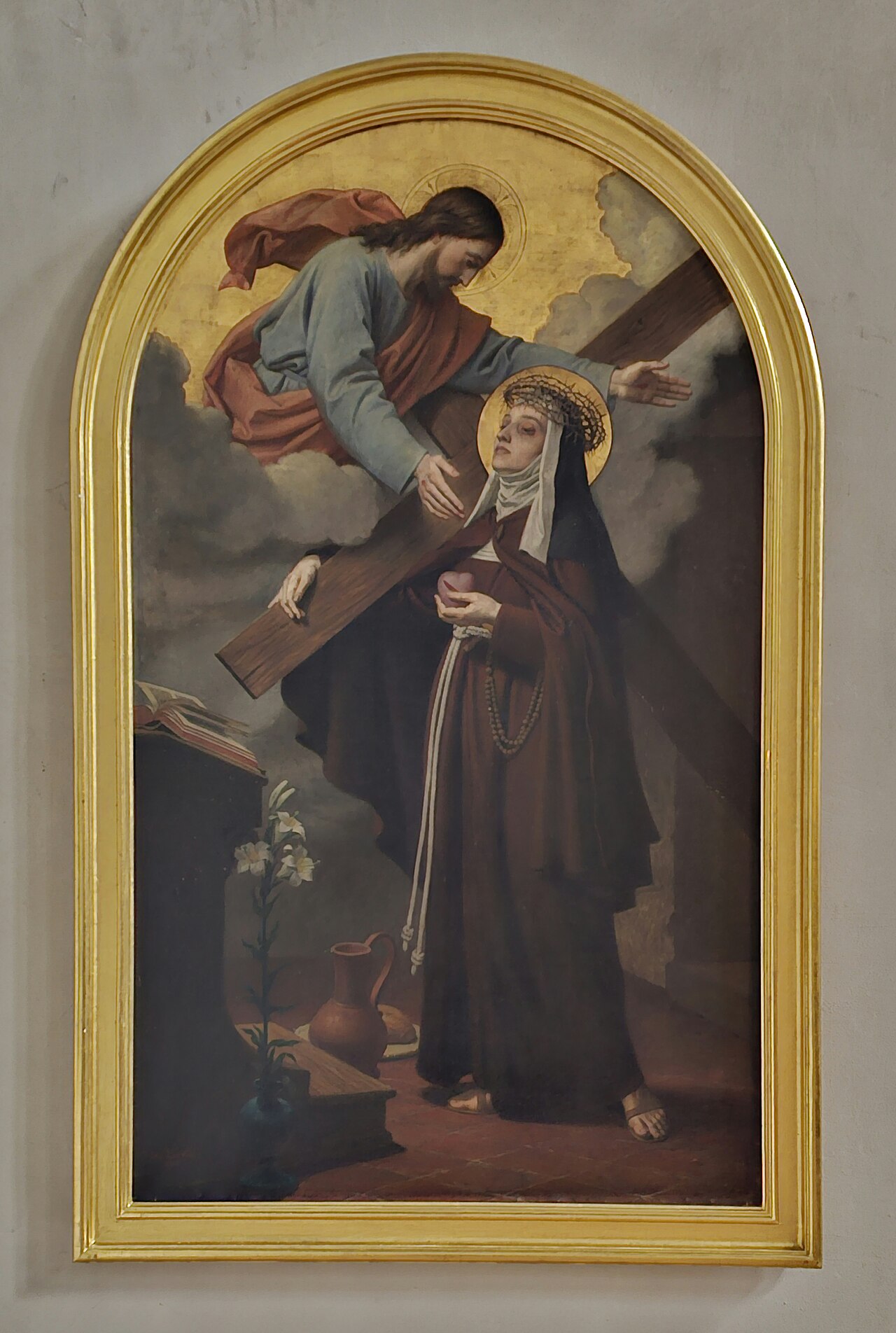
Source file copied unchanged by Saints and Science. The existing Commons proportional1280-pixel JPEG is copied unchanged. No additional crop, retouching, color correction, compositing or AI alteration.
Web delivery: Saints and Science created proportionately resized WebP delivery copies at quality 82, or 80–76 where needed to keep the file smaller, for faster loading. The complete composition is retained, with no crop, enlargement, retouching, color adjustment, compositing, or AI alteration. Source ICC, EXIF, and XMP metadata are retained where available. Large ICC color profiles are color-managed into compact standard sRGB to preserve intended displayed colors without carrying oversized profiles; EXIF orientation is applied only if required for the original display orientation. The reviewed original remains available unchanged. Each copy retains the source image license and attribution.
Saint Vincent de Paul
Etienne Fessard’s 1756 engraving after Charles Joseph Natoire depicts Saint Vincent de Paul in the Chapel of the Enfants-Trouvés in Paris. It belongs to a print series made after Natoire’s chapel paintings before the chapel was destroyed in the nineteenth century.
Credit: Etienne Fessard, after Charles Joseph Natoire · The Met Open Access / CC0 1.0 · Image file
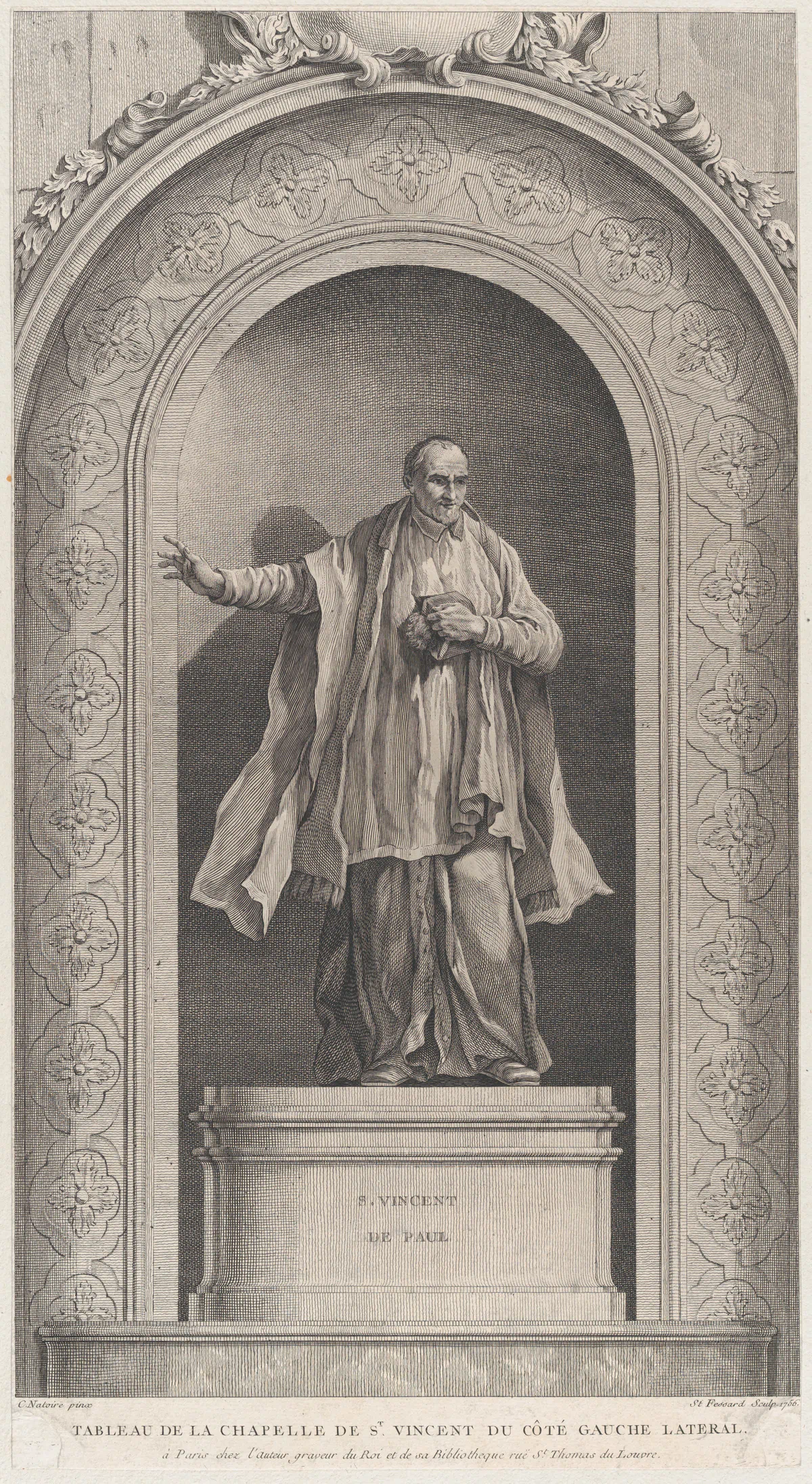
Source file copied unchanged by Saints and Science. Exact official Open Access primary-image bytes (2052 × 3748 JPEG); Corpus Files made no crop, resize, recompression, retouching, or content alteration. The Met catalogs the surviving sheet as trimmed; the image retains the complete surviving sheet and inscriptions. No further conservation or digital-processing history is stated in the current Met object/API record. Publication does not imply Metropolitan Museum of Art endorsement.
Web delivery: Saints and Science created proportionately resized WebP delivery copies at quality 82, or 80–76 where needed to keep the file smaller, for faster loading. The complete composition is retained, with no crop, enlargement, retouching, color adjustment, compositing, or AI alteration. Source ICC, EXIF, and XMP metadata are retained where available. Large ICC color profiles are color-managed into compact standard sRGB to preserve intended displayed colors without carrying oversized profiles; EXIF orientation is applied only if required for the original display orientation. The reviewed original remains available unchanged. Each copy retains the source image license and attribution.
Saint Virginia Centurione Bracelli
Saint Peter’s Basilica and Square in Vatican City, photographed in August 2014. Virginia Centurione Bracelli was canonized in this square on 18 May 2003.
Credit: Perituss · CC0 1.0 · Image file

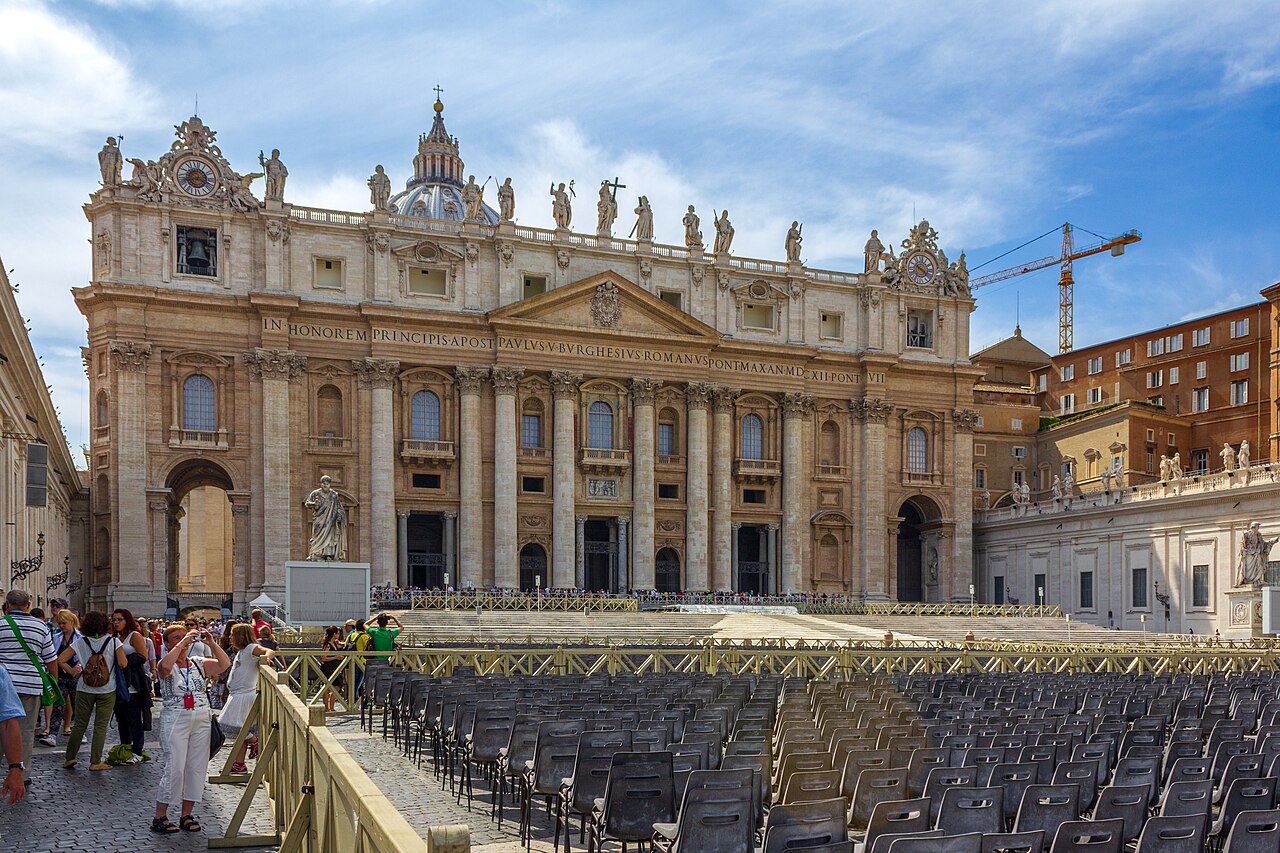
Source file copied unchanged by Saints and Science. The supplied Commons proportional1280-pixel JPEG is copied unchanged. No additional crop, retouching, color correction, compositing or AI alteration.
Web delivery: Saints and Science created proportionately resized WebP delivery copies at quality 82, or 80–76 where needed to keep the file smaller, for faster loading. The complete composition is retained, with no crop, enlargement, retouching, color adjustment, compositing, or AI alteration. Source ICC, EXIF, and XMP metadata are retained where available. Large ICC color profiles are color-managed into compact standard sRGB to preserve intended displayed colors without carrying oversized profiles; EXIF orientation is applied only if required for the original display orientation. The reviewed original remains available unchanged. Each copy retains the source image license and attribution.
Saint Waltheof of Melrose
A building along the eastern wall of Melrose Abbey, viewed from the Commendator's House grounds in 2022.
Credit: Ymblanter · CC BY-SA 4.0 · Image file

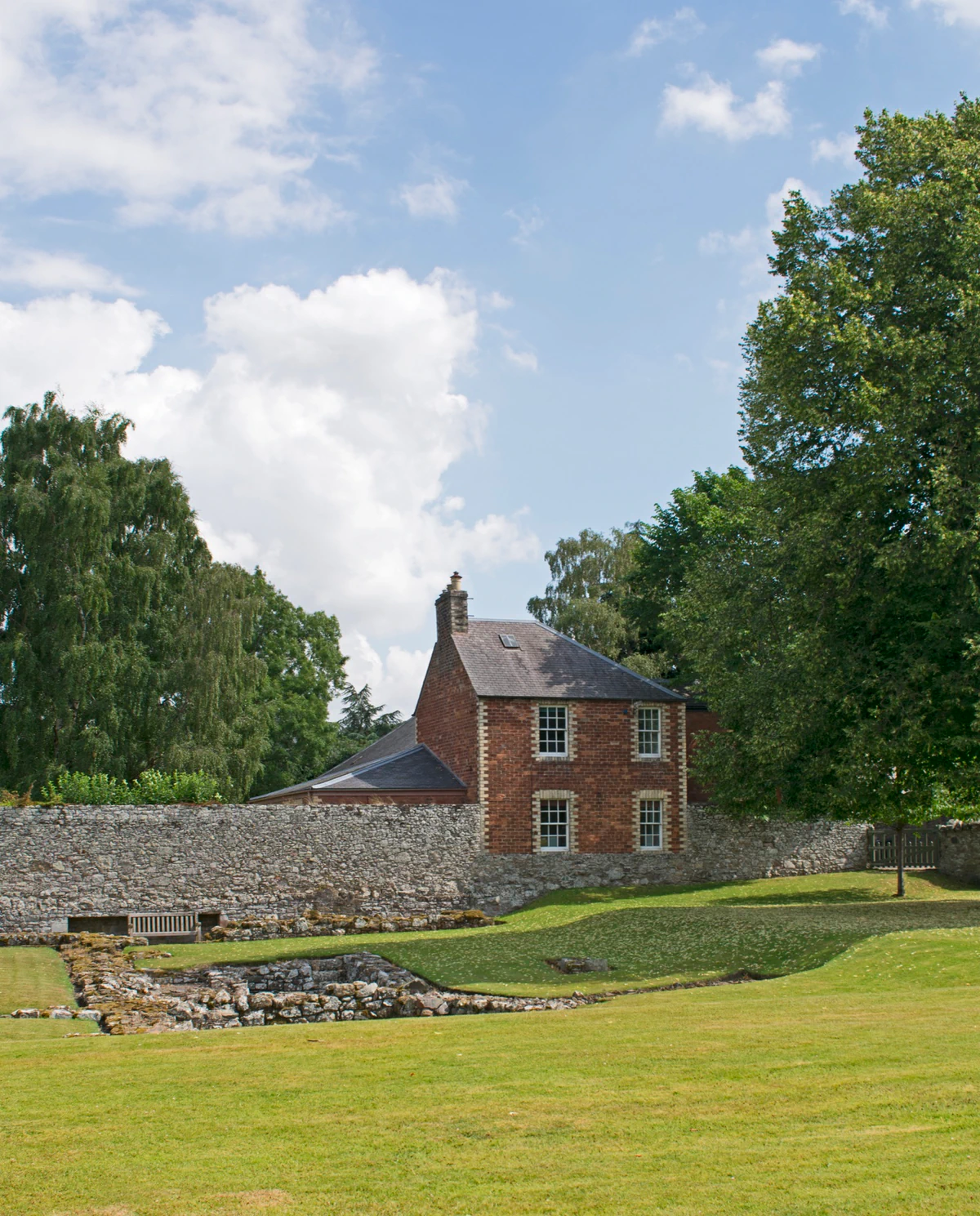
Source file copied unchanged by Saints and Science. Corpus Files proportionally resized the 4000 × 4960 Wikimedia Commons JPEG source to 1451 × 1800 pixels and JPEG re-encoded it at quality 86 with macOS sips for web delivery. No crop, manual rotation, retouching, compositing, content alteration, or AI alteration was made; metadata may have been normalized by re-encoding. Redistribution remains under CC BY-SA 4.0; ShareAlike applies to adaptations.
Web delivery: Saints and Science created proportionately resized WebP delivery copies at quality 82, or 80–76 where needed to keep the file smaller, for faster loading. The complete composition is retained, with no crop, enlargement, retouching, color adjustment, compositing, or AI alteration. Source ICC, EXIF, and XMP metadata are retained where available. Large ICC color profiles are color-managed into compact standard sRGB to preserve intended displayed colors without carrying oversized profiles; EXIF orientation is applied only if required for the original display orientation. The reviewed original remains available unchanged. Each copy retains the source image license and attribution.
Saint Werburgh
The fourteenth-century stone shrine of Saint Werburgh, reconstructed in the nineteenth century, behind the high altar in Chester Cathedral.
Credit: Mcginnly (Russ McGinn) · CC BY 3.0 · Image file

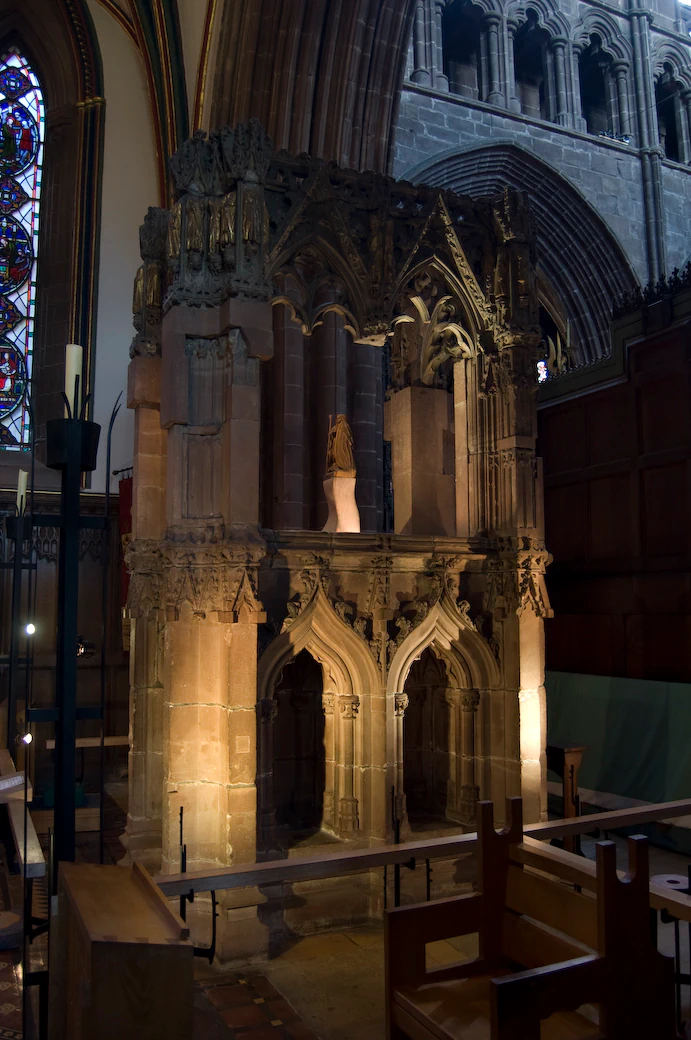
Source file copied unchanged by Saints and Science. Exact original Wikimedia Commons JPEG retained as uploaded; Corpus Files made no further crop, resize, rotation, recompression, metadata removal, retouching, color adjustment, compositing, or AI alteration. Commons publishes one binary revision. Embedded Lightroom XMP records creator-applied crop, 1.629832-degree straightening, brightness +50, contrast +25, a medium-contrast tone curve, sharpening 25, and color-noise reduction 25. CC BY 3.0 requires attribution and change disclosure; no ShareAlike condition applies.
Web delivery: Saints and Science created proportionately resized WebP delivery copies at quality 82, or 80–76 where needed to keep the file smaller, for faster loading. The complete composition is retained, with no crop, enlargement, retouching, color adjustment, compositing, or AI alteration. Source ICC, EXIF, and XMP metadata are retained where available. Large ICC color profiles are color-managed into compact standard sRGB to preserve intended displayed colors without carrying oversized profiles; EXIF orientation is applied only if required for the original display orientation. The reviewed original remains available unchanged. Each copy retains the source image license and attribution.
Sister Wilhelmina Lancaster
Benedictines of Mary praying beside Wilhelmina Lancaster’s displayed body, in a modified still from TAN Books’ Finding Sr. Wilhelmina (2023). The image documents a devotional presentation, not an anatomical examination or proof of untreated preservation.
Credit: TAN Books · CC BY 3.0 · Image file

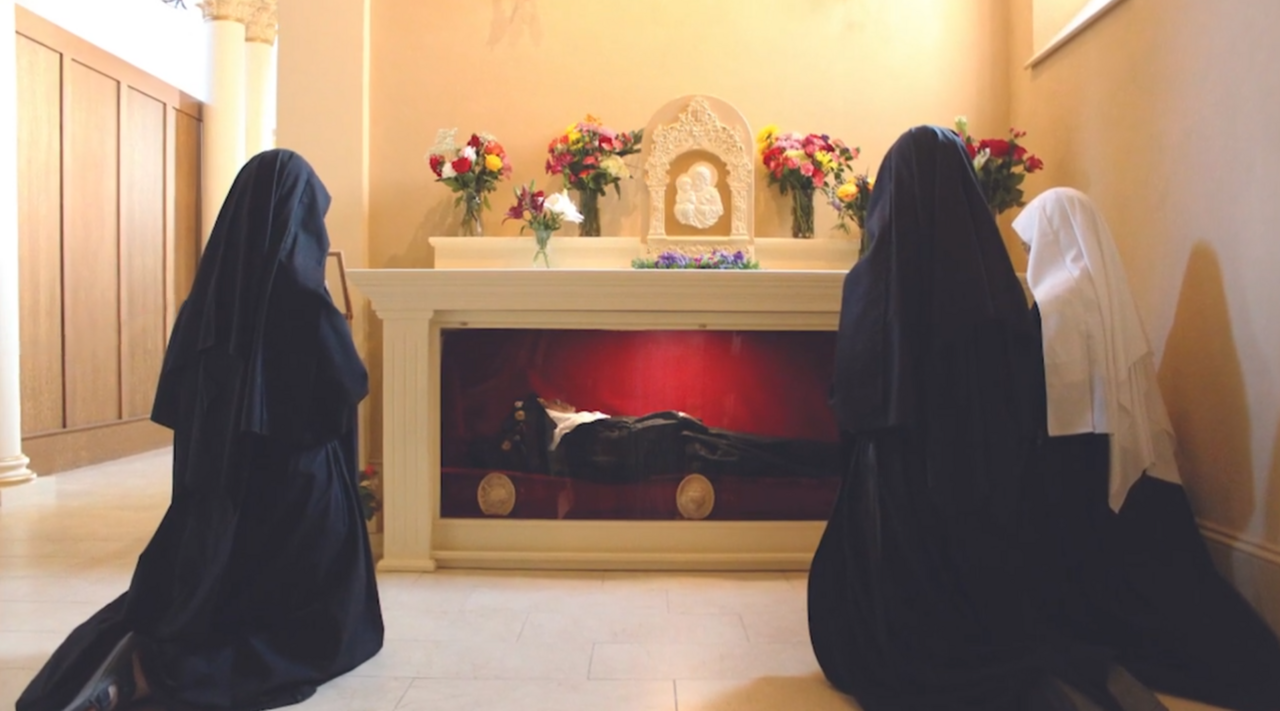
Source file copied unchanged by Saints and Science. Exact Wikimedia Commons proportional thumbnail bytes at 1280 × 711 pixels. Corpus Files made no crop, resize, recompression, retouching, compositing, color adjustment, or AI alteration. Commons describes the source as a modified screenshot; the precise upstream modification is not specified.
Web delivery: Saints and Science created proportionately resized WebP delivery copies at quality 82, or 80–76 where needed to keep the file smaller, for faster loading. The complete composition is retained, with no crop, enlargement, retouching, color adjustment, compositing, or AI alteration. Source ICC, EXIF, and XMP metadata are retained where available. Large ICC color profiles are color-managed into compact standard sRGB to preserve intended displayed colors without carrying oversized profiles; EXIF orientation is applied only if required for the original display orientation. The reviewed original remains available unchanged. Each copy retains the source image license and attribution.
Saint Zita
Arnould de Vuez, Sainte Zite, 1696, Hospice Comtesse, Lille; photograph by the Wikimedia contributor Velvet.
Credit: Arnould de Vuez; photograph by Velvet · CC BY-SA 3.0 (share-alike terms retained for this derivative) · Image file

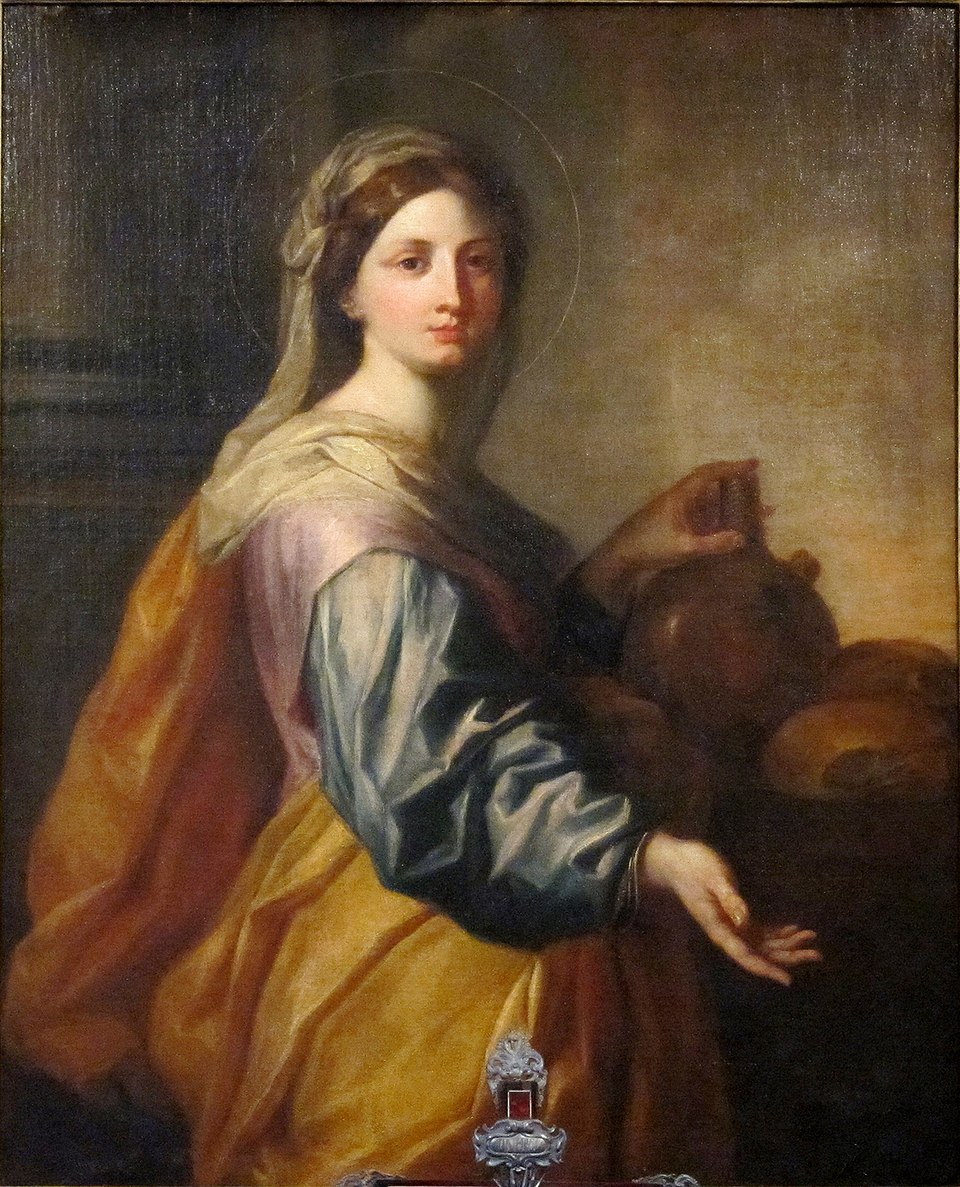
Source file copied unchanged by Saints and Science. The displayed copy is a resized and JPEG re-encoded derivative of Velvet's photograph, near-pixel-identical to the current Commons 960-pixel rendition.
Web delivery: Saints and Science created proportionately resized WebP delivery copies at quality 82, or 80–76 where needed to keep the file smaller, for faster loading. The complete composition is retained, with no crop, enlargement, retouching, color adjustment, compositing, or AI alteration. Source ICC, EXIF, and XMP metadata are retained where available. Large ICC color profiles are color-managed into compact standard sRGB to preserve intended displayed colors without carrying oversized profiles; EXIF orientation is applied only if required for the original display orientation. The reviewed original remains available unchanged. Each copy retains the source image license and attribution.
Saint Émilie de Vialar
The reliquary identified as Émilie de Vialar's in Saint-Pierre, Gaillac.
Credit: Didier Descouens · CC BY-SA 4.0 · Image file

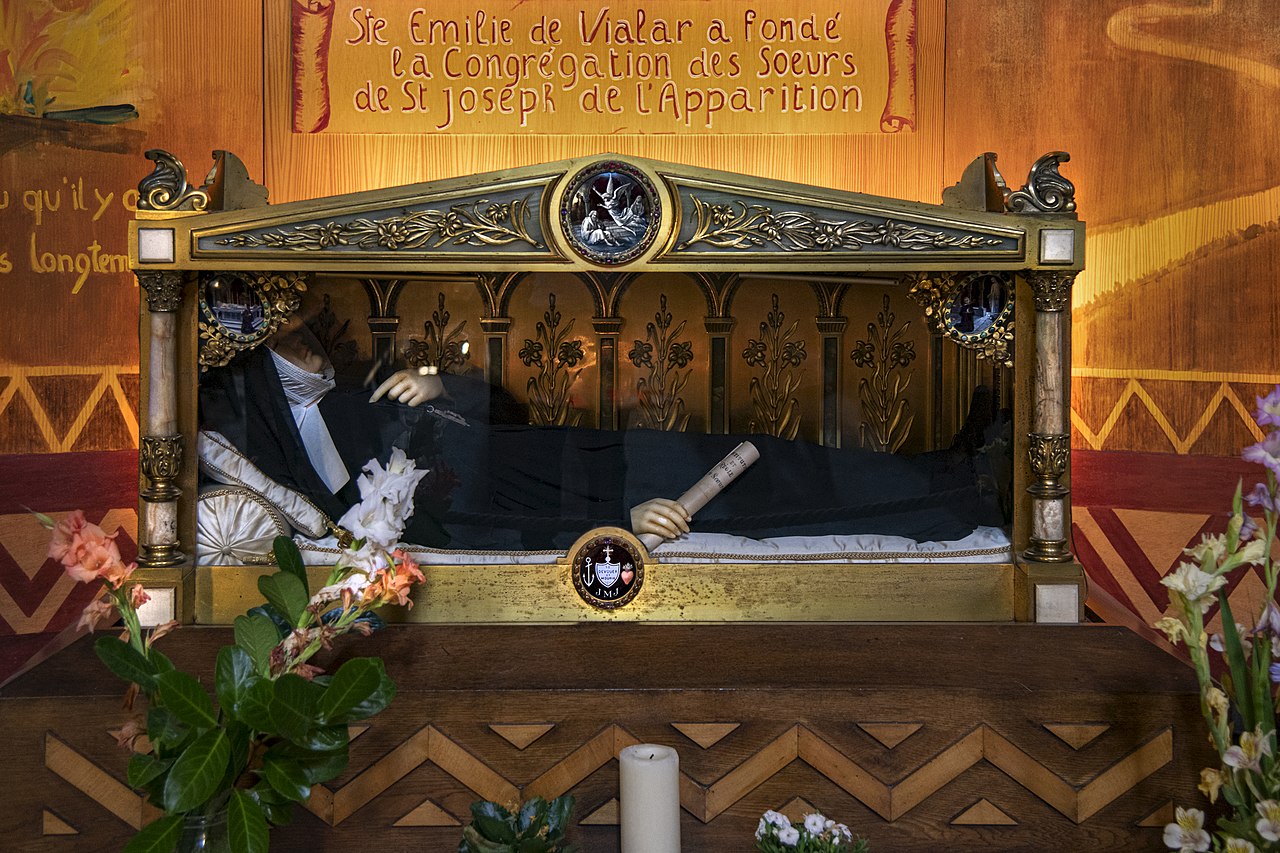
Source file copied unchanged by Saints and Science. Displayed copy is Wikimedia Commons’ upstream proportional thumbnail resize. Corpus Files downloaded it without additional crop, retouching, compositing, AI alteration or intentional color adjustment.
Web delivery: Saints and Science created proportionately resized WebP delivery copies at quality 82, or 80–76 where needed to keep the file smaller, for faster loading. The complete composition is retained, with no crop, enlargement, retouching, color adjustment, compositing, or AI alteration. Source ICC, EXIF, and XMP metadata are retained where available. Large ICC color profiles are color-managed into compact standard sRGB to preserve intended displayed colors without carrying oversized profiles; EXIF orientation is applied only if required for the original display orientation. The reviewed original remains available unchanged. Each copy retains the source image license and attribution.