THE PERSON BEHIND THE ACCOUNT
Ángela of the Cross returned to the shoemaking bench before she found her community.
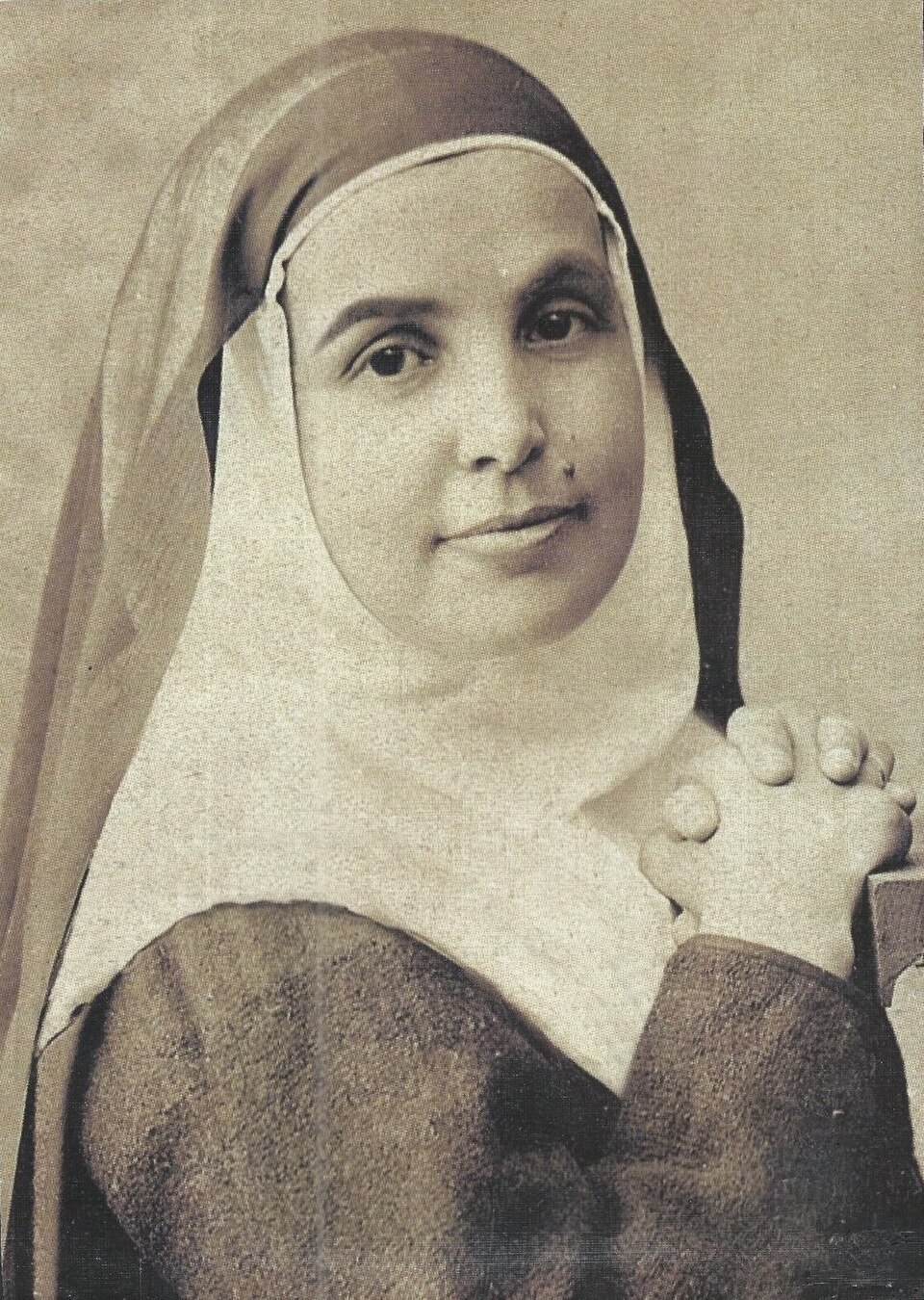
Ángela Guerrero had already tried to enter religious life when poor health forced her to leave the Daughters of Charity. She returned to shoemaking in Seville and continued discerning with her spiritual director. The Sisters of the Cross grew from the years after that disappointed beginning. [1]
Work began young
Born in Seville in 1846, Ángela had little formal schooling and started work in a shoe workshop around twelve. An early biography preserved by the sisters recalls a family of fourteen children, six of whom reached adulthood, and parents who worked for the Trinitarian community. The household’s losses and labor belong before the later reputation for holiness. [4] [3]
Writing after the workshop
The congregation’s biography recounts her writing the foundation project after days at the shoe workshop, encouraged by José Torres Padilla. That is a practical picture of discernment: work, advice and repeated writing, before a community had a house or an approved rule. [2]
Four women in a rented room
In 1875 she and three companions began the Company of the Cross in a small rented room. The sisters’ history names Josefa de la Peña, Juana María de Castro and Juana Magadón among the first group. Their visiting work required companions willing to share the same material uncertainty. [2]
Care crossed the threshold of the home
The Vatican account describes sisters visiting sick people at home, collecting alms and distributing assistance, and taking in orphaned girls. That combination followed need into the household and then extended to children left behind. It involved the unglamorous logistics of food, space and time as much as religious inspiration. [1]
IN OUR OWN LIVES
The work after a closed door
Returning to paid work after a desired path closes can leave a person with no clear next step. Repeated thought, advice and practical preparation may still produce another form of service. Companions can help make it sustainable.
THROUGH THE EYES OF FAITH
Faith and daily life
Ángela’s founding idea was to share the poverty of the people she served. The formal canonization record describes devotion to the crucified Christ, humility and daily care for sick people. The Cross in her name expressed the religious purpose of that service. [4]
Poverty with cleanliness and care
The sisters’ account remembers austerity alongside cleanliness and a cheerful household. Chosen poverty remained responsible to the care owed to people receiving help. [2]
John Paul II canonized her on 4 May 2003. The formal apostolic record names her among the Spanish saints recognized that day. The act locates her within Catholic public veneration; it does not supply a conservation report for the body. [4]
THROUGH THE LENS OF SCIENCE
The evidence about the remains
The Vatican and the congregation describe her body as incorrupt and locate it in the motherhouse chapel in Seville. These are direct institutional claims about the remains; neither source publishes a full anatomical examination or history of treatment. [1] [2]
What the Seville account says
The congregation records a 2003 transfer for cathedral celebrations. It says embalming after death was considered if needed and judged unnecessary then. This is institutional testimony about that occasion, not an independently established lifetime absence of treatment. [2]
The sources do not disclose the full condition of the tissues or every later conservation intervention. The appropriate description is an institutionally reported preserved body, with its material history incompletely published. [1] [2]
READER QUESTIONS
Questions and answers
Why did she leave the Daughters of Charity?
The Vatican account attributes the departure to poor health. Her later foundation developed after she returned to Seville and work. [1]
What did the first sisters do?
They visited poor and sick people in their homes, distributed assistance and later cared for orphaned girls. [1]
FOLLOW THE SOURCES
Sources and further reading
- Holy See — Canonization biography of Ángela of the Cross
Church or shrine source
Work, health-related departures, care and motherhouse preservation claim; conflicting exact early dates omitted.
- Sisters of the Cross — Biography
Church or shrine source
Companions, after-work writing, institutional practices and account of remains. A devotional institutional narrative, without a medical protocol.
- Sisters of the Cross — Early biography, chapter II
Primary historical record
Reproduces an early community biography, explicitly dependent in part on oral recollections; family labor and bereavement only are used.
- John Paul II — Verbum enim crucis, 4 May 2003
Primary historical record
Formal canonization record, including early work and the spirituality of poverty, the Cross and daily service to sick people; no material examination. Its compressed admission history differs from the fuller institutional biography, so it is not used to settle those details.
Sources checked: 2026-10-27. Suggest a correction or a source.