THE PERSON BEHIND THE ACCOUNT
Camillus knew the hospital from the patient’s side of the bed.
A recurring wound in Camillus de Lellis’s leg twice prevented him from remaining with the Capuchins. It brought him back to a Roman hospital as a patient. The place associated with his own need for care became the setting of his work for other sick people. [1]
Cards, military life and a turning point
Historian Felice Accrocca’s account describes a young man whose gambling brought him to poverty and begging. Work with the Capuchins at Manfredonia gave him food and employment. The conversion he remembered in 1575 was followed by an attempt to join that community, before the leg wound intervened. [4]
The later nursing vocation did not require the wound to vanish. His biography contains an ongoing physical limitation alongside an unusually demanding response to other people’s illness. That combination is more revealing than a conversion story in which every consequence of the past conveniently disappears. [1] [4]
A hospital needed more than good intentions
The Order’s history of its work at Pavia recalls Camillus’s return to San Giacomo and his growing responsibility for staff and services. It describes patients suffering from neglect, rough treatment and poor cleanliness. The problem was institutional as well as personal: people needed reliable care across a working hospital. [5]
IN OUR OWN LIVES
Remembering the patient while organizing the ward
A crowded schedule can turn a person into a task. Care requires attention to staffing, conduct and continuity as well as the next procedure. The patient’s dependence on the people working in the ward is a question an institution has to keep asking.
THROUGH THE EYES OF FAITH
Faith and daily life
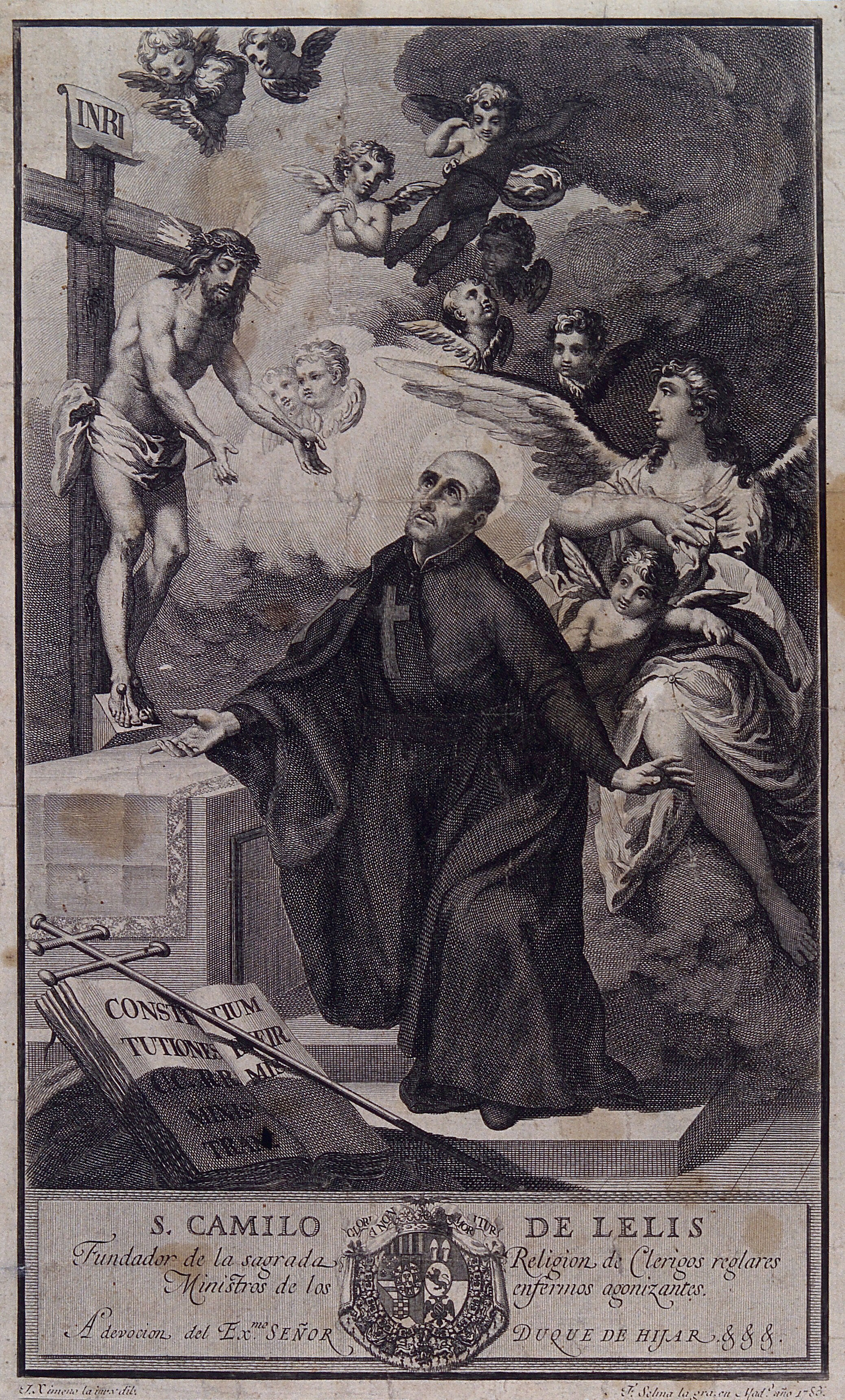
The community he founded added a fourth vow to the usual religious vows: continuing bodily and spiritual assistance to sick people, including those with plague. The commitment made danger part of the responsibility accepted, with Christ encountered in the patient. [1]
The red cross meant a commitment
The Dicastery reproduces his early biographer’s explanation of the red cross worn by the ministers: it identified them as devoted to sick people and marked a life accepting toil and suffering in that service. The sign belonged to a religious rule and practice, rather than a promise that its wearers would be spared danger. [1]
A patient’s fears and relationships remain present alongside illness. Spiritual assistance belongs within Catholic care, but cannot excuse inadequate practical treatment.
THROUGH THE LENS OF SCIENCE
The evidence about the remains
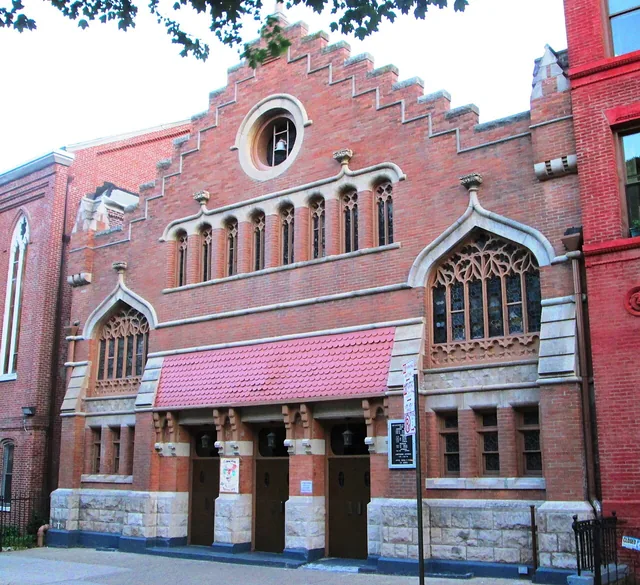
Camillus’s remains are divided among several relics. The Order identifies his body in the altar urn at Santa Maria Maddalena and his heart separately in the house’s former infirmary. Its own material history records missing and distributed parts. [2] [3]
An organ removed and kept as a relic
The Order’s account, quoting early testimony, says surgeons removed his heart after death in 1614. It was placed with aromatic substances and enclosed in a cypress box. The account explicitly describes human intervention at the beginning of the heart relic’s history. A preserved organ in a reliquary is therefore not evidence that his entire body remained untouched. [6]
Distributed remains and uncertain pieces
A 2011 Camillian publication records the heart’s distribution between Rome and Messina, the left foot at Bucchianico and other parts missing. That level of detail is more useful than the loose phrase incorrupt body: it tells a visitor that several locations and material histories are involved. [3]
The Rome itinerary identifies the altar urn and the heart’s separate setting, while the published histories leave a full present inventory and all later treatment incompletely described. The organ’s extraction and aromatic treatment are documented features; the remaining biological condition needs its own examination record. [2] [3] [6]
READER QUESTIONS
Questions and answers
Did his illness end when his vocation changed?
The recurring wound twice prevented his remaining with the Capuchins. [1]
What was the fourth vow?
Continuing bodily and spiritual service to sick people, including people with plague. [1]
FOLLOW THE SOURCES
Sources and further reading
- Dicastery for the Causes of Saints — Camillus de Lellis
Church or shrine source
Leg wound, Capuchin departures, fourth vow and early explanation of red cross.
- Camillian Order — Santa Maria Maddalena itinerary
Church or shrine source
Custodial distinction between altar urn, heart relic and former infirmary.
- Camilliani-Camillians 1/2011 — Relic history
Church or shrine source
Explicit distributed/missing parts, including heart and left foot. Not a current full scientific inventory.
- Felice Accrocca — Camillus and Capuchin spirituality
Scholarly account
Historian’s account of gambling, poverty, work at Manfredonia and conversion.
- Camillian Order — The Camillians at Pavia, biography section
Church or shrine source
Institutional history describing San Giacomo’s care problems and Camillus’s staff/service responsibilities.
- Camillian Order — Heart relic history
Church or shrine source
Quotes early testimony of surgical extraction and aromatic substances; establishes intervention and separate relic history, not whole-body natural preservation.
Sources checked: 2026-10-27. Suggest a correction or a source.