THE PERSON BEHIND THE ACCOUNT
The woman who would not leave the pope in peace
Catherine addressed Gregory XI as a father and told him to behave like a shepherd. In a letter sent while he was in Avignon, she urged him to make peace with rebellious Christians, choose better pastors and return to Rome. She had no ecclesiastical office with which to command him. She used argument, affection and relentless insistence. [4]
A young woman under examination
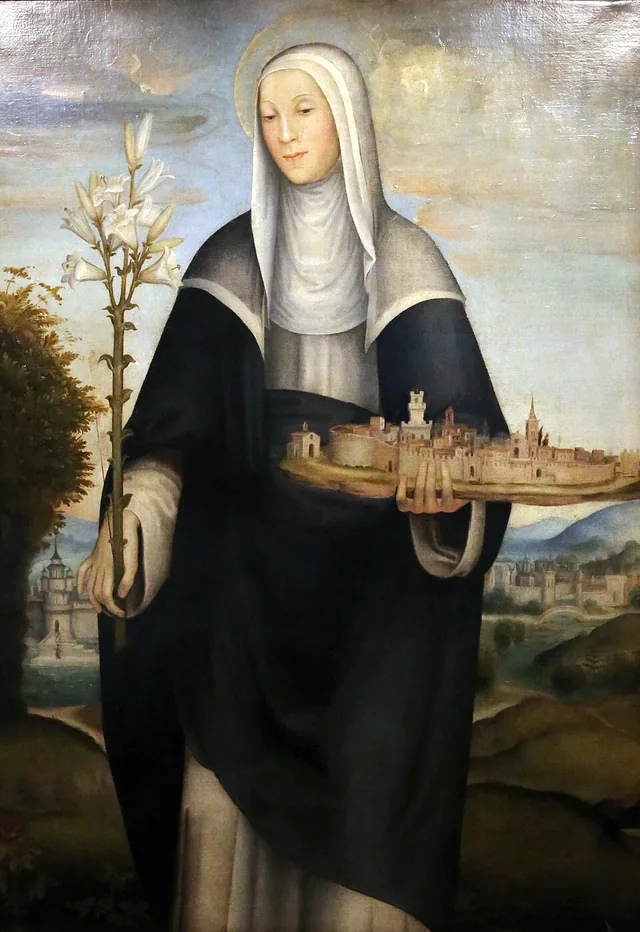
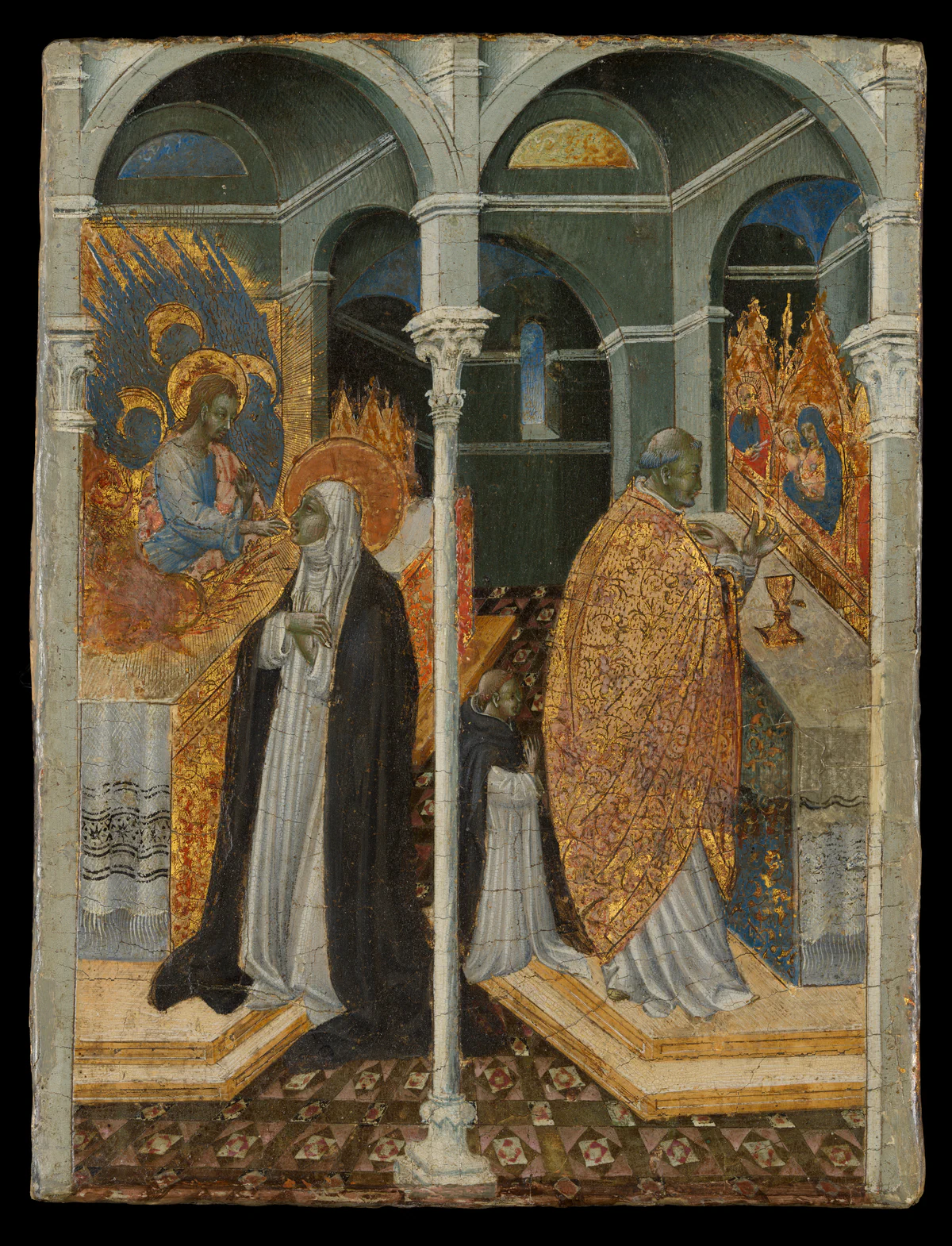
Born in 1347, Catherine joined the Mantellate, the female Dominican tertiary community, as a teenager. She prayed, undertook penance and cared for sick people. As her influence widened, so did scrutiny: the Dominican general chapter summoned her to Florence in 1374 and appointed Raymond of Capua as her spiritual guide. He became her confessor and biographer. [1]
Rome did not end the trouble
She went to Avignon in 1376. Gregory left that September and entered Rome in January 1377; Catherine was an energetic advocate for the move, rather than its sole cause. Her subsequent peacemaking work in Florence brought personal danger during the upheavals of 1378. After Gregory died and the Western Schism began, she supported Urban VI and moved to Rome, continuing to send letters and messengers. She died there in 1380, aged thirty-three. [2]
IN OUR OWN LIVES
Loyalty with something difficult to say
Catherine’s letters are useful reading for anyone trying to decide how to challenge a leader they respect. She names failures, asks for particular changes and keeps the person’s responsibility in view. She also shows how moral urgency can carry the assumptions and blind spots of its time. Both lessons deserve attention. [4]
Her public courage did not make private self-examination unnecessary. The spiritual cell and the outspoken letter belong to the same woman. That combination can trouble the comfortable critic as much as the comfortable institution. [4][5]
THROUGH THE EYES OF FAITH
Faith and daily life
Catherine’s authority grew from the life of prayer and service she began as a Dominican tertiary in Siena. She remained a laywoman. Her teaching, preserved in the Dialogue, letters and prayers, eventually led the Church to name her a Doctor of the Church in 1970. [1]
What she asked of a shepherd
Her letter to Gregory demands that he answer wrongdoing with patience and kindness. It attacks pastors preoccupied with status, possessions and pleasure while neglecting those entrusted to them. This was criticism from someone who took the pope’s spiritual responsibility seriously. For Catherine, respect for his office made his conduct more urgent. [4]
The same letter urges a crusade against non-Christians. Her appeal for peace among Christians belongs to a medieval program that also accepted religious warfare. Reading her honestly requires keeping that disturbing passage beside the counsel on mercy, rather than turning her into a modern advocate of universal religious tolerance. [4]
A room a person can carry
Writing to her friend Monna Alessa dei Saracini, Catherine describes a spiritual cell of self-knowledge that can accompany a person anywhere. Awareness of one’s faults must stay joined to awareness of God’s goodness: either alone can lead to confusion or presumption. She also urges her niece Eugenia to practice self-knowledge and care tenderly for sisters in need. [5]
The exercise remains searching. Before correcting someone else, what do I understand about my own desires? Can I acknowledge a failure without deciding that mercy has run out? Catherine’s inner room makes those questions part of prayer. [5]
THROUGH THE LENS OF SCIENCE
The evidence about the remains
The best-known bodily relic in Siena is Catherine’s head, kept at San Domenico. The basilica also preserves a thumb. These are separated relics, while other remains are venerated at Santa Maria sopra Minerva in Rome. No visitor is looking at an entire untouched body. [2][3]
A head carried from Rome
The basilica’s history recounts the removal of Catherine’s head after her burial in Rome and its transfer to Siena with papal permission. Successive reliquaries have housed it. Such a history includes separation, transport and changing display arrangements; the word incorrupt cannot erase those interventions. [3]
Preservation and the evidence available
A 2021 paleopathology review lists Catherine among artificial mummies. Its direct survey concerns Ranieri da Borgo. [6]
The shrine guide describes the head’s survival through fires and other upheavals. It gives no modern tissue inventory or treatment chronology for that particular relic. The classification of the body does not by itself describe every component of the separately housed head. [3]
READER QUESTIONS
Questions and answers
Was Catherine a nun or a priest?
Neither. She lived as a Dominican tertiary, initially in her family home. Her spiritual influence developed without ordination or the authority of an abbess. [1]
FOLLOW THE SOURCES
Sources and further reading
- Benedict XVI — Catherine of Siena, 24 November 2010
Church or shrine source
Supports Dominican tertiary status, ministry, scrutiny and designation as Doctor; a catechesis, not an independent forensic study.
- John Paul II — Amantissima Providentia (1980)
Church or shrine source
Historical and ecclesial account of Avignon, Florence, the schism, death and divided relic locations; avoids attributing the papal return solely to Catherine.
- San Domenico shrine — The Basilica
Church or shrine source
Custodial account of the head, thumb, transfers and reliquaries; no modern anatomical report.
- Catherine of Siena — Letter 74 to Gregory XI, UC Davis
Primary historical record
Primary letter in scholarly translation with notes, including counsel on peace, pastoral reform, Rome and crusade. Supports the tension in her political teaching.
- Catherine’s letters — Vida Dutton Scudder translation, Project Gutenberg
Primary historical record
Letters to Monna Alessa dei Saracini and Sister Eugenia: spiritual cell, knowledge of divine goodness and tender care for sisters. Historical public-domain translation.
- Mandarano, Czortek and Ventura — Medieval body embalming (2021)
Scholarly account
Comparative table; direct survey concerns Ranieri.
Sources checked: 2026-10-27. Suggest a correction or a source.