THE PERSON BEHIND THE ACCOUNT
He left his village for a monastery and spent his final decades in a nearby hermitage.
Youssef Makhlouf left his Lebanese village at twenty-three and never returned to live there. Paul VI’s canonization homily remembers the pain of separation in his mother’s response. The decision that made him Brother Charbel had a cost within a family before it became a story known around the world. [1]
A Maronite childhood
Youssef grew up in a Lebanese farming family. Vatican News remembers his family responsibilities, prayer and two uncles who were hermits. His later vocation developed within the Maronite Catholic tradition, with its longstanding life of monks and hermits. [4]
Learning to live with other monks
He entered the Lebanese Maronite Order, underwent formation, and was ordained a priest in 1859. Sixteen years of community life at Annaya preceded the move to the hermitage of Saints Peter and Paul in 1875. Permission and obedience remained part of the arrangement. A hermit’s vocation developed within the Order’s life and authority. [1]
A day with fewer choices
The Vatican News biography describes prayer, agricultural work, fasting, and silence. Charbel’s quarters and routine were austere. The account also places service to poor and sick people within his earlier monastic responsibilities. His eventual withdrawal narrowed the range of activities in a day so that prayer could occupy its center. [4]
For someone accustomed to independence, that way of life can be unsettling. There is less choice about possessions, meals, company, and work. Charbel’s vocation treated those limits as part of an offering to God. Understanding the choice requires taking his religious purpose seriously, even if one would never choose the same circumstances.
A shrine still serving people
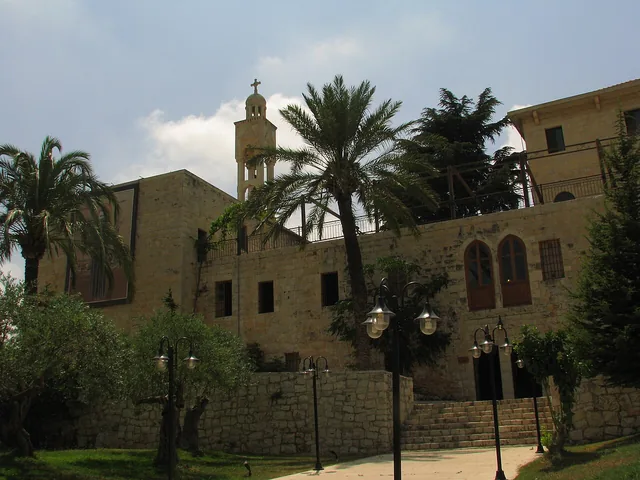
The monastery records a new church completed in 1974 as pilgrimage grew. It also describes visitor facilities, agriculture and service to neighboring parishes. Work and hospitality continue alongside the tomb. [2]
IN OUR OWN LIVES
Making room for undivided attention
Charbel’s life confronts a familiar difficulty in an unfamiliar form. Many of us say that something is central to our lives while allowing every interruption to displace it. His chosen routine made sustained prayer possible. The useful question for a reader is which commitments deserve actual time and what can be set aside to give it.
His severity is a particular religious vocation, not a health regime or a set of instructions for everyone. Leo’s visit draws out practices that can be understood more widely: a little silence, modesty about oneself, and room for other people’s needs in prayer. [5]
THROUGH THE EYES OF FAITH
Faith and daily life
Paul VI canonized Charbel on 9 October 1977. His homily interprets the monk’s discipline through prayer and conformity to Christ. [1]
The question Paul VI did not avoid
At the 1977 canonization, Paul VI asked whether such austerity could appear to reject healthy human relationships and freedom. He answered through Charbel’s love of Christ and his search for God, while affirming the Church’s responsibility for prudent discernment. The homily provides room to ask a difficult question about the saint’s life. Admiration need not prevent understanding. [1]
What a visitor heard in 2025
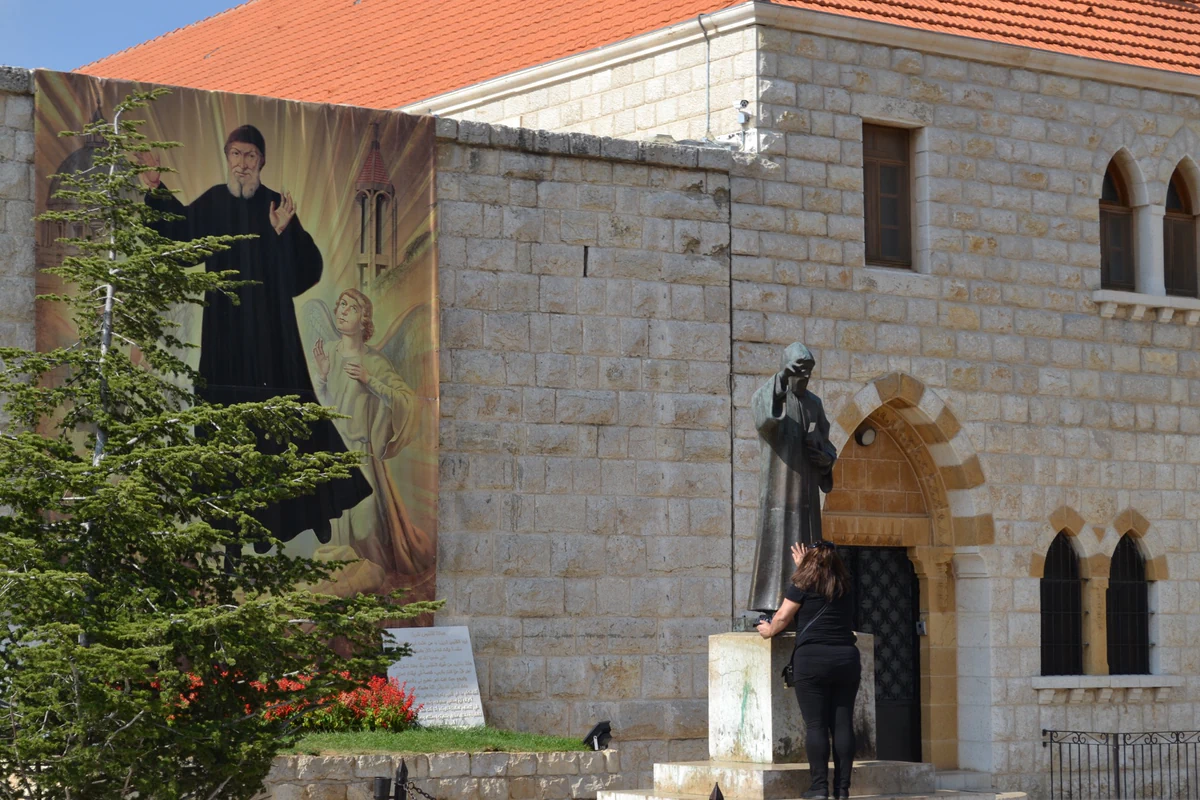
When Leo XIV visited Annaya in December 2025, he spoke about prayer, silence, modesty, and poverty. He connected Charbel’s memory with the need for conversion, unity, and peace in Lebanon and the wider world. The hermit’s tomb had become a place where the needs of families and nations were brought into prayer. [5]
THROUGH THE LENS OF SCIENCE
The evidence about the remains
The fluid and preservation claims should be studied through dated observations and records of custody and intervention. The linked monastery account is evidence for what its custodians report. A full independent explanation would require the underlying examination materials. [2]
The tomb’s material history
Annaya’s official website describes transfers from the monks’ cemetery through several coffins and examinations concerning fluid it calls water and blood. It dates placement in the present cedar coffin to 7 August 1952. This is a custodial history with particular events to investigate. [2]
The website supplies no underlying chemical analysis, sample record, tissue inventory, or complete treatment history. Its description of fluid is therefore reported in the monastery’s terms. Statements that its composition was conclusively established, or that every ordinary preservation mechanism was excluded, would go beyond the published account.
READER QUESTIONS
Questions and answers
Does the monastery publish a laboratory explanation of the fluid?
Its history says examinations took place and describes the reported fluid as water and blood. It gives no complete laboratory results or sampling protocol on that page. [2]
FOLLOW THE SOURCES
Sources and further reading
- Paul VI — Charbel canonization homily, 9 October 1977
Church or shrine source
Formation, family separation, vocation, recognition and the pope’s explicit discussion of austerity.
- Saint Maron Monastery, Annaya — Monastery
Church or shrine source
Custodial account of transfers, reported exudation,1952 coffin, shrine and ongoing work. Direct page retrieved; no full examination results.
- Vatican News — Saint Charbel Makhlouf
Church or shrine source
Devotional biography of community life, work, prayer and death. Physical claims are received reports, not laboratory results.
- Leo XIV — greeting at Annaya, 1 December 2025
Church or shrine source
Current official account of the visit and interpretation of prayer, silence, modesty, poverty and peace.
Sources checked: 2026-10-27. Suggest a correction or a source.