THE PERSON BEHIND THE ACCOUNT
The imprisoned poet who later opposed his own leaders
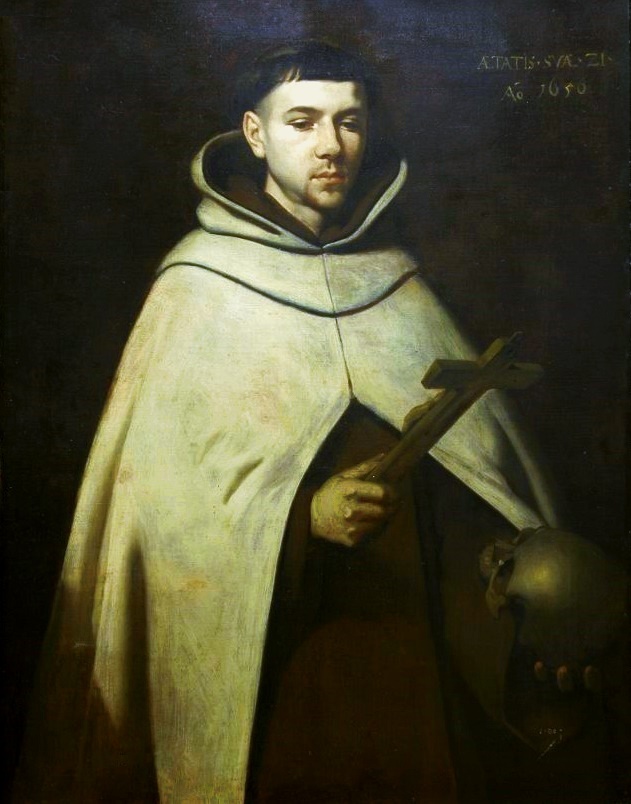
In December 1577, members of John’s own Carmelite order imprisoned him in Toledo. He endured severe deprivation before escaping in August 1578. Portions of his Spiritual Canticle took shape during that captivity. His writing about the soul’s longing emerged from a life in which religious institutions could wound as well as sustain. [1]
A reform begun with Teresa
John entered the Carmelites in 1563 and studied at Salamanca. After his ordination, a meeting with Teresa of Ávila drew him into her reform. In 1568 he helped begin the first reformed community of friars at Duruelo, taking the name John of the Cross. Reform changed the conditions of his own life before it became the subject of later books. [4]
Getting out of Toledo
The conflict concerned the reform’s place within an older order. Benedict’s biography attributes John’s imprisonment to Carmelites of the older observance and records his escape on the night of 16–17 August 1578. Discalced Carmelite nuns then gave him shelter. [1]
That escape is important to reading him responsibly. His spirituality does not require treating captivity or mistreatment as something a victim must passively accept. He sought a way out and depended on other people for safety.
Disagreement after success
A Carmelite scholarly introduction describes another dispute in 1590. Nicolás Doria proposed relinquishing responsibility for the nuns and expelling Jerónimo Gracián. John spoke against both proposals. At the following year’s chapter, he received no new office. The account does not give a complete explanation of the appointments, so disagreement cannot be assigned as the sole cause. [3]
His later reputation as a mystical writer can obscure that institutional judgment. He had opinions about how colleagues should be treated and was willing to voice them. Holiness did not remove disagreement from the reform he had helped establish.
IN OUR OWN LIVES
When religious disagreement becomes personal
John offers more than an inspiring phrase about darkness. He joined a reform, suffered within it, escaped confinement and later challenged its leadership. His life gives readers reasons to ask whether a religious community protects the people who depend on it.
His writing can also accompany the loss of familiar certainty. Reading it slowly, in its theological setting, is more useful than calling every painful season a dark night or assuming that distress must have a hidden spiritual purpose.
THROUGH THE EYES OF FAITH
Faith and daily life
John’s “dark night” concerns the purification of a person’s relationship with God: learning to love without making possessions, sensations or spiritual satisfaction the measure of faith. Benedict XVI explains this through faith, hope and charity. It is a theological account, not a diagnosis to impose on everyone experiencing depression or abuse. [1]
A letter after the loss of office
Writing to a Segovian prioress on 6 July 1591, John urged a response that included the counsel, “where there is no love, put love, and you will draw out love.” The Carmelite editors place the letter amid the disappointment of his final year. The line concerns an active response to a damaged relationship, rather than a promise that every relationship will become safe. [3]
Reading the poet without romanticizing pain
Readers can begin with a concrete question from his work: what happens when prayer no longer provides the reassurance it once did? His answer should be read within his Catholic commitments and alongside his actual decisions, including escape, friendship and disagreement. Pain itself is no reliable measure of spiritual maturity.
THROUGH THE LENS OF SCIENCE
The evidence about the remains
His tomb in Segovia preserves a documented sequence of devotional settings. The Carmelite sanctuary identifies an earlier burial location, a chapel built in 1691 and the present monument made by Félix Granda in 1927. Its description is architectural and custodial rather than an anatomical report. [2]
What the Segovia monument can show
The sanctuary says visitors can see the place in the chapel floor where his body rested before his beatification in 1675. That location and the later tomb help reconstruct public veneration. Neither a monument’s beauty nor a report that a body was moved identifies the present condition of skin, organs or bone. [2]
The sanctuary page supplies no dated anatomical inventory or history of preparation and conservation. Its detailed account of the monument leaves the present condition of the enclosed remains unspecified. [2]
READER QUESTIONS
Questions and answers
Did John accept imprisonment as something he had to remain in?
He escaped Toledo and took refuge with reformed Carmelite nuns. His account of spiritual purification should be read with that action in view. [1]
Does “dark night” mean a mental health condition?
John describes spiritual purification and union with God. That teaching cannot substitute for medical assessment. [1]
Is the visible tomb an examination of his remains?
No. The sanctuary describes burial locations and the 1927 monument, without publishing a modern anatomical inventory. [2]
FOLLOW THE SOURCES
Sources and further reading
- Benedict XVI: John of the Cross, 16 February 2011
Institutional source
Biographical chronology and interpretation of spiritual purification.
- Segovia Carmelite sanctuary: Church and tomb
Institutional source
Custodian describes successive burial settings and the current monument.
- Dicastery for the Causes of Saints: John of the Cross
Institutional source
Opening biographical summary: Teresa and the Duruelo foundation.
- ICS Publications: John of the Cross, final years
Institutional source
Carmelite scholarly introduction to collected works; leadership disputes and Letter 26.
Sources checked: 2026-10-27. Suggest a correction or a source.