THE PERSON BEHIND THE ACCOUNT
Madrid’s farmer saint left a medieval story and a body that researchers could examine.
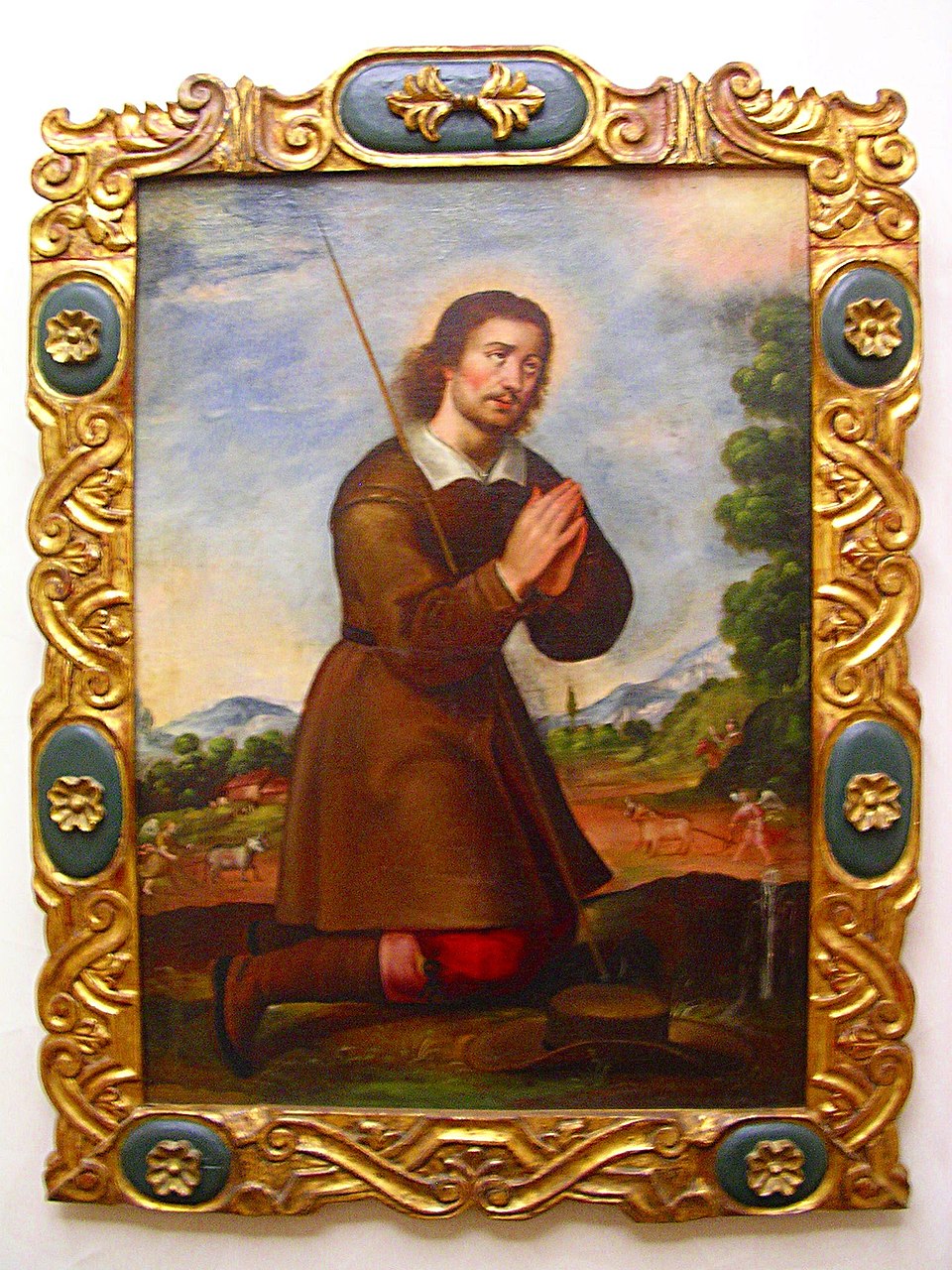
The Catholic account remembers Isidore as a farm worker who made time for Mass and shared limited resources with poor neighbors. His wife, María de la Cabeza, belongs within that story. Their household, work and generosity gave Madrid a saint outside the better-documented worlds of bishops and founders. [1]
The medieval source is later than the life
Madrid’s municipal account identifies the principal manuscript as a thirteenth-century hagiography, dated around 1270, with later additions. Its authorship is debated. It preserves the cult’s account of Isidore, but is not a contemporary diary. That distinction limits how confidently a modern biography can reconstruct conversations, individual decisions or precise early dates. [5]
Work and a shared household
The Church biography places him in Madrid and remembers the couple giving assistance from what they had. The religious significance lies partly in the absence of an impressive office. The ideal is responsibility within an existing life. Nothing in that ideal requires treating exhausting work, insecure employment or poverty as good conditions in themselves. [1]
A manuscript that kept growing
The city’s 2022 edition includes the medieval text, transcription, translation and a codicological study. Fifteenth-century miracle material and a later notarial act accompanied the earlier manuscript. These layers let readers investigate how the remembrance developed, instead of assuming that everything in the tradition was written at once by one witness. [5]
IN OUR OWN LIVES
Remembering the person doing the work
A city’s patron can be a reminder of people whose labor makes urban life possible while remaining largely out of sight. Isidore’s cult makes room for a farm worker and a household, rather than allowing rank to determine whose life is remembered.
The case is also an unusually clear example of different kinds of evidence working alongside one another. A manuscript shows what people told about a saint; an examination describes attributed remains. Neither has to be made to answer every question. A careful reader can be interested in the history, the religious meaning and the physical findings while keeping track of the limits of each.
THROUGH THE EYES OF FAITH
Faith and daily life
The example offered is an ordinary lay vocation: worship, earning a living and concern for people needing help. The familiar accusation that prayer distracted him from work comes through hagiography. It should not become an invented transcript of a dispute with his employer. [1]
The lesson is also social
At the presentation, Cardinal Carlos Osoro connected Isidore’s remembrance with care for neighbors and relationships in families and workplaces. The religious response he proposed was mutual care. That gives a visit or feast a practical direction: the person who grows food, cleans a building or performs another necessary job should receive recognition and fair treatment within the community. [2]
THROUGH THE LENS OF SCIENCE
The evidence about the remains
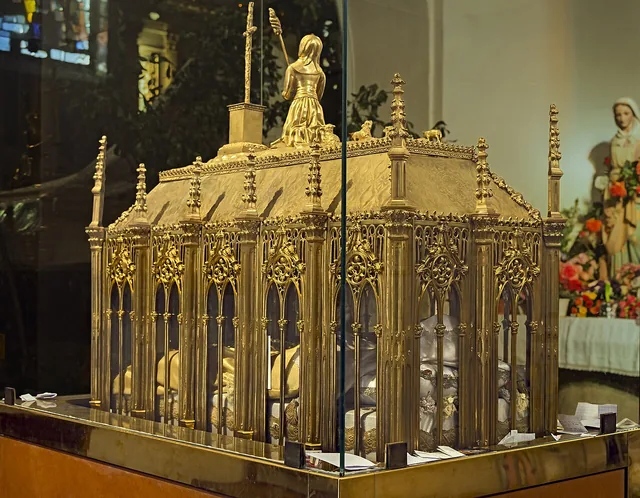
A Complutense University team examined the attributed body in 2022, including CT imaging. Its public summary offers hypotheses about mummification and later partial immersion, rather than a finding that normal physical processes had been excluded. [4]
Who authorized the examination
The archdiocese explains that the custodial congregation proposed the study in connection with the 2022 exposition. Church permission was sought in 2021, and four researchers from the university’s forensic-medicine school undertook inspections in January, February and April 2022. This is a reported investigation with dates and named investigators, rather than a plan that has yet to produce findings. [2]
What the university reported
The university’s summary describes a male body, estimates an age at death of thirty-five to forty-five, and notes changes consistent with intensive use of the arms. It reports dental infection and a possible relationship to death, while keeping that explanation provisional. A coin-shaped object appeared in the laryngeal area; its exact identification remained uncertain. [4]
Preservation and damage in the same record
The proposed sequence begins with mummification under the original burial conditions, followed by deposits and damage to the back during partial immersion. It is a hypothesis offered in the university’s summary. The age estimate also differs from a much later tradition of ninety years. These results improve the description of the attributed remains without independently proving every biographical story or the precise preservation sequence. [4]
READER QUESTIONS
Questions and answers
Was the 2022 study only announced, or were findings presented?
Findings were presented at the Complutense medical faculty in November 2022. The university published a summary. [4]
How early is the main life account?
The surviving hagiographic manuscript dates to the thirteenth century, with later additions; its authorship is debated. [5]
FOLLOW THE SOURCES
Sources and further reading
- Dicastery for the Causes of Saints — Isidore the Farmer
Institutional source
Retrospective lay-life tradition; early dates are not treated as certain.
- Archdiocese of Madrid — Forensic study presentation, 2022
Institutional source
Authorization, examination chronology and bishop’s religious response.
- Complutense University — Results of the Isidore study, 2022
Institutional source
Primary institutional summary; findings and hypotheses, not a complete raw dataset.
- Madrid City Council — Edition of the Isidore codex
Institutional source
Manuscript dating, layers and uncertain authorship.
Sources checked: 2026-10-27. Suggest a correction or a source.