THE PERSON BEHIND THE ACCOUNT
The archbishop who stayed during the plague
When plague struck Milan in 1576, Charles Borromeo stayed with the people of his diocese. He supported the hungry and sick and committed his possessions to relief. The cardinal who could have organized his life around rank instead made his episcopal office a daily obligation to people in danger. [1]
The family future he declined
Pope Pius IV, his uncle, made Charles a cardinal. After his elder brother Federico died, Charles resisted calls to lead the family and continued toward priesthood, receiving priestly and episcopal ordination in 1563. His ministry began within inherited privilege. [2]
Reform with opponents
He founded seminaries for clergy, established the Oblates, and promoted schools and other institutions. Enforcing reform brought resistance. The Dicastery’s biography recounts an attempted assassination by members of the Humiliati: a shot fired from behind while he was praying failed to kill him. Renewal was contested within the religious world he sought to change. [2]
IN OUR OWN LIVES
What a position requires of its holder
A position can offer comfort and distance or require its holder to go where help is needed. Leadership becomes more concrete when the question includes which inconveniences and risks the leader bears.
Institutional reform also needs preparation and direct knowledge of working conditions. Anger at failure alone will not arrange either.
THROUGH THE EYES OF FAITH
Faith and daily life
Charles understood reform as something a pastor had to practice before demanding it of others. Prayer, the Eucharist and penance belonged alongside the schools, seminaries and charitable institutions he helped organize. His ambition was a Church whose ministers could be trusted with the people they served. [1][2]
A pastor on the road
Benedict XVI describes repeated visits across Charles’s large diocese, including remote communities. This gives a practical meaning to his teaching on pastoral duty. A bishop could learn little about neglected parishes by remaining within the setting of his own cathedral. Attention required travel and presence. [1]
During plague, material relief and sacramental care belonged to the same ministry. The religious interpretation and the practical acts can be described together without treating prayer as an epidemiological finding. [1][2]
Humilitas under a cardinal’s hat
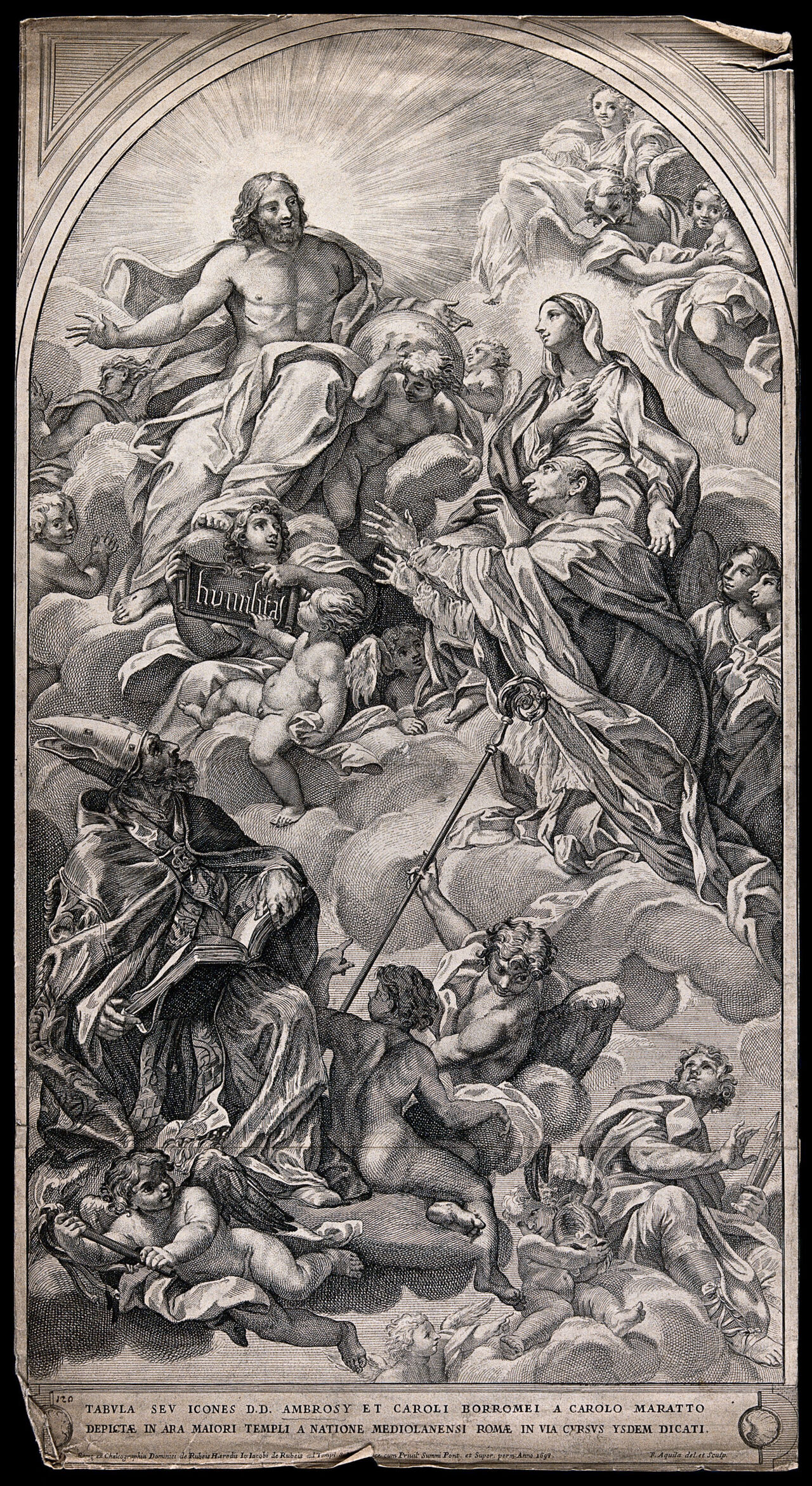
His motto was Humilitas. The Christian humility associated with Charles asked someone with authority to submit his own habits to discipline. He could be a demanding reformer, and his sixteenth-century world was deeply hierarchical. His example still poses a fair question to leaders: which inconveniences of the institution are you willing to bear yourself? [1][2]
THROUGH THE LENS OF SCIENCE
The evidence about the remains
In Milan Cathedral’s Scurolo, his remains lie in a crystal-and-silver urn. A silver mask covers the face. The cathedral’s description makes that distinction explicit: the face a visitor sees is a crafted covering, not exposed preserved skin. [3]
Inside the Scurolo
The cathedral identifies the urn as a gift from Philip IV of Spain and describes Charles dressed in pontifical vestments. Cardinal Giovanni Battista Montini, later Pope Paul VI, commissioned the silver face covering during his years as archbishop of Milan. The ensemble combines human remains, clothing, metalwork and a carefully designed sacred setting. [3]
Restoring a chapel is a different claim
The cathedral’s restoration account concerns silver decorations, fabrics, woodwork, lighting and other features of the Scurolo. It is not a report of biological testing on Charles’s body. It supplies valuable evidence about the display but no full anatomical inventory or explanation of preservation. The mask makes visual judgments about the underlying face especially unreliable. [3]
READER QUESTIONS
Questions and answers
Is the face visible in Milan Charles’s preserved skin?
No. The cathedral states that a silver mask covers his face. The visible covering should not be used to assess the condition of the tissue beneath it. [3]
FOLLOW THE SOURCES
Sources and further reading
- Benedict XVI — Lumen caritatis (2010)
Church or shrine source
Pastoral interpretation and account of reform, visits, plague service and religious teaching; no biological examination.
- Dicastery for the Causes of Saints — Charles Borromeo
Church or shrine source
Received Church biography: family decision, ordination, institutions, assassination attempt, motto, plague service and canonization. Some catechetical interpretation overlaps source 1.
- Veneranda Fabbrica del Duomo — restoration of the Scurolo
Church or shrine source
Direct custodial account explicitly identifying the silver mask, urn and restoration of the surrounding chapel; not a body examination.
Sources checked: 2026-10-27. Suggest a correction or a source.