
The short version
Learning about nature can deepen a believer's wonder and strengthen faith. It does not follow that every scientific advance makes Catholicism more likely to be true. Scientific findings, philosophical interpretations, and religious commitments have different roles. Understanding their relationship requires examining the connections between them.
The story
Imagine two people looking through the same telescope. One sees a universe sustained by a loving Creator. The other sees an extraordinary universe whose existence does not require a religious explanation.
They can agree about the observations while disagreeing about their meaning. To understand that disagreement, we need to ask what each person believes the observations establish, and what additional reasoning connects those findings to a conclusion about God.
Catholic teaching offers a clear starting point. The Catechism teaches that faith and reason cannot truly conflict because both come from God. It affirms scientific inquiry conducted with sound methods and respect for moral law. This is a theological conviction about the unity of truth. A skeptical reader is entitled to ask for its justification. Catechism §159
If we want to explain why the natural world points toward God, we must make the argument explicit. The Catechism distinguishes philosophical arguments for God from proofs in the natural sciences. It also teaches that reason can know God with certainty from creation, while acknowledging the difficulties people encounter. Catechism §§36–38 It identifies the world's order, change, and dependence, alongside human experience, as starting points for reasoning about God. Catechism §§31–35
Take a classical argument from dependence. Aquinas considers causes that act through other causes: his example is a hand moving a staff. The staff has the power to move something else because it is itself being moved. He argues that an order of causes wholly dependent in this way requires a first cause. Adding more dependent causes would not supply what enables them to act. Summa Theologiae I.2.3
For this argument to reach a Creator, the dependence has to concern the natural order itself, not merely one implement in it. A believer must defend that extension. A skeptic might accept every physical explanation while holding that reality as a whole needs no further cause, or that a physical foundation could be the ultimate explanation. The Christian philosopher's reply is that something whose existence and activity are received cannot supply the final explanation of that dependence. Their disagreement is over whether nature has that character and whether the proposed source is necessary.
The argument therefore does not begin with “everything has a cause” and then exempt God. It distinguishes dependent causes from the independent source it proposes. Whether that distinction is justified is a premise to examine. Further reasoning would also be needed to establish intelligence, goodness, or a personal God. Finding another physical mechanism would add knowledge of nature while leaving those philosophical inferences to be assessed on their merits.
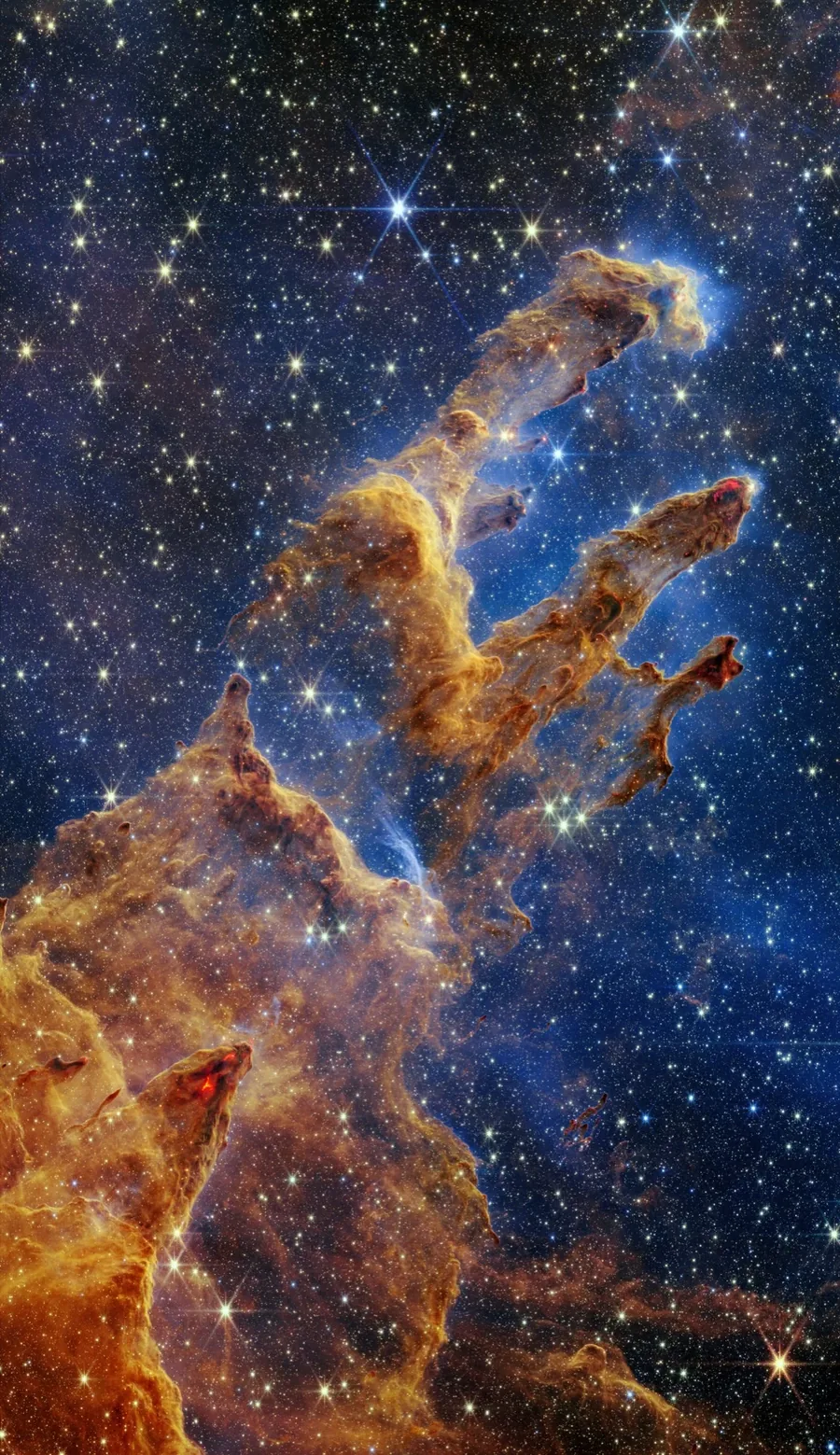
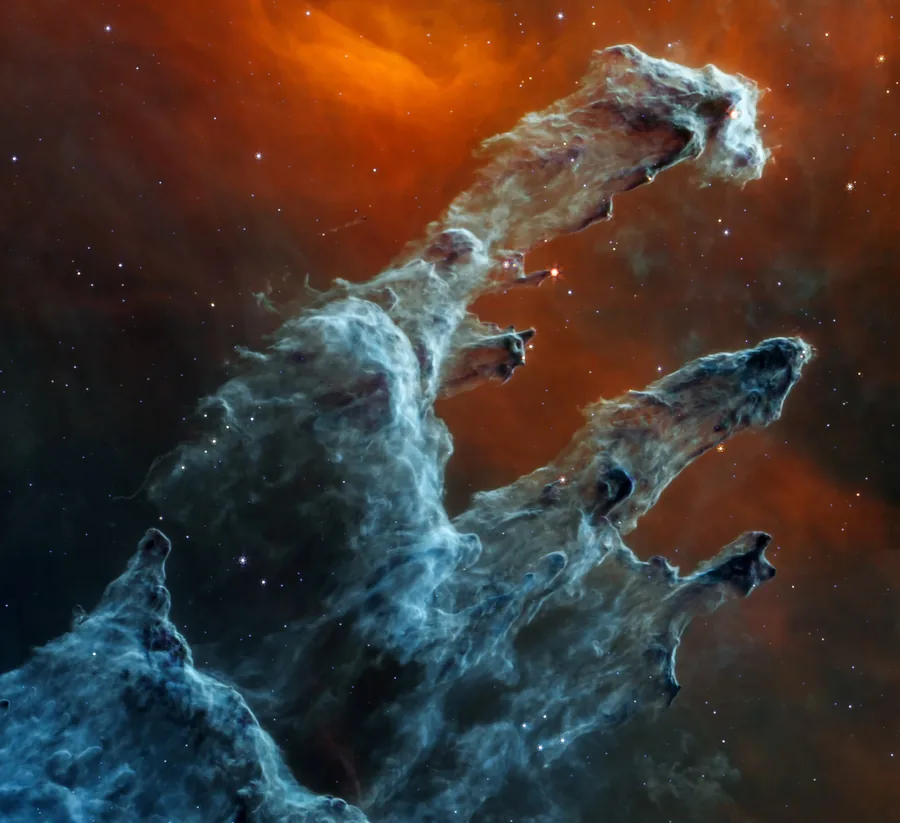
Further questions remain. Even if an argument establishes a Creator, what grounds connect that conclusion to Christianity, and then to Catholicism? Those steps deserve developed answers. Catholics understand faith as a free response to God’s revelation, made possible by grace. Reasoned arguments can prepare someone for faith; a beautiful image of a galaxy cannot carry the entire argument. Catechism §§153–160
Make the steps in the argument visible.
What was measured or recorded?
Which account best fits the available evidence?
What additional reasoning connects it to a belief?
Scientific achievement also has a limited role here. When a Catholic researcher makes an important discovery, the achievement can demonstrate that serious scientific work and Catholic commitment coexist. The discovery's validity depends on evidence. The researcher's religious conclusions require their own examination.
Still, it would be too simple to put science and religion in separate rooms marked “how” and “why.” Religious claims sometimes concern observable events. A claimed healing raises questions about diagnosis, treatment, recovery, and documentation. Scientific and historical evidence can strengthen or weaken the factual basis of a religious interpretation.
Scientific discoveries can also challenge how believers interpret Scripture. Reflecting on Galileo in 1992, John Paul II acknowledged the mistake of theologians who treated Earth's central position as required by Scripture. He urged theologians to remain informed about scientific advances and consider their implications for their teaching. Address to the Pontifical Academy of Sciences
A skeptic may object that a commitment to eventual harmony makes religious belief impossible to challenge: whenever trouble appears, the interpretation changes. That concern deserves attention. Reinterpretation needs reasons that can be examined—historical, textual, philosophical, or theological. Declaring harmony does not demonstrate it.
For this publication, that means identifying which claim is being tested and allowing the evidence to count against it. An unsupported miracle account should lose our confidence. An inaccurate historical claim should be corrected. Neither outcome should be hidden because the original story was spiritually appealing.
Scientific learning may nourish your faith. It may also unsettle an argument you once found convincing. We invite both experiences into the conversation, while explaining why Catholics believe the search for truth can lead toward God.
Examine the methods & evidenceOptional · 3 min extra
Reproducibility, selection bias, and revisable conclusions
For any science-and-faith claim, separate four questions:
- Observation: What was actually measured or documented?
- Scientific explanation: Which account best fits the available evidence?
- Philosophical interpretation: What additional premises connect that account to claims about God?
- Catholic belief: What further grounds connect belief in God with Christ and the Church?
Agreement at one stage does not automatically establish the next. The skeptical objections and this four-question framework are editorial analysis. The Catechism supplies the Catholic teaching; the papal address supplies the Church's later acknowledgment concerning Galileo. That address alone is not a complete history of the trial.
Publication, reproducibility, and independent checking
A published paper makes a claim available for scrutiny. That is the beginning of an evidence trail. In the terminology used by the US National Academies, computational reproducibility means obtaining consistent results using the same input data and analytical procedures. Replicability concerns consistent findings in studies collecting their own data. Neither should be assumed merely because an article appeared in a journal. National Academies report
For this site, the practical questions are concrete: Can we inspect the methods? Can another team check the analysis? Do independent measurements support the conclusion? For an individual historical event, investigators may be able to re-examine its records or physical traces even though the event itself cannot be repeated on demand. We should state exactly which kind of checking has occurred.
A remarkable case is not a success rate
A collection selected for unusual recoveries cannot tell us how often pilgrimage leads to recovery. Estimating such an effect would require a defined study population, consistent outcome measurements, appropriate comparisons, and attention to treatment and other differences between groups. Cochrane's guidance explains how confounding, selection, missing data, and measurement can distort conclusions about intervention effects. We apply that general methodological lesson here; Cochrane is not making a judgment about Lourdes or miracles. Cochrane methods handbook
The question “What happened to this person?” remains worth investigating. It is a different question from “Does pilgrimage increase the probability of recovery?” Neither answer automatically supplies a theological interpretation.
What evidence would change the assessment?
The table scrolls horizontally on small screens.
| Claim being examined | Evidence that could strengthen it | Evidence that could weaken or revise it |
|---|---|---|
| A proposed physical mechanism explains a measurement | Independent measurements and predictions that succeed under new conditions | Results inconsistent with its predictions, or a better-fitting explanation |
| A particular recovery remains medically unexplained | Detailed diagnostic records, sustained objective improvement, and well-supported exclusion of relevant alternatives | Evidence of a different original diagnosis, an adequate treatment explanation, or incomplete recovery |
| The universe depends on a Creator | A philosophical argument whose premises and reasoning withstand serious objections | A sound objection to a premise or inference in that argument |
The last row concerns an argument's strength; it is not a proposed laboratory test for God. Throughout the site, confidence should attach to a clearly stated claim. We should not assign a numerical “probability of a miracle” without a defensible model and evidence sufficient to support it.
Source note: based on the linked public sources. No external scientific or theological review has been commissioned.
Editorial update · 27 October 2026
Developed the causal-dependence argument, its contested premises, and the further steps needed to reach Christian faith. Retained the earlier clarification of Catholic teaching on reason, revelation, and grace. Original publication: 28 September 2026.