THE PERSON BEHIND THE ACCOUNT
Anna Maria Taigi kept an open door in a crowded Roman life.
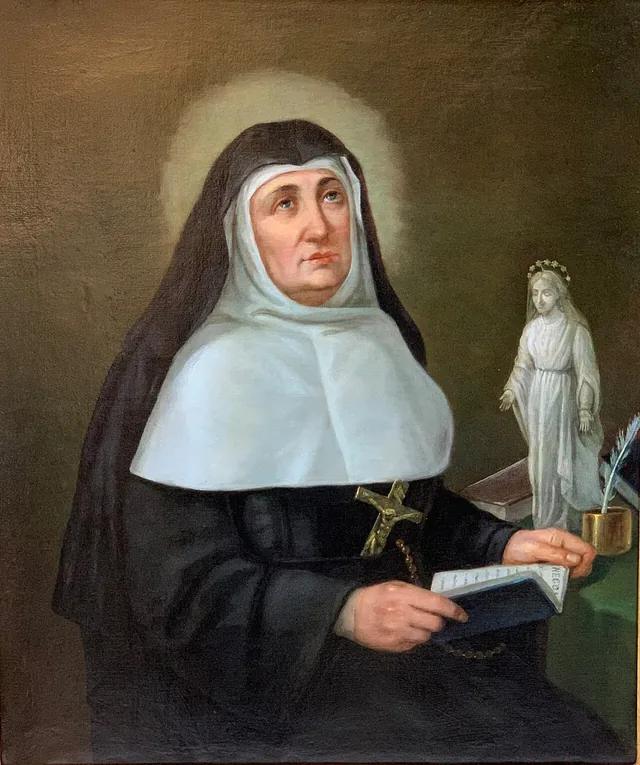
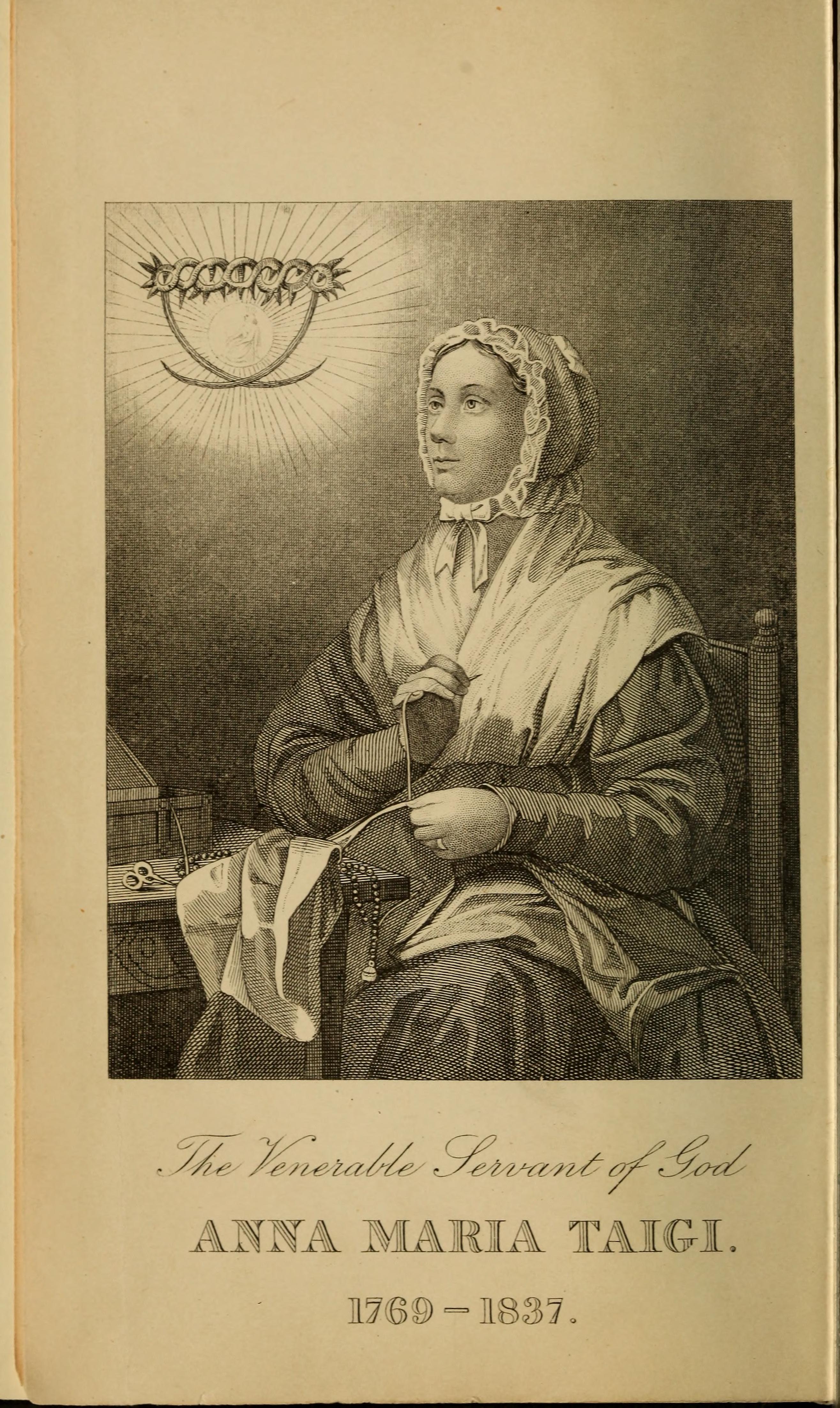
Anna Maria Taigi raised children and supported a household while people came to her for spiritual counsel. Her directors sent visitors from different backgrounds to a woman whose early work and education had been shaped by poverty. [1]
A six-year-old on the road to Rome
Born in Siena in 1769, Anna Maria moved to Rome with her parents after her father’s finances collapsed. Benedict XV’s beatification letter says the child made the long journey on foot. Later, domestic service helped her support the family. Poverty was an experience of employment and dependence before it became a theme in accounts of her spirituality. [2]
The marriage remained
She married Domenico Taigi, a servant in the Chigi household. The papal account describes him as upright and devout, with rough manners and a difficult disposition. It also records Anna Maria’s early enjoyment of fashionable clothing before her religious life intensified. These details give the remembered holy woman a recognizable youth and a demanding relationship. [2]
Seven children were born and three died young. The Vatican biography describes care for the survivors and generosity limited by what she could afford. Helping others did not erase her household’s needs. [1]
A laywoman with people to counsel
The Order remembers her visiting the sick at home and in hospitals, praying with them and offering religious instruction. Families in difficulty also sought her advice. Her public role grew through conversations and personal contact rather than an office or a school she founded. [3]
IN OUR OWN LIVES
For people whose time already belongs to others
Domestic labor, grief and patient attention deserve a place in a religious biography. Someone caring for children or an ill relative can recognize those responsibilities without sharing the reported visions. How much help can a person offer while protecting the needs of people already entrusted to them?
THROUGH THE EYES OF FAITH
Faith and daily life
The Trinitarian Order places a change of direction soon after her marriage: an encounter with the Servite priest Angelo Verardi at Saint Peter’s helped deepen her commitment to Christian life. She continued living with her husband and children while visiting sick people and helping other families. [3]
Prayer reached beyond the front door
She entered the Trinitarian Third Order on 26 December 1808. Her devotions included the Trinity, the Eucharist, Christ’s Passion and Mary. Those are specific Catholic commitments, carried within a lay vocation. [1]
The Trinitarian account also remembers her prayer for Pius VII during his imprisonment by Napoleon’s forces. Her concern extended from sick neighbors to a Church experiencing political upheaval. In that account, prayer accompanied attention to what was happening around her. [3]
The mystical sun and the public act
A Vatican devotional profile recounts a mystical sun through which she reportedly perceived events and the condition of souls. Such language describes a claimed religious experience. Readers need not treat every prophecy circulating under her name as authenticated to understand her Catholic reputation. [1]
Benedict XV beatified her on 30 May 1920. His letter presents her marriage and manual work as evidence that Christian holiness is possible within family responsibilities. That emphasis gives the formal act a wider reach than curiosity about visions. [2]
THROUGH THE LENS OF SCIENCE
The evidence about the remains
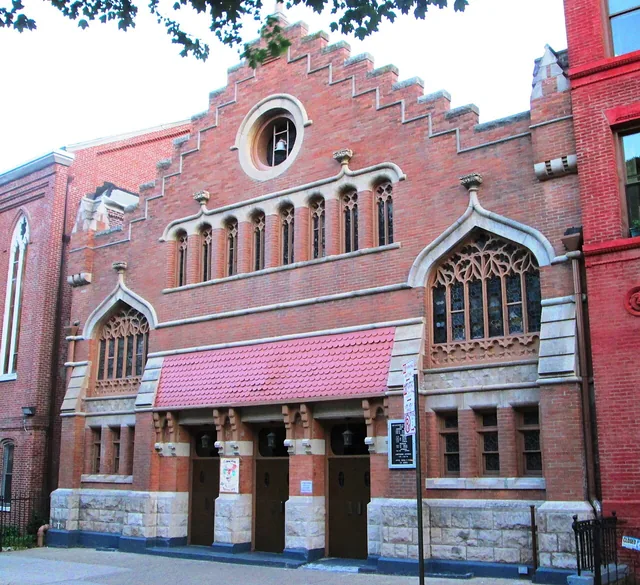
At San Crisogono, devotion centers on remains associated with Taigi. The Vatican’s description locates them there; it gives no anatomical account of the figure visitors see. [1]
What the display can tell a visitor
An independent architectural guide describes the San Crisogono figure as waxwork containing bones. This is a useful warning against reading a lifelike appearance as exposed, preserved flesh; the guide is not a custodial inventory or medical report. The sources reviewed leave the display’s construction and treatment history unresolved. [4]
READER QUESTIONS
Questions and answers
Was she a nun?
She was a married laywoman and a Trinitarian tertiary. Third Order membership formed her religious life while she continued her family vocation. [1]
Does beatification authenticate every prophecy attributed to her?
The 1920 act recognizes her for public veneration as Blessed. It is not an itemized approval of later collections of predictions. [2]
FOLLOW THE SOURCES
Sources and further reading
- Vatican City State — Anna Maria Taigi
Church or shrine source
Devotional biography: family, Third Order, reported vision and San Crisogono. No anatomical inventory.
- Benedict XV — Quod habetur, 30 May 1920
Primary historical record
Primary beatification letter; childhood journey, domestic employment, marriage and the theological meaning assigned to her vocation. A cause document, not a medical report.
- Trinitarian Order — Anna Maria Taigi
Church or shrine source
Order biography: encounter with Verardi, visits to sick people, family counsel and prayer during Pius VII’s captivity.
- Churches of Rome — San Crisogono
Reference account
Independent architectural guide reports waxwork containing bones. This is not an official inventory or a scientific examination.
Sources checked: 2026-10-27. Suggest a correction or a source.