THE PERSON BEHIND THE ACCOUNT
At Arcella, Helen Enselmini’s quiet history survives beside Anthony’s famous one.
The shrine at Arcella is famous as the place where Anthony of Padua died. Its custodians also name Helen Enselmini, a young Poor Clare who lived there during his lifetime. She belonged to the women’s community whose life continued around that celebrated final visit. [1] [2]
The women of Santa Maria della Cella
The medieval site combined a Poor Clare monastery and a friary. The Diocese of Padua calls Helen a disciple of Anthony; the Franciscan shrine identifies her as a member of the community during his lifetime. The association is part of local Church tradition. Neither source records a conversation between the two. [1] [2]
An illness remembered in prayer
Padua’s liturgical proper remembers early religious entry, grave illness, courage and trust in God. It associates Helen’s formation with Anthony. The brief account does not identify the illness or document particular choices during it. [3]
A place rebuilt around its memories
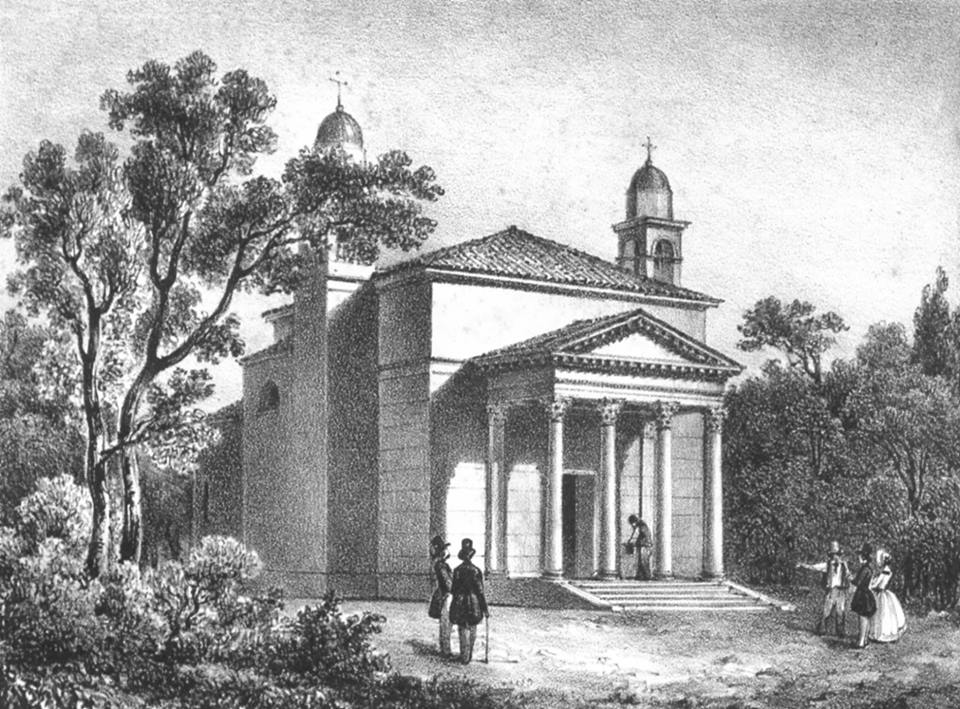
Arcella suffered destruction and rebuilding. Its present church incorporates substantial nineteenth-century construction; the shrine’s history reaches through earlier buildings and displaced communities. Visitors encounter a place maintained by successive generations, rather than an untouched medieval setting. [1] [2]
IN OUR OWN LIVES
A woman at the edge of a famous story
Helen is a reason to look beyond the best-known name at a shrine. The early Franciscan world included communities of women whose histories survive unevenly. Her local remembrance offers a place for illness, prayer and continuity within that larger history. The gaps deserve to remain visible: a person’s worth does not depend on our ability to recover a spectacular episode. [1] [2] [3]
THROUGH THE EYES OF FAITH
Faith and daily life
Padua’s liturgical proper remembers Helen’s meditation on Christ’s Passion and her trust during serious illness. It preserves a local religious memory, rather than a day-by-day biography. Her recognition as Blessed is recorded under Innocent XII in 1696. [3]
What remains of her own voice
The same introduction attributes writings of Christian devotion to Helen through an earlier author’s testimony. It connects her spirituality with Christ’s Passion, but provides no text of those writings. That is a limit on how precisely her teaching can be recovered. [3]
THROUGH THE LENS OF SCIENCE
The evidence about the remains
The Franciscan shrine states that Helen’s mortal remains are kept at Arcella. It supplies no physical inventory, photographs of an examination or conservation history. Those words alone cannot tell a visitor whether the relics include preserved soft tissue. [2]
The return in 1957
Padua’s proper records the movement of the remains to Santa Sofia in 1810 and their return to Arcella in 1957. This gives the relics a history of transfer. It leaves their completeness and treatment unspecified. The modern shrine’s custody should therefore be distinguished from a scientific demonstration of natural preservation. [3]
READER QUESTIONS
Questions and answers
Did Helen know Saint Anthony?
The diocese calls her his disciple, and the shrine places her at Arcella during his lifetime. The reviewed accounts preserve that association without a detailed record of their contact. [1] [2]
What can we recover of her spiritual teaching?
The diocesan proper remembers devotion to Christ’s Passion and attributes writings to her, without reproducing them. [3]
Does the shrine contain her intact body?
It reports mortal remains. Their anatomical completeness and preservation are not described in the reviewed custodial account. [2]
FOLLOW THE SOURCES
Sources and further reading
- Diocese of Padua — Arcella sanctuary
Church or shrine source
Community setting, Helen’s association with Anthony, rebuilding and current chapel location.
- Franciscan shrine — Arcella
Church or shrine source
Calls Helen a young Poor Clare of Anthony’s lifetime and locates her mortal remains. No anatomical description.
- Diocese of Padua — Proper Missal, 6 November
Church or shrine source
Local liturgical memory of illness, Passion devotion, reported writings, recognition and transfers. Exact early chronology is inconsistent.
Sources checked: 2026-10-27. Suggest a correction or a source.