THE PERSON BEHIND THE ACCOUNT
Sophie Barat built girls’ schools on an education she first received at home.
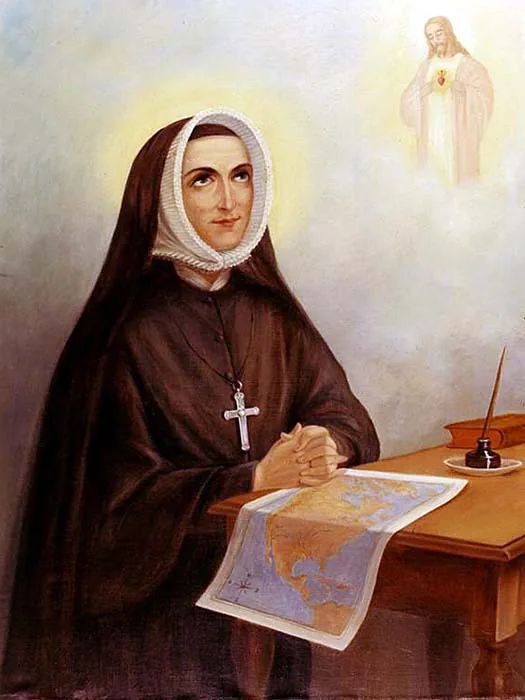
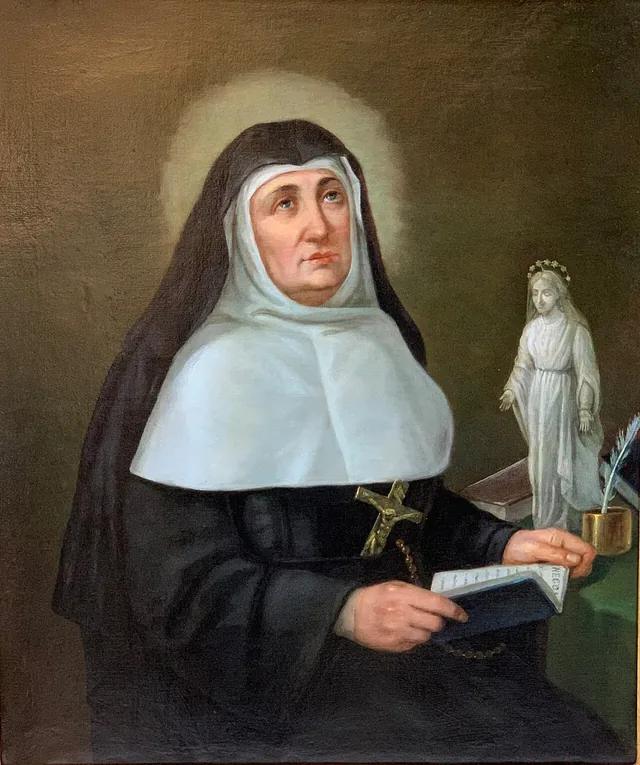
Madeleine Sophie Barat studied at home what her brother taught at the college in Joigny: literature, history, Scripture, Latin, Greek and mathematics. Her later schools grew from a woman who had experienced serious intellectual formation herself. She expected educators to keep learning, too. [2] [3]
A student in Joigny
Born in 1779, Sophie grew up in a family able to support study despite modest means. Her brother’s teaching gave her an unusually wide curriculum, including physics and introductions to other languages. The Society’s educational history connects that training with her concern for judgment, as well as information. [3]
The same congregational series makes a demanding point: an educator has to develop herself before she can accompany someone else’s growth. Sophie’s remembered enthusiasm for study gives that principle a personal origin. Learning was a resource she could put to work. [3]
Paris while religious life was precarious
Sophie left Joigny for Paris in 1795, while religious persecution continued. Her brother Louis had been secretly ordained during the Revolution; she taught children and catechism. The Society’s account locates her project amid disrupted worship and the difficulty of passing faith to another generation. [4]
On 21 November 1800, she and companions made their first consecration. She could have pursued a more private life of prayer. The institute she helped begin required teaching, relationships and administration, while seeking to preserve the interior life that gave the work its direction. [4] [2]
Schools within a divided society
The Dicastery biography says the Society’s schools particularly served girls of higher social classes and attached classes for poor children. Both facts belong in the history. An educational mission can create opportunities while still operating through the class divisions of its era. Calling the work universal should not hide whom particular schools admitted. [1]
A long responsibility
The Society’s account credits Sophie with spiritual guidance, educational leadership and administration. By her death in 1865, it reports more than 3, 500 members in foundations across Europe, the Americas and Africa. Sustaining that network demanded more than the enthusiasm of the first school. [2]
A 2025 anniversary account recalls poor health and the dangers of successive revolutions during nearly sixty years of leadership. It is an institutional tribute, yet its broad chronology shows the duration of her commitment: she had to keep responding as France and the congregation changed. [5]
IN OUR OWN LIVES
The teacher has to keep learning
Teaching places intellectual seriousness alongside personal formation. An educator has to keep learning while keeping an institution running, without losing attention to the people it serves. Those obligations can reinforce one another, but they compete for time.
THROUGH THE EYES OF FAITH
Faith and daily life
The Society of the Sacred Heart joined education to a conviction about God’s love revealed in Christ. Its official account describes prayer and apostolic work informing each other. The schools were an expression of that religious purpose, with teachers’ own formation part of their responsibility. [2]
The Heart at the center of the timetable
Sophie’s spirituality was shaped by Ignatian prayer. The Dicastery describes the Society’s purpose as honoring the Sacred Heart through an interior life that supported education. In a school, those priorities meet the ordinary pressures of lessons, discipline and administration. Her model asks what kind of person the teacher is becoming alongside the pupils. [1] [2]
Pius XI canonized Sophie on 24 May 1925. The Society marked the centenary in 2025, connecting her memory with its continuing educational mission. That celebration is a history of religious recognition and institutional inheritance, distinct from the condition of her remains. [1] [5]
THROUGH THE LENS OF SCIENCE
The evidence about the remains
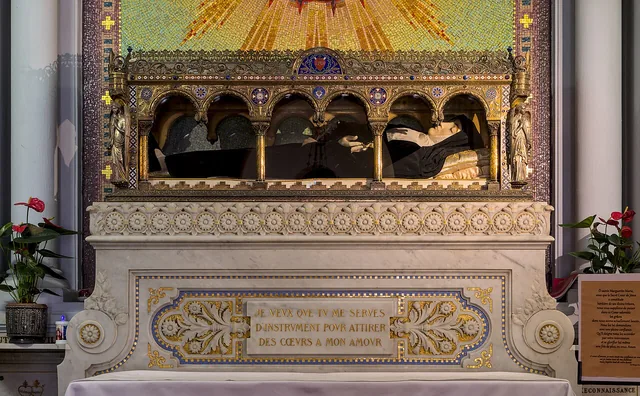
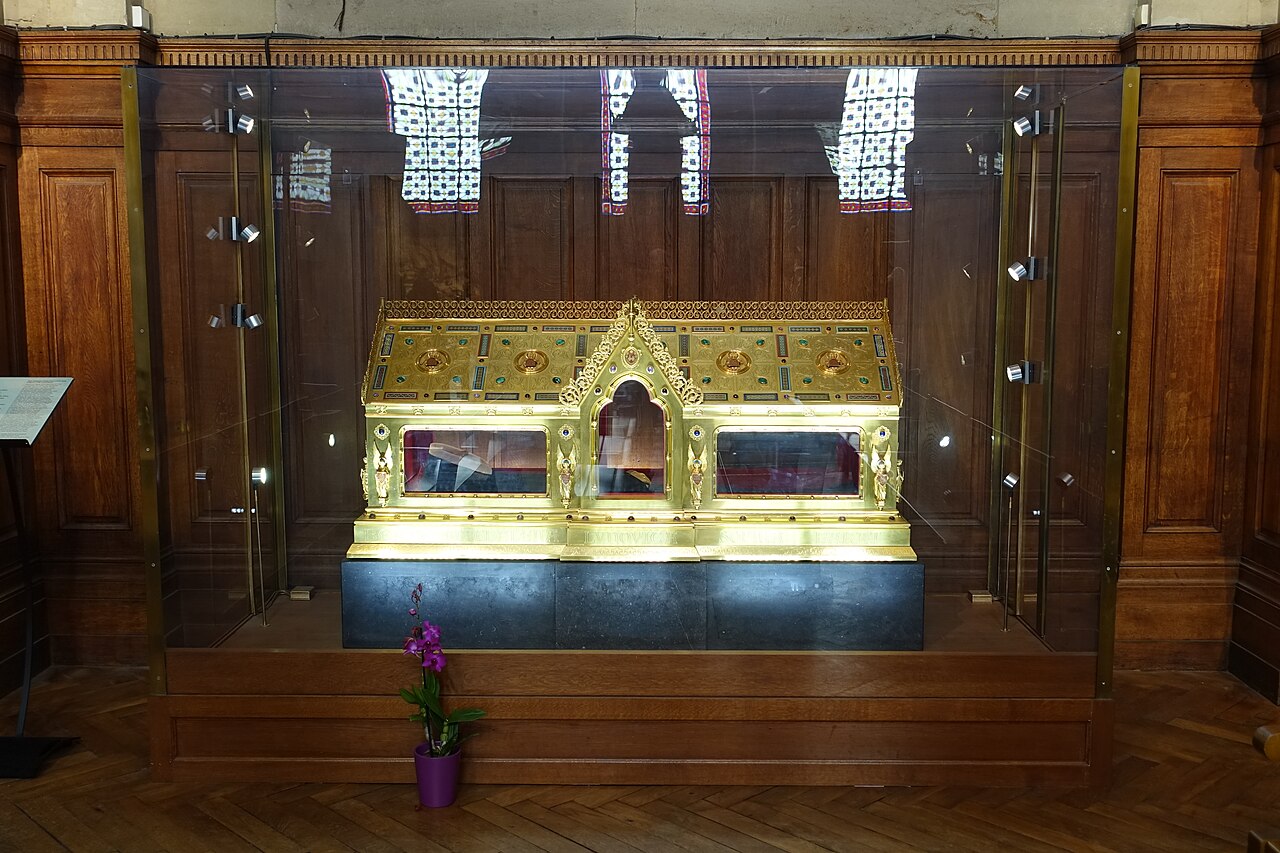
In June 2009 the Society reported the installation of Sophie’s remains at Saint-François-Xavier in Paris, clothed in its traditional habit within a glass-and-gold reliquary. That custodial description tells us where the remains were placed and how they were presented. [6]
The reliquary in Paris
The Society’s 2009 account records the return of the remains to France and their placement at Saint-François-Xavier, across from the house where she died. The article describes the ceremonial removal of the coverlet and the location of the reliquary. It is evidence of transfer and presentation rather than a medical examination. [6]
The sources reviewed publish no anatomical inventory separating surviving tissues, coverings and support materials, and no full treatment history. A lifelike clothed figure behind glass cannot by itself answer those material questions. [6]
READER QUESTIONS
Questions and answers
Did her schools serve only wealthy girls?
The Dicastery says the main schools particularly served higher social classes and included attached classes for poor children. The social distinctions should remain visible in the account. [1]
What did the Sacred Heart mean to her project?
Prayer and education were joined in the mission of discovering and revealing Christ’s love. [2]
Is her body’s natural preservation established?
The Society documents the 2009 transfer and display in Paris. Its account contains no anatomical findings or full conservation record. [6]
FOLLOW THE SOURCES
Sources and further reading
- Dicastery for the Causes of Saints — Madeleine Sophie Barat
Church or shrine source
School access, Ignatian spirituality and 1925 canonization. Its 1908 beatification papal attribution is inconsistent and is omitted.
- Society of the Sacred Heart — Saint Madeleine Sophie Barat
Church or shrine source
Formation of educators, prayer/apostolic life and reported institutional scale at death.
- Society of the Sacred Heart — A woman for young people
Church or shrine source
Home curriculum and the connection between learning and the formation of judgment.
- Society of the Sacred Heart — A Bold Woman
Church or shrine source
Paris in 1795, clandestine worship, teaching and 21 November 1800 consecration.
- Society of the Sacred Heart — Canonization centenary, 2025
Church or shrine source
Anniversary account of poor health, revolutions and long leadership. Institutional tribute rather than a medical biography.
- Society of the Sacred Heart — Heart, Winter 2009, Sophie Comes Home
Church or shrine source
Custodial account of 19 June 2009 installation, habit and reliquary at Saint-François-Xavier. No anatomical or conservation findings.
Sources checked: 2026-10-27. Suggest a correction or a source.