THE PERSON BEHIND THE ACCOUNT
The woman behind an image seen in churches around the world
Margaret Mary Alacoque entered the Visitation at Paray-le-Monial in 1671 after family resistance. Her reports of religious experiences met disbelief within the community. The Dicastery’s biography describes the vulnerability of a woman trying to communicate something other people could not directly verify. Her later influence should not make that beginning look inevitable. [1]
Ordinary work in the convent
The sanctuary’s biography gives her profession date as 6 November 1672. It recalls her preparation for vows alongside work looking after the monastery’s donkey and foal so they would not damage the garden. This retrospective detail places the remembered mystic within a household whose tasks still had to be done. [4]
Telling someone who might not believe her
Her spiritual director Claude de la Colombière encouraged her to write about her experiences. The official biography records her reluctance and eventual agreement. What later readers encounter is therefore a written account produced through spiritual direction, not independent access to the experiences themselves. [1]
The sanctuary also remembers Claude insisting that she continue praying the office with her sisters rather than prefer extraordinary prayer to the community’s shared obligation. His support included a practical limit, as well as reassurance. [4]
How a private account became a public devotion
Her reports from the 1670s shaped the imagery and observances associated with the Sacred Heart. The Dicastery’s account identifies a heart marked by wounds, thorns and a cross. These symbols connect love with the Passion, rather than depicting a life protected from injury or disappointment. [1]
The sanctuary places her appointment as novice mistress in 1684 and records the novices’ dedication to the Sacred Heart in 1685. Her influence developed through the education of other religious women, written accounts and subsequent reception beyond the convent. [4]
IN OUR OWN LIVES
Reading the familiar image more carefully
A Sacred Heart image can become so familiar that its original claim disappears: divine love is personal, vulnerable to rejection and expressed in self-giving. Margaret Mary gives that image a particular human history, including reluctance, skepticism and a written account that needed other people to carry it forward.
Her story also offers a way to approach extraordinary religious claims with patience. One can ask what was reported, who recorded it, how it was interpreted and what behavior the resulting devotion encouraged. These questions leave room for religious meaning while requiring accuracy.
THROUGH THE EYES OF FAITH
Faith and daily life
Sacred Heart devotion addresses Jesus Christ through the image of his heart: his humanity, love and self-giving. The Paray sanctuary explains the heart as a symbol of the whole person. The object of Catholic worship is Christ, rather than an organ imagined as possessing a separate power. [2]
What Catholics mean by private revelation
The Catechism, paragraph 67, distinguishes recognized private revelations from the Church’s deposit of faith. Their purpose is to help people live the revelation given in Christ more fully, rather than add to or correct it. That distinction permits careful consideration of Margaret Mary’s experiences without treating every reported detail as a new compulsory article of faith. [5]
The devotion’s central question can be stated plainly: how should someone respond to believing that God loves human beings personally? In this tradition, prayer and acts of love answer that question. A frightening retelling that reduces devotion to securing benefits misses its stated center.
THROUGH THE LENS OF SCIENCE
The evidence about the remains
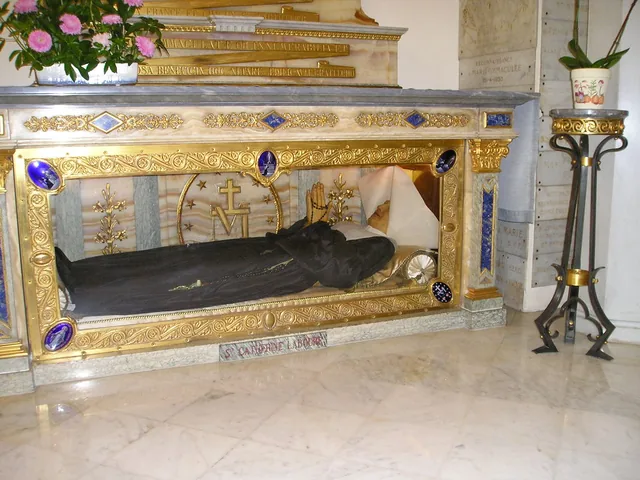
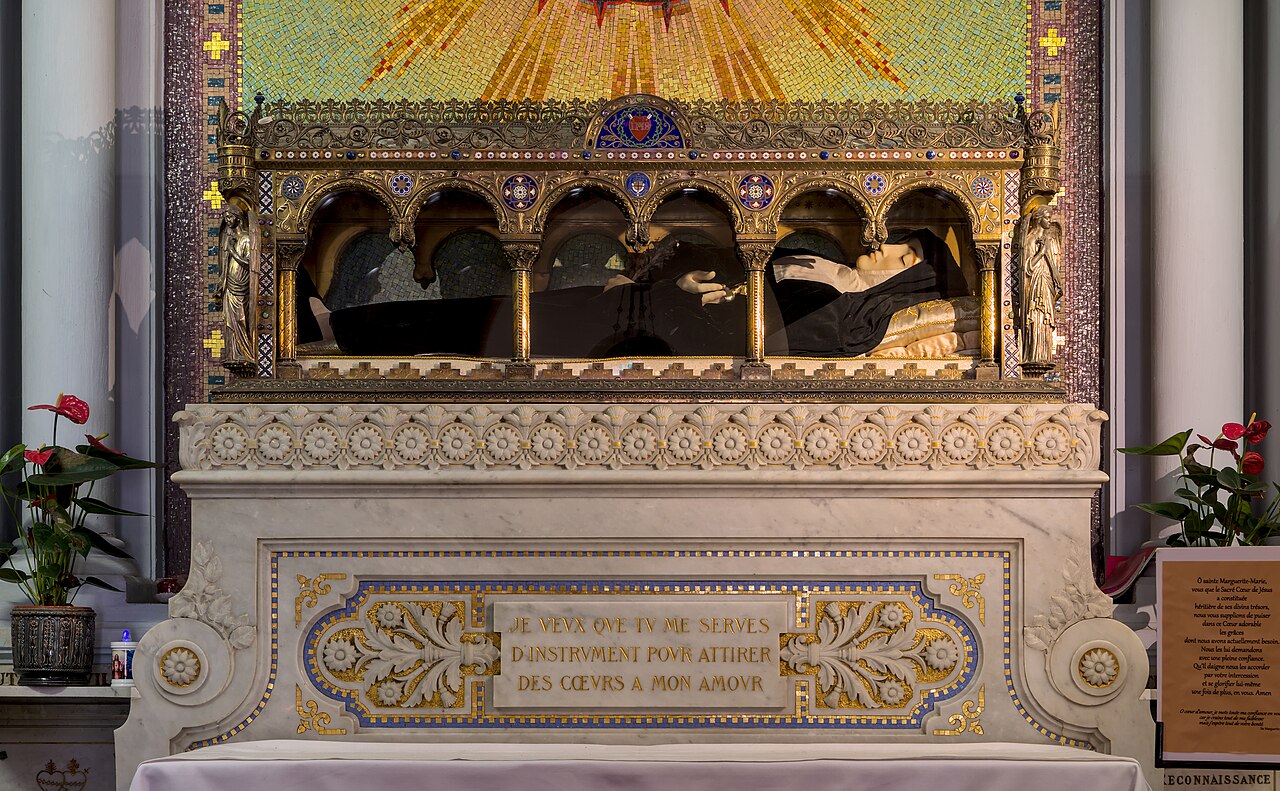
The sanctuary explicitly identifies the visible figure in the chapel as a wax statue. It says most of her bones lie beneath it and separately reports a shrunken but intact brain relic on the cloister side. The brain claim is a custodial description, without a published anatomical assessment on that page. [3]
The statue, bones and separate relic
The sanctuary’s separation of statue, bones and brain is more informative than a photograph without a caption. A wax face cannot demonstrate the condition of bones underneath. Nor does a description of one organ establish preservation of a complete body. [3]
The sanctuary page gives no examination findings or preparation and conservation history for these materials. Its claim about the brain remains a custodial description, separate from the clearly identified wax statue and bones. [3]
READER QUESTIONS
Questions and answers
Must a Catholic accept every detail of her visions as an article of faith?
The Catechism distinguishes private revelations from the deposit of faith. They serve the revelation given in Christ; they do not complete or correct it. [5]
Is the figure in the chapel her preserved body?
The sanctuary calls it a wax statue and distinguishes it from bones beneath it and a separate brain relic. [3]
What was distinctive about her influence?
Her reported experiences helped spread a devotion focused on Christ’s love, expressed through the image of his heart and practices of prayer. [2]
FOLLOW THE SOURCES
Sources and further reading
- Dicastery for the Causes of Saints: Margaret Mary Alacoque
Institutional source
Retrospective biography; family resistance, skepticism, writing and devotional imagery.
- Paray sanctuary: The Heart of Jesus
Institutional source
The sanctuary’s explanation of the heart as a symbol of Christ’s person and love.
- Paray sanctuary: Chapel of the Apparitions
Institutional source
Explicitly distinguishes wax statue, bones and the reported separate brain relic.
- Paray sanctuary: Margaret Mary and Claude
Institutional source
Community tasks, spiritual direction and novice formation; retrospective devotional account.
- Catechism of the Catholic Church, paragraphs 65–67
Catholic doctrinal source
Official teaching on Christ and private revelation.
Sources checked: 2026-10-27. Suggest a correction or a source.