THE PERSON BEHIND THE ACCOUNT
He used the skills his friends asked for to serve his parish and people who needed help.
At fourteen, Carlo Acutis helped with his parish website and prepared children for Confirmation while keeping up with demanding schoolwork. Friends and relatives also asked him for computer help. His skills were useful close to home. [1]
A boy growing up in Milan
Born in London in 1991, Carlo grew up in Milan and visited Assisi during holidays. The official biography remembers help with computers and programs, friendships and pocket money given to people in need. [1]
Choosing where attention goes
Francis discussed Carlo in his 2019 letter to young people. He saw in him someone able to use digital communication for faith while recognizing the pressures of advertising, distraction, and consumption. The problem was already familiar: a device can absorb the time and attention its owner meant to use elsewhere. Francis proposed Carlo as an example of choosing what to do with those tools. [7]
That question remains concrete for a student with homework, friends, and a phone. Someone has to decide whether to keep scrolling, help with another person’s problem, or finish the thing a community needs. Carlo’s parish work supplies an actual example; it need not turn every hobby or hour of leisure into a moral examination.
The exhibition he wanted people to see
Carlo assembled an exhibition about reported Eucharistic miracles. Its images and historical descriptions served a devotion central to his life. The exhibition is his contribution; each claim it repeats still needs its own evidence. [1]
The illness that left little time
Rapidly progressing leukemia brought Carlo to hospitals in Milan and Monza in October 2006. He died on 12 October, aged fifteen. The cause biography remembers his offering of suffering for the Church alongside the medical care he received. [1]
IN OUR OWN LIVES
Put a skill to work for someone
A skill in design, music, cooking, coding or explaining homework can become a regular gift to someone else. The practical question is whom it can help and what time its owner is willing to give.
Francis’s discussion of Carlo also gives adults something to consider before dismissing young people’s digital lives. Ask what they can make, whom they can help, and what demands their attention. The useful conversation begins there, alongside the question of what their devices are asking from them. [7]
THROUGH THE EYES OF FAITH
Faith and daily life
For Catholics, the Eucharist is an encounter with Christ, and Carlo made it a recurring part of his week. Leo’s homily connects that prayer with generosity toward other people. Faith concerns how a person lives with the time and abilities available to them, including time at a computer. [5]
An ordinary day, taken seriously
At Carlo’s canonization in 2025, Leo XIV described prayer, sport, study, and charity woven into his days. He emphasized daily Mass, adoration, Confession, and small acts of generosity. The pope’s portrait gives the Church’s reason for holding up Carlo: practices a young person could carry into school and family life. It does not require a teenager to become a public figure. [5]
THROUGH THE LENS OF SCIENCE
The evidence about the remains
Carlo belongs in this collection because his displayed remains are often mistaken for an untouched body. His canonization on 7 September 2025 is recorded by the Holy See. The bishop’s conservation account describes how the body was prepared; the canonization celebrates his Christian life. [4][5]
What the bishop explained about the tomb
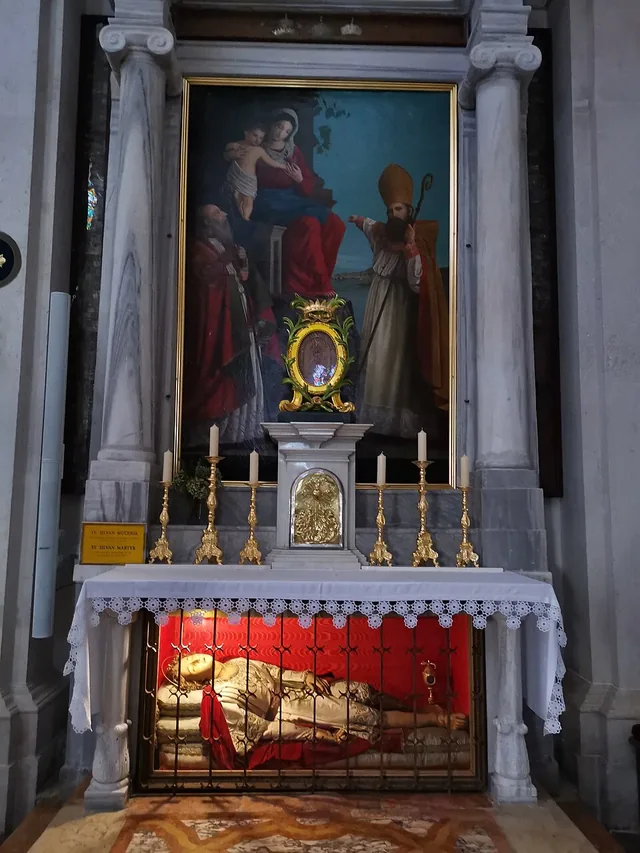
When the tomb was opened to visitors in 2020, images of Carlo’s recognizable face spread widely. Bishop Domenico Sorrentino corrected reports that an incorrupt body had been found. At the January 2019 exhumation, he said, the remains showed the normal changes after death. They were conserved and reconstructed for dignified display; the face has a silicone mask. [4]
The bishop’s statement is direct about the intervention. It records the responsible church authority’s explanation of the display, rather than a complete technical protocol. The missing protocol leaves details of conservation to specialists; it gives no reason to repeat the claim the bishop expressly corrected. [4]
READER QUESTIONS
Questions and answers
Is Carlo officially a saint now?
Leo XIV canonized him with Pier Giorgio Frassati on 7 September 2025. “Saint Carlo Acutis” is the current title. [5]
Is the face in the tomb preserved skin?
Bishop Sorrentino identified a silicone face mask used in reconstruction. His 2020 statement explicitly rejected reports that the body had been found incorrupt. [4]
Does his exhibition settle the science of Eucharistic miracles?
It is a devotional and historical project. Each reported event and each proposed laboratory result still needs to be examined through its own records; Carlo’s authorship supplies no blanket scientific finding.
FOLLOW THE SOURCES
Sources and further reading
- Dicastery for the Causes of Saints — Carlo Acutis
Church or shrine source
Life, computer projects, charity, Eucharistic devotion and final illness. A cause biography rather than a technical evaluation of his exhibition.
- Bishop Domenico Sorrentino — correction concerning Carlo’s body, 1 October 2020
Church or shrine source
Direct diocesan statement rejecting an incorrupt-body report and describing conservation, reconstruction and silicone face. No complete laboratory protocol.
- Leo XIV — canonization homily, 7 September 2025
Church or shrine source
Records canonization and explains the Church’s portrait of daily faith, friendship and charity.
- Francis — Christus vivit, paragraphs 104–107
Church or shrine source
Discussion of Carlo’s digital creativity and resistance to consumerism and distraction. Written before his canonization.
Sources checked: 2026-10-27. Suggest a correction or a source.