THE PERSON BEHIND THE ACCOUNT
Adoration with the door open to working people
Eymard’s devotion took a practical form in Paris: preparing adults and young workers for Communion, as well as organizing prayer before the Blessed Sacrament. The work required teaching and welcome. A person unable to fit the usual childhood path into church life was still someone his community wanted to reach. [1]
A vocation interrupted by illness
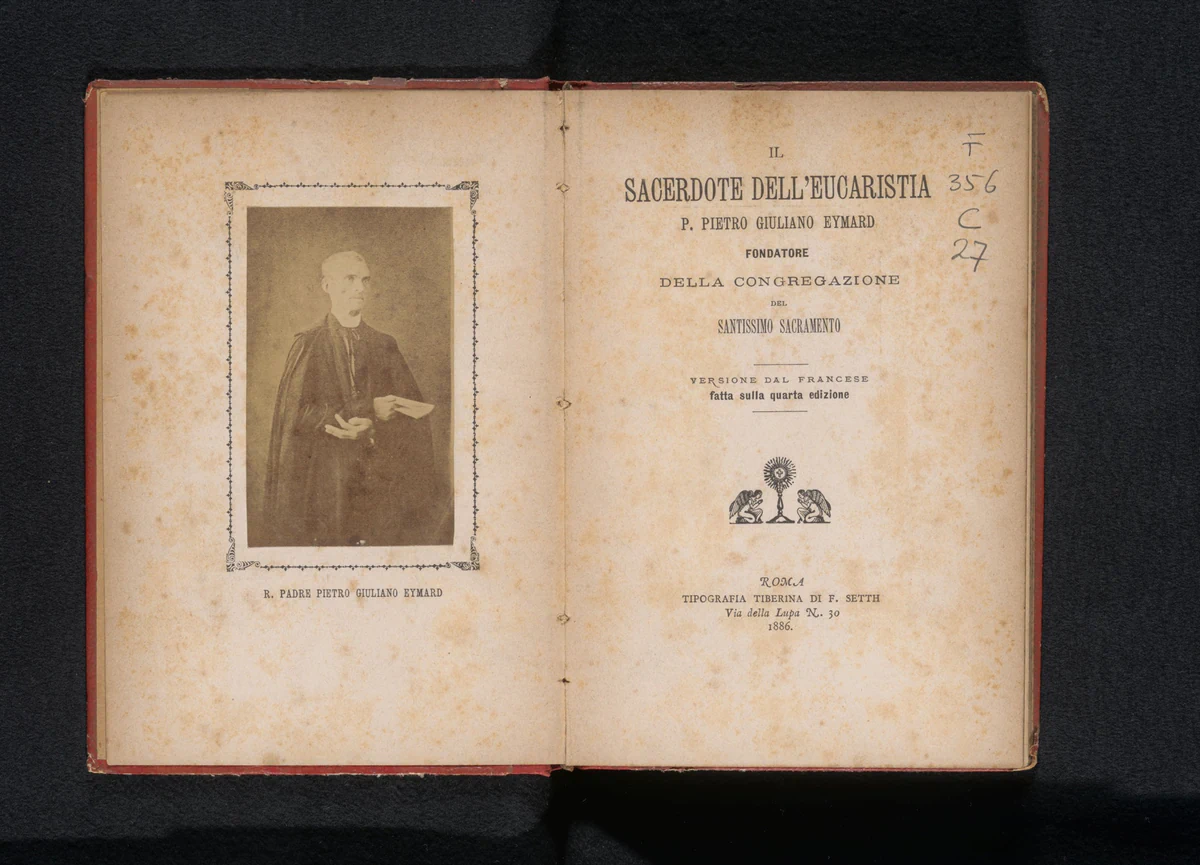
Born at La Mure in 1811, Eymard had to navigate family resistance and poor health before becoming a priest. A first attempt at religious formation ended in illness; he later resumed his studies and was ordained in 1834. His eventual work grew from a vocation that had already required more than one beginning. [2][3]
He subsequently joined the Marists. Teaching, preaching and religious responsibilities developed within that community before his Eucharistic foundation. The distinction matters: he did not begin as a founder with a complete institution waiting to be opened. He learned religious life within an existing order and later had to decide whether to leave it. [2][3]
Leaving a secure place
The biography hosted by the Congregation for the Clergy follows the difficult emergence of his new project. Eymard sought permission to establish a community specifically devoted to the Blessed Sacrament. Founding required ecclesiastical approval, companions and a sustainable house. The change cost him his settled place among the Marists. [3]
His foundation also involved other people’s initiative. Marguerite Guillot helped develop the women’s community, the Servants of the Blessed Sacrament. Naming her prevents the history from becoming the story of one man acting alone. His religious vision needed colleagues who could translate it into a shared daily life. [1]
People who had missed First Communion
Vatican News records his work preparing adults and young workers for their first Communion, along with support for poor people in the Paris suburbs and priests in difficulty. The specificity is useful. “Devotion” here meant making time for instruction and for people whose circumstances could leave them outside the ordinary arrangements. [1]
The Notre Dame account likewise emphasizes an active love of neighbours growing from Eucharistic belief. For a modern reader, his work raises a practical question about access: who is assumed to have already learned a community’s language and customs, and what happens to someone who has not? [2]
IN OUR OWN LIVES
Making belonging possible
Eymard is particularly relevant to anyone who teaches newcomers or works with people who have missed expected milestones. His Paris ministry treated adult religious formation as work worth organizing. A reader can also test his own claim in practice: whether a community’s worship makes it more attentive and generous towards those at its edges. [1][2][4]
THROUGH THE EYES OF FAITH
Faith and daily life
His central conviction was Catholic belief in Christ’s presence in the Eucharist. Adoration, the celebration of Mass and service to neighbours belonged together in his vision. The congregation he founded continues to interpret the Eucharist as a source of communion and mission. [1][4]
What he meant by the Eucharist
The congregation’s published Rule of Life treats the Eucharist as a way of learning a gift of self. That later institutional language should be distinguished from Eymard’s exact words, but it explains the continuing shape of his foundation. Prayer is meant to affect relationships, shared life and the treatment of others. [4]
His surviving spiritual counsels also addressed concrete responsibilities. They include advice to people involved in charitable work, not only directions for prayer in a chapel. These texts make it possible to read him as a spiritual adviser concerned with perseverance and decisions, rather than reducing him to an emblem holding a monstrance. [6]
THROUGH THE LENS OF SCIENCE
The evidence about the remains
A 2021 congregational pilgrimage account identifies a body attributed to him in a glass casket in Paris. It is a custody description, without anatomical findings or a treatment history. [5]
Paris, the casket and the limits of the description
John XXIII’s 1962 canonization homily says Eymard’s body was kept in Paris. The later congregational pilgrimage report locates the glass casket at 23 Avenue de Friedland. Together they document a continuing institutional account of where pilgrims venerate him. [5][7]
Neither text provides an inventory of tissue, the history of embalming or other treatments, or a current anatomical examination. A glass casket makes a relic visible without answering those questions. The description “incorruptible” should therefore not be expanded into a claim that an entire untreated body has been scientifically verified. [5][7]
READER QUESTIONS
Questions and answers
Was his work only silent adoration?
No. The institutional biographies also describe preaching, spiritual direction, adult Communion preparation and help for poor people and priests in difficulty. [1][3]
Does the Paris display prove natural incorruption?
The published pilgrimage account identifies the casket and location. It supplies no examination or treatment details needed to draw that conclusion. [5]
FOLLOW THE SOURCES
Sources and further reading
- Vatican News: Peter Julian Eymard
Institutional account
Supports Eucharistic vocation, social ministry, adult/worker Communion preparation and Guillot’s contribution. Not physical evidence.
- University of Notre Dame: Eymard
University devotional account
Supports family resistance, interrupted training and link between devotion and active charity; broad devotional biography.
- Congregation for the Clergy-hosted biography
Institutional biography
Long devotional biography supports formation, Marist period and difficult foundation. Page heading has an inconsistent birth year; 1811 corroborated elsewhere controls.
- Congregation of the Blessed Sacrament: Rule of Life bulletin, 2024
Religious order’s account
Explains continuing Eucharistic charism; later Rule language is not represented as Eymard’s verbatim teaching.
- Congregation of the Blessed Sacrament: Paris pilgrimage, 2021
Religious order’s account
Indexed report identifies glass casket and 23 Avenue de Friedland; direct retrieval timed out. No anatomical or conservation data.
- Eymard: Counsels for Spiritual Life, selected letters
Primary writings in translation
Counsels include correspondence about charitable work and responsibilities. No private motives inferred beyond texts.
- John XXIII: canonization homily, 9 December 1962
Church or shrine source
Confirms canonization and that body was kept in Paris; no tissue inventory or treatment account.
Sources checked: 2026-10-27. Suggest a correction or a source.