THE PERSON BEHIND THE ACCOUNT
He offered young workers a place to learn. Keeping it open took more than one man.
In 1846 Bosco’s oratory finally found a base at the Pinardi property after moving between temporary places. Then he became seriously ill. While he recovered outside Turin, Giovanni Borel and other priests kept the work going. When Bosco returned, his mother Margaret came with him. [6]
Work and study in the same childhood
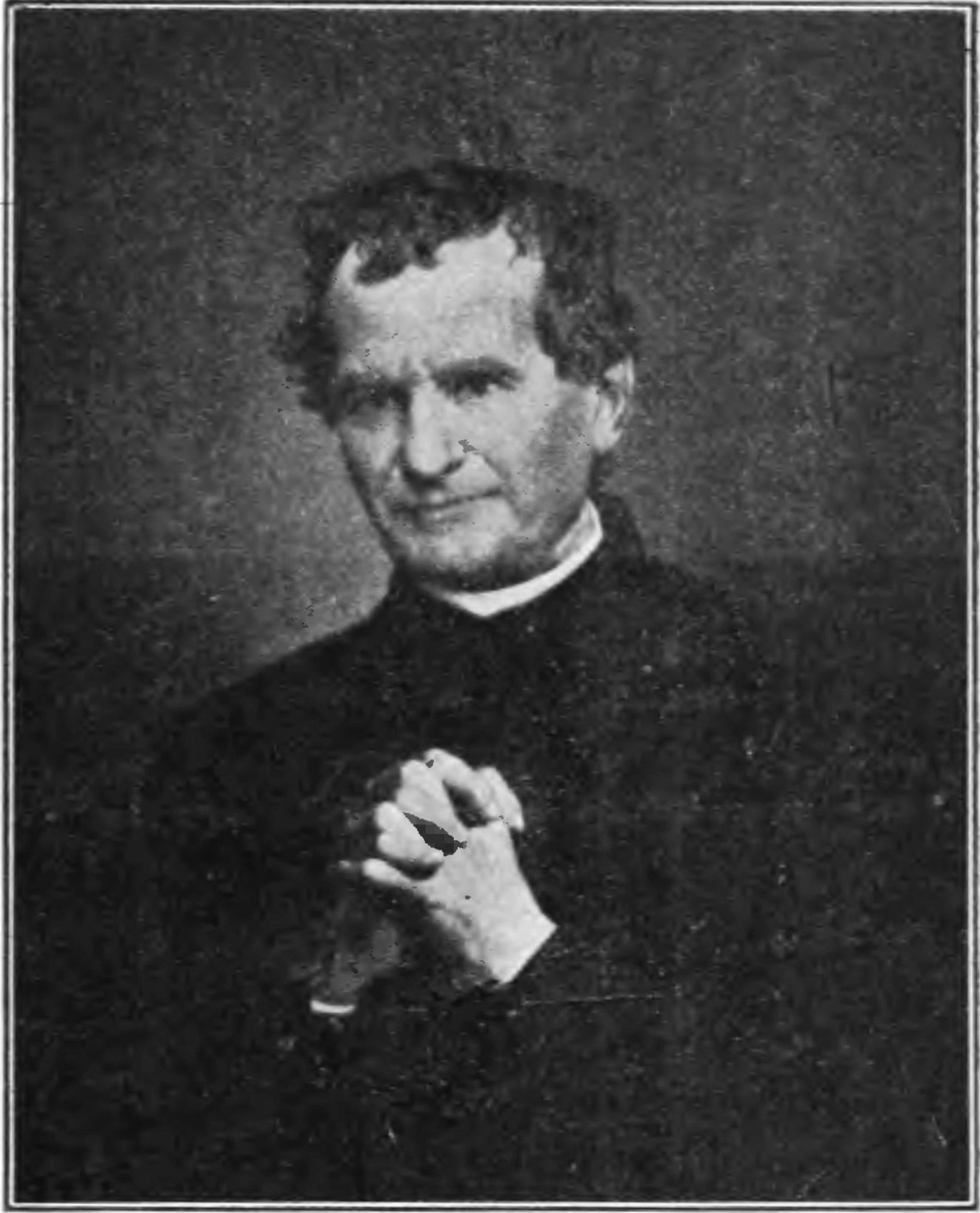
Born in 1815 to a farming family, Bosco lost his father while very young. The Church biography describes conflict over his studies, work away from home and several jobs through which he supported his education. These details connect his later interest in training with a life in which earning, learning and dependence on other people were already intertwined. As an educator, he worked with boys for whom study also had to compete with earning a living. [1]
The boys arriving in Turin
After ordination in 1841, he worked among young people in streets, construction sites and prisons, including migrants from the countryside. Industrial Turin offered work without always providing a stable household or preparation for adult life. His contribution included religious instruction, schooling and preparation for employment. The aim was a place where a young person could become part of a community while developing practical abilities. [1]
The household behind the founder
Arthur Lenti’s study follows Margaret’s decision to stay in Turin after nursing her son through illness. She cared for him and for the increasing number of boys who needed lodging. Other women later helped. The biography of a celebrated priest can obscure this domestic labor, but rooms do not clean themselves and a school cannot substitute a reputation for food and clothing. The institution depended on people doing these tasks. [6]
More than a founder working alone
In 2015 Pope Francis described Bosco surrounded by young people, educators and the wider Salesian family. He specifically urged continued attention to poor and marginalized youth. His address treats the legacy as a task still being carried out, rather than an achievement completed by a famous man. It also joins the religious purpose with practical forms of education and welcome. [5]
IN OUR OWN LIVES
What makes a young person feel safe enough to learn?
Bosco’s account of teaching gives a reader specific things to look for: adults who explain rules, time for play and music, correction without violence, and a dependable relationship. A school’s claim to a founder’s tradition is meaningful only if its daily conduct can bear that examination.
The story also offers a better question than whether a single energetic person can save everyone. Who takes over when the founder is ill? Who cooks, cleans, finds a bed or notices an absent pupil? Borel, Margaret and the other helpers belong inside the history. Their work made continued care possible.
THROUGH THE EYES OF FAITH
Faith and daily life
His 1877 account of education puts reason, religion and loving kindness together. Its instructions reject violent punishment. They also describe an educator who spends time with pupils, explains expectations and notices difficulties. [4]
What he asked of teachers
Bosco’s educational text requires the director to be available and the assistants to be responsible. It gives room to games, music, theatre and exercise. Discipline was supposed to work through relationship and explanation. Some of his assumptions belong to nineteenth-century Catholic education, and the text’s sweeping promises of success are its author’s claims, not evidence that every child prospered. The explicit rejection of hitting and degrading punishment remains a concrete principle against which an institution can be judged. [4]
Religious teaching and the pupil’s freedom
In the same text, confession, Communion and Mass are central to the program, but Bosco tells educators to encourage rather than force pupils to receive the sacraments. That distinction deserves attention. A Catholic school may explain the value it places on a religious practice while still bearing responsibility for how a child experiences authority and whether a refusal can be heard. [4]
THROUGH THE LENS OF SCIENCE
The evidence about the remains
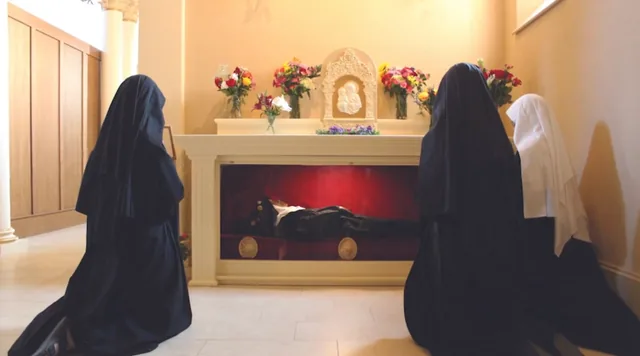
The basilica at Turin contains Bosco’s remains within a life-size wax effigy. A traveling casket is a separate object, also an effigy, containing some relics. Archbishop Timothy Costelloe carefully distinguishes the two in his 2023 homily. [2]
The wax figure and the enclosed remains
Costelloe’s description supplies a distinction that a photograph can easily lose: a recognizable sculpted likeness is an artistic covering or representation. The Turin casket and the traveling reliquary have different contents and histories. His homily does not provide an anatomical inventory or conservation report for the enclosed remains. The wax face therefore cannot demonstrate natural soft-tissue preservation. [2]
READER QUESTIONS
Questions and answers
Is every traveling Don Bosco casket his whole body?
No. Costelloe describes the touring casket as a replica with a wax effigy enclosing some relics. [2]
Did he approve corporal punishment?
His 1877 text says hitting, painful kneeling, ear-pulling and similar punishments should be avoided. [4]
FOLLOW THE SOURCES
Sources and further reading
- Dicastery for the Causes of Saints — John Bosco
Institutional source
Retrospective childhood, training and early youth ministry.
- Timothy Costelloe SDB — Don Bosco relics, 17 September 2023
Institutional source
Distinguishes Turin effigy and remains from traveling replica and enclosed relics.
- John Bosco — Preventive System (1877)
Institutional source
1877 primary educational text; critical translation by P. Laws.
- Pope Francis — Address to the Salesian family, 21 June 2015
Institutional source
Primary Catholic interpretation; shared responsibility and marginalized youth.
- Arthur J. Lenti — Margaret Occhiena Bosco, Journal of Salesian Studies, 2005
Institutional source
Original historical research, printed pp.38–40; illness, Borel and Margaret’s collaboration.
Sources checked: 2026-10-27. Suggest a correction or a source.