THE PERSON BEHIND THE ACCOUNT
A familiar-looking face conceals how little we know about the person remembered here.
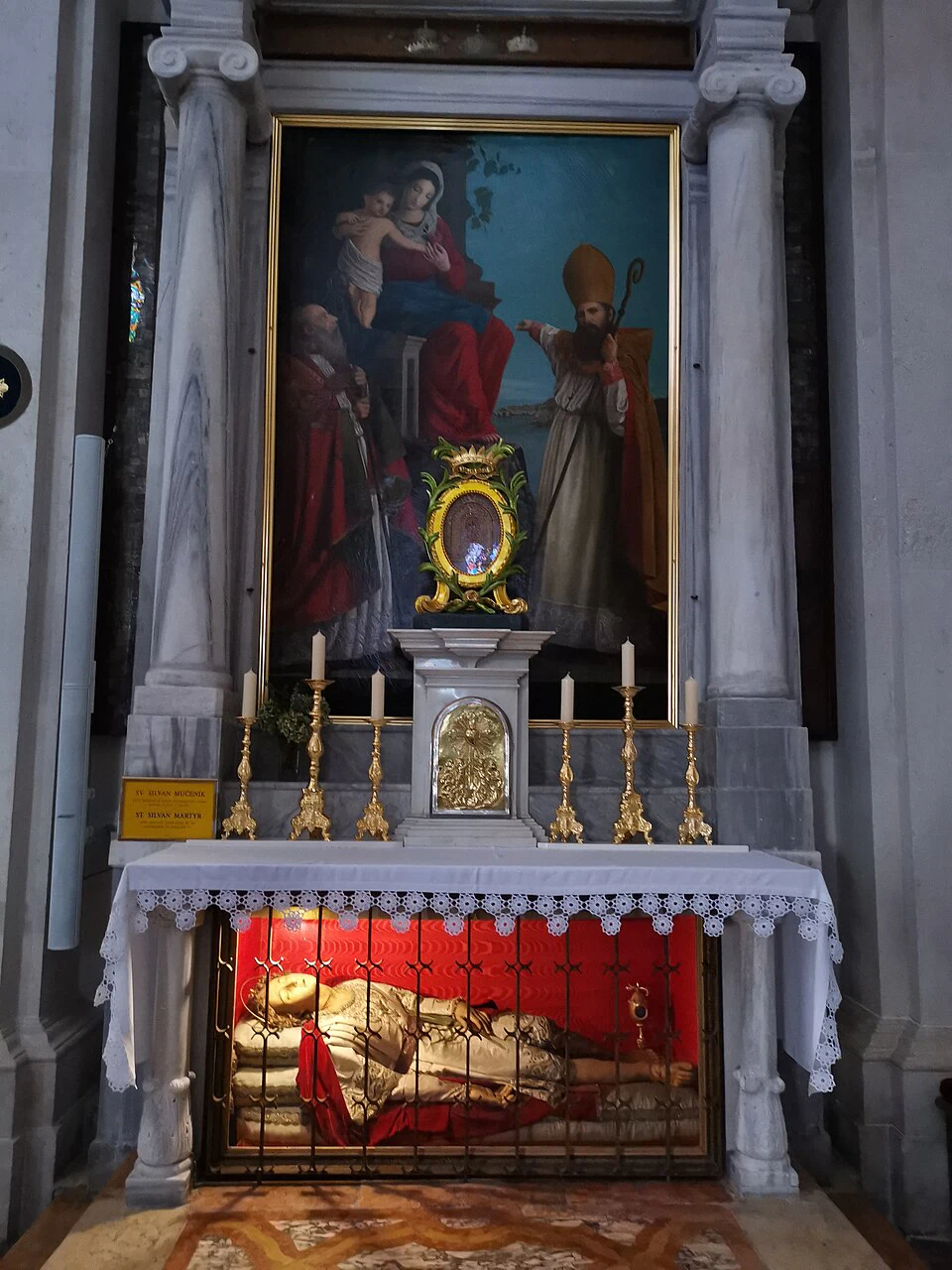
Dubrovnik Cathedral identifies Silvan in the Church of Saint Blaise as bones enclosed in a wax figure. It gives no secure individual biography. [1]
A name without a recovered life
The guide supplies no family, occupation or documented decision for Silvan. Assigning him the life of a similarly named martyr would risk confusing different people. [1]
The figure and the bones
A human-shaped container can make the person represented seem familiar before we know who they were. Its face gives the visitor a likeness, while the individual life remains out of reach.
IN OUR OWN LIVES
A person deserves an accurate name
The most respectful story is sometimes an unfinished one. A lifelike face makes it easy to feel that we know someone; the absence of a biography asks us to slow down. For a pilgrim, a photographer, or a parent explaining a church visit, the useful first question is what the church says the object contains.
THROUGH THE EYES OF FAITH
Faith and daily life
Catholic respect for human remains rests on the dignity of the person and hope in the resurrection. The Catechism asks for care and charity toward the dead. That obligation includes people whose lives have left few records. It gives a reason to approach this reliquary thoughtfully while the identity remains uncertain. [2]
Remembering someone we cannot describe
There is a human difficulty in this encounter. A church has preserved a name while the details that would make its bearer familiar to us remain uncertain. A visitor can acknowledge that gap, show respect, and ask for the history of the object. None of those responses requires treating its face as surviving skin.
THROUGH THE LENS OF SCIENCE
The evidence about the remains
The figure is a constructed reliquary. Its visible face belongs to the wax presentation, rather than an intact, naturally preserved body. [1]
The material left unspecified
The guide gives no bone inventory, transfer record or specialist findings establishing identity and completeness. [1]
Before sharing the photograph
The cathedral’s explanation provides a straightforward caption: a wax reliquary containing bones. A photograph described as an untouched ancient body would misidentify what visitors see. [1]
READER QUESTIONS
Questions and answers
Is this an incorrupt body?
The cathedral describes bones within wax. The visible body shape is the container. [1]
Which Saint Silvan is remembered here?
The guide gives too little information to identify a particular historical person securely. [1]
FOLLOW THE SOURCES
Sources and further reading
- Dubrovnik Cathedral — Moćnik Katedrale
Church or shrine source
Custodial account identifies bones inside wax at Saint Blaise; no individual biography or inventory.
- Catechism of the Catholic Church — paragraphs 2300–2301
Church or shrine source
Catholic teaching on respectful treatment of the dead and legitimate scientific examination. No claim about Silvan’s identity.
Sources checked: 2026-10-27. Suggest a correction or a source.