THE PERSON BEHIND THE ACCOUNT
An elderly pope set a great council in motion and asked the Church to speak with mercy.
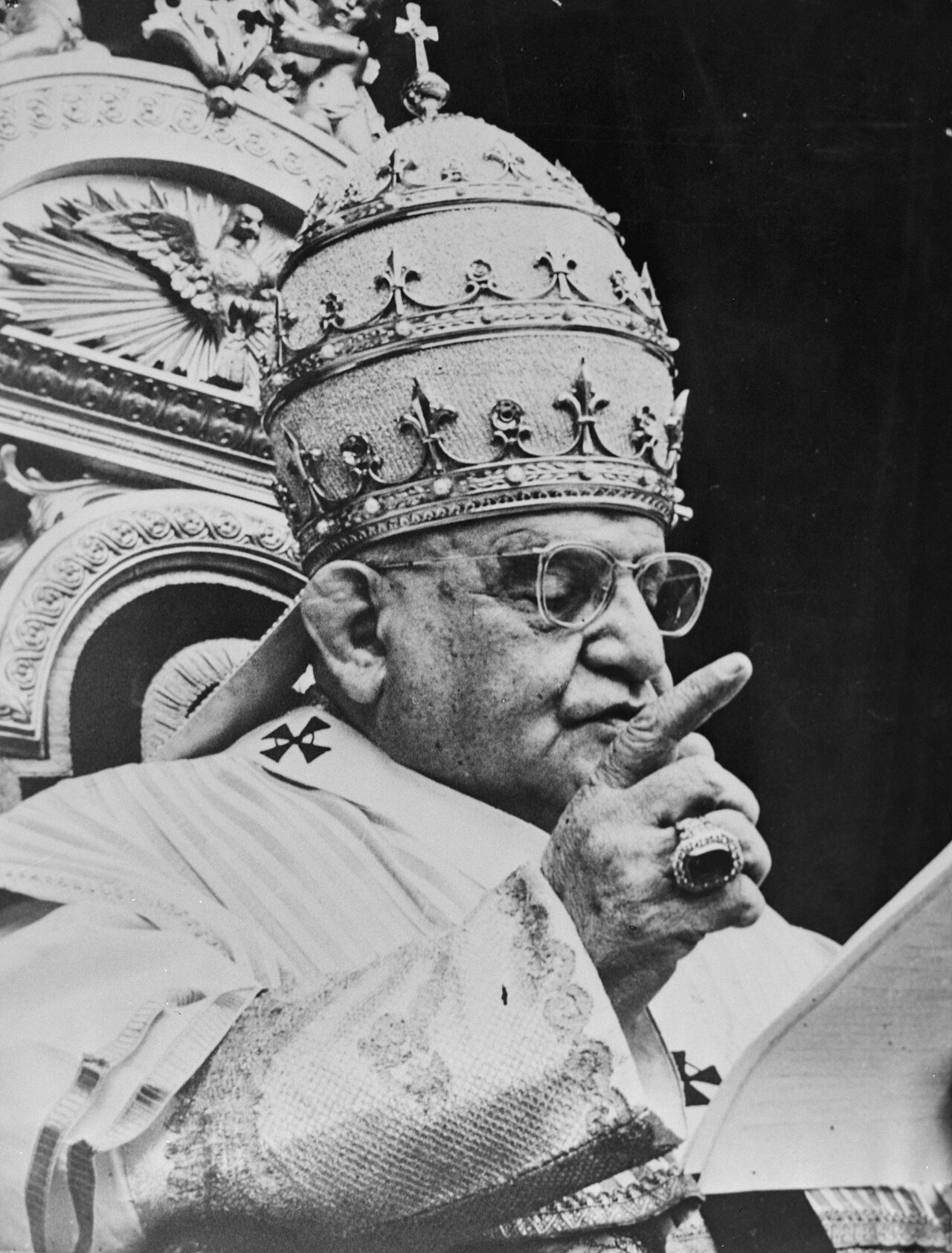
John XXIII opened the Second Vatican Council in October 1962 by challenging a habit he knew among religious people: seeing only ruin in the present and imagining the past had been free of trouble. His speech called for confidence, careful teaching, and mercy. The man speaking was approaching his eighty-first birthday, beginning work he would not live to finish. [7][1]
Angelo before Rome
Born in 1881 to a farming family in Sotto il Monte, Angelo Roncalli kept spiritual notes as a seminarian. He later taught, assisted Bishop Radini Tedeschi and served as a medical sergeant and hospital chaplain during the First World War. [1]
Learning patience abroad
Diplomatic work brought misunderstandings in Bulgaria and later duties in Turkey and Greece. The Holy See’s biography records help with Jewish transit visas during the Second World War, alongside relations with Orthodox Christians and Muslims. [1]
A proposal becomes three years of work
Elected in 1958, John announced the council the following January. His opening speech recalled a sudden inspiration followed by three demanding years of preparation. Its task combined guarding Christian teaching with communicating effectively in changed circumstances. [1][7]
An institution facing reform has to judge what deserves preservation and what needs examination. A public commitment also requires time, preparation and the willingness to let other people help carry it out.
The council continued without him
John died on 3 June 1963. The council continued, while his own short pontificate became a point of reference for the Church’s renewal. At his 2014 canonization, Francis emphasized his readiness to be guided by the Holy Spirit and his service in calling the council. The homily remembers a pastor’s faith and responsibility. [1][5]
IN OUR OWN LIVES
Kindness with public responsibilities
Calling John the good pope is easy; reading the rights he lists in Pacem in terris is more demanding. A person praising human dignity has to ask about food, health care, safe work, and truthful information. John supplies concrete subjects for a discussion that can otherwise drift into agreeable generalities. [6]
Anxiety can turn into nostalgia. Reading John’s speech brings the conversation back to the work of learning, preparation and explanation. That combination of conviction and patience has uses in a parish meeting, a workplace or a family argument. [7]
THROUGH THE EYES OF FAITH
Faith and daily life
At the council’s opening, John spoke of the Church’s preference for the “medicine of mercy.” The phrase belongs to a speech that also insists on the truth of Christian teaching. In his approach, patience and explanation are responsibilities of someone who believes there is truth to share. [7]
Rights with names and practical requirements
In Pacem in terris, published in April 1963, John began with the dignity of every person. He named rights to food, shelter, medical care, education, a good name, and accurate public information, alongside duties toward others. People facing illness, disability, old age, and unemployment receive explicit attention. His account of peace reaches into the conditions of an ordinary household. [6]
THROUGH THE LENS OF SCIENCE
The evidence about the remains
John’s remains are venerated as those of a Catholic saint. Conservation work can be described openly within that setting. The 2014 canonization homily directs attention to his life and service; it offers no judgment about a chemically untreated body. [3][5]
The conservation history
A 2018 scholarly review of relic conservation describes preserving treatment after John’s 1963 death and further work following retrieval in 2001. Its account draws on earlier publications; the authors do not present a new examination of his body. Deliberate intervention is therefore part of the published history. [3]
The review supplies no complete original laboratory file from which to calculate the contribution of each treatment or the burial environment. Those details remain a technical question. Calling the remains preserved need not imply that they were left untreated, and their present appearance cannot reconstruct the entire history by itself. [3]
READER QUESTIONS
Questions and answers
Did John XXIII finish Vatican II?
He opened Vatican II on 11 October 1962 and died the following June; the council continued. [1]
Where should I begin reading him?
Begin with Pacem in terris, paragraphs 9–17, then his council opening address. [6][7]
Was his body left untreated?
The cited conservation review records preserving treatment in 1963 and additional work in 2001. It is a review of published accounts, not the full original treatment dossier. [3]
FOLLOW THE SOURCES
Sources and further reading
- Holy See — biography of John XXIII
Church or shrine source
Formation, wartime and diplomatic service, pontificate and death. Institutional biography.
- Dimitrov and colleagues — Methods for preservation of body relics, 2018
Scholarly account
Pages 34–35 review published accounts of 1963 and 2001 treatment. No new direct examination or full original protocol.
- Francis — canonization homily, 27 April 2014
Church or shrine source
Canonization context and interpretation of John’s council initiative and pastoral service.
- John XXIII — Pacem in terris, paragraphs 9–17
Church or shrine source
John’s own teaching on personal dignity, rights, duties and care for people in need.
- John XXIII — opening address to Vatican II, 11 October 1962
Church or shrine source
Italian original of his account of the council’s origins, preparation, teaching method and mercy. The English page contained no speech text; Italian text inspected.
Sources checked: 2026-10-27. Suggest a correction or a source.