THE PERSON BEHIND THE ACCOUNT
Antonia of Florence changed her religious life after fourteen years of leading others.
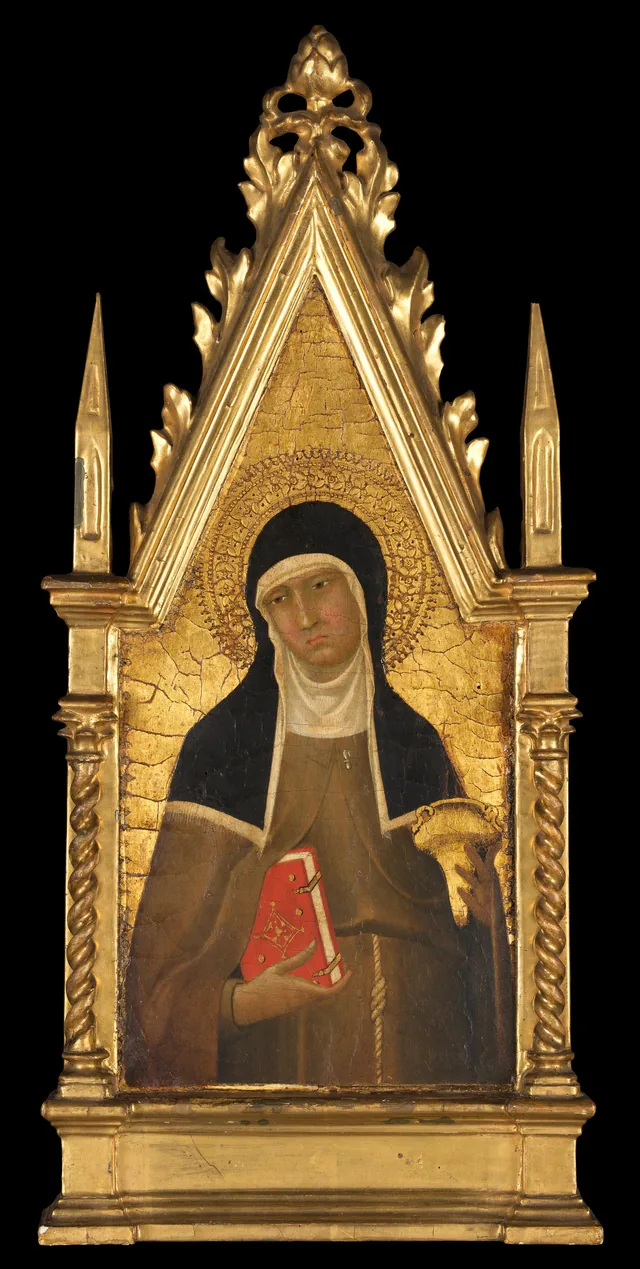
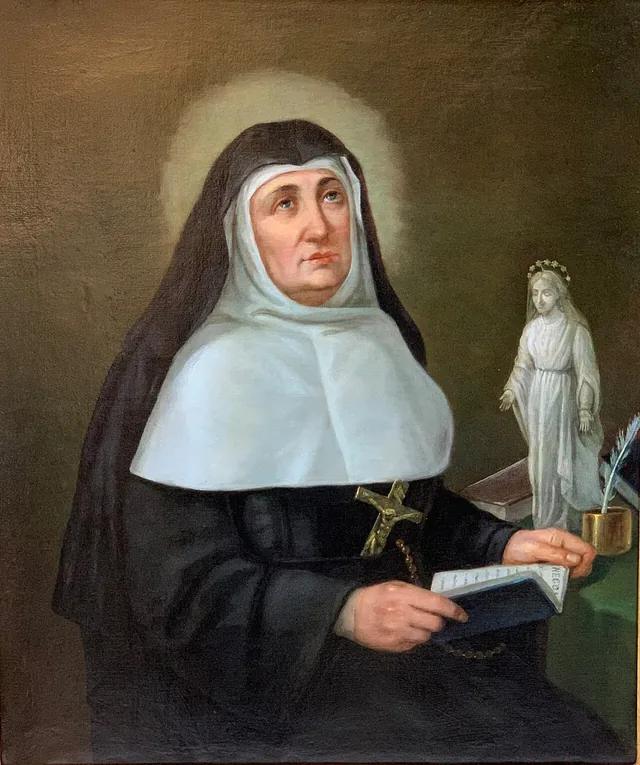
Antonia had led Saint Elizabeth’s in L’Aquila for fourteen years when she moved with companions to a community following Clare’s rule in 1447. The new foundation embraced strict poverty. Its custodian’s account says that, when necessities ran out, she went out with a sister to ask for alms. [1]
Her son came before the cloister
Antonia was born in Florence around the beginning of the fifteenth century, married young and was widowed with a child. The Vatican account says she cared for him and later entrusted him to relatives before entering religious life. She declined remarriage despite pressure from those around her. [2]
A vocation learned across communities
She entered the regular Franciscan Third Order associated with Angelina of Marsciano. Service in several communities preceded her responsibility at L’Aquila. The change to Clare’s rule therefore came after sustained leadership, rather than from someone unacquainted with the ordinary demands of communal life. [2]
IN OUR OWN LIVES
The second change of direction
A life can cross several vocational boundaries without fitting one simple label. Gaps in the record also deserve respect. A medieval woman need not be made to say what a modern reader wants to hear in order to be worth meeting.
THROUGH THE EYES OF FAITH
Faith and daily life
The Vatican profile presents the change as a search for a more contemplative Franciscan life. John of Capistrano supported the foundation. Prayer and poverty were shared commitments with practical consequences for the women who joined her. [2]
The record does not preserve her own words
Poor Clare writer Chiara Cremaschi cautions that no writings by Antonia survive in the account available to her, nor direct sayings preserved by the early sources. She notes the risk of standard saintly traits filling the portrait. That warning is valuable: Antonia’s spiritual choices can be followed through the stages of her life without giving her invented advice or motives. [3]
Poverty had to be lived together
The custodians remember a leader caring for sisters who were ill or discouraged. The alms-seeking episode makes the cost of the community’s austerity tangible. It also leaves a question for any reader of such a life: how does a person’s chosen deprivation affect the people depending on her? The received portrait emphasizes maternal care within that demanding observance. [1]
THROUGH THE LENS OF SCIENCE
The evidence about the remains
The Poor Clares at Paganica preserve Antonia’s remains and transmit accounts of repeated findings of incorruption after her death. Their narrative is the source of the preservation tradition, without a published modern anatomical inventory. [1]
A preservation story with a long history
The monastery recounts early exhumations, a bishop’s order to rebury the body and a later finding of preservation in 1477. Pius IX confirmed her public recognition as Blessed in 1848, according to the Vatican profile. These are transmitted historical accounts; the underlying examination protocols are not reproduced. [1] [2]
The current custodians locate the remains at Paganica. Their description leaves the amount of surviving tissue, identity testing and later treatment unspecified. A devotional account of a movable preserved body in the fifteenth century cannot supply those present-day material details. [1]
READER QUESTIONS
Questions and answers
Was she a mother?
The Vatican account describes her son’s care before religious entry, with relatives later taking responsibility. [2]
Can I read her spiritual writings?
Cremaschi’s discussion says none survive in the sources she treats, and warns against attributing standard devotional phrases to Antonia herself. [3]
What is secure about the remains?
The Poor Clare custodians locate them at Paganica and transmit an incorruption tradition; they publish no complete modern material report here. [1]
FOLLOW THE SOURCES
Sources and further reading
- Poor Clares of Paganica — Antonia of Florence
Church or shrine source
Custodial history of 1447 foundation, alms, care for sisters and exhumation tradition; present custody, without modern anatomy.
- Vatican City State — Antonia of Florence, 28 February 2026
Church or shrine source
Widowhood, son’s care, religious stages and 1848 recognition.
- Chiara Cremaschi — Antonia of Florence
Church or shrine source
Reflective historical discussion hosted by custodians; explicit lack of surviving writings/direct sayings and risk of hagiographic formulas. Its speculative reconstruction of motives is not repeated.
Sources checked: 2026-10-27. Suggest a correction or a source.