THE PERSON BEHIND THE ACCOUNT
Antoninus of Florence asked what a prosperous city owed the people it could not see.
Florence’s prosperity did not make its poverty easy to see. Antoninus called citizens together to assist people ashamed to seek alms. The Buonomini of Saint Martin still identify that protection of dignity and confidentiality with their founding purpose. [3]
A Dominican in a commercial city
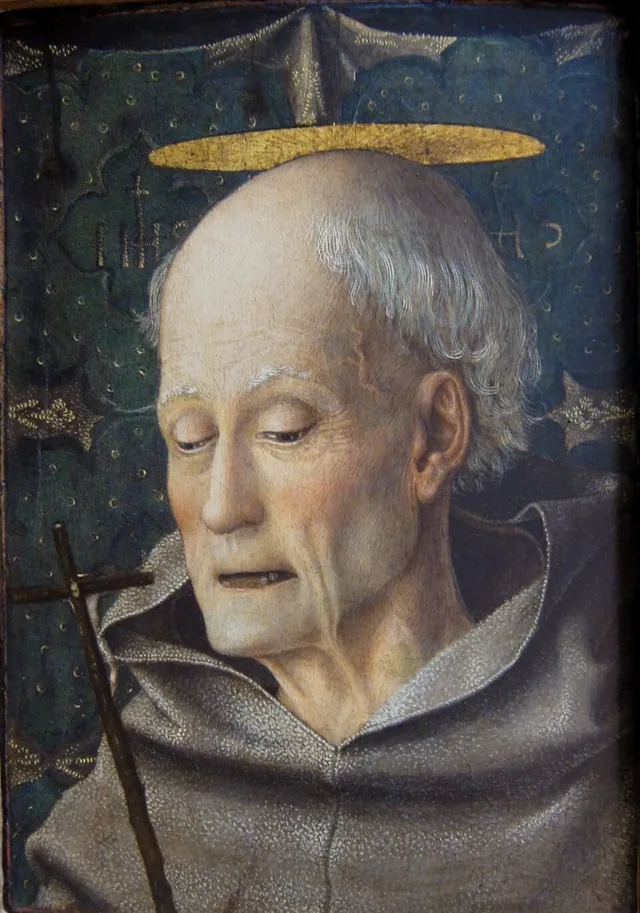
Born in Florence in 1389, Antoninus entered the Dominican Order and later became archbishop. Scholar Oreste Bazzichi locates his work at the intersection of the city’s economic, civic and religious life. Questions about credit, production and exchange became questions a pastor encountered in the lives of his neighbors. [5]
The people who would not ask
The Buonomini’s own history describes merchants and artisans who had fallen into hardship and could not bring themselves to beg. Antoninus selected twelve citizens to collect assistance and distribute it discreetly. The community’s account makes the recipient’s dignity part of the method, rather than a sentiment added after a gift had been made. [3]
Aid can miss someone whose need is urgent but who cannot bear a public disclosure. Confidentiality changes the method of assistance, not merely the words spoken when a gift is handed over.
Care while others were leaving
Cardinal Giuseppe Betori’s diocesan address recalls Antoninus personally helping people during the plague of 1448–49 and directing a substantial part of episcopal income toward poor people. This is a modern churchman’s account of his predecessor, with service and the risk of contagion joined in the same episode. [2]
He did not give every powerful person the answer wanted
The same address recounts his opposition when Cosimo de’ Medici sought to replace secret voting with public voting. It describes a written warning posted at churches. The incident shows why a bishop’s concern with conduct could lead beyond private moral advice into conflict over civic power. [2]
IN OUR OWN LIVES
Help without humiliation
How does the method of giving affect the person receiving help? Privacy and dignity are practical requirements, not decorative additions. The same scrutiny can extend to earning and exchanging money, before any of it is given away.
THROUGH THE EYES OF FAITH
Faith and daily life
Antoninus treated economic conduct as a matter of Christian conscience. His major work of moral theology considered human behavior, transactions and duties to others. A modern scholarly edition places those writings within the city’s commercial world, rather than treating them as abstract rules detached from work. [4]
Trade needed a moral vocabulary
Antoninus’s Summa examined economic action within a much larger account of morality. Brown’s scholarly edition emphasizes proper means and ends in the marketplace, and Bazzichi connects his analysis with the changing organization of production and credit. Neither description makes him the spokesman for a modern political or economic party. [4] [5]
The interesting point is the refusal to exempt business from questions about justice. A transaction can be lawful in form and still require moral scrutiny of the way people act toward one another. Reading him in historical context is more demanding than selecting a line to endorse a present-day ideology. [4] [5]
THROUGH THE LENS OF SCIENCE
The evidence about the remains
A public heritage record places his remains beneath the central altar of the Salviati Chapel at San Marco. It describes the chapel and its conservation needs; it supplies no anatomical examination of the relics. [1]
The elaborate chapel and the smaller physical question
The Salviati family commissioned the chapel to receive Antoninus’s remains. Its architecture and decoration preserve a history of veneration after his death in 1459. The heritage record identifies that setting precisely, while leaving the surviving anatomy and treatment of the remains unspecified. [1]
Conservation of the chapel’s plaster, paintings and stonework is not the same as conservation of human remains. The public restoration description answers questions about the building; a bodily-preservation claim needs its own physical record. [1]
READER QUESTIONS
Questions and answers
What was distinctive about the Buonomini?
Their founding history emphasizes discreet assistance to people in hardship who were ashamed to beg, protecting their dignity through confidentiality. [3]
Did Antoninus write about economics?
His moral theology examined economic conduct; modern scholarship studies it in the setting of fifteenth-century Florence’s trade and work. [4] [5]
Does the Salviati Chapel record demonstrate incorruption?
It locates the remains and describes the chapel. It contains no anatomical findings or full treatment history for the body. [1]
FOLLOW THE SOURCES
Sources and further reading
- Art Bonus — Salviati Chapel
Cultural heritage record
Chapel commissioning, remains under altar and building-conservation concerns. No bodily examination.
- Giuseppe Betori — Study conference on Antoninus, 2009
Church or shrine source
Diocesan account of plague care, income for poor people, Medici voting conflict and moral teaching.
- Buonomini of Saint Martin — History
Church or shrine source
Institution’s account of twelve citizens and confidentiality for people ashamed to ask. Exact foundation year differs across its pages, so no year is asserted.
- University of Toronto Press — Jason Aaron Brown, St Antoninus on Trade, Merchants and Workers
Scholarly account
Publisher’s scholarly synopsis of the critical edition and economic-ethics argument. Full book was not read; no detailed wage doctrine is inferred.
- Oreste Bazzichi — Antonino da Firenze, 2012
Scholarly account
Scholarly account situating moral analysis in Florence’s economic and civic setting.
Sources checked: 2026-10-27. Suggest a correction or a source.