THE PERSON BEHIND THE ACCOUNT
Benedict’s community chose its cook to become its guardian.
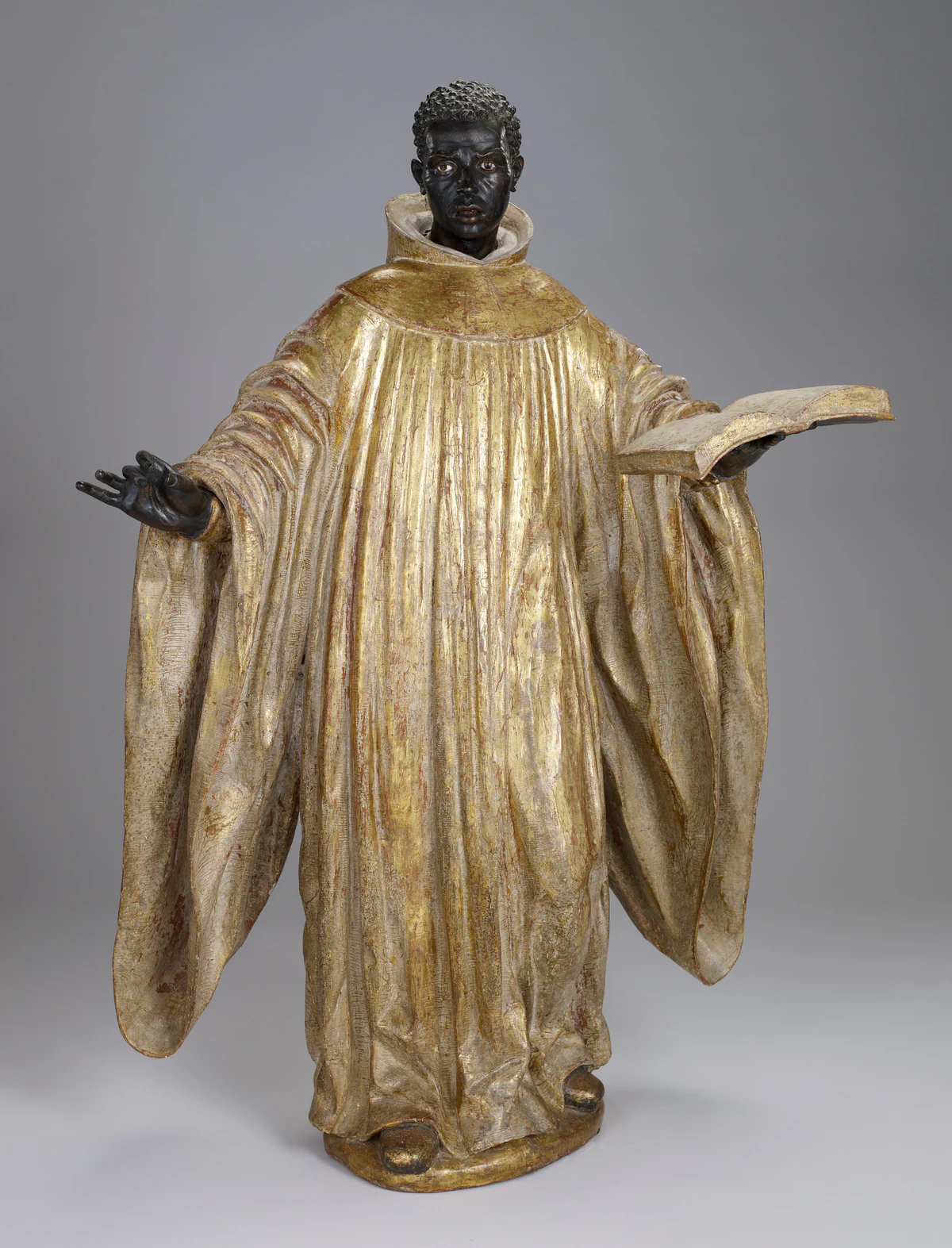
At Santa Maria di Gesù in Palermo, Benedict served as a cook before becoming guardian of the friary in 1578. The Franciscan account emphasizes that he lacked formal literacy. His community nevertheless entrusted him with authority and later with the formation of novices. [1]
A family shaped by enslavement
The Order locates Benedict’s birth in San Fratello, Sicily, around 1524 and recounts his parents’ enslaved condition and an owner’s promise that their first child would be free. It also remembers mockery directed at his skin color and family background. These were injustices endured by a person, not picturesque details in a saint’s childhood. [1]
The choice to join the hermits
The institutional biography says he sold his oxen, gave the proceeds to poor people and joined Girolamo Lanza’s hermit community. He later entered the Friars Minor in Palermo. Religious life developed through two settings, with work and material renunciation among the choices the narrative preserves. [1]
IN OUR OWN LIVES
Who gets recognized as capable of leading?
Whose competence goes unnoticed because of ancestry, skin color, work or credentials? Recognizing an exceptional individual is a beginning. It also brings a responsibility to examine the surrounding system that made recognition difficult.
THROUGH THE EYES OF FAITH
Faith and daily life
The Franciscan minister general acknowledges the Church’s historical acceptance of slavery alongside belief in human equality before God. His 2024 letter asks Benedict’s admirers to reckon with that contradiction. [2]
Authority after kitchen work
An appointment to lead makes a sharp question of everyday judgments about work and competence. A kitchen role should not keep a community from recognizing the person doing it.
What the Franciscan letter asks of admirers
The minister general interprets Benedict through the poor Christ and life among people in need. Admiration is meant to affect how readers treat humiliated neighbors. This is a later Catholic reading of the saint. [2]
THROUGH THE LENS OF SCIENCE
The evidence about the remains
The minister general reports severe damage to Benedict’s remains in the July 2023 Palermo fires. Pre-fire descriptions cannot be repeated as present condition. [2]
After the Palermo fire
The report of severe damage supplies no complete inventory of surviving material or detailed conservation assessment. Photographs taken before the fire cannot answer what remains afterward. This page therefore retains the historical preservation tradition while leaving the current physical condition unresolved. [2]
READER QUESTIONS
Questions and answers
Was Benedict formally educated?
The Order describes him as lacking literacy, while also serving as guardian and novice master. [1]
Is his body still in the pre-fire condition?
That claim is unsafe. The minister general reports severe damage in the July 2023 fire; no full current material inventory accompanies the report. [2]
What does the Franciscan interpretation emphasize?
Service among poor people, the humble Christ and an honest reckoning with slavery and prejudice. [2]
FOLLOW THE SOURCES
Sources and further reading
- Franciscan Order — Saint Benedict the Moor, 2025
Church or shrine source
Institutional biography of family enslavement, hermit life, cooking and leadership. No medical examination.
- Massimo Fusarelli OFM — Benedict, a Gospel Reminder, 17 November 2024
Primary historical record
Minister-general letter on slavery, poor-Christ service and severe July 2023 fire damage; no post-fire inventory.
Sources checked: 2026-10-27. Suggest a correction or a source.