THE PERSON BEHIND THE ACCOUNT
The hunter remembered for admitting the damage
A fire set during a hunt spread to nearby homes, and another man was condemned for it. In Conrad’s received biography, the hunter came forward, admitted responsibility and sold his property to pay compensation. [1]
What the story asks of its wealthy hunter
Vatican News dates the fire to 1313 and says Conrad’s wife later entered a Poor Clare monastery. He became a Franciscan tertiary. The summary supplies no judicial record or account of their discussions; her choice deserves to remain distinct from his. [1]
A cave beyond the city
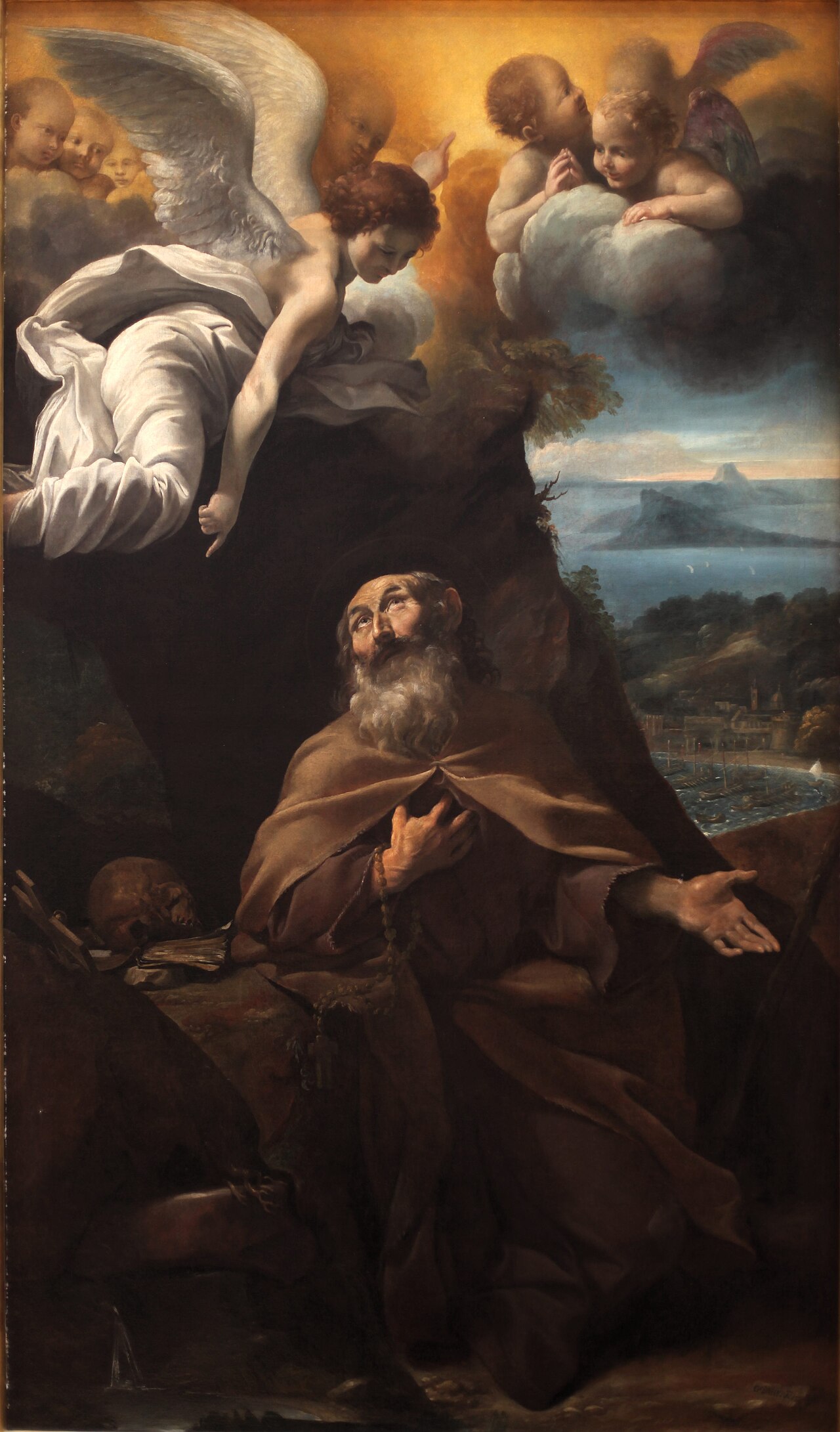
The received chronology places Conrad near Noto in 1343, later in a cave at Pizzoni. He died in 1351 and was buried at San Nicolò. The spare record leaves much of the journey untold. [1]
IN OUR OWN LIVES
An apology someone else can live with
Conrad’s fire story makes an uncomfortable distinction between feeling sorry and accepting consequences. The innocent person’s danger and the householders’ losses remain in the picture. A reader can test an apology against the same standard: has it made life any better for the person harmed?
His later obscurity also leaves room for restraint. The surviving summary does not authorize a detailed psychological portrait. The story’s central act is already substantial enough to examine without adding imagined motives.
THROUGH THE EYES OF FAITH
Faith and daily life
The narrative gives repentance a material cost. Admitting fault was followed by restitution, then a different form of life. Conrad joined the Franciscan Third Order and eventually lived as a hermit near Noto in Sicily. [1]
Restitution before retreat
The tradition puts compensation before retreat. Solitude cannot cancel another person’s claim after a home has burned. Restitution makes repentance answerable to the person harmed.
A modern reader need not assume that leaving a marriage or living in a cave is the right response to their own wrongdoing. The more immediate question is whom an apology has failed to help. Repentance may require money, time, changed conduct or a willingness to lose standing.
The hermit Noto carries through its streets
Conrad’s devotion is now public and communal. A diocesan notice for his 2024 feast describes the bishop’s Mass, a civic offering and a procession of the silver shrine. The saint remembered for withdrawing from ordinary society has become part of how a city assembles and remembers its responsibilities. [2]
THROUGH THE LENS OF SCIENCE
The evidence about the remains
Noto’s diocese identifies his mortal remains inside a sixteenth-century silver shrine in the cathedral. Its descriptions establish the relic’s location and continuing veneration. They provide no modern anatomical assessment of an incorrupt body. [2][3]
What the silver shrine encloses
The cathedral guide calls its contents the saint’s mortal remains. The closed silver exterior is not a view of tissue. Without an inventory or examination report, the extent of surviving bone and soft tissue cannot be specified from these custodial notices. His place in a collection of incorruptibility traditions should retain that limitation. [2][3]
READER QUESTIONS
Questions and answers
How certain is the story of the hunting fire?
Vatican News tells a received biography, without original court documents. The episode is introduced as tradition. [1]
FOLLOW THE SOURCES
Sources and further reading
- Vatican News — Conrad Confalonieri, Franciscan hermit
Church or shrine source
Short received biography supplies fire, restitution, Franciscan choice, Sicily and death. No original trial record is reproduced.
- Diocese of Noto — celebration of Saint Conrad, 2024
Church or shrine source
Direct diocesan notice identifies patronage, liturgy and the silver shrine containing mortal remains.
- Diocese of Noto — Cathedral of San Nicolò
Church or shrine source
Identifies the sixteenth-century silver shrine and its contents as mortal remains; not an anatomical examination.
Sources checked: 2026-10-27. Suggest a correction or a source.