THE PERSON BEHIND THE ACCOUNT
The hermit people kept asking to return
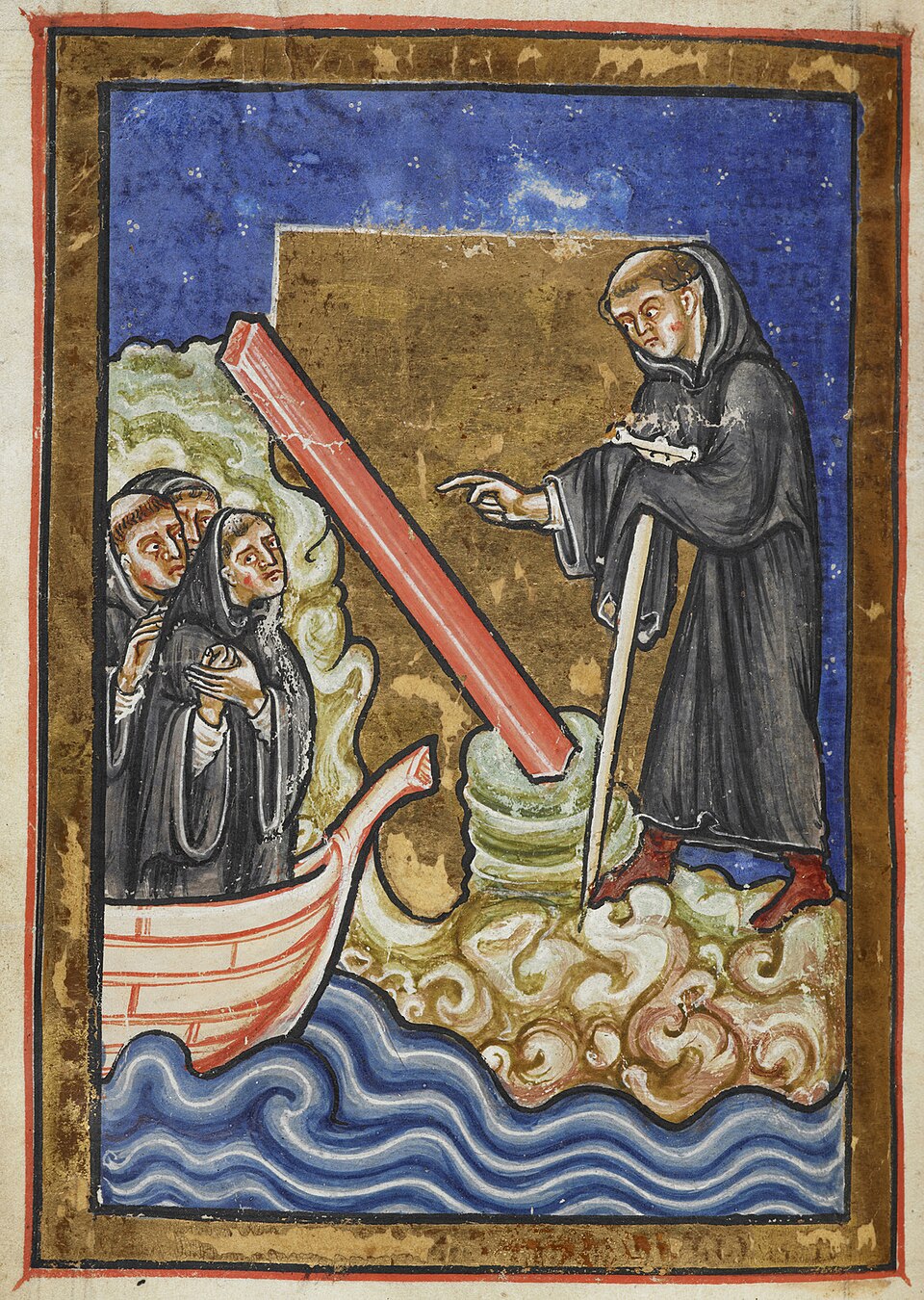
Cuthbert preferred the solitude of Inner Farne to the office of bishop. When called to leave it, he resisted before accepting responsibility at Lindisfarne. His life was marked by the pull between withdrawal for prayer and the needs of people who wanted his help. [1]
A monk among divided traditions
Cuthbert entered monastic life at Melrose and later served at Lindisfarne. He lived through disputes between Irish and Roman Christian practices, particularly the calculation of Easter. University College Oxford’s manuscript guide notes his acceptance of the Roman decision associated with the Synod of Whitby in 664, despite his earlier formation in the Irish tradition. [1][5]
People who needed a visit
Bede describes journeys on foot or horseback into the countryside, where Cuthbert taught and heard confessions. The account stresses the poverty and remoteness of places he visited. Such work meant time away from his monastery, sometimes a month. The details give practical substance to his later reputation as a pastor. [2]
A community carries its saint
Cuthbert died on Inner Farne in 687. In 875 the Lindisfarne community left under threat from Viking raids, carrying his remains and other treasures. After a long residence at Chester-le-Street and further movement, the community settled at Durham in 995. His body became a point of continuity through displacement. [1]
IN OUR OWN LIVES
The cost of being available
Cuthbert’s story can speak to someone who needs quiet and also has people depending on them. His solution was not a life without tension. He repeatedly moved between solitude and service, taking both seriously. The remote village and the island hermitage each held a claim on his time. [1][2]
The later journeys of his community add another human concern: what do people carry when they must leave home? Their treasured remains, books and objects helped preserve a shared identity across unfamiliar places. [1][3]
THROUGH THE EYES OF FAITH
Faith and daily life
Bede’s early Life joins miracle accounts to teaching about repentance, prayer and care. It is a devotional portrait written for a Christian community. The journeys and encounters give that teaching particular people and places. [2]
Solitude with a door
In chapter XXII of the Life, people come seeking counsel about grief, temptation and adversity. Bede presents Cuthbert as consoling them by directing their attention toward God and reminding them that both prosperity and trouble are temporary. Even the hermit’s isolation had room for people in distress. [2]
A reader today may recognize the interruption: another person’s grief arrives when we hoped for quiet. In Bede’s portrait, Cuthbert’s preferred solitude still has to leave room for someone seeking help.
THROUGH THE LENS OF SCIENCE
The evidence about the remains
The claim of an incorrupt body belongs to early openings of Cuthbert’s tomb. The cathedral’s account of the 1827 opening describes a skeleton wrapped in textiles. His remains were reburied; visitors today encounter a tomb and surviving objects, not an exposed intact body. [3][4]
The coffin of 698
The cathedral museum identifies surviving fragments of an oak coffin made in 698. Its history recounts the community opening the earlier grave expecting bones and finding a preserved body instead. The coffin is a material artifact that can be studied; the report of bodily preservation is the community’s transmitted account of what the opening revealed. [3]
Raine’s opening in 1827
The cathedral’s historical account says James Raine opened the tomb partly to challenge Catholic claims of continuing incorruption. His party found a skeleton within the wrappings, along with burial objects. The polemical purpose belongs in the history of the opening. So does the reported result. [4]
The gold-and-garnet cross, portable altar and coffin fragments now displayed in the museum document the burial’s material history. Their survival is not evidence that Cuthbert’s flesh remains intact. Distinguishing the objects, the bones and earlier descriptions allows each kind of evidence its proper place. [3]
READER QUESTIONS
Questions and answers
FOLLOW THE SOURCES
Sources and further reading
- Durham Cathedral — Saint Cuthbert
Church or shrine source
Custodial biography on monastic service, reluctance to become bishop and the community’s movement to Durham. Its twelve-year exhumation interval is not adopted; the museum page dates the coffin to 698.
- Bede — Life of Cuthbert, J. A. Giles translation (1843)
Primary historical record
Primary devotional Life, chapters IX and XXII, read in public-domain translation: remote preaching and counsel to visitors. Early hagiography, not a modern clinical source.
- Durham Cathedral — Treasures of Saint Cuthbert
Church or shrine source
Direct museum account of 698 coffin, tomb objects, 1827 recovery and reburial; distinguishes artifacts from bodily remains.
- Durham Cathedral — Opening Cuthbert’s Tomb, part 1 (2020)
Church or shrine source
Institutional collections history explicitly describes a skeleton in 1827 and Raine’s anti-Catholic motive; not a newly commissioned examination.
- University College Oxford — Bede’s Life of Cuthbert
Scholarly account
University manuscript account contextualizes Roman/Irish practice and devotional lives. Its incidental nine-year exhumation interval conflicts with 698 and is not adopted.
Sources checked: 2026-10-27. Suggest a correction or a source.