THE PERSON BEHIND THE ACCOUNT
The king rebuilt Westminster. Later generations rebuilt his reputation around its shrine.
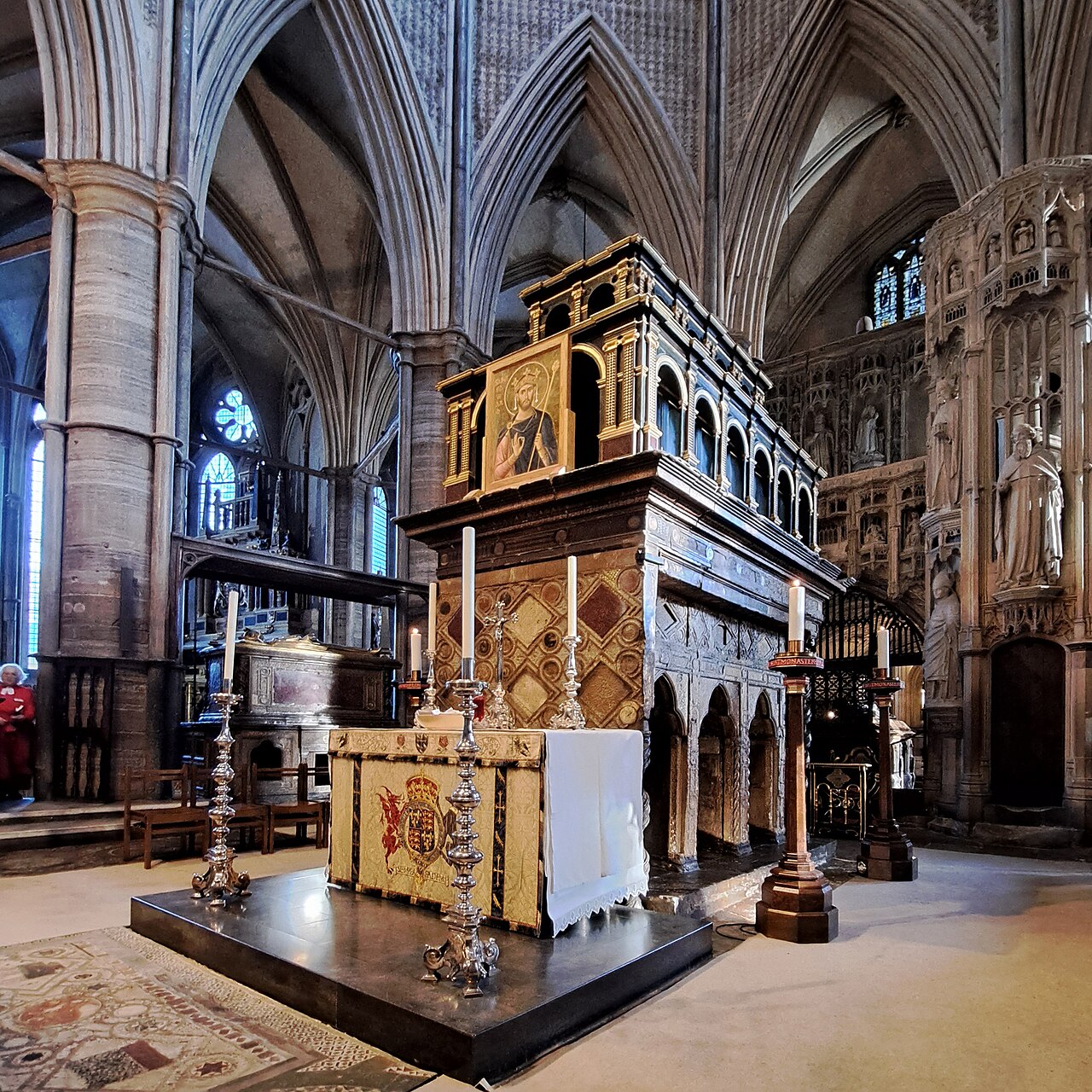
Edward’s rebuilt church at Westminster was consecrated in December 1065. The king was too ill to attend. He died days later, and the church became his burial place. His foundation would shape the commemoration of an English king long after the Norman Conquest transformed England. [1]
Exile and a royal foundation
Edward returned from exile in Normandy to become king in 1042. His marriage to Edith linked him with her powerful father, Earl Godwin. In the crisis of 1050–52, Edward banished Godwin and sent Edith away from court; Godwin later returned. The royal household’s historical account describes a reign dependent on difficult alliances, followed by a closer relationship with Godwin’s son Harold. A saintly title should not turn that political struggle into a picture of uninterrupted harmony. [4]
Building a saintly king
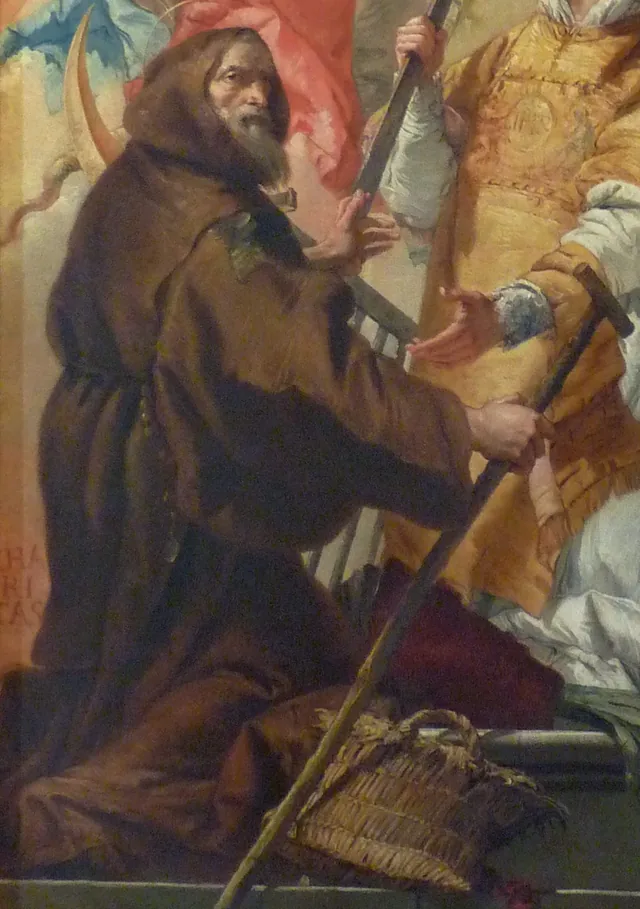
The National Archives’ teaching collection examines later images of Edward, including stories that turn events at court into demonstrations of his miraculous power. It distinguishes an early account of Godwin’s sudden illness from the later choking legend. Such changes show how a remembered king could acquire a different character in the retelling. Reading a miracle picture requires attention to when it was made and who wanted its audience to admire Edward. [5]
Edith helped shape the memory
Edward’s wife Edith commissioned the Vita Edwardi, a life of the king. She helped shape the record through which later readers would know him. [1]
The shrine drew people to Westminster
Boyle’s study of the abbey’s relic culture describes a place attracting worshippers, offerings and historical curiosity. Monks maintained records of relics, including items whose identity they could not recover. She also discusses a supposed seal of King Arthur, probably a forgery. Such examples complicate the history without settling the authenticity of every separate object or Edward’s remains. [3]
IN OUR OWN LIVES
Reading the story around a monument
A royal shrine can make a past life seem settled: a title, a tomb and a line of visitors. Edward’s case asks for a slower look at who built the monument, who wrote the life and which claims belong to which century.
That habit is useful far beyond medieval religion. Public monuments often carry sincere loyalties alongside political interests. Studying their records lets us understand the people who created them without requiring either unquestioning acceptance or the dismissal of everything they valued. Edward’s abbey remains a substantial achievement even where details of his saintly legend require qualification.
THROUGH THE EYES OF FAITH
Faith and daily life
Medieval pilgrims came to Edward’s shrine to pray and seek healing. The historian Mary Boyle explains how the presence of a royal saint also benefited the abbey that guarded his tomb. Devotion and the institution’s interests occupied the same place. [3]
A king remembered as a saint
A shrine could bring the Christian hope of intercession into a tangible setting: a tomb, a remembered life and a community praying together. Boyle distinguishes the veneration of saints’ relics from worship offered to God. Historical scrutiny of the objects can coexist with a serious account of what pilgrims believed they were doing. [3]
THROUGH THE LENS OF SCIENCE
The evidence about the remains
A description of the tomb opened in 1685 refers to bones, a skull and surviving cloth. That record should prevent a simple claim that a substantially intact body has remained unchanged across the centuries. [1]
Different openings, different descriptions
The abbey recounts Osbert of Clare’s description of an opening in 1102, including a wrapped body and fragrance; it raises the possibility of aromatics. Centuries later, the 1685 account describes bones. These are observations transmitted through historical texts, with different dates and purposes. They do not amount to a modern examination or establish a single preservation mechanism. [1]
A new project studies the relic culture
In October 2025 the abbey announced doctoral research into its medieval relics, their acquisition, locations and religious uses. That announcement describes historical research. It does not report a new examination of Edward’s body or completed anatomical findings. Its questions concern how the institution used and understood sacred objects. [2]
READER QUESTIONS
Questions and answers
Does “Confessor” mean he was a priest?
No. In his saintly title it distinguishes a Christian witness who was not a martyr; Edward was a king. [1]
Is the new abbey research a forensic investigation?
The 2025 announcement describes research into medieval sacred objects and spaces, not a reported anatomical examination. [2]
FOLLOW THE SOURCES
Sources and further reading
- Westminster Abbey — Edward the Confessor and Edith
Institutional source
Custodial history with medieval and 1685 tomb descriptions.
- Westminster Abbey — Medieval relic research, October 2025
Institutional source
Announcement of historical research; no new anatomical findings.
- Mary Boyle — Teeth, bones and books
Institutional source
Historian’s account of Westminster pilgrimage and relic culture.
- Royal household — Edward the Confessor
Institutional source
Institutional historical summary of alliances and the Godwin crisis.
- The National Archives — Edward the Confessor
Institutional source
Historical source collection; distinguishes record and later royal legend.
Sources checked: 2026-10-27. Suggest a correction or a source.