THE PERSON BEHIND THE ACCOUNT
The warrior became a hermit. His story kept changing as people retold it.
The early life written by Felix presents Guthlac as a man of noble birth who gave up a military career, entered Repton and then sought solitude at Crowland. The change is the organizing decision of his story: a figure formed by armed life becomes a monk and adviser. [4]
Felix wrote within a generation
Felix’s Latin life dates from around 730–40. Oxford scholar Helen Appleton traces its later translation and adaptation in Old English. Nearness to the lifetime is valuable, but the work is still a saint’s life with religious purposes. Its miraculous episodes cannot simply be treated as observations verified by an independent witness. [4]
Solitude that people visited
In the narrative Guthlac did not remain without human connections. He offered counsel, including to Æthelbald, a claimant to Mercia’s throne. Crowland’s account associates the king with the saint’s later monument. Religious retreat and political relationships could meet at the same hermitage. [1]
Eighteen pictures centuries later
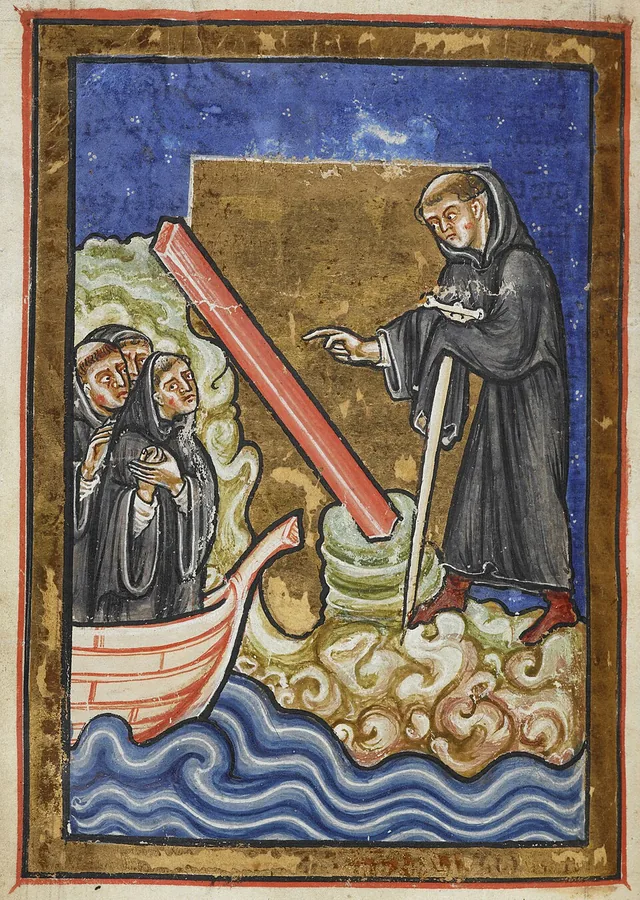
The Guthlac Roll, probably made around 1210, presents his life in eighteen round pictures. Crowland’s introduction emphasizes the roughly five-century gap between the events and this illustrated version. The roll records how later people understood the saint. It cannot serve as a contemporary picture of his clothing, face or burial. [1]
The abbey grew around the memory
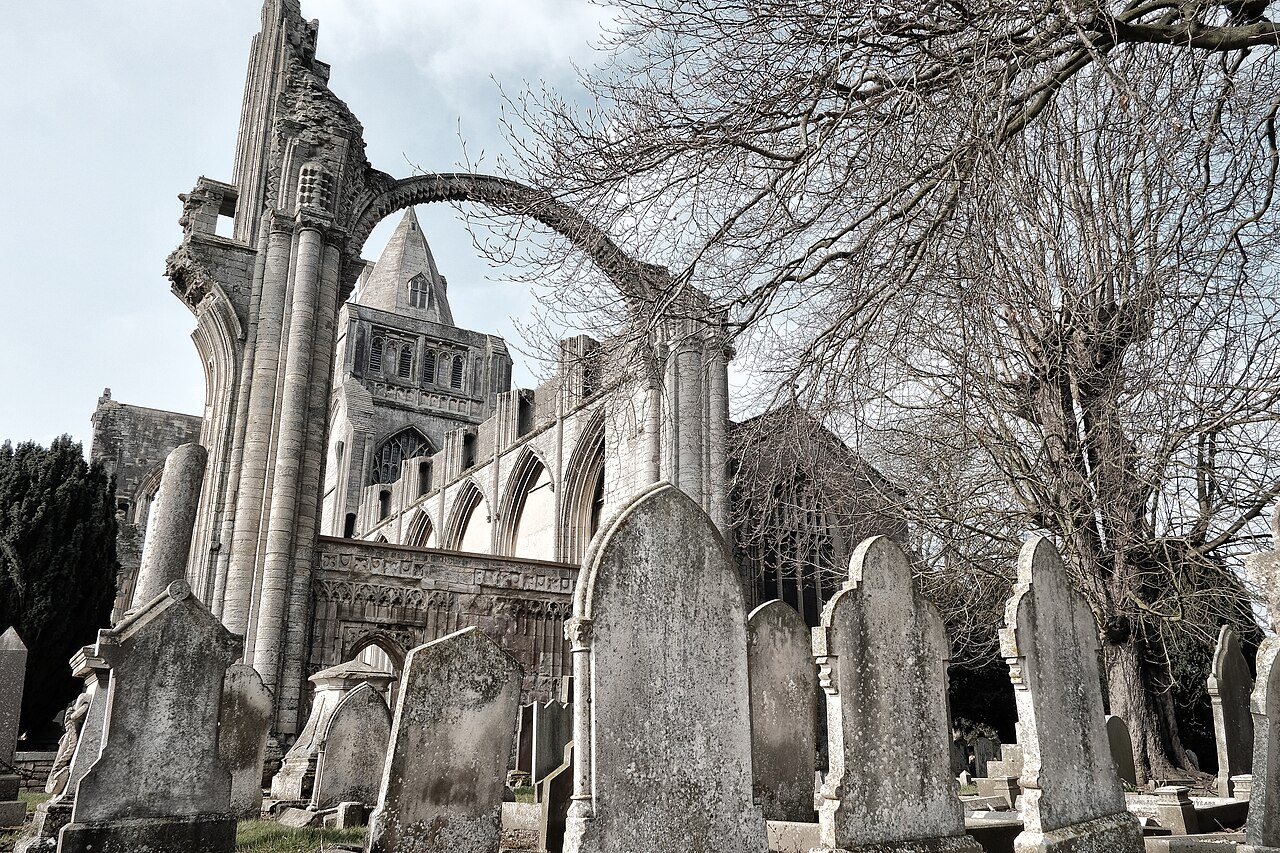
Crowland’s history describes royal and noble gifts to the shrine, later rebuilding, and surrender of the monastery in 1539. It also acknowledges that the chronicle long attributed to Abbot Ingulph was actually a fifteenth-century compilation. That warning matters when a vivid local story appears to come from an earlier witness. [2]
IN OUR OWN LIVES
A different use of strength
Guthlac’s remembered change of direction gives the story its human interest. What happens when a person stops organizing life around the role that once gave them status? The narrative’s answer is a different discipline and a place where other people seek counsel.
The changing texts offer another reason to read him. Communities choose which parts of a life to repeat, expand or leave out. Looking closely at those choices makes an old religious story more interesting, while protecting the difference between what a text says and what can be demonstrated about its subject.
THROUGH THE EYES OF FAITH
Faith and daily life
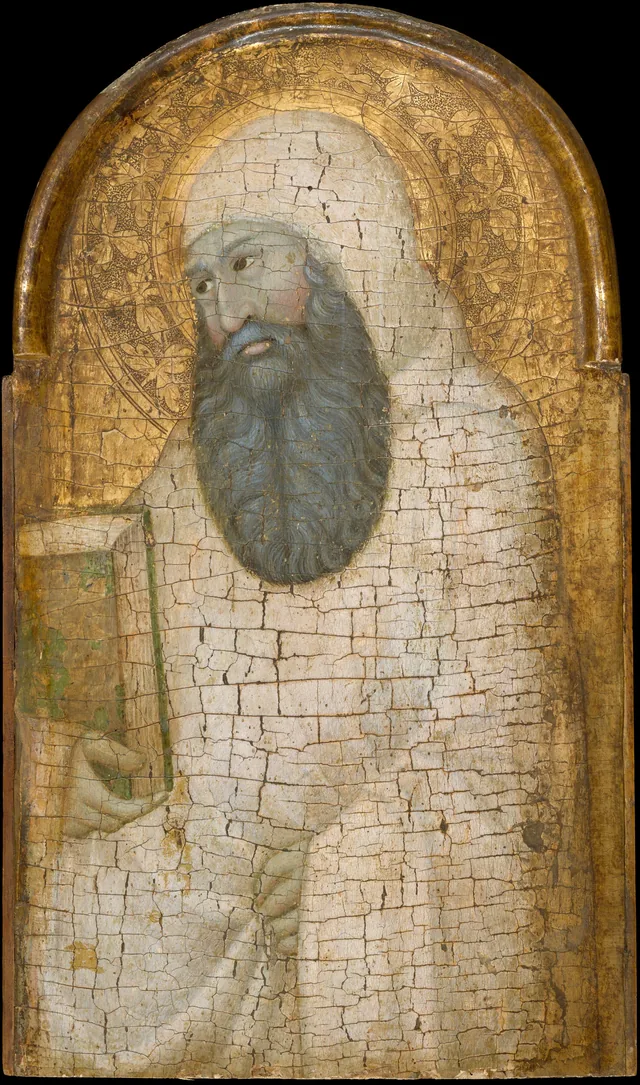
The accounts place his struggle within the Christian tradition of desert saints. Crowland’s isolated fenland setting becomes a place for prayer, temptation and dependence on God. This is the religious language through which his biographers made the life intelligible. [1]
Stories revised for new listeners
Appleton describes two Old English prose versions with different selections and endings. One was marked for reading aloud; another concentrates on Guthlac’s encounter with demons and his rescue by Bartholomew. Those choices tell us what storytellers wanted an audience to hear. The central religious claim is trust in God through temptation, rather than a modern account of a psychological or medical condition. [4]
THROUGH THE LENS OF SCIENCE
The evidence about the remains
The claim of an incorrupt body belongs to the transmitted story of events after his death in 714. The checked institutional and scholarly pages supply no modern examination of identified surviving remains. [1]
Archaeology preserves a different kind of evidence
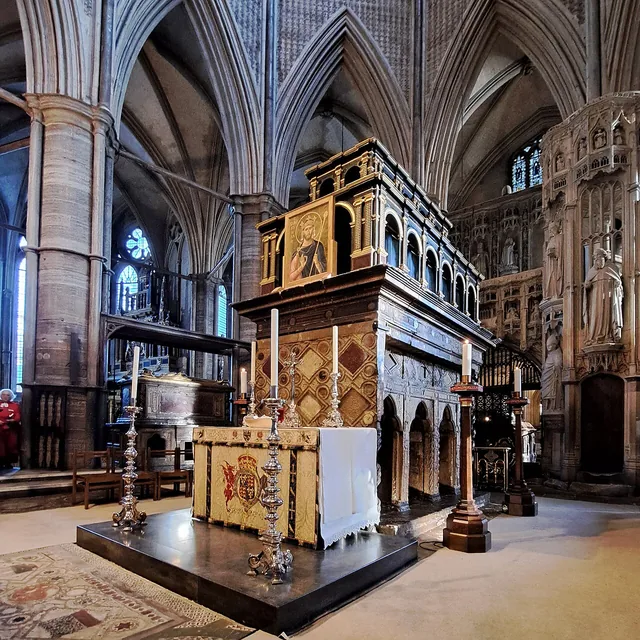
The official monument designation records important surviving ruins, buried architecture and archaeological potential. It recognizes the shrine’s role in pilgrimage. Architectural remains can establish the scale and use of a monastic site; they cannot by themselves authenticate Guthlac’s bodily remains or test Felix’s preservation narrative. The two kinds of evidence answer different questions. [3]
READER QUESTIONS
Questions and answers
Was the picture roll made during his life?
No. The abbey dates it to around 1210, centuries after his death in 714. [1]
Why do different versions of the life have different endings?
Appleton’s study shows later writers shortening and adapting the text for different purposes and audiences. [4]
FOLLOW THE SOURCES
Sources and further reading
- Crowland Abbey — The Guthlac Roll
Institutional source
Local explanation of biography, preservation narrative and thirteenth-century images.
- Crowland Abbey — History
Institutional source
Institutional development and warning about the pseudo-Ingulph chronicle.
- Lincolnshire Heritage Explorer — Crowland Abbey
Institutional source
Official archaeological designation; not a bodily examination.
- Helen Appleton, University of Oxford — Old English Prose Guthlac
Institutional source
Scholarly account of Felix’s life and subsequent textual transmission.
Sources checked: 2026-10-27. Suggest a correction or a source.