THE PERSON BEHIND THE ACCOUNT
He crossed oceans to teach his faith, then found that zeal could not replace learning a language.
Francis Xavier reached Goa in May 1542 after a voyage lasting more than a year. The Jesuit archivist Festo Mkenda describes arrival as a new beginning: Xavier had to build relationships and learn how to work in a society far from his familiar world. [3]
Time spent at sea
Travel consumed a large part of his missionary life. Pope Francis estimates that more than three and a half of its roughly eleven years were spent on ships. In Japan, Xavier encountered opposition, climate difficulties and his own lack of the language. A willingness to travel did not by itself equip him to understand everyone he met. [2]
Children, teachers and collaborators
A Jesuit study by Francisco de Sales Baptista draws on Xavier’s correspondence to describe teamwork and his instructions to deal kindly with people, including children attending prayers. His work required local relationships, translators and fellow missionaries. The study also preserves his use of political connections. Both belong in an account of how the missions functioned. [6]
Colonial authority and the Inquisition
Baptista reproduces Xavier’s request that the Portuguese king establish an Inquisition in India. The tribunal was instituted in 1560, after Xavier’s death. The request remains his responsibility. The source interprets it partly through protection of converts, but also records concern about Jews and Muslims retaining their beliefs. Understanding his period does not require excusing religious coercion or overlooking people subjected to it. [6]
A final destination he did not reach
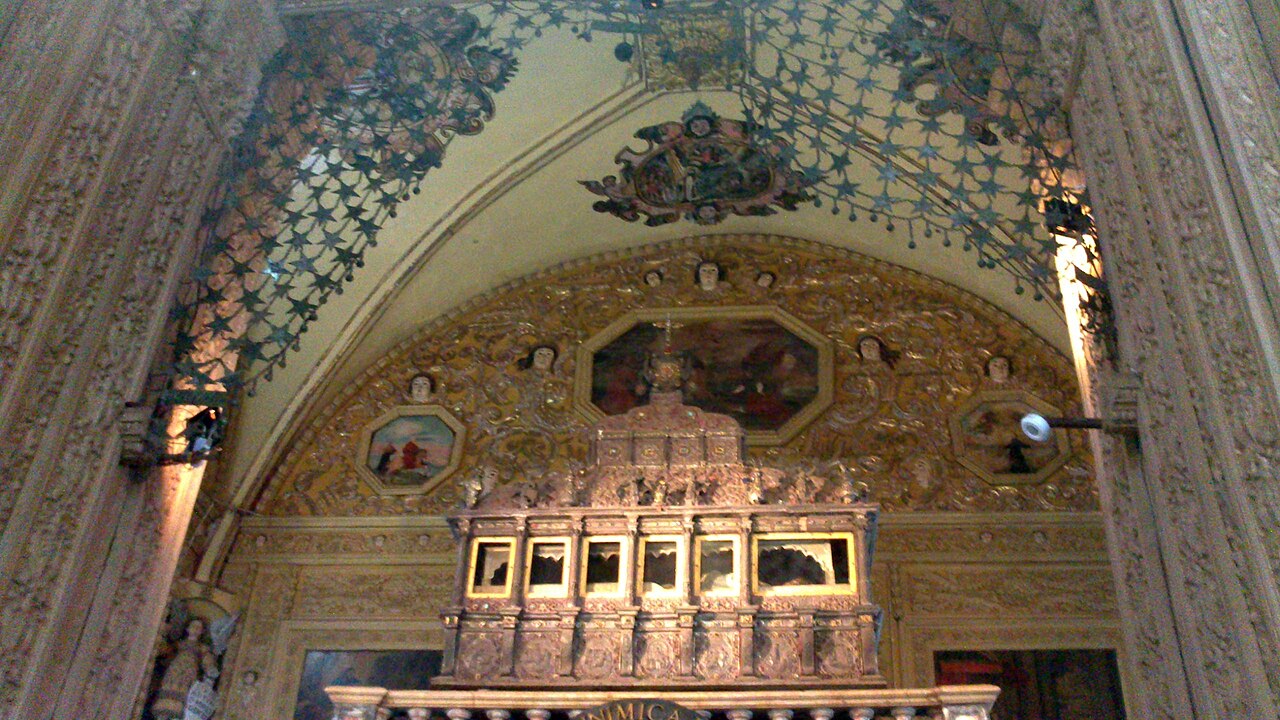
Xavier died in December 1552 on Shangchuan, off the Chinese coast, before entering mainland China. His remains eventually reached Goa and are venerated at the Basilica of Bom Jesus. The historical route ended short of his intended destination. The communities and collaborators already involved in his work had futures beyond that unfinished plan. [3]
IN OUR OWN LIVES
Conviction with accountability
Xavier’s story deserves attention because it resists an easy account of either perfect heroism or simple failure. Long journeys, serious religious commitment and care for other people coexist with an appeal to an institution of religious coercion. A responsible biography has room for the full record.
Anyone working across a cultural boundary can recognize part of the difficulty: good intentions do not supply a language, an understanding of local power or permission to decide for others. Learning who has been left out of the story is one way to begin. Admiration becomes more useful when it can survive an honest examination of a person’s choices.
THROUGH THE EYES OF FAITH
Faith and daily life
Pope Francis’s 2023 account begins with the change in direction Xavier made after meeting Ignatius of Loyola in Paris. Study and career gave way to the Society of Jesus and a religious commitment to making Christ known. The same account remembers care of sick people alongside preaching and teaching. [2]
Communicating a conviction
The Catholic account of his vocation places love of Christ behind his willingness to leave home and endure difficulty. [2]
How can a person communicate a conviction while respecting another person’s freedom? Missionary commitment needs patience, knowledge and the ability to listen, as well as determination. Learning from another person requires allowing an answer that may challenge our expectations.
THROUGH THE LENS OF SCIENCE
The evidence about the remains
The Archdiocese of Goa and Daman documents public expositions of relics attributed to Xavier. Its announcement of the 2024–25 exposition is a custodial and liturgical record, not a new medical examination. [4]
What an exposition documents
The archdiocesan decree announced the exposition for November 2024 to January 2025 and organized a committee including lay people, religious and clergy. It establishes a public act of custody and devotion. The notice supplies no tissue inventory, laboratory results or treatment history. The physical condition of the relics cannot be determined from that announcement or from a distant photograph of the reliquary. [4]
READER QUESTIONS
Questions and answers
Did Xavier conduct the Goa Inquisition?
He requested an Inquisition, but died in 1552; the tribunal was instituted in 1560. Those are different forms of responsibility, and the request still belongs in his biography. [6]
Does the exposition announcement confirm natural preservation?
It confirms the planned public veneration of attributed relics. It does not publish anatomical findings or determine a preservation mechanism. [4]
FOLLOW THE SOURCES
Sources and further reading
- Pope Francis — Francis Xavier, 17 May 2023
Institutional source
Primary Catholic interpretation; travel, teaching and language difficulties.
- Festo Mkenda SJ — Xavier arrives in Goa
Institutional source
Jesuit archivist’s retrospective chronology of arrival, mission and burial.
- Archdiocese of Goa and Daman — Exposition decree announcement
Institutional source
Dates and organization of the 2024–25 exposition; no physical examination report.
- Francisco de Sales Baptista SJ — Francis Xavier Missionary
Institutional source
Jesuit study quoting correspondence, including Inquisition request; retrospective interpretation.
Sources checked: 2026-10-27. Suggest a correction or a source.