THE PERSON BEHIND THE ACCOUNT
The missionary who returned to training novices
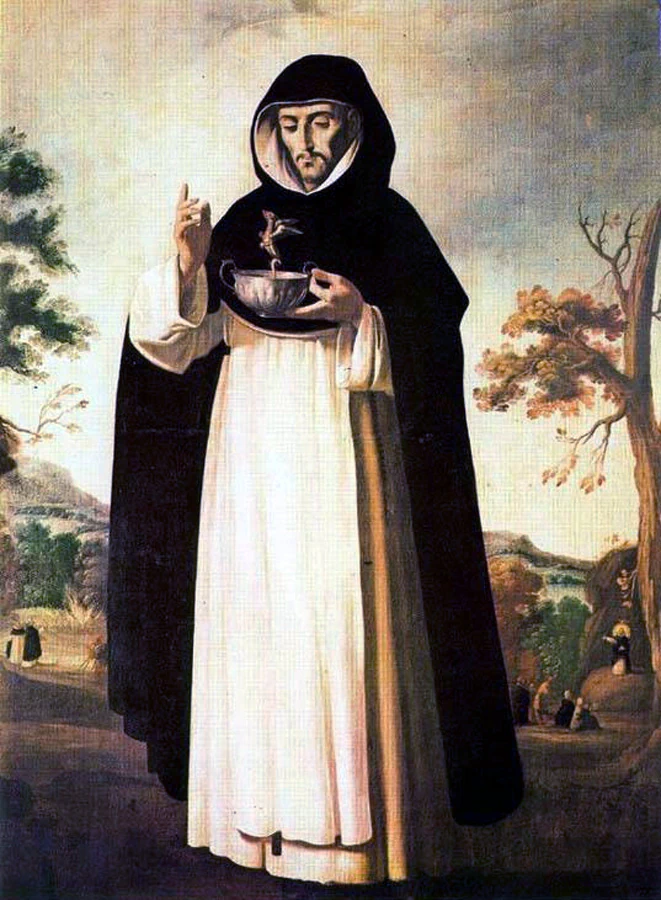
Louis Bertrand left Spain for New Granada in 1562. He spent seven years there before returning to Spain, where his order repeatedly entrusted him with training novices. His Dominican biography remembers difficult travel, fragile health and conflict with colonists who exploited Indigenous people. It gives a favorable retrospective account, rather than a detailed record of each confrontation. [1]
His parents asked him to wait
The Dominican chronology records an early attempt to enter the order that was delayed by his parents’ opposition. He received the habit in 1544 at eighteen and was ordained in 1547. After a posting to Llombai, he returned to Valencia and became responsible for novices and students. [1]
Religious formation was not an incidental interval before a more colorful journey. Preparing other men for ministry was a recurring responsibility, and one he resumed after returning from America.
New Granada was a colony
His order locates his missionary work inland from Cartagena, around Santa Marta and Tubará, and recalls opposition to the abuses of encomenderos. That favorable account needs its colonial setting kept in view. Evangelization occurred amid unequal power over Indigenous communities; an institutional claim of defense is not a substitute for investigating local experiences. [1]
The institutional biography names regions and opposition to exploitation but gives no detailed account of a particular confrontation. Indigenous testimony and local records would be necessary to understand how those communities experienced his mission. [1]
IN OUR OWN LIVES
Reading a missionary with the people he met in view
Louis’s story offers two paths for further reading: his own teaching about friendship and the history of the communities in which he preached. Keeping both in view helps prevent either an uncomplicated missionary adventure or a life reduced to a modern slogan.
His return to teaching also deserves attention. The lasting work of a religious life may include the people someone prepared for responsibilities that outlived him. That is a different achievement from the spectacular miracles attached to a later reputation.
THROUGH THE EYES OF FAITH
Faith and daily life
In a surviving reflection on preaching, Louis describes three relationships of friendship: Christ’s love for humanity, people’s love for one another and their response to God. Mutual help belongs to his account of love between equals. This gives readers something more specific than a general reputation for austerity. [2]
The responsibility of forming another preacher
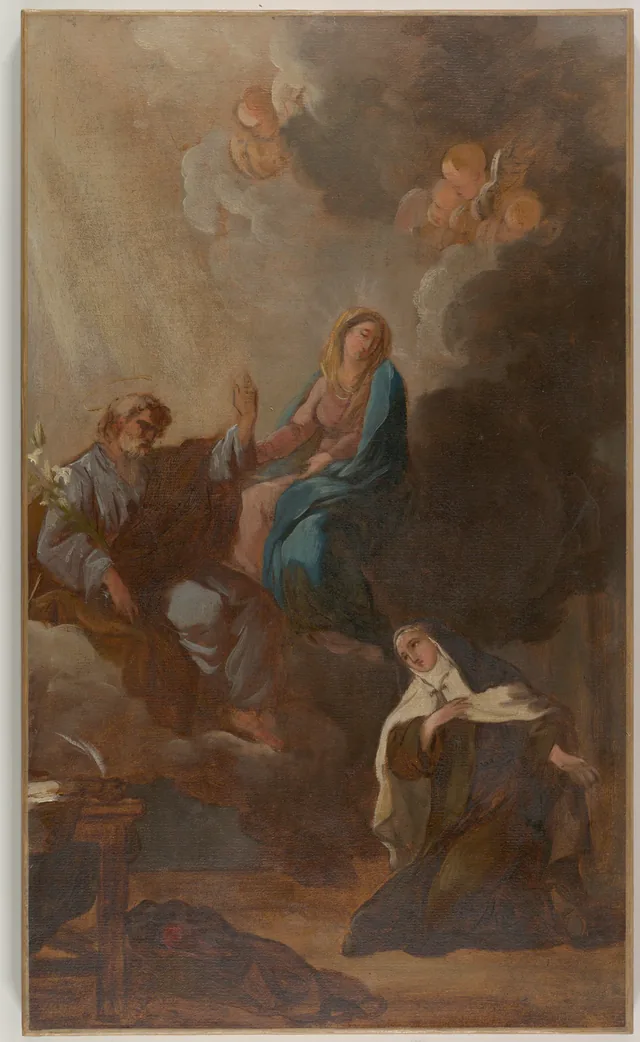
Valencia’s archdiocese remembers Louis serving repeatedly as novice master and giving time to study, sermons, prayer and Eucharistic devotion. It also records his correspondence with Teresa of Ávila and the support of Archbishop Juan de Ribera during his last illness. He died in 1581. [3]
Training a preacher carries a particular responsibility: the student will later speak with religious authority to someone else. A Dominican account of contemplation and study is therefore also an account of preparation. Personal conviction alone cannot supply knowledge of another person’s language, circumstances or rights.
Friendship has obligations
Louis’s reflection takes Christ’s friendship as the beginning of an obligation among people. Those who love one another should share what they have and help each other; their response to God includes obedience to what God commands. The text belongs to his treatment of apostles and preachers. [2]
That teaching can be read critically alongside the colonial setting. Did the relationships created by a missionary’s work allow mutual aid, freedom and respect? A religious account of friendship should permit those questions rather than make them impolite.
THROUGH THE LENS OF SCIENCE
The evidence about the remains
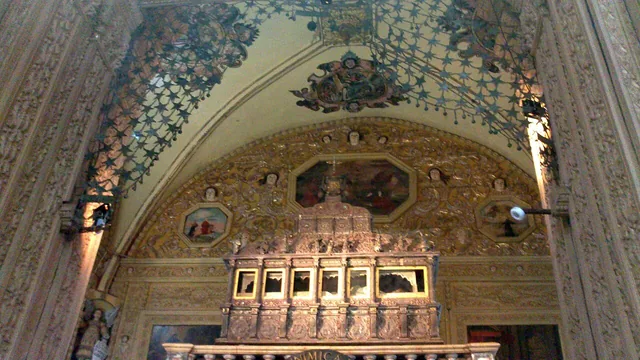
The Archdiocese of Valencia reports that the body formerly venerated at Saint Stephen’s church was removed and entirely burned in 1936. Whatever earlier preservation accounts may describe, the diocesan account does not support a claim that a complete preserved body remains there now. [3]
An earlier claim and a later destruction
The archdiocesan article uses the language of incorruption for the body before its destruction. It provides no examination report establishing which tissues survived or how the body had been prepared. Its explicit account of the 1936 burning is essential to an honest description of what can be visited today. [3]
Saint Stephen’s remains a place associated with his memory. In the archdiocese’s account, the body formerly venerated there was destroyed; a map marker for the church should be read as a historical association. [3]
READER QUESTIONS
Questions and answers
Is his complete body still displayed in Valencia?
The archdiocese reports its complete burning in 1936. [3]
What can readers find in his own teaching?
The Dominican site reproduces a reflection on friendship, mutual help and the response to God from his treatise on apostles and preachers. [2]
FOLLOW THE SOURCES
Sources and further reading
- Spanish Dominicans: Saint Louis Bertrand
Institutional source
Retrospective life and chronology; mission and novice formation.
- Louis Bertrand: Invitation to the Love of God
Primary writing, institutional edition
Dominican reproduction of his reflection on friendship and preaching.
- Archdiocese of Valencia: Five hundred years since his birth, 2026
Institutional source
Formation, relationships, earlier preservation tradition and destruction in 1936.
Sources checked: 2026-10-27. Suggest a correction or a source.