THE PERSON BEHIND THE ACCOUNT
A siege interrupted his preaching. The city needed food.
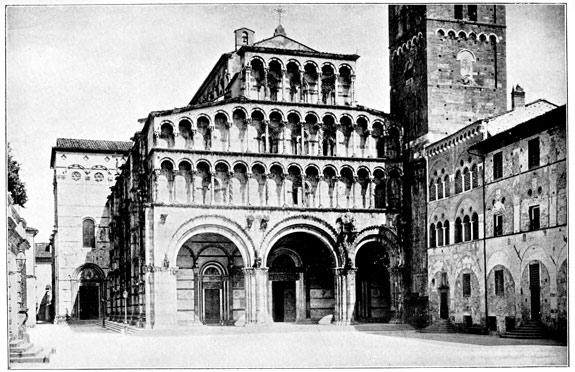
In 1430 Ercolano was preaching Lent at Lucca when a Florentine army attacked the city. The Diocese of Perugia remembers his efforts to help hungry residents and cautiously reports that he may have helped bring grain and livestock through the siege. The caution belongs in the telling. [4]
The friar remembered in Garfagnana
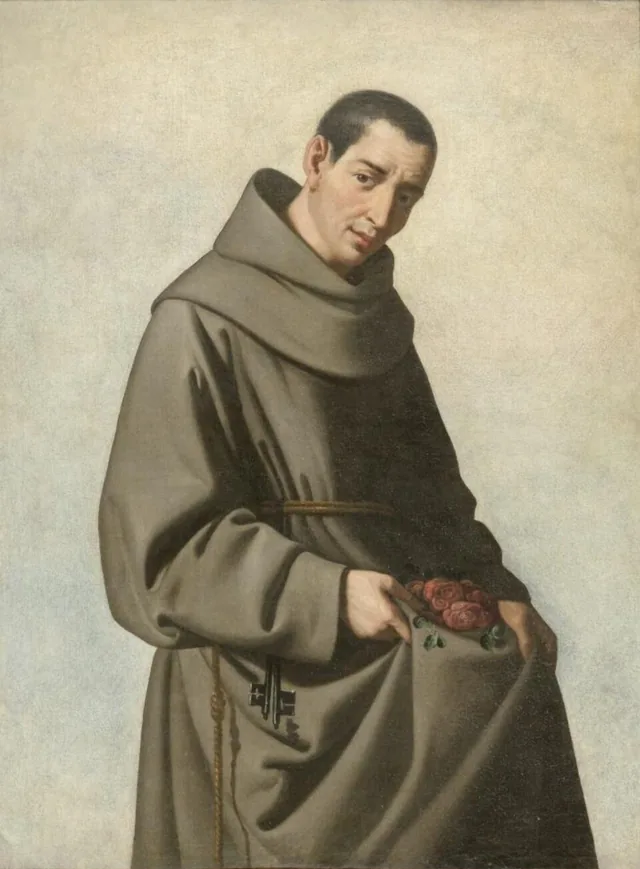
Ercolano came from Piegaro in Umbria and joined the Franciscan Observance. The parish account connects him with Alberto da Sarteano and Bernardino of Siena’s reforming movement. It presents religious discipline and preaching as shared commitments, shaped by relationships with other friars. Its exact early dates are less secure than the outline of his adult work. [1]
A city under pressure
The diocesan account relates Lucca’s gratitude to the grant of a convent near the city. It describes a preacher responding to immediate need during war, while also supporting the city’s resistance. This was participation in a particular civic conflict. A general reputation as a holy man should not make the political setting disappear. [4]
Finding ground for a community
The parish history records foundations near Barga and at Pieve Fosciana. Local people gave land at Pieve Fosciana, where Ercolano and Jacopo da Pavia began a small, poor convent. He continued traveling to preach and worked for peace in a valley divided by war and political hatreds. No specific reconciliation settlement is reproduced in the checked account. [1]
IN OUR OWN LIVES
Hearing what a listener needs
A preacher may arrive with an address prepared and discover that the immediate problem is hunger. Ercolano’s remembered response makes that interruption worth attending to. The same problem appears in schools, charities and public institutions: the planned activity matters, but so do the conditions that determine whether people can take part.
His foundations also show the role of less famous people: a companion who built with him and residents who supplied land. A community’s survival depends on these contributions. Remembering them gives the biography more human scale than a list of extraordinary claims alone.
THROUGH THE EYES OF FAITH
Faith and daily life
His local parish history identifies the Passion of Christ as a recurring subject of his preaching. In the same account, religious reform also meant establishing modest places where friars could live and serve. [1]
The Passion and the neighbor
Meditation on Christ’s suffering could be heard alongside the hunger and insecurity of people caught in war. Ercolano’s remembered actions give that preaching a practical question: how can worship and instruction remain attentive to the conditions in which their listeners live? A religious gathering does not suspend the need for food, shelter and safety.
THROUGH THE LENS OF SCIENCE
The evidence about the remains
The diocese recounts an exhumation in which his body appeared undamaged after burial in damp ground. [4]
The exhumation story
The Diocese of Perugia dates his death to 1451 and the reported discovery of an undamaged body to five years later. This is a retrospective liturgical biography. The public text does not identify the observers, describe individual tissues or record subsequent conservation. A claim of unchanged present condition would go beyond that narrative. [4]
READER QUESTIONS
Questions and answers
Why is he called Blessed rather than Saint here?
The Diocese of Perugia lists him as Blessed Ercolano, a priest. [4]
Was the convent entirely his own project?
The parish account names Jacopo da Pavia and the local gift of land at Pieve Fosciana. [1]
FOLLOW THE SOURCES
Sources and further reading
- Garfagnana Est parish community — Blessed Ercolano
Institutional source
Retrospective local life, companions, preaching and foundations.
- Diocese of Perugia — Blessed Ercolano, 28 May
Institutional source
Liturgical status; qualified siege account and later preservation tradition.
Sources checked: 2026-10-27. Suggest a correction or a source.