THE PERSON BEHIND THE ACCOUNT
She learned how to begin again—and helped generations learn to pray.
Teresa of Ávila knew what it was to watch the clock during prayer. Her autobiography remembers waiting for the hourglass to run out. She also describes weeping before an image of the wounded Christ and asking for strength to change. A future teacher of prayer was struggling to persevere in it herself. Benedict XVI places that turning point in Lent 1554. [1] [2]
A lively woman with a fragile body
Born in Ávila in 1515, Teresa entered the Carmelite community of the Incarnation as a young woman. The Dicastery's biography also remembers a sociable person who enjoyed music, poetry, reading, and writing, and whose friendships drew people to her. Becoming a reformer did not erase that temperament. Her story asks how those gifts could serve a deeper commitment, rather than letting an appealing social life absorb the attention she wanted to give to prayer. [3]
Her father opposed her decision to enter. The biography describes her leaving home despite his objections. Her vocation required a difficult choice within her family before it became a reform with an enduring public legacy. [3]
After a serious illness, her Life recalls a recovery measured in years, and the joy of first being able to crawl on her hands and knees. [1]
A small house, a large risk
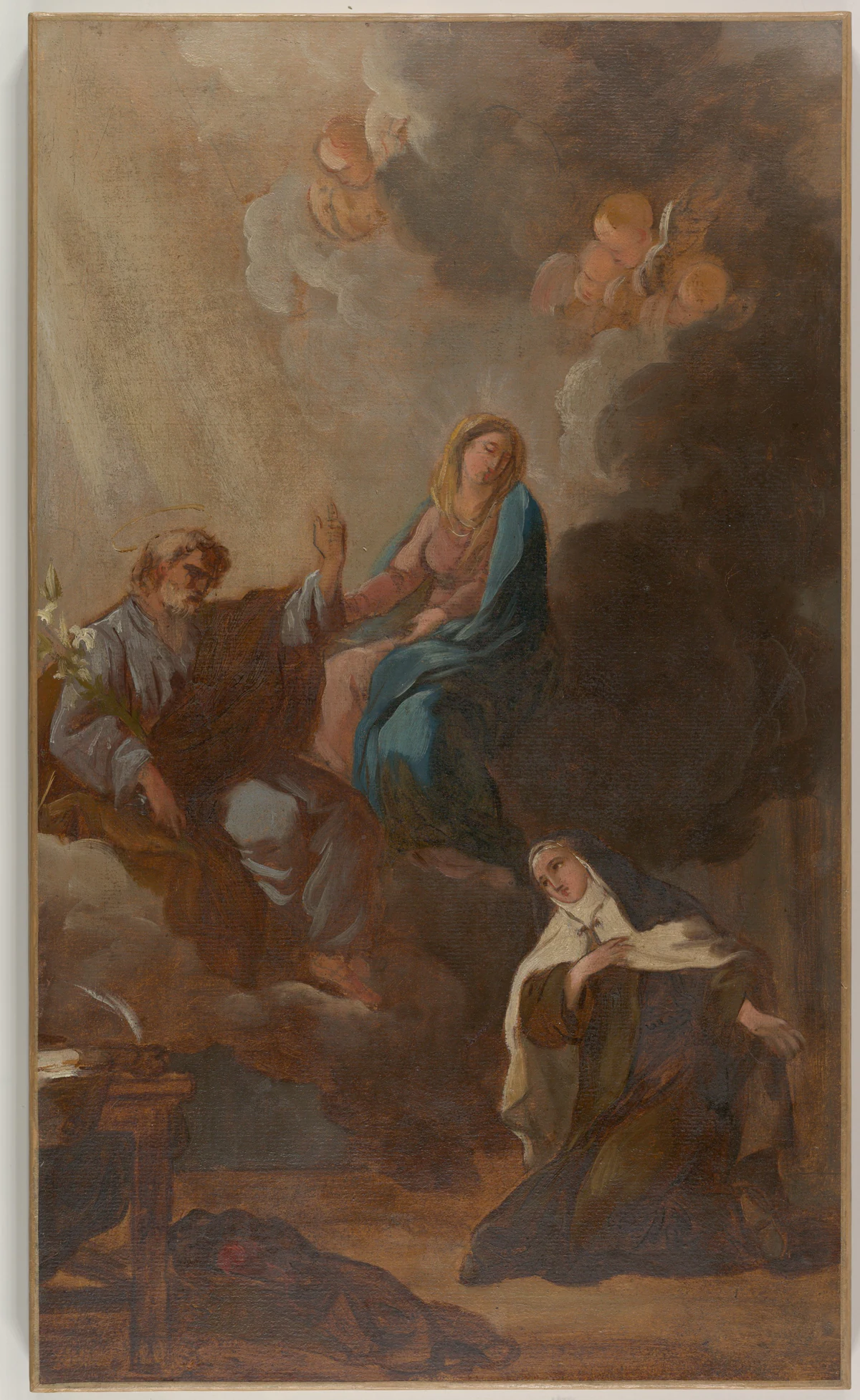
Saint Joseph's in Ávila opened in 1562 after setbacks over money and permission. Teresa says her provincial withdrew support when the revenue looked uncertain; she obeyed an instruction to stop. Preparations later resumed with episcopal protection. She describes hurried building work and the fear of being ordered back to her old monastery. Four women were received without dowries. She describes a house limited to thirteen sisters, supported by alms, and following the earlier Carmelite rule. That commitment to poverty made money and permissions urgent concerns. Her account includes the doubts that followed its opening as well as the joy. [1]
Reform grew through friendship
The little foundation became the beginning of a wider reform. Benedict XVI's account credits Teresa with seventeen foundations and describes the first house for Discalced Carmelite men, established with John of the Cross at Duruelo in 1568. She was building a continuing way of life: communities where prayer, simplicity, and life together could shape an ordinary day. The work required people prepared to carry it forward after the founder had left. [2]
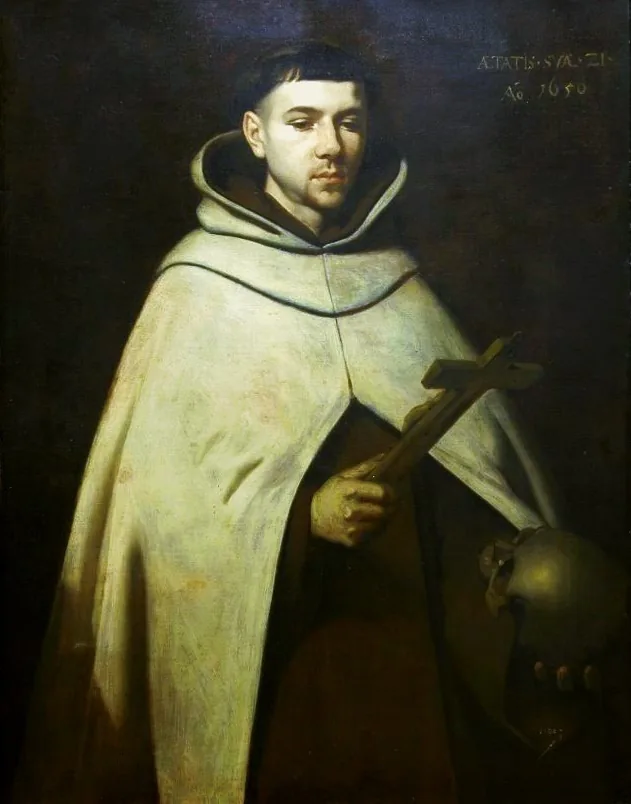
Collaboration also brought a human cost. John later served as confessor and vicar at the Incarnation while Teresa was prioress. Their spiritual friendship helped both writers. In the conflict surrounding the reform, other Carmelites imprisoned him in Toledo in 1577. He endured months of confinement before escaping. These events place the reform within painful disagreements among religious people. The communities grew through cooperation and perseverance amid those divisions. [4]
Books written for people trying to live this
The Life told her spiritual history; The Way of Perfection advised her sisters; The Interior Castle, written in 1577, explored growth in prayer. Teresa died at Alba de Tormes in 1582, still engaged in founding communities. [2]
IN OUR OWN LIVES
Beginning again at prayer
Start with Teresa’s account of trying to pray in the Life. She describes divided attention and the effort of returning. Her later teaching asks what follows when someone gets up from prayer: whether another person receives more patience, service, or love. Readers can take that question into a household or workplace as well as a monastery. The Catechism’s use of her writing keeps both the friendship with Christ and the persistence it requires in view. [6]
THROUGH THE EYES OF FAITH
Faith and daily life
The Catholic understanding of prayer still carries Teresa's voice. The Catechism quotes her description of it as a friendship: making time to be alone with the God who loves us. This is a relationship to enter and keep returning to, including when attention wanders or feelings run dry. Prayer begins with God's love, and calls for a response made in the circumstances of an actual life. [6] Researchers studying prayer must choose an intervention and a measurable outcome. Our article on clinical trials of prayer follows those choices through a major study of heart-surgery patients.
What is inside the castle?
The Interior Castle begins with a startling image of human dignity: the soul as a beautiful castle with many rooms. At its centre is God. The journey inward involves learning who we are, recognising our faults, and becoming capable of a deeper love. Teresa's rooms give language to changes in prayer and spiritual life. They invite patient self-knowledge; they are not a competition in unusual experiences. [5]
The test comes in how we live
Near the book's end, Teresa insists on the fruits of prayer. She names good works and service, and brings the biblical sisters Martha and Mary together: both must welcome Christ. Promising wonderful things in solitude has little value if, when the opportunity comes, our conduct contradicts the promise. This gives her mystical teaching an everyday test. An inner life should make a difference to the people who share our home or community. [5]
THROUGH THE LENS OF SCIENCE
The evidence about the remains
Teresa's principal remains are venerated at Alba de Tormes. An examination began there on 28 August 2024, addressing the body and major relics including the heart and an arm. The Carmelite postulator reported that its condition resembled what had been seen in 1914. That is the Order's reported comparison; the announcement also said further laboratory work was needed. [8]
What the recent study adds
The Order's June 2025 follow-up reports that the remains were professionally treated to preserve them. It also reports a public exhibition from 11 to 25 May, after which the urn was closed again. Present appearance therefore belongs to a history that includes conservation. The letter does not set out the treatment substances or a full preservation protocol. The recent treatment cannot, by itself, explain the condition recorded before it took place. It needs to be distinguished from the longer history of the remains. [10]
Making a modern portrait
The facial approximation announced in March 2025 was made by forensic sculptor Jennifer Mann using anthropometric information and X-rays supplied by the University of Chieti-Pescara team. It is a modern reconstruction based on measurements and interpretation. The published bust is a proposed likeness produced by those methods. Assessing it involves the measurements used and the sculptor’s interpretation. The official reconstruction statement describes its makers and methods; it does not determine a supernatural cause for the condition of Teresa's remains. [9]
READER QUESTIONS
Questions and answers
Where should I begin reading Teresa?
Start with Life 8–9 for her struggle to pray, then the first and final chapters of The Interior Castle for its image and practical conclusion. [1] [5]
Why is she called a Doctor of the Church?
Doctor here means a recognized teacher of Christian doctrine. Paul VI proclaimed Teresa a Doctor on 27 September 1970. She had been canonized in 1622. Her writings are part of what the Church is inviting people to study. [3][7]
Does the facial reconstruction show her unchanged face?
It shows a modern forensic approximation based on measurements and X-rays. It should be distinguished from the remains themselves, whose present condition also includes conservation work reported by the Order. Neither the portrait nor the conservation statement establishes a supernatural preservation mechanism. [9] [10]
FOLLOW THE SOURCES
Sources and further reading
- Teresa of Jesus — The Life, chapters 6, 8–9 and 32–36 (David Lewis translation)
Primary historical record
Teresa’s own retrospective account: prolonged illness and recovery, difficulty persevering in prayer, the wounded-Christ image, and the practical and personal trials of the first foundation. Historical translation in the public domain; spiritual autobiography, not an independent clinical record.
- Benedict XVI — General Audience on Teresa of Ávila, 2 February 2011
Church or shrine source
Places the 1554 turning point, foundations, principal writings, and death within the Church’s account of her life and teaching.
- Dicastery for the Causes of Saints — Teresa d’Avila
Church or shrine source
Biographical account, temperament and illness, Church recognition, and dates of beatification and canonization.
- Benedict XVI — General Audience on John of the Cross, 16 February 2011
Church or shrine source
Documents collaboration and spiritual friendship with Teresa, his role at the Incarnation, and imprisonment during the Carmelite conflict.
- Teresa of Ávila — The Interior Castle, First Mansions 1, Sixth Mansions 9, and Seventh Mansions 4
Primary historical record
The Stanbrook translation with Benedict Zimmerman’s notes: the castle image and Teresa’s insistence on good works, service, and the union of Martha and Mary. Historical translation in the public domain; editorial notes are distinguished from Teresa’s text.
- Catechism of the Catholic Church — Contemplative prayer, paragraphs 2709–2711
Church or shrine source
Quotes Teresa on prayer as friendship and explains perseverance through trials, dryness, work, and changing circumstances.
- Paul VI — Proclamation of Teresa as Doctor of the Church, 27 September 1970
Church or shrine source
The proclamation identifies her teaching and its value for the Church. It is not a scientific examination of bodily preservation.
- Discalced Carmelites — Examination of Teresa’s tomb and remains, October 2024
Church or shrine source
Reports the August 2024 opening, objects examined, postulator’s comparison with 1914, initial observations, and planned laboratory work. A report issued by the custodian, not the complete scientific dossier.
- Discalced Carmelites — Official facial-reconstruction statement, 28 March 2025
Church or shrine source
Names the examination team and Jennifer Mann and describes anthropometric and X-ray information used for the facial approximation. It establishes the origin of the reconstruction, not a preservation mechanism.
- Discalced Carmelites — General Definitory Letter 16, 13 June 2025, pages 7–8
Church or shrine source
Reports professional preservation treatment, the May 2025 exhibition, and closure of the urn. It does not provide a full treatment protocol or explain the entire earlier preservation history.
Sources checked: 2026-10-27. Suggest a correction or a source.