THE PERSON BEHIND THE ACCOUNT
She worried that she did not love enough, while sick sisters kept asking for her care.
Teresa Margaret Redi was once reprimanded for spending so much time in the infirmary that she seemed to neglect contemplation. The Diocese of Arezzo recounts the incident in its biography. It is an unexpected detail in the life of a woman remembered for prayer: caring for sick people could put even a devoted young nun at odds with the expectations around her. [3]
Anna Maria changes her plans
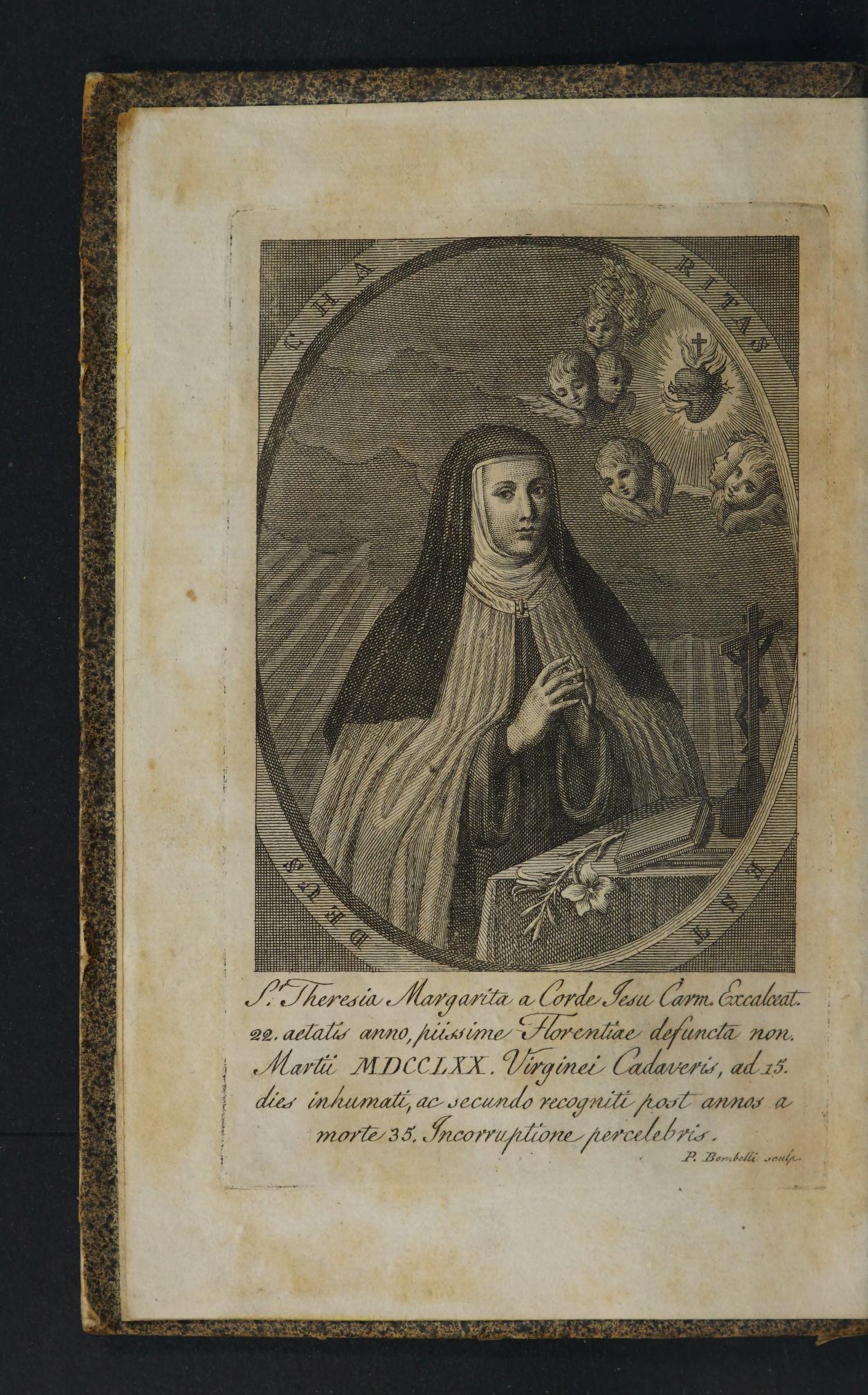
Anna Maria Redi was born in Arezzo in 1747 and educated with the Benedictines in Florence. She initially expected to join them. The Carmelites’ biography says a conversation with a friend preparing for Carmel changed her direction. She returned home to consider the decision and entered the Florentine Carmel in 1764. The change disappointed people who had expected a different future for her. [2]
An uncertain return
During her trial period, Anna Maria left for a knee operation without knowing whether she would be readmitted. She returned and professed as Teresa Margaret of the Sacred Heart. The Order remembers the uncertainty surrounding that interruption. [2]
The work nobody could finish once
As an assistant infirmarian, Teresa Margaret was sought by sick sisters. The Order remembers particular patience with a woman whose mental illness included aggressive behavior. Both women deserve a compassionate account: one needed care, and the other faced demanding work. [2]
Her surviving writings admit discouragement at repeating the same mistakes. The reprimand over infirmary work belongs within that unsettled effort, rather than a portrait of effortless perfection. [3]
Letters she chose to give up
At profession she gave up correspondence with her father, Ignazio Maria, an important confidant. They promised to remember each other in the Heart of Jesus each evening. The diocese records this painful loss within her vocation; it need not become a rule for other families. [3]
IN OUR OWN LIVES
The person who needs you again
For someone caring for an aging parent, a sick partner, or a difficult patient, Teresa Margaret’s nursing may feel close at hand. The task returns. Patience runs out. A belief in love has to survive tiredness and irritation. These ordinary pressures deserve an honest place in a spiritual life.
THROUGH THE EYES OF FAITH
Faith and daily life
Her Sacred Heart devotion responded to Christ’s love through prayer and service. The Dicastery records beatification in 1929 and canonization in 1934. [1]
What “God is love” asks of a person
The First Letter of John was central to her prayer. [1]
The passage joins the love of God with love for the person one can actually see. Someone who claims to love God while hating a brother contradicts the claim. That gives her nursing a clear Christian context: love has a recipient who needs something from you, often at an inconvenient time. [4]
When prayer felt empty
The Carmelite account says her final years included dryness, fear, and resistance in prayer. She continued using psalms and short biblical prayers. For a reader familiar with distraction or emotional exhaustion, this is a more recognizable difficulty than constant spiritual exhilaration. Her practice continued through feelings she could not simply command. [2]
THROUGH THE LENS OF SCIENCE
The evidence about the remains
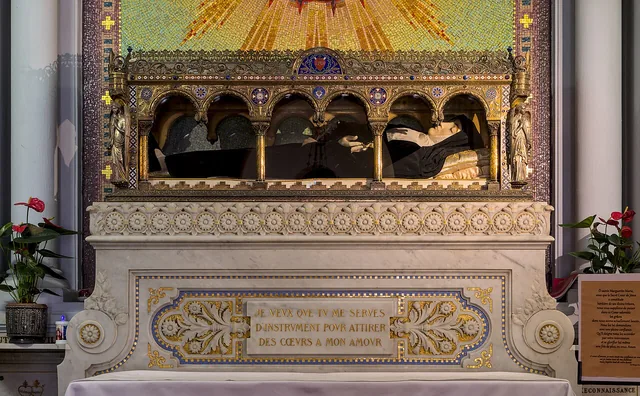
The Dicastery reports that her body remains preserved in Florence. Its biography includes no anatomical examination or conservation history. [1]
Her death and the preservation account
She died on 7 March 1770, aged twenty-two. The Dicastery attributes the death to peritonitis and reports fragrance and a preserved body at the Florentine Carmel. It publishes no clinical record, tissue inventory or conservation history. These remain claims of a devotional biography, with no modern preservation mechanism established. [1]
READER QUESTIONS
Questions and answers
Is she Teresa of Ávila?
They are different women. Teresa Margaret Redi lived in eighteenth-century Tuscany and entered the Carmelite tradition that Teresa of Ávila had reformed two centuries earlier. [1]
What does devotion to the Sacred Heart mean here?
Her prayer centered on Christ’s love and a desire to answer it. The diocesan biography connects that devotion with her family, Eucharistic worship, and care within the community. [3]
FOLLOW THE SOURCES
Sources and further reading
- Dicastery for the Causes of Saints — Teresa Margherita Redi
Church or shrine source
Basic life, scriptural inspiration, recognition dates and preservation tradition. Its attached papal address concerns prayer, not an examination.
- Discalced Carmelites — Santa Teresa Margherita Redi
Church or shrine source
Order’s biography: vocational change, operation, nursing and difficult prayer.
- Diocese of Arezzo-Cortona-Sansepolcro — Teresa Margherita Redi
Church or shrine source
Retrospective biography with letters, infirmary reprimand and family relationship; the birth-date entries disagree internally.
- First Letter of John 4:7–21 — USCCB Bible
Scripture
Biblical context for the connection between love of God and care for one another.
Sources checked: 2026-10-27. Suggest a correction or a source.