THE PERSON BEHIND THE ACCOUNT
A parish priest who repeatedly wanted to leave
John Vianney did not experience responsibility as easy confidence. The shrine at Ars remembers three attempts to leave his parish, feeling unequal to his work. Parishioners persuaded him to remain. The priest remembered for receiving other people’s burdens also needed help carrying his own. [1]
The farm needed him
Born in Dardilly in 1786, Vianney grew up during the French Revolution, when practicing Catholics sometimes received the sacraments secretly. His father resisted his wish to become a priest for two years because the farm needed his labor. He began his preparation around twenty, assisted by Abbé Balley, and was ordained in 1815. [1]
That beginning gives his later reputation a different scale. The future confessor was an adult beginner who depended on a mentor and had obligations at home. Calling his life a vocation need not erase those practical difficulties.
A school with two named collaborators
Vianney arrived in Ars in 1818. In 1824 he asked Benoîte Lardet and Catherine Lassagne to open the Providence, an educational home for girls, many of them orphans. Remembering the two women makes the undertaking more accurate: the parish’s work required collaborators, premises and sustained care. [3]
Benedict cautioned against taking an old biographer’s description of Vianney as living entirely in church too literally. He also visited households, organized charitable funds and relied on lay helpers. His parish ministry included administration and relationships as well as prayer. [2]
IN OUR OWN LIVES
A ministry larger than its reputation
A familiar image of Vianney is the priest perpetually in the confessional. The named teachers, household visits and charitable funds give that image practical substance. They also offer a useful test for any community that speaks about mercy: who receives help learning, eating or coping with illness?
His repeated wish to leave makes him approachable without making exhaustion a religious ideal. Readers who care for others can recognize the need for colleagues, honest limits and commitments that other people help them keep.
THROUGH THE EYES OF FAITH
Faith and daily life
For Vianney, forgiveness belonged at the center of parish life. Benedict XVI’s account connects his long hours hearing confessions with visits to families, care of the sick and the education of children. The sacrament was part of that wider responsibility for particular people. [2]
Staying when he felt unequal to the work
The wish to leave was not a passing detail in the shrine’s biography. It returned during his ministry, alongside his reputation as a confessor. Remaining at Ars required accepting obligations he sometimes wanted to escape and accepting the parishioners’ attachment to him. [1]
There is a useful distinction here between fidelity and pretending to be inexhaustible. A person can take responsibility seriously and still need assistance. Vianney’s story allows that tension to remain visible.
What a confessional was for
Benedict presents Vianney’s pastoral aim as helping people encounter God’s mercy and change their lives. In Catholic belief, sacramental confession includes acknowledging wrongdoing, receiving absolution and undertaking a different course. It concerns a restored relationship with God, with consequences for how people treat one another. [2]
THROUGH THE LENS OF SCIENCE
The evidence about the remains
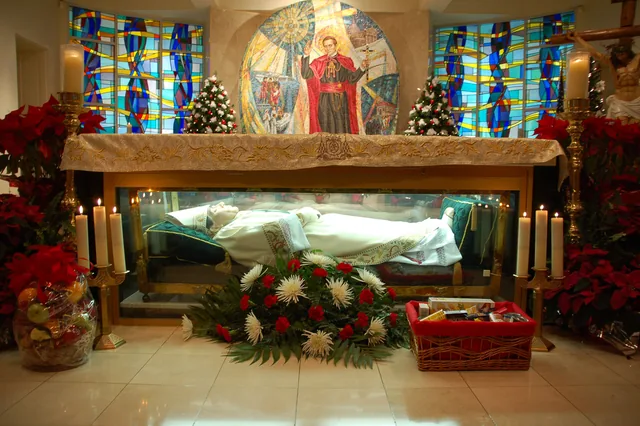
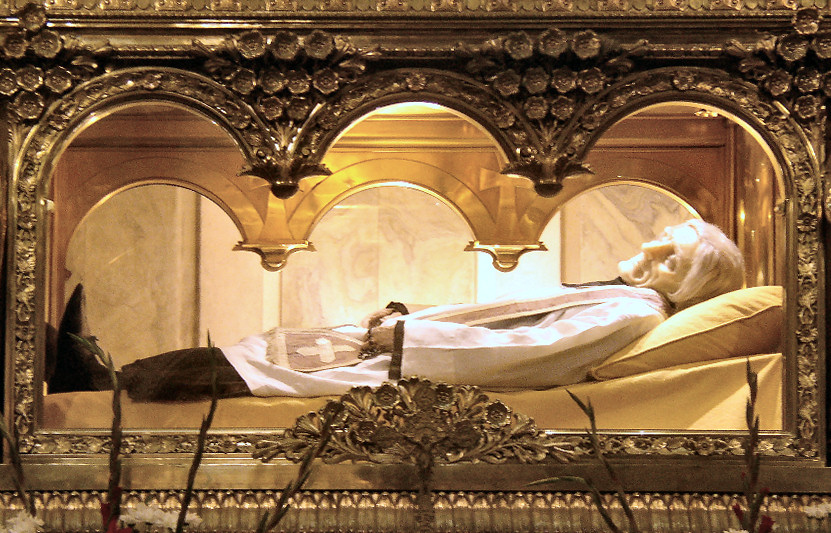
The Ars sanctuary’s jubilee guide dates an exhumation to 1902 and reports that his body was found intact. That is the custodian’s historical account; it supplies no modern anatomical findings or detailed record of preservation treatments. [3]
The body and the separate heart relic
The sanctuary guide identifies a chapel built in 1930 to hold a relic of his heart. The body’s shrine and the heart’s reliquary therefore represent different parts of a custody history. A photograph of either cannot tell us the condition of all his remains. [3]
The guide does not identify the tissues examined in 1902 or describe subsequent preparation and conservation. It preserves a dated report of the exhumation, leaving the mechanism and present extent of preservation unspecified. [3]
READER QUESTIONS
Questions and answers
Did his work consist only of hearing confessions?
No. Benedict XVI also describes family visits, care for sick people, education, charitable administration and cooperation with lay parishioners. [2]
What supports the preservation claim?
The Ars sanctuary reports the 1902 exhumation in its jubilee guide. The guide does not publish an anatomical examination or treatment history. [3]
FOLLOW THE SOURCES
Sources and further reading
- Ars sanctuary: The Curé of Ars
Institutional source
Custodial retrospective biography; vocation, arrival and attempts to leave.
- Benedict XVI: Letter for the Year for Priests, 16 June 2009
Institutional source
Pastoral interpretation; confession, practical ministry and lay cooperation.
- Ars sanctuary: Living the Jubilee guide, 2024–25
Institutional source
Pages 5 and 30: exhumation account, Providence collaborators and heart chapel.
Sources checked: 2026-10-27. Suggest a correction or a source.