THE PERSON BEHIND THE ACCOUNT
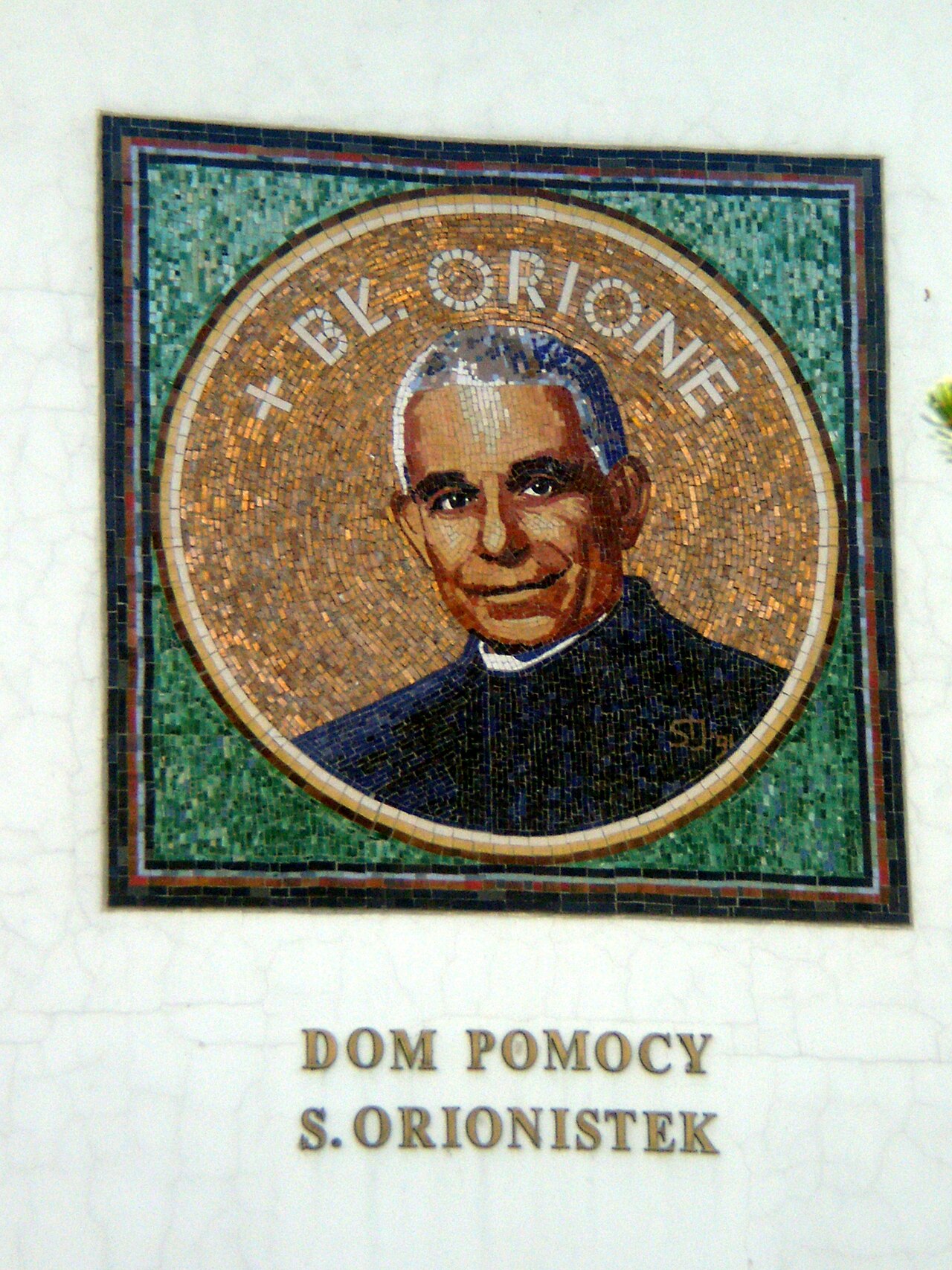
Luigi Orione: a road worker’s son who made room for people left without help
Luigi Orione’s first attempt at religious life ended with serious illness and dismissal from a Franciscan friary. He was a teenager from a poor family whose father paved roads. His later work took a different course: education for boys who lacked money, relief after earthquakes and institutions for people who had few places to turn. [1][2]
A vocation that changed address
As a boy Orione helped his father with road paving. The congregation’s illustrated biography places that work within a household with little money. After leaving the Franciscans because of pneumonia, he studied with Don Bosco’s community at Valdocco and eventually entered the diocesan seminary at Tortona. [1]
The change did not erase the need to support himself. Historian Ennio Apeciti records that he worked as a cleric-sacristan while studying. Before ordination he was already organizing aid for people in poverty. The life that followed was shaped by practical work as well as formal religious formation. [2]
A school before ordination
Orione opened an oratory in Tortona in 1892 and a boarding school for poor boys in 1893, while still a seminarian. He was ordained in 1895. The sequence matters: he began accepting responsibility for children before he had a settled clerical career. [1]
A residential school creates continuing obligations: somewhere to live, daily provision and responsible adults who remain after public attention moves elsewhere. That makes the quality and accountability of care a legitimate question for later generations.
When an earthquake made children homeless
After the 1908 earthquake in Reggio Calabria and Messina, Orione helped organize relief and opened an orphanage at Cassano allo Ionio. He received responsibilities from both civil authorities and Pius X, who appointed him vicar general of Messina. He remained there until 1912. [2]
His work also reached people affected by the 1915 Marsica earthquake. Emergency assistance therefore became a sustained strand of his life. The official biography connects those interventions with his later network of schools, agricultural training and welfare institutions. [3][5]
IN OUR OWN LIVES
An emergency became a longer responsibility
Orione’s work offers a concrete question for anyone moved by a crisis: what happens after the first rescue? The orphanage, schools and homes turned immediate concern into continuing obligations. That is the part of his life most likely to connect with a reader who has never considered visiting a shrine. [2][5]
The interrupted vocation gives the biography a human shape. Illness closed one path; other work and formation followed. The teenager sent home eventually became a founder responsible for communities of his own. [1]
THROUGH THE EYES OF FAITH
Faith and daily life
Orione’s Catholic vision joined service to people in need with loyalty to Christ, the Church and the pope. The official account of his congregation makes that connection explicit. He hoped works of charity would bring people into a living relationship with the Church; they were central to his religious purpose. [3]
Care as a public expression of faith
The homes known as Little Cottolengos were intended for people experiencing suffering, abandonment and exclusion. The official biography describes their placement on the edges of large cities. They were meant to make Christian care visible in places where social need could be easy to overlook. [5]
John Paul II’s canonization homily interprets Orione’s service through his attachment to Christ and acknowledges fatigue, difficulty and misunderstanding. Its emphasis is on sustained self-giving. The pope canonized him on 16 May 2004; that recognition concerns his life and Catholic witness, rather than treating preservation as the substance of his achievement. [6]
People receiving care have their own lives, preferences and relationships. A founder’s reputation deserves study alongside that standard. A home’s religious identity cannot replace the daily responsibility to provide good care.
A family that continued beyond him
Orione’s work developed into more than one religious community, including the Little Missionary Sisters of Charity and a community of blind sisters devoted to Eucharistic adoration. The official biography also records his journeys and foundations beyond Italy. His legacy depends on communities continuing the work after the founder could no longer direct it. [5]
A 2025 congregation report describes students from the Don Orione school at Cerrillos in Chile visiting his home region and praying at his body in Tortona. The detail connects the shrine with an educational community that still uses his name. The visit brought pupils from one of those distant schools to the place where the founder is remembered. [7]
THROUGH THE LENS OF SCIENCE
The evidence about the remains
His congregation describes the body as well preserved at its first exhumation in 1965, twenty-five years after his death. This is a dated institutional account. The material checked does not include the full examination protocol or a complete record of treatments before and after that opening. [4]
The opening of the coffin in 1965
Orione died at Sanremo on 12 March 1940 and was buried at the sanctuary of Our Lady of the Guard in Tortona. The congregation’s 2017 account says that when the coffin was opened in 1965 its wood had deteriorated, while the body and clothing were found preserved. It also records a public viewing afterward. [4]
The description is specific enough to identify the claim and the occasion. It does not document an absence of embalming, list all surviving tissues or distinguish every subsequent conservation material. The 2025 report confirms continued veneration in Tortona, without supplying a new physical examination. A cause of preservation cannot be established from those devotional reports alone. [4][7]
READER QUESTIONS
Questions and answers
What did Orione do after the 1908 earthquake?
He helped with relief, opened an orphanage at Cassano allo Ionio and took on diocesan responsibilities at Messina. His service there continued until 1912. [2]
Was the 1965 preservation report a full scientific explanation?
No. The congregation reports preservation at exhumation. The sources checked do not provide the full protocol, treatment history or environmental evidence needed to explain it. [4]
FOLLOW THE SOURCES
Sources and further reading
- Don Orione Italia: illustrated life
congregation biography
Family poverty, paving work, illness and interrupted Franciscan formation, Valdocco and later seminary. Private dream/instant healing accounts not adopted as clinical evidence.
- Ennio Apeciti: Luigi Giovanni Orione, Dizionario Biografico degli Italiani
scholarly biography
Student employment, relief, Cassano orphanage, civil/diocesan appointments and Messina service through 1912. Source accessed in full web text.
- Dicastery for Causes of Saints: Luigi Orione
official biography and status
Charism, fidelity to pope and relief. Overlaps source 5.
- Don Orione Italia: anniversary of death, 2017
congregation preservation account
1940 death/burial, 1965 coffin/body/clothing report and public viewing. Institutional report, no full forensic or treatment protocol.
- Vatican liturgical office: Luigi Orione biography, 2004
official biography
Institutions, religious branches and international work; same biography as source 3.
- John Paul II: canonization homily, 16 May 2004
official papal homily
Catholic interpretation of sustained charity, fatigue and obstacles; canonization. No physical-preservation finding.
- Don Orione congregation: Cerrillos school band visit, 12 September 2025
recent congregation report
Chilean educational community and visit to body in Tortona; confirms recent devotional custody without new examination.
Sources checked: 2026-10-27. Suggest a correction or a source.