THE PERSON BEHIND THE ACCOUNT
She arrived in Cortona with a son to care for. Later, she helped the city care for its sick.
Cortona’s hospital began with people who needed somewhere to go. Italy’s archival register connects its foundation to Margaret, a woman who had come to the city after a devastating change in her own life. With support from Uguccio Casali and Madonna Diabella, she established a hospice that became the Hospital of Santa Maria della Misericordia in 1286. The record names collaborators as well as the saint. [1]
A mother arrives in a new city
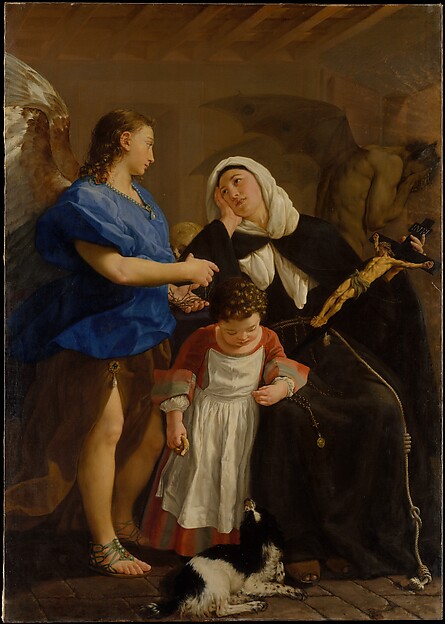
Margaret was born at Laviano in 1247. She lived for years with a man she did not marry, and they had a son. After his violent death, she and the boy eventually reached Cortona. The 1910 Catholic Encyclopedia describes two local women taking them in and introducing Margaret to the Franciscans. Receiving help belongs near the beginning of her later work of giving it. [2]
That older biography also objects to writers who exaggerated her earlier sexual history to dramatize her conversion. Its correction remains useful. A woman’s grief and religious change do not give a storyteller permission to invent a more scandalous past for her. [2]
Penance needed limits
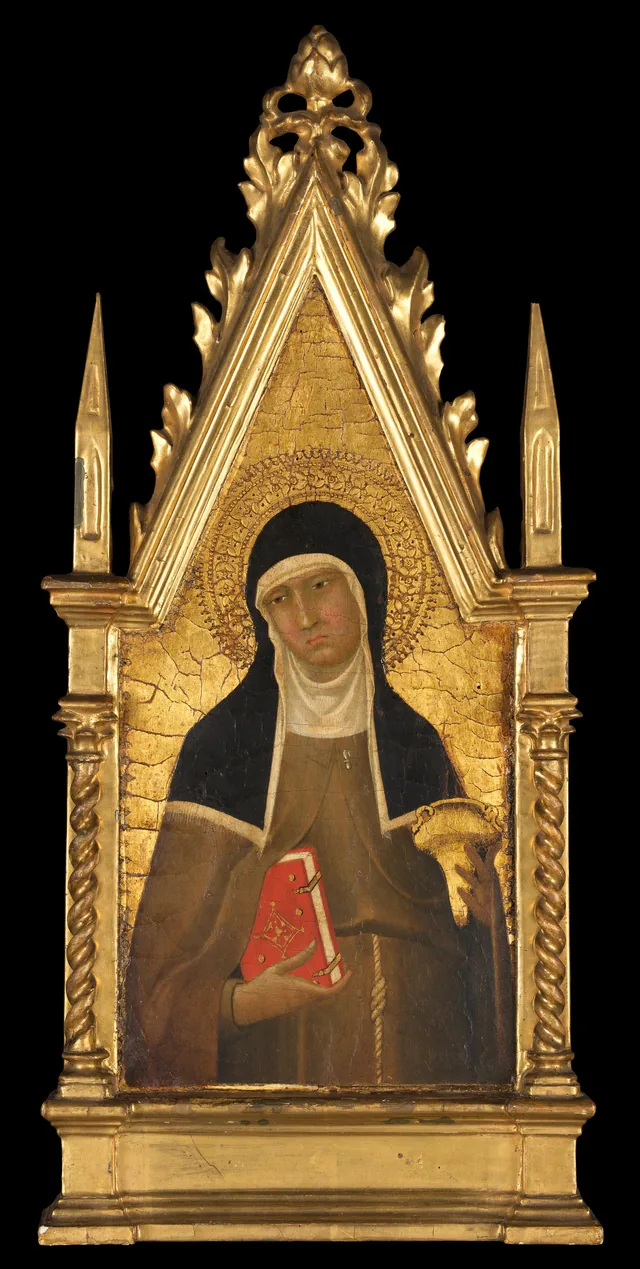
Margaret became a Franciscan tertiary and lived in poverty, combining prayer with care for sick people. Franciscan Media’s account preserves an uncomfortable detail: her confessor sometimes had to moderate her severe self-denial. Her effort to change could become excessive. Spiritual guidance included restraint, and readers need not copy her fasting to understand her commitment. [3]
A place that could keep caring
The archival history identifies a specific institution, its benefactors, and its later development. In the fifteenth century the main hospital absorbed several smaller hospices. A new building followed; in 1514 a papal bull approved a chapel where abandoned children could be received. These developments came long after Margaret’s death. They show the institution continuing to change as the city’s needs changed. [1]
IN OUR OWN LIVES
Learning to receive help, then organize it
Margaret’s arrival in Cortona gives a reader somewhere to begin without first admiring her. She was a mother in need of support. Later, hospital work required other people’s money, property, and labor. The people who welcomed her and the people who helped establish the hospice belong in the account. [1][2]
Anyone trying to turn concern into durable help must ask who will keep caring when the first organizer can no longer do it. A hospital needs people who can take responsibility, find resources and adapt as needs change.
THROUGH THE EYES OF FAITH
Faith and daily life
Margaret’s conversion joins repentance to practical obligations. A son needed care; sick neighbors needed help; a hospital needed supporters. The religious accounts give prayer a place within those responsibilities. [2][3]
Prayer in public life
Margaret’s devotion centered on the Eucharist and Christ’s suffering. The Franciscan account connects that prayer with nursing and with people seeking her counsel. Her withdrawal for prayer did not end her involvement in the needs around her. [3]
The older biography also records interventions in civic feuds and criticism of a bishop whose conduct resembled that of a soldier and prince. These episodes come through a devotional historical tradition, whose central source was her director, Giunta Bevegnati. They present a woman willing to speak to authority as well as examine herself. [2]
The shrine in Cortona
The diocese identifies her remains in an urn above the basilica’s high altar and remembers her among its principal patrons. Benedict XIII canonized her on 16 May 1728. Current veneration belongs to a community with a long memory of Margaret; a claim that her body was never treated would contradict the published preservation history. [5][4]
THROUGH THE LENS OF SCIENCE
The evidence about the remains
The preservation tradition needs to be read alongside records of treatment. A lifelike appearance cannot tell a visitor which tissues remain or how they were conserved.
A preserved body, with a treatment history
The 2021 review classifies Margaret as artificially mummified and records municipal involvement in embalming. Its direct survey concerns Ranieri da Borgo. [4]
The comparative article gives no complete account of Margaret’s examination, the embalming materials or subsequent conservation. Those parts of her physical history remain unspecified.
READER QUESTIONS
Questions and answers
Was Margaret a nun?
She was a Franciscan tertiary, a woman living a penitential religious commitment rather than the life of a cloistered nun. [2][3]
Are her remains described as naturally untouched?
The literature identifies artificial preservation. The particular methods and later conservation need fuller documentation. [4]
FOLLOW THE SOURCES
Sources and further reading
- Italian Ministry of Culture, SIUSA — Hospital of Santa Maria della Misericordia, Cortona
Archive
Archival institutional history: named collaborators, hospice foundation, 1286 hospital and later institutional changes.
- Lawrence Hess — Saint Margaret of Cortona, Catholic Encyclopedia (1910)
Historical
Historical devotional biography discussing the Legenda, family, reception in Cortona, civic interventions, and exaggeration by later writers.
- Franciscan Media — Saint Margaret of Cortona
Religious order’s account
Franciscan account of her vocation, hospital work, devotion and a confessor’s restraint of excessive self-denial.
- Mandarano, Czortek and Ventura — Medieval body embalming in Blessed Ranieri da Borgo (2021)
Scholarly account
Comparative classification and municipal embalming involvement; direct survey concerns Ranieri.
- Diocese of Arezzo-Cortona-Sansepolcro — Margaret, patron of the diocese (2025)
Church or shrine source
Canonization date, diocesan patronage and urn above the basilica high altar. No scientific report.
Sources checked: 2026-10-27. Suggest a correction or a source.