THE PERSON BEHIND THE ACCOUNT
A room, a conversation, a different kind of community
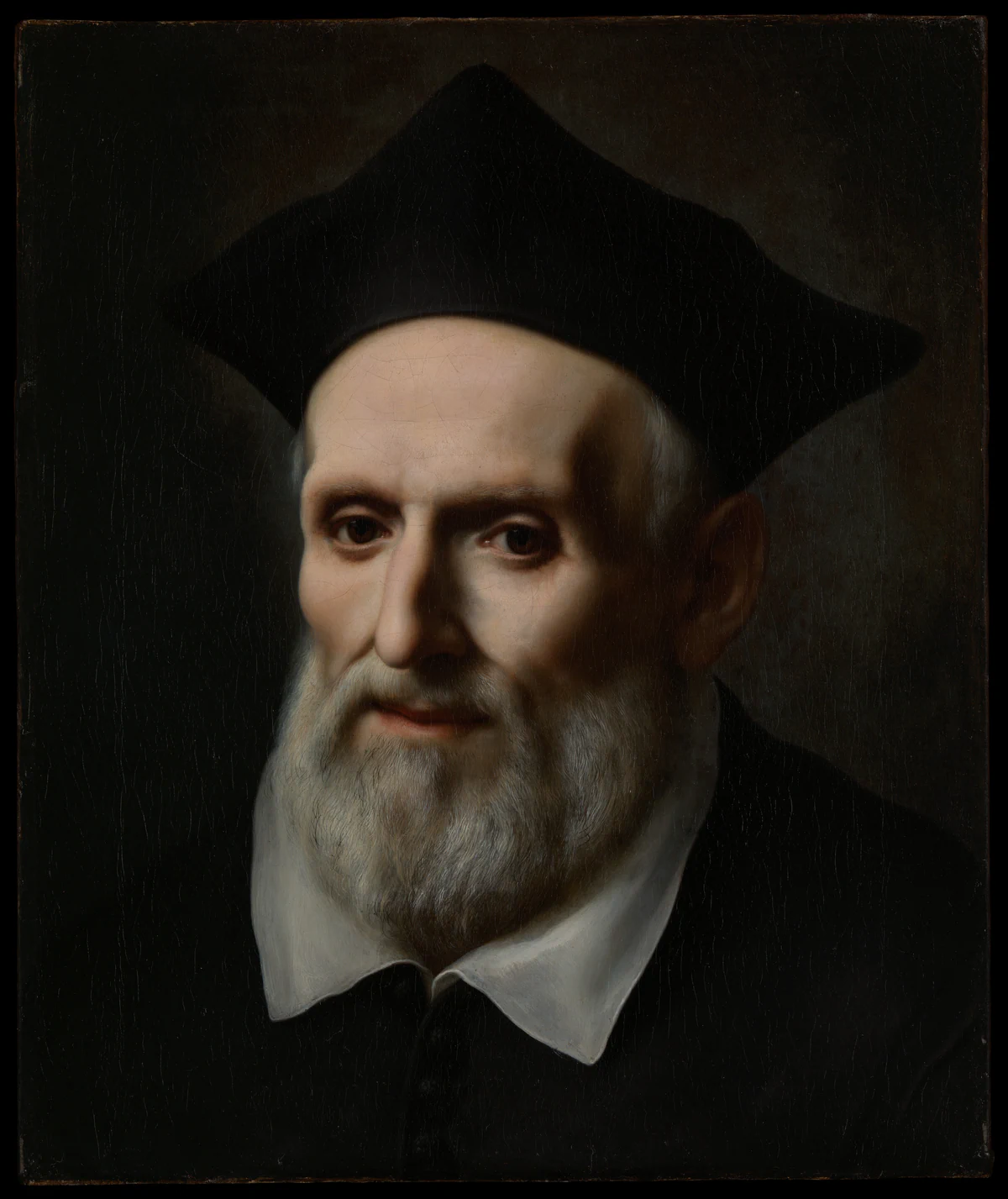
By the early 1550s, men gathered in Philip Neri’s room at San Girolamo della Carità in Rome to read, pray and talk. They also visited hospitals. Growing friendships eventually gave rise to the Congregation of the Oratory. [2]
The business he did not inherit
Born in Florence in 1515, Philip was sent as a young man to an uncle near Monte Cassino who intended to leave him a business. Philip instead went to Rome. He supported himself by teaching two boys in return for lodging and food. Choosing that uncertain arrangement over the expected business is an early concrete turn in his life. [1]
The Birmingham Oratory’s biography remembers prayer in the catacombs and an attachment to the early Christians. Rome became his lasting field of work. The young tutor’s religious interests developed alongside everyday dependence on another household; the later founder did not begin with his own institution or fortune. [1]
Being persuaded to become a priest
Philip’s early apostolate was lay work. According to the Oratory’s institutional history, he accepted ordination in 1551 on the advice of his spiritual director. Priesthood added confession and sacramental ministry to relationships already forming around him. His later community grew out of that work rather than preceding it. [2]
Philip’s companions shared spiritual reading, pilgrimages, prayer and visits to sick and dying people. Some were ordained as numbers grew. Responsibility had to spread beyond the man around whom they first gathered. [2]
Room for different vocations
Philip directed some followers towards religious life while encouraging others to remain in their circumstances and influence the people around them. The Birmingham biography specifically mentions penitents at court. It preserves a flexible response to people, rather than one prescribed route that everyone had to follow. [1]
Prayer, learning and charity can share the same circle of friendship. A group need not treat conversation and visits to a hospital as competing interests. Giving both a place is a practical way to sustain its purpose.
IN OUR OWN LIVES
The work of making people feel at home
Philip’s life is useful for anyone building a group around a demanding purpose. He gave people time, shared activities and responsibilities. The Oratory’s lasting question is practical: how can friendship sustain prayer and service once the first enthusiasm wears off? His answer took the form of a community that outlived its founder. [1][2][3]
THROUGH THE EYES OF FAITH
Faith and daily life
Philip’s warmth had a definite religious centre. Pope Francis describes prayer, Scripture, the sacraments and care for poor people as the substance of the Oratory. Joy made that life approachable; it was not a substitute for it. [3]
Freedom inside a common life
The Oratory developed a distinctive arrangement: secular priests living in community without religious vows. The Birmingham account explains that members are bound by charity and normally remain in their own local congregation. This gives a particular shape to Philip’s legacy: a stable life together that cannot rely on a vow alone to settle every difficulty. [2]
Francis’s 2015 message describes Philip attending closely to people’s spiritual growth, including their hardships. Confession continued to the end of his life. The reputation for cheerfulness belongs with that patient work of listening. It need not be inflated into a claim that he was always light-hearted or that sorrow had no place in his care. [3]
THROUGH THE LENS OF SCIENCE
The evidence about the remains
The Oratorians documented a canonical examination and renewed urn in 2022. Their notices describe the process and custody, but do not publish an anatomical report establishing a naturally intact body. [4][5]
What happened to the relics in 2022
The Oratorian notice dated 8 June 2022 describes the beginning of a canonical recognition the previous day. It names three physicians, two technicians, custodians and a diocesan commission. The stated purpose included better conservation of the relics. It records who was involved and that work began; it gives no tissue findings. [4]
A completion notice on 8 September reports a signed record and placement of the remains in a renewed urn, retaining earlier material where possible. It describes return to the altar at Santa Maria in Vallicella. This is evidence of active custody and conservation, not grounds to call every visible feature untreated flesh. [5]
The full technical record would be needed to say more about the surviving anatomy or specific interventions. The public notices are valuable precisely for the narrower story they tell: people opened, examined, documented and prepared the relics for continued veneration. [4][5]
READER QUESTIONS
Questions and answers
FOLLOW THE SOURCES
Sources and further reading
- Birmingham Oratory: Philip Neri
Religious community’s account
Supports early business decision, tutoring, prayer, practical ministry and varied counsel.
- Birmingham Oratory: What is the Oratory?
Religious community’s account
Supports lay origins, 1551 ordination, 1552 gatherings, activities and distinctive community without vows.
- Pope Francis: fifth-centenary message, 2015
Church or shrine source
Supports pastoral method, Christian joy, confession and Catholic content of the Oratory; commemorative interpretation.
- Oratorian Confederation: recognition begins, June 2022
Custodian’s account
Records 7 June opening, personnel and conservation purpose; no anatomical findings.
- Oratorian Confederation: recognition completed, 8 September 2022
Custodian’s account
Records documentation, renewed urn and return to Vallicella altar; no untreated-whole-body finding.
Sources checked: 2026-10-27. Suggest a correction or a source.