
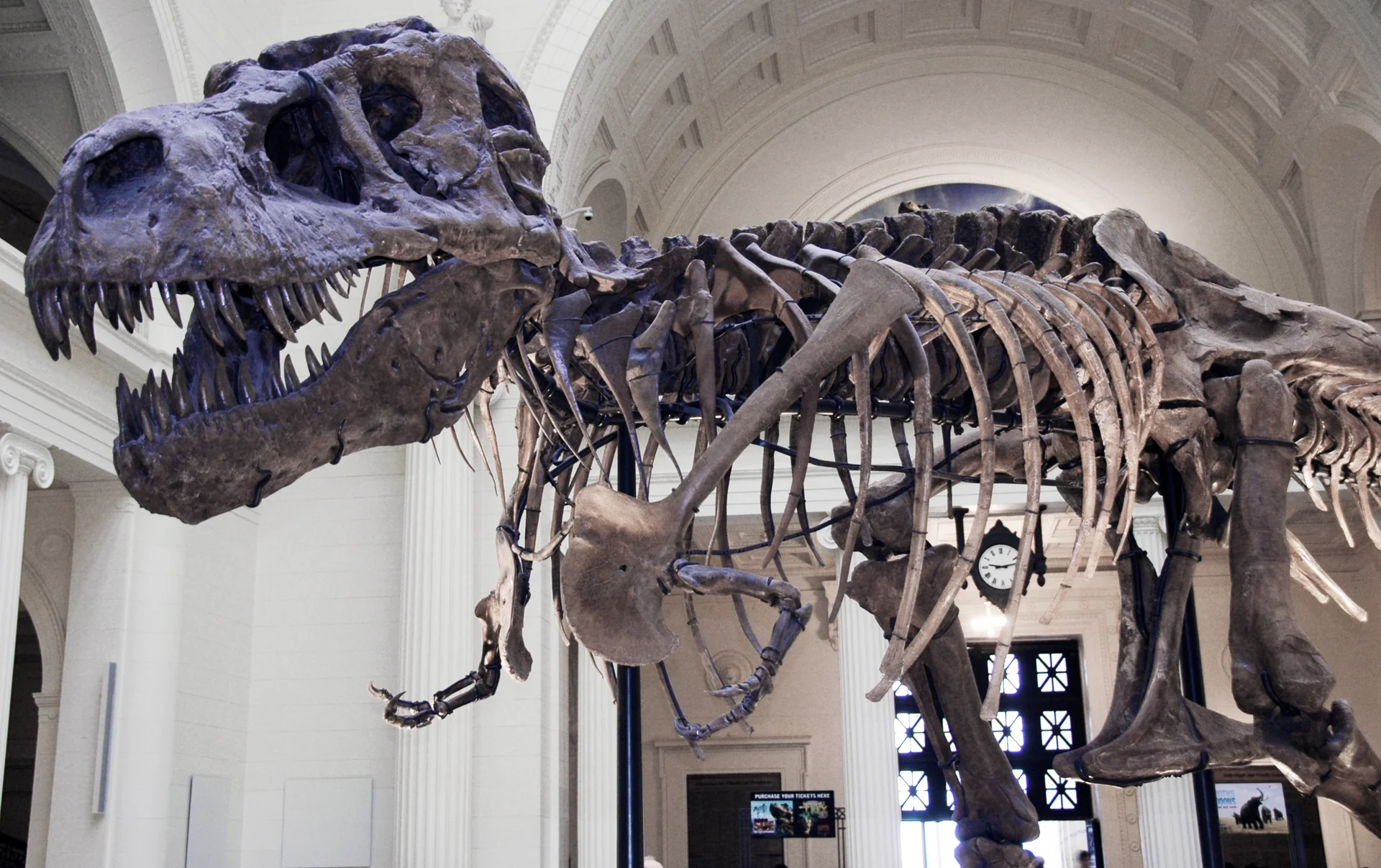

Two fused dinosaur tail bones preserve an unsettling encounter. Inside them lies a broken tyrannosaur tooth, surrounded by bone that grew as the wound healed. The prey survived the attack long enough for its body to respond. In a 2013 paper, researchers presented the specimen as direct evidence that a Tyrannosaurus rex attacked a living hadrosaur. DePalma and colleagues, PNAS
The fossil does not preserve the animal's experience. It preserves injury, survival, and repair. Even that much challenges a comfortable picture of nature as an unbroken idyll until humans arrived. Harm belongs deep within life's history. For someone who believes that creation comes from a good God, the question is unavoidable: why should living things endure so much of it?
What we can know about suffering
Pain is more than a reflex. An organism can detect tissue damage and withdraw without that response alone demonstrating an unpleasant conscious experience. Researchers call the detection and processing of harmful stimuli nociception. Assessing pain involves asking whether there is also a negative experience that affects behavior and motivation.
A 2021 study by Robyn Crook approached this distinction through octopuses. After an irritating injection, animals avoided a place associated with that experience; animals in the painful condition also developed a preference for a place associated with local pain relief. Behavioral results were combined with recordings of nerve activity. The study supports an affective component of pain in the tested octopuses, while acknowledging the difficulty of inferring subjective experience in another species. Crook, iScience
That inference is stronger than simply watching an animal jerk away. It is also narrower than claiming that every living thing suffers in a human fashion. Species differ; experimental designs have limits; experience cannot be read directly from a fossil. Precision improves the ethical question rather than dissolving it. We have substantial reasons to take many animals' distress seriously without pretending to know every detail of their inner lives.
Evolution explains functions, not ultimate justification
Sensitivity to injury can help an animal protect damaged tissue or avoid a danger. Predation transfers energy through food webs and shapes the survival and reproduction of populations. These processes help explain how traits and ecological relationships persist.
But explaining a mechanism does not show that every resulting harm is good. A prolonged injury may continue long after a useful warning has been delivered. A young animal can die without ever reproducing. The benefits a process brings to a population do not make its costs to an individual unreal.
The strongest version of the theological challenge presses exactly there. If God is good and powerful, why create through processes with these costs? Saying that pain sometimes has a function answers part of a biological question. The moral question remains: why this amount of suffering, with this distribution and intensity? A predator’s biological role also differs from the moral responsibility we attribute to human choices.
Why human wrongdoing is not a complete answer
Humans cause immense avoidable animal suffering. That explains much of what happens in farms, laboratories, homes, and damaged habitats. It cannot straightforwardly explain injuries in animals living millions of years before humans. The fossil record imposes a chronological constraint on any account that makes all predation a recent physical consequence of human action.
Catholic teaching connects human sin with a profound rupture in humanity's relationship with God and creation. That teaching should be taken seriously, but it is not a fossil-dating method. Simply pointing to the Fall does not supply a demonstrated mechanism by which a later human act produced earlier animal injuries. Catechism, 399–400
Some theological proposals attempt more elaborate connections. Their existence is not proof that one has succeeded. A responsible reader can recognize the unresolved problem without weakening the well-supported evidence that injury and predation precede us.
A creation still on its way
The Catechism describes a world moving toward fulfillment, in which constructive and destructive processes coexist. That offers a framework for understanding creation as a history with development, rather than a finished arrangement lacking every vulnerability. It also states plainly that evil admits no quick answer. Catechism, 309–310
One philosophical proposal is that a world of stable processes and genuinely active creatures has goods that a constantly corrected world would lack. Animals can explore, learn, develop, and act within dependable surroundings. Yet this remains a proposal with a serious objection: would those goods require this much suffering? We cannot inspect every possible creation and demonstrate that no less painful alternative was available to God.
Christian hope contributes a further perspective. Laudato si’ places the destiny of creatures in relation to God and the risen Christ, and rejects the assumption that other creatures exist merely for human use. That prevents a facile answer in which an animal's only significance is the lesson its suffering teaches us. It does not provide an inventory of exactly how each creature's history is fulfilled. Laudato si’, 83
The question changes what we owe
An explanation of suffering, even a persuasive one, would not authorize adding needless suffering. The Catechism requires kindness to animals and rejects causing their needless pain or death. It also permits human uses of animals within moral limits. Those statements create a demanding practical question: which harms are necessary, and what reasonable alternatives can reduce them? Catechism, 2415–2418
The answer depends partly on empirical knowledge. Better understanding of a species' behavior can reveal distress that a keeper once overlooked. Evidence about pain relief can change research practice. Attention to habitat can prevent injuries and starvation that would otherwise appear simply “natural.” Compassion becomes more effective when it learns.
We should also resist promises that every ecological intervention will help. Removing a predator may create further harms through a food web. The obligation to care includes learning enough to avoid confident mistakes, and distinguishing relief we can responsibly provide from control we do not possess.
The fossil records an animal’s injury and survival. The questions it raises about suffering remain difficult. Animals alive now also need care, and their welfare gives those questions practical urgency.