
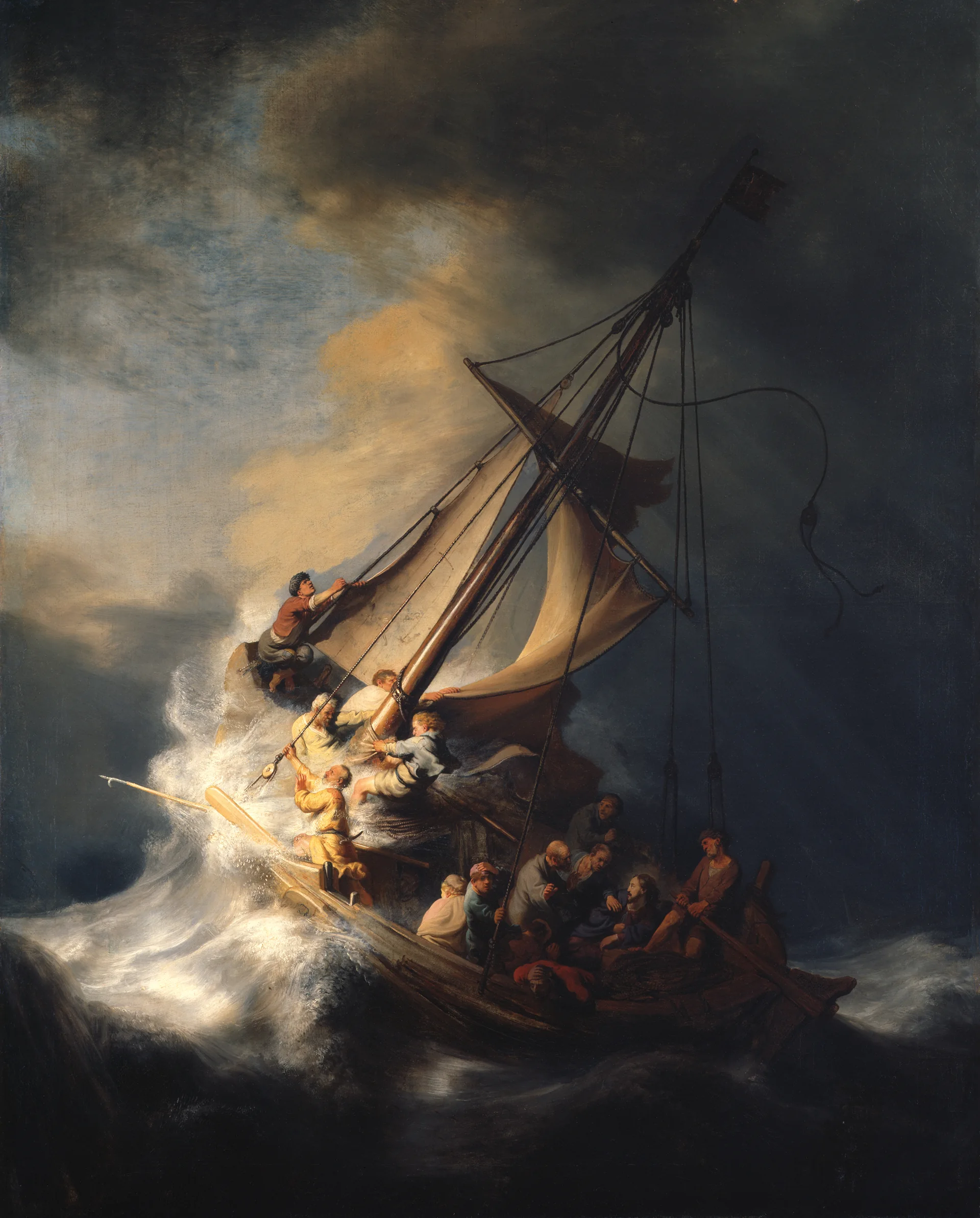

A dropped cup accelerates toward the floor. Catch it, and the cup stops falling. Nothing miraculous has happened: a hand supplies forces that were absent from the simplest prediction. The example makes a useful distinction visible. A law, a model of a particular situation, and the complete list of causes acting in that situation are different things.
Miracles raise a harder question than catching cups. Could the Creator act in a way that exceeds the capacities of created causes? And if so, how could anyone responsibly identify such an event? Keeping those two questions apart helps us avoid confusing a philosophical possibility with evidence that something happened.
Laws earn their authority through evidence
Scientific laws express regularities with mathematical or conceptual precision. Predictions require additional information: the system's starting conditions, the influences acting on it, and whether the model applies in the relevant regime. An apparent exception may reveal a missing influence, faulty measurement, or a limit in the theory.
Newtonian gravity remains extraordinarily useful, but Einstein's general relativity gives a more comprehensive account. The advance did not make every successful Newtonian calculation worthless. It explained why the older treatment works so well in many circumstances and where it needs correction. OpenStax's account of gravity illustrates how scientific confidence can coexist with attention to a theory's domain. University Physics: Einstein's theory of gravity
This history offers no shortcut to miracles. “Our present theory might be incomplete” supports further investigation; it does not select divine action as the explanation. The same openness that permits scientific discovery requires patience with an unexplained observation. The inquiry into Sister Wilhelmina Lancaster’s remains raises this distinction: a diocesan summary calls their condition highly atypical while leaving the preservation mechanism unresolved.
Nor should quantum probabilities become a religious escape route. An unlikely outcome permitted by a physical model remains an outcome permitted by that model. The size of the probability says nothing by itself about anyone’s intention. A winning lottery ticket can transform a life without overturning probability theory.
What a Catholic means by divine action
Catholic thought does not generally place God beside gravity or chemistry as one more cause of the same kind. The Creator is understood as the source of the existence and powers of created things. That view allows ordinary natural activity to be fully real without becoming independent of God. Catechism, 301 and 306–308
Thomas Aquinas argues that God is not limited to the order of effects produced by secondary, created causes. His discussion of miracles locates them beyond what nature's own powers can accomplish, not simply beyond what an observer happens to understand. This is a theological and philosophical argument; it is not an experimental demonstration of a particular miracle. Summa Theologiae, I, question 105, articles 6–8
The distinction explains why a believer can affirm both dependable natural order and the possibility of a miracle. It does not compel a nonbeliever to accept either the existence of the Creator or a claimed intervention. Those are further claims requiring further reasons.
It also prevents the cup illustration from doing too much work. A human hand is a measurable physical cause within nature. The illustration helps distinguish an incomplete prediction from a broken law; it is not a miniature proof of how God acts.
Unexplained is a finding, not an identity
Imagine a report of an unexpected recovery. Before interpreting its meaning, investigators need to establish what illness was present, how securely it was diagnosed, which treatments occurred, what changed, and whether the change lasted. An impressive story with uncertain records has a different evidential status from a well-documented case.
A sound inquiry should also examine spontaneous improvement, mistaken prognosis, overlooked treatment effects, misleading testimony, and ordinary variation. These are not insults to the person reporting the event. They are relevant alternatives. The stronger the conclusion being proposed, the more carefully alternatives deserve attention.
At Lourdes, the sanctuary describes stages that distinguish initial claims, medical investigation, and ecclesial recognition. Medical evaluation concerns whether a recovery is adequately explained by current knowledge; the religious judgment belongs to the Church's competent authority. The procedure itself recognizes that medical and theological assessments do different work. Lourdes: Recognition of a miracle
A favorable medical assessment does not logically eliminate every unknown natural cause. Nor can a skeptical investigator settle the matter by defining every possible event as natural from the outset. Both shortcuts prearrange the answer. What the evidence supports must be stated with its actual strength and its remaining uncertainty.
A sign has a context
The Christian use of “miracle” includes significance as well as unusual occurrence. In the Gospels, healings and other mighty deeds are connected with Jesus' identity and the coming of God's kingdom. The Catechism places them within that proclamation, not within a demand for spectacle. Catechism, 547–550
That context creates an additional burden of interpretation. Even if an event were beyond known natural explanation, the assertion that it confirms a specific religious claim would need an argument. The timing, testimony, broader circumstances, and theological meaning would matter. Strangeness alone supplies none of those conclusions.
Historical events also cannot always be repeated on demand. Historians reconstruct singular events from records, testimony, and material traces; they do not dismiss every unrepeatable event as unknowable. Yet singularity does not exempt a claim from criticism. The reliability and independence of sources, their proximity to events, and competing explanations remain important.
Living without a guaranteed exception
There is a painful question behind many discussions of miracles: why would one person recover while another does not? No catalogue of unusual cures makes that question disappear. It is especially damaging to infer that a person who remains ill must have prayed poorly or lacked faith. The Gospel accounts themselves do not present Jesus as eliminating every instance of earthly suffering. Catechism, 549
Belief in miracles therefore gives no sound reason to neglect ordinary care, discount another person's suffering, or demand a spectacular result as proof of their worth. If healing comes through skilled treatment, sustained attention, and patient companionship, those remain goods to receive and pursue.
For any remarkable report, begin with what happened and the records supporting it. A proposed explanation then has to fit those records. The religious interpretation requires further arguments from philosophy, history, and theology.