
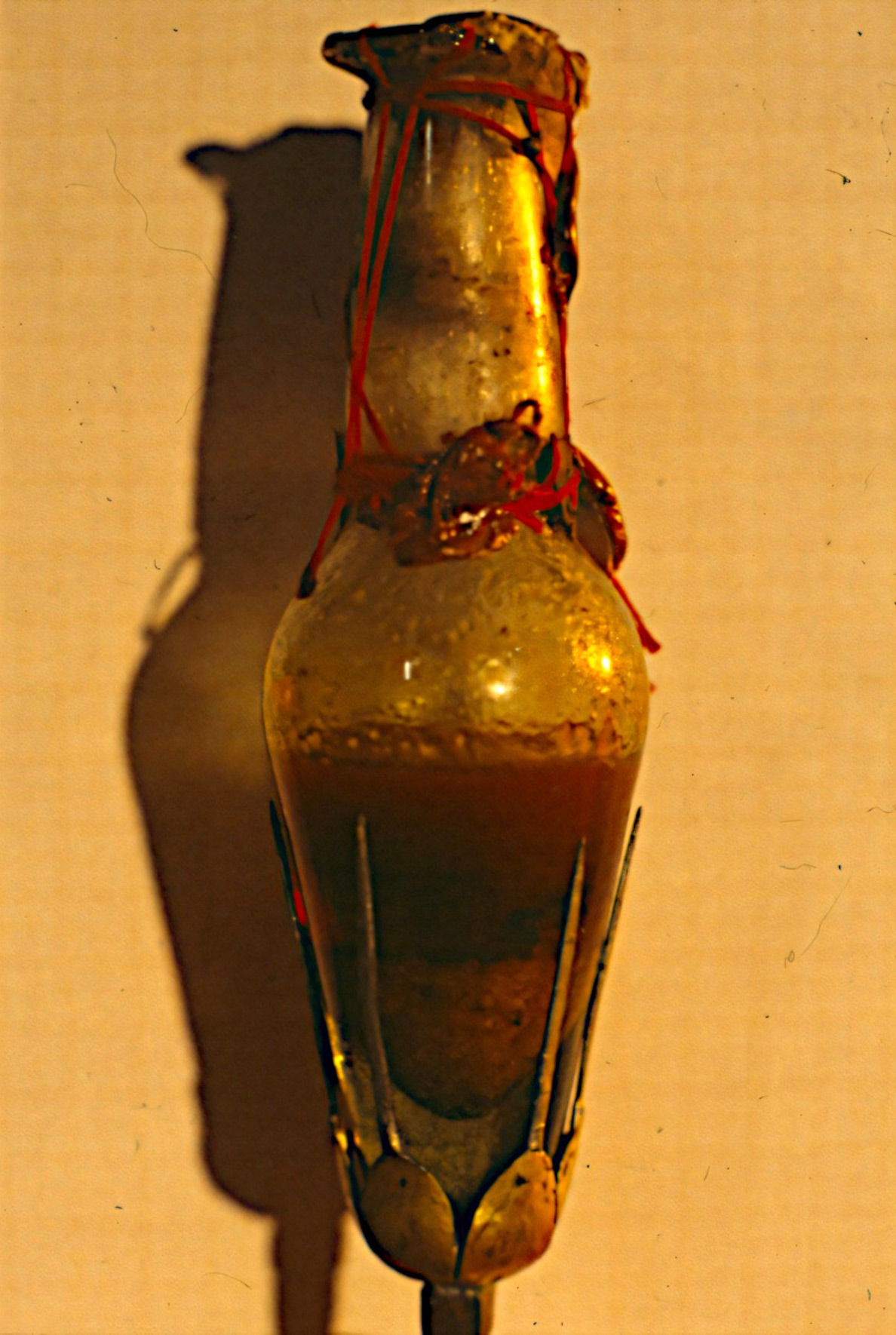
On 10 August 1996, chemist Luigi Garlaschelli lowered the bottom of a glass vial into an ice-water bath. The vessel, venerated in the Italian town of Amaseno as a relic of St Lawrence, contained a clear red liquid. Within minutes, he reported, the liquid became an opaque brownish solid. He then warmed the surrounding water slowly with a hairdryer, stirring it and monitoring a laboratory thermometer. As the bath returned to about 29–30°C, the contents began to melt and turn red again. [1]
That experiment is three decades old. It appears in a paper Garlaschelli and Giacomo Torzo published in EXARC Journal on 29 May 2026, comparing three Italian relics and laboratory mixtures that imitate their behavior. Their account brings together an examination of one revered vial, observations reported for others, and experiments with materials the researchers prepared themselves. [1]
A vial that responds to warmth
In the Amaseno test, cooling and warming the vessel reversed its contents’ appearance and ability to flow. The authors interpret this as melting and solidification of a material with a low melting range. The thermometer measured the water bath, however, and the paper reports no chemical identification of the vial’s contents. Its behavior supports a physical explanation without supplying a recipe for what is inside. [1]
Fats and waxes offer possible ingredients because their response to warmth can produce striking changes. A solid mixture may soften and become mobile as it warms; on cooling, it can become rigid again. Garlaschelli and Torzo investigated candidate mixtures and colorants that could imitate the appearance of the relics. Some preparations looked quite different when solid and liquid. They also considered whether ingredients would have been available when the objects entered the historical record. [1]
Their laboratory comparisons have limits. One apparatus used to test their laboratory mixtures had an uncalibrated thermometer, so the reported temperature ranges should not be read as high-precision measurements. And a mixture that works in a modern laboratory leaves the history of an old vial open: who prepared it, what went into it, and whether its contents ever changed. [1]
In Ravello, the relic associated with St Pantaleone presents a different practical problem. Its vessel is kept behind a protective grille. The authors describe seasonal changes resembling those in Amaseno, but report no direct examination of its contents. They propose recording its appearance alongside the temperature near it, day after day. Such a record could test a seasonal pattern that a photograph taken on a feast day cannot capture. [1]


Movement can make a gel flow
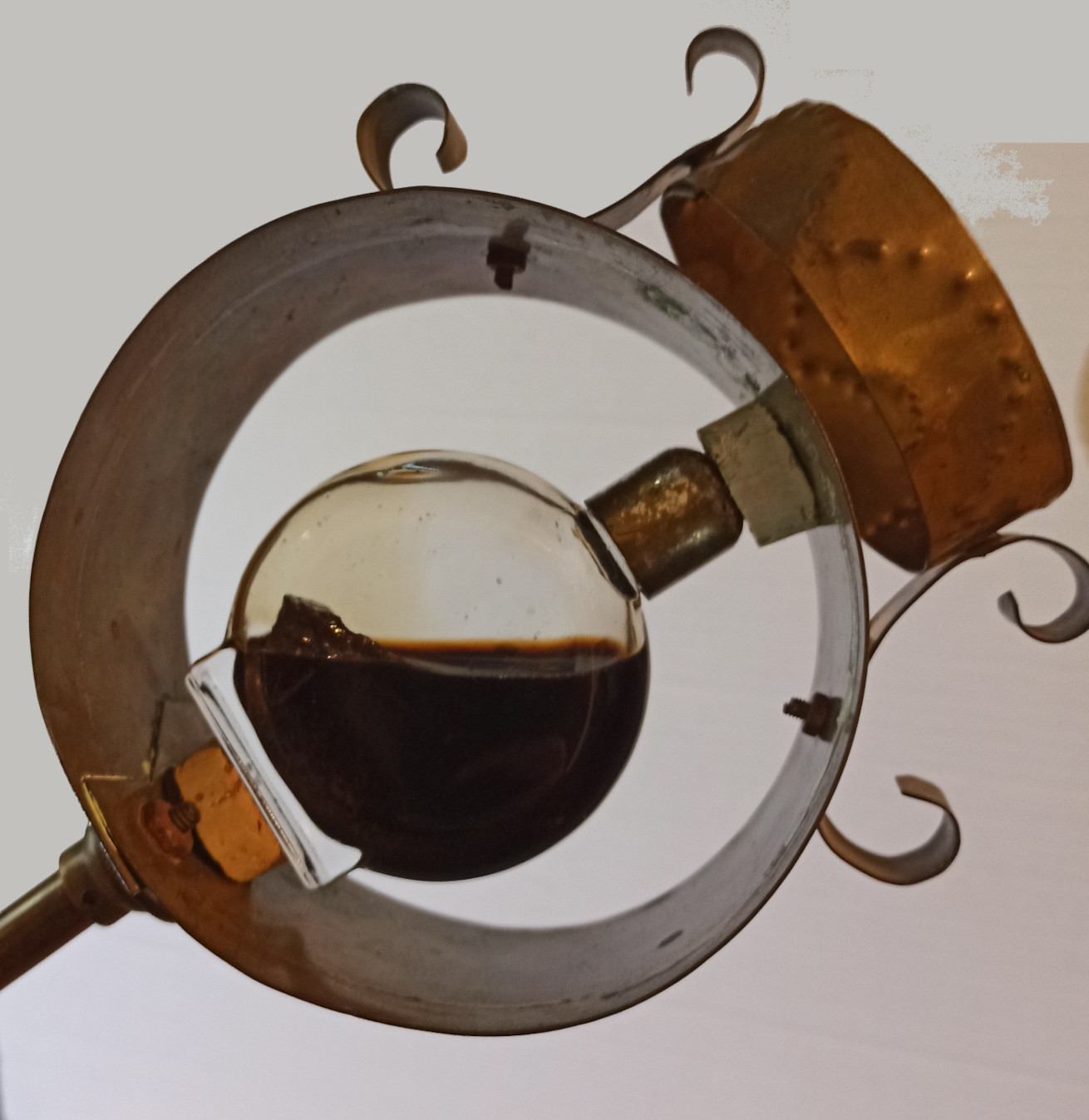
The reliquary of San Gennaro, or St Januarius, in Naples is carried and turned during ceremonies. That movement introduces another possibility. Some gels become less resistant to flow when disturbed and regain their consistency when left at rest. This reversible response is called thixotropy. A material can therefore appear to “liquefy” through movement, even when warming is not the cause. [1] [2]
The 2026 paper revisits thixotropic imitations described in research from 1991 and 1994. The experimenters produced a dark gel that became free-flowing when its container was gently tapped or reversed several times. This gives handling a plausible role to investigate. It does not tell us that the Naples vial contains the laboratory preparation. [1]
Garlaschelli and Torzo now favor a low-melting mixture as an explanation worth testing. Among their reasons is the limited durability of their own thixotropic preparations, which retained the behavior for only a few years. That observation concerns the recipes they tried; it is not a test of every possible gel or an analysis of the historic material. [1]
What would distinguish the explanations?
Watching a tilted vial is less straightforward than it looks. The authors point out that an opaque mixture might melt first near the glass. A thin liquid layer could let a still-solid center slide downward, making the whole mass appear liquid. Even the description of the event needs care before a mechanism can be assigned to it. [1]
The authors propose controlled observations that separate temperature from movement. For a thermal test, the intact reliquary could be placed in a chamber whose temperature rises gradually, allowing time for the contents to warm. A separate assessment would examine its response to mechanical disturbance. These are proposals requiring the custodians’ permission and protection of the object; the paper does not report that those controlled tests have been completed on the Naples relic. [1]
A recent ceremony illustrates the gap in the available record. The Archdiocese of Naples reported that the contents were already liquid at the feast on 19 September 2026; the announcement came at 10:04. That report tells us what was announced. It supplies no accompanying temperature-and-handling record with which to distinguish the competing physical explanations. [3]
Caring for the relic and the people around it
Catholic devotion to relics remembers particular people through material traces of their lives. The Church’s Directory on Popular Piety and the Liturgy describes the veneration of saints’ bodies and associated objects, while directing pastors to ensure authenticity and prevent fraud and superstition. Those requirements give careful examination a place within the care of a relic. They offer no verdict on the chemistry of these three vessels. [4]
In his homily on 19 September 2026, Cardinal Domenico Battaglia turned the attention of those gathered around San Gennaro’s reliquary to children killed by violence, the Camorra’s damage to young lives, and families bereaved by war. He asked that, when Naples gathered again the following year, it would no longer have to speak of children killed or mothers who had lost them. [5]