
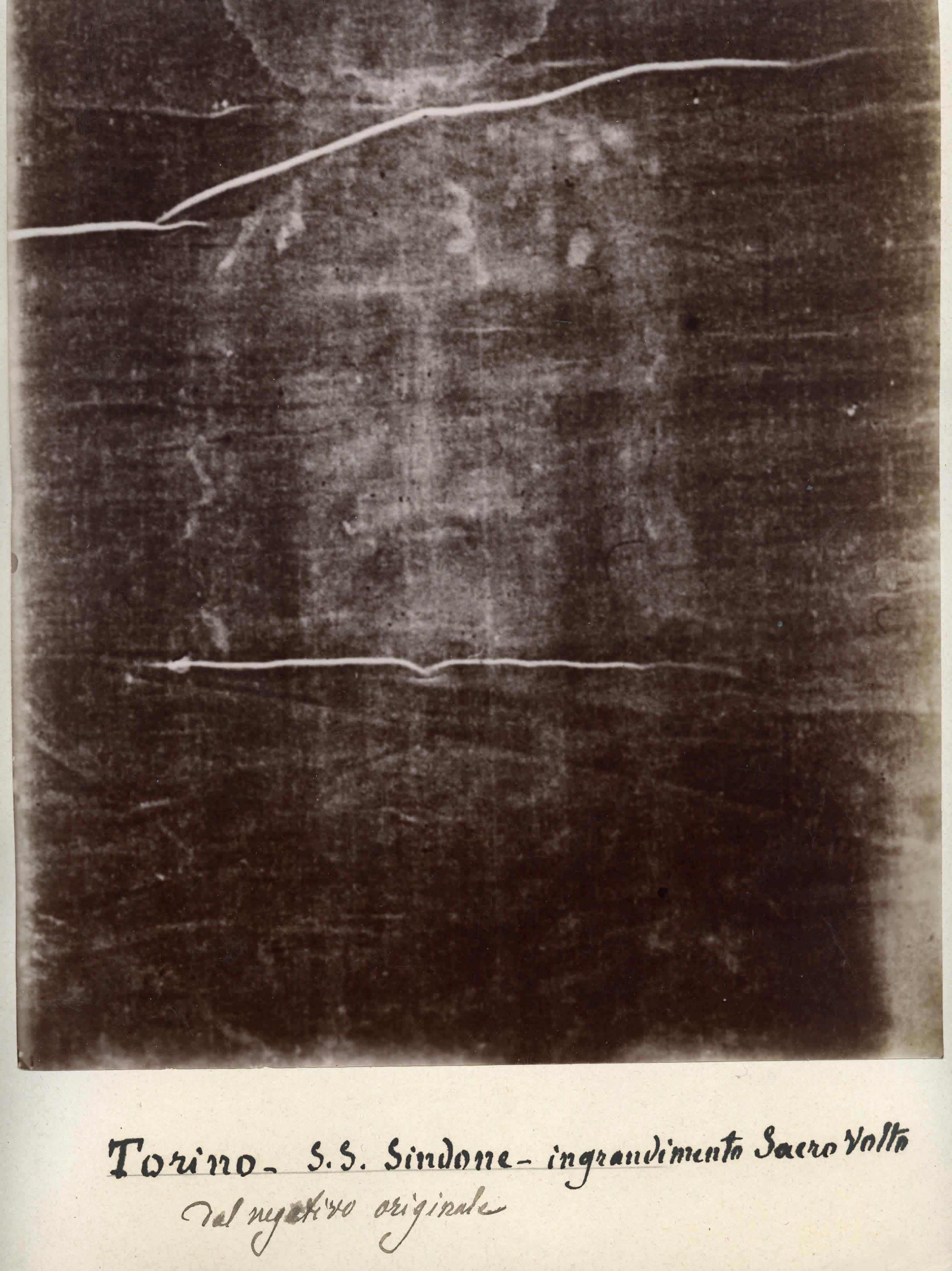

On the night of October 8–9, 1978, forensic physician Pierluigi Baima Bollone collected material from the Shroud of Turin. Nearly half a century later, researchers examining that collection found a genetic connection to someone whose contact with the cloth was documented: Baima Bollone himself. [1] [2]
The result appears in a study published in Scientific Reports on July 9, 2026. Led by researchers at the universities of Padua and Pavia, the investigation ran from September 2022 through December 2025. Its most revealing comparison involved DNA recovered from archival specimens and a modern saliva sample supplied by the collector. For readers wondering whether DNA could identify the person represented on the Shroud, that comparison puts a known human contributor into the discussion. [1] [2]
A sample with several contributors
The Shroud is a linen cloth bearing the image of a man, revered by many Christians as the burial cloth of Jesus. It has also been handled, examined and stored by generations of people. A specimen taken from its surface can contain biological material from several encounters, mixed with material acquired during collection and later handling. [1]
The researchers examined twelve items from the 1978 collection and obtained genomic sequence data from seven. The collection included linen, material on a microscope slide and vacuum-collected dust. Before examining the archival samples, the team checked that it could recover human DNA from modern linen deliberately touched by a laboratory operator. [1]
Their approach, called metagenomics, reads genetic material from a mixture and compares the sequences with reference data. Human DNA can be examined alongside traces assigned to bacteria, fungi, plants and other organisms. The study found a complicated mixture, with clear signs of modern human contamination. The word “contamination” here means material introduced from another source. [1]

The collector’s comparison
Three specimens yielded the strongest human genetic data: a linen fragment labeled AB1, a microscope slide labeled B12, and vacuum dust labeled C10-gl. All three contained a predominant mitochondrial sequence matching Baima Bollone’s. The researchers had extracted DNA from his saliva for the comparison. He was also a coauthor of the paper; its memorial note records his death in November 2025. [1]
Mitochondria are structures inside our cells that carry a small amount of DNA of their own. Mitochondrial DNA is inherited through the maternal line, so a match can connect people who share maternal ancestry. It cannot, on its own, uniquely name one person. In these specimens, the team found the collector’s particular sequence within the maternal lineage designated K1a1b1a. [1] [3]
The researchers therefore also compared genetic information across the broader genome. Their analysis placed the three specimens and the collector in a category consistent with the same individual or a first-degree relative, such as a parent, child or sibling. That is the paper’s reported level of resolution. The data were sparse compared with a deeply sequenced modern genome, and the category should not be shortened to an unequivocal individual identification. [1]
Taken together with his documented role, those comparisons support the authors’ interpretation that Baima Bollone contributed prominently to the human DNA recovered from these specimens. Other mitochondrial lineages were present too. The result applies to the tested collection; it cannot inventory every human trace on the entire cloth. [1]

What a genetic match leaves open
The DNA fragments were short, averaging fewer than 100 genetic letters. Short fragments can occur in degraded material, but their length alone cannot tell us that they are ancient. The team examined chemical damage patterns as well. Only a tiny fraction had high damage scores, in proportions comparable to those found in modern and historical samples; the overall results showed a strong modern contribution. There is no securely isolated genetic profile here that can be assigned to Jesus. [1]
Even a strong match leaves a separate question: how and when did that DNA arrive? The US National Institute of Standards and Technology explains that sensitive methods can recover small traces and mixtures, while DNA can pass indirectly from one surface or person to another. Identifying a contributor and reconstructing an episode of contact require different evidence. The Shroud comparison cannot pinpoint the moment when the collector’s DNA entered each specimen. [4] [1]
Nor can the geographical distribution of a maternal lineage plot the cloth’s travels. People move, ancestry is shared across regions, and a genetic lineage cannot tell us when someone’s DNA reached the cloth. The Padua research announcement explicitly urges caution about tying these findings to particular historical events or geographical origins. Our earlier Shroud feature examines the separate evidence concerning the age of the linen. [1] [2]
An inquiry Catholics can leave open
When John Paul II visited the Shroud in Turin on May 24, 1998, he addressed the authenticity question directly. He said the cloth’s historical relationship to Jesus was not a matter of faith, and that the Church left such questions to scientific investigation. He asked researchers to approach it without predetermined positions. In the same address, he explained how its image could lead a Christian to contemplate Christ’s suffering. [5]
That invitation leaves room to report a modern contributor plainly. A Catholic reader can take the genetic comparison seriously without making the cloth’s devotional value depend on a preferred laboratory result. [5] [1]
Baima Bollone’s participation gave the researchers something especially useful: a known person to compare with an anonymous mixture. The team has deposited sequencing data in the European Nucleotide Archive under accession PRJEB88938. Future analyses can return to that record with the collector’s contribution in view. Any proposed ancient contributor will still need evidence that separates their traces from those left during the cloth’s long history of handling. [1]