
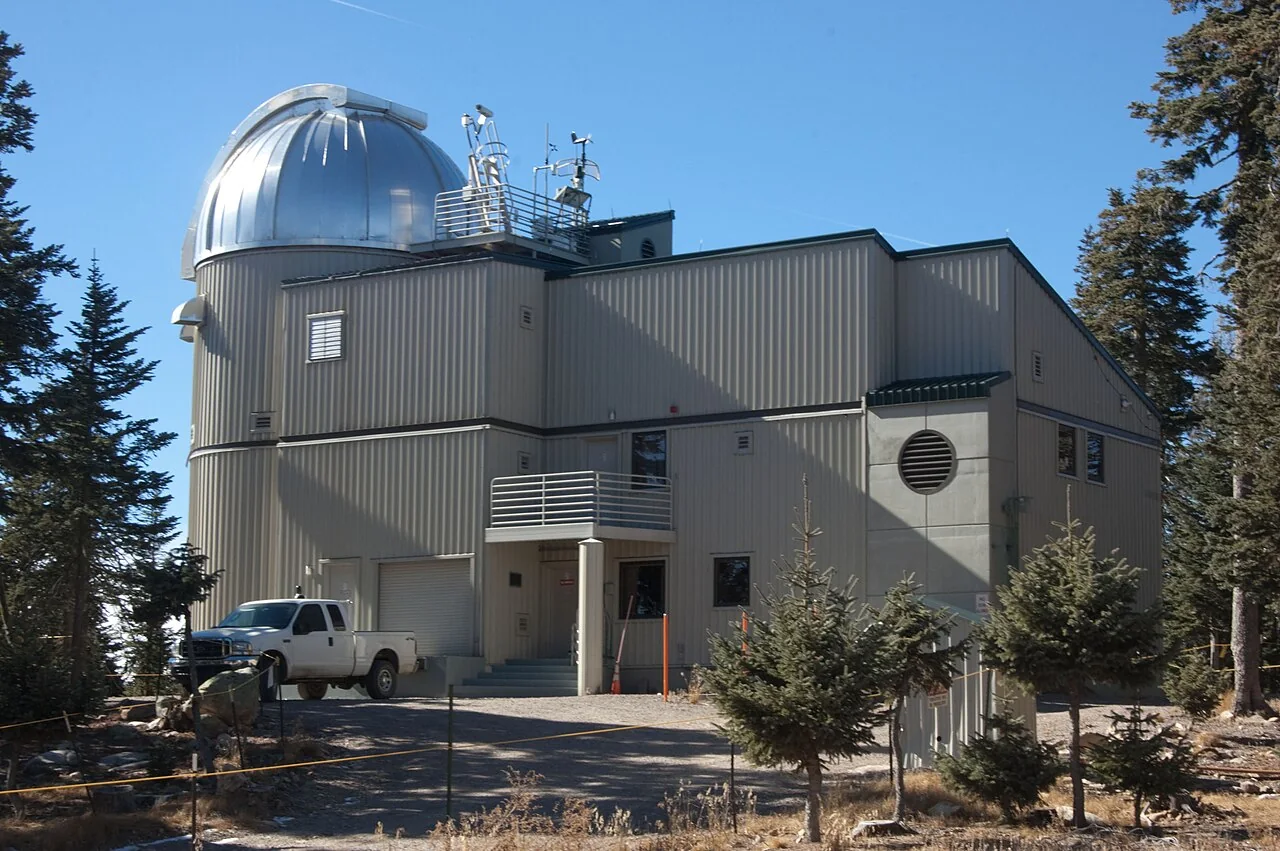

To keep studying faint objects, the Vatican Observatory had to move beyond Rome’s spreading light. Its history runs from a city to a papal residence, then to an Arizona mountain. Each move needed buildings, instruments, money and cooperation. At Mount Graham it also encountered a religious dispute: the mountain is sacred to Apache people who opposed the observatory project.
This is a research institution with a Catholic purpose and obligations to people beyond its own community. Its history lets us examine both: the astronomy the Church has supported, and the responsibilities that accompany choosing where and how to do it.
A calendar, then a research institution
The story reaches back to the reform of the calendar under Gregory XIII. By the sixteenth century, the Julian calendar's accumulated error had shifted the calendar date of the spring equinox. Because the timing of Easter mattered to Christian worship, understanding the relation between the civil year and the sky had a practical religious purpose. The Jesuit mathematician Christoph Clavius helped explain the Gregorian reform. This history is a root of Vatican astronomy, not a claim that the modern institution has operated unchanged since 1582. The Observatory's historical overview.
The decisive modern foundation came in 1891. Leo XIII formally reestablished the Specola Vaticana through the document Ut Mysticam. Its institutional setting included a response to accusations that the Church opposed scientific inquiry. That apologetic purpose was explicit. Yet the response was concrete: build an institution capable of joining scientific work. The Observatory's account of its foundation.
One early commitment was participation in the international Carte du Ciel project. Observatories divided the sky into zones and used photographic instruments with comparable specifications. The Vatican's work involved taking plates and measuring stellar images. Cooperation required common standards: a photograph obtained in one place had to become useful to people working elsewhere. A claim of support for science acquired meaning through equipment, measurement, and sustained labor.
Why an observatory moves
The night sky over a growing city changes even when the stars do not. Light scattered through the atmosphere raises the background against which faint astronomical objects must be detected. Increasing exposure time cannot simply make that background disappear. The quality of an observing site is part of the experiment.
In 1935 the Observatory moved from Vatican City to Castel Gandolfo, outside Rome. As urban illumination later reached that location too, researchers established a base in Tucson in the early 1980s, in association with the University of Arizona's Steward Observatory. Castel Gandolfo continued to matter; the Arizona development was an expansion of the institution's scientific opportunities. The Observatory's detailed history.
The Vatican Advanced Technology Telescope, or VATT, was dedicated on Mount Graham in 1993. Initial light with the primary mirror came that September, work with the secondary followed, and scientific observations began in 1995. Those separate milestones give some sense of the work between opening an observatory and making a difficult instrument useful. The VATT chronology.
The observing site carries a further responsibility. Apache Stronghold describes Mount Graham, Dził Nchaa Sí’an, as a sacred site and traditional homeland, with springs, plants and animals used in Apache religious ceremonies. Its account records opposition to the observatory project on religious grounds. Astronomical advantages do not answer that objection. Apache Stronghold’s statement on Mount Graham.
For a Catholic reader, this belongs in the history of the telescope. Respect for religious practice cannot stop at the boundary of one’s own tradition. Judging a research institution includes asking how it treats the people for whom its chosen site already has spiritual obligations.
What a telescope actually contributes
A telescope does more than produce beautiful pictures. It collects incoming light over an area much larger than a human pupil and directs it onto a detector. Repeated measurements can establish how an object's apparent brightness changes. Separating light by wavelength can reveal patterns that connect an observation to physical conditions. To turn a picture into evidence, researchers must understand both their target and their instrument.
Consider comparing a star on two nights. A difference in the recorded signal might arise from the star, but it might also arise from clouds, atmospheric conditions, exposure settings, or the detector. Nearby comparison stars and calibration exposures help distinguish these possibilities. The reasoning is ordinary but exacting: before explaining a change in nature, establish that the measurement itself has not changed in a misleading way.
An institution’s religious identity cannot settle an astronomical dispute. Other researchers need methods and data they can examine. A discovery becomes valuable because it improves an account of the world, whether its author works for the Vatican, a public university or another observatory.
A Catholic reason to let science be science
The Second Vatican Council's Gaudium et spes, paragraph 36, recognizes the proper autonomy of the sciences. Created things have structures and regularities that people should investigate through appropriate methods. In this view, respecting a natural explanation is itself consistent with belief in a Creator. The theological claim concerns the world's dependence on God; an astronomical model investigates processes within that world. The council's account of scientific autonomy.
John Paul II developed this point in his 1988 letter to Observatory director George Coyne. He supported exchange between theology and science while insisting that each retain its integrity. He did not make Christianity's justification depend primarily on scientific discoveries. Scientific findings can challenge a theological interpretation, and theology can raise questions about meaning and responsibility, without turning one discipline into a branch of the other. The letter to Coyne.
That position carries an obligation. If the Church funds research, the results must be allowed to be inconvenient, provisional, or disappointing. Otherwise it has funded publicity dressed as investigation.
The value of paying attention
Someone might still ask whether astronomy deserves resources beside poverty, education, and other urgent needs. The Observatory's existence does not resolve every budgetary decision. Scientific institutions, religious or otherwise, should be accountable for their choices. But human flourishing includes learning, and a culture that supports only immediate utility risks losing the patient inquiry on which future understanding depends.
The Observatory’s publications and instruments let readers examine what it contributes to astronomy. The Apache statement asks them to examine another part of the same history. Support for scientific inquiry becomes more credible when an institution is willing to have its choices investigated as carefully as its measurements.