THE PERSON BEHIND THE ACCOUNT
Albert the Great wanted to know how the natural world worked.
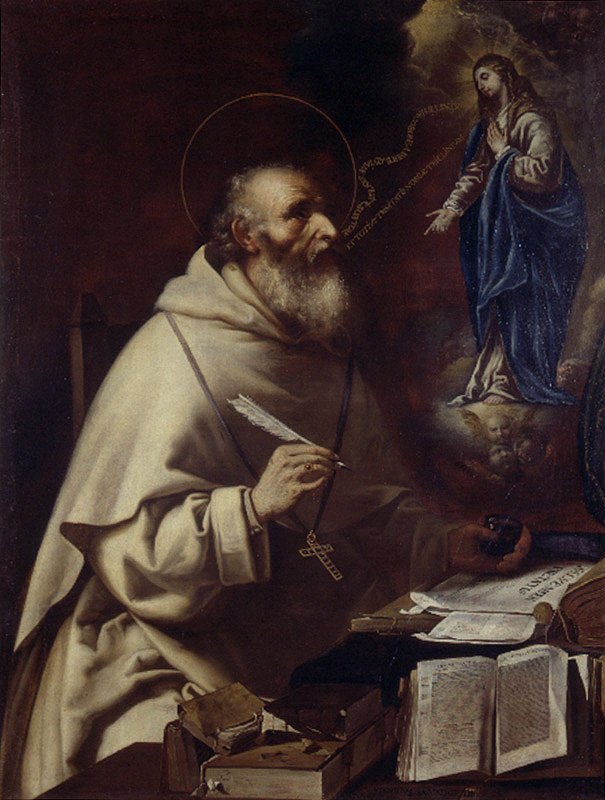
Albert’s life moved between books and obligations that took him away from them. A Dominican teacher in Paris and Cologne, he became provincial and then bishop of Regensburg. He asked to leave the bishopric and returned to teaching and writing. His intellectual work continued through those interruptions. [1] [3]
A teacher with an ambitious reading list
Albert entered the Dominican Order in the thirteenth century and taught Thomas Aquinas. The official biography remembers their work in Paris and Cologne, where Albert helped establish the order’s advanced school. His reputation rests in part on the range of texts he made available for serious study. [1]
Greek and Arabic works newly available in Latin Europe brought difficult questions. The scholarly account places Albert at the forefront of interpreting them within a Christian intellectual world, learning from authors outside it. [3]
The bishop who wanted to return
He accepted Regensburg in 1260 and was relieved of the office in 1262. Benedict XVI’s account emphasizes peacemaking, reorganizing parishes and charitable activity during his episcopate. These were responsibilities with consequences for people who would never read his commentaries. [2]
His later career also included preaching a crusade at papal request. That episode belongs to the medieval churchman’s life alongside his intellectual openness; it prevents a portrait that simply turns him into a modern academic transported backward in time. [3]
Observation within medieval natural philosophy
The Stanford scholarly entry describes Albert’s respect for experience, personal observations and occasional tests concerning minerals, plants and animals. It also cautions that his framework was not the generalized mathematical and experimental method of modern science. Both parts are needed to understand what his curiosity achieved in its own setting. [3]
IN OUR OWN LIVES
A religious thinker who kept asking about nature
Sustained work with books, observations and unfamiliar traditions offers a better conversation about faith and science than competing slogans. Curiosity deserves respect without a claim that a medieval thinker had already invented modern science.
THROUGH THE EYES OF FAITH
Faith and daily life
Benedict XVI presented Albert as an example of faith welcoming rational inquiry. Nature could be studied as a creation with its own intelligibility, while philosophy and theology retained distinct tasks. The Catholic claim was that truth could be pursued across those disciplines without treating every question as the same kind of question. [2]
Reason was part of the religious vocation
Albert’s work helped distinguish philosophy from theology without treating them as enemies. Benedict’s interpretation points to a created world that can be investigated and a human vocation to truth. It does not ask a scientific observation to function as a proof of every theological belief. [2]
Pius XI recognized Albert as a saint and Doctor of the Church in 1931. The title Doctor concerns his contribution to Christian teaching. His later patronage of natural scientists expresses the Church’s reception of that intellectual legacy. [1] [2]
THROUGH THE LENS OF SCIENCE
The evidence about the remains
At Saint Andrew’s in Cologne, the Dominicans identify Albert’s tomb in the crypt. A church-history leaflet describes bones received from the former Dominican church. That is a relic history involving skeletal remains, rather than documentation of an intact incorrupt body. [4] [5]
Bones at Saint Andrew’s
The local Dominican guide names the crypt as his burial place. Its historical leaflet records the reception of his bones after the suppression of Cologne churches. These sources support a place and a broad transfer history. They publish no comprehensive osteological inventory, modern identification study or evidence of surviving soft tissue. [4] [5]
READER QUESTIONS
Questions and answers
Why is Albert called a Doctor of the Church?
The title recognizes his contribution to Christian teaching; Pius XI declared him a saint and Doctor in 1931. [1]
Was he a modern experimental scientist?
No. He valued observation and sometimes testing, within a medieval Aristotelian framework that differed from modern scientific methods. [3]
FOLLOW THE SOURCES
Sources and further reading
- Dicastery for the Causes of Saints — Albert the Great
Church or shrine source
Teaching, order service and recognition in 1931. Dates vary in brief medieval chronologies; detailed chronology follows scholarly source 3.
- Benedict XVI — Albert the Great, 24 March 2010
Primary historical record
Primary papal interpretation of reason, theology, natural inquiry and episcopal service.
- Stanford Encyclopedia of Philosophy — Albert the Great
Scholarly account
Scholarly discussion of chronology, Greek/Arabic texts, observation, testing and limits of comparisons with modern science.
- Dominicans of Cologne — Saint Andrew’s guide
Church or shrine source
Locates Albert’s tomb in the crypt; not an anatomical report.
- Saint Andrew’s church association — Historical leaflet
Church or shrine source
Refers explicitly to receipt of Albert’s bones from the former Dominican church. No material inventory.
Sources checked: 2026-10-27. Suggest a correction or a source.