THE PERSON BEHIND THE ACCOUNT
She refused payment for her story and chose a life of nursing and prayer away from the crowds.
The Lourdes sanctuary remembers Bernadette refusing payment and declining to bless the rosaries people pushed toward her. She knew she was not a priest. When questioned about what she had seen, she insisted that her words be reported accurately. The girl at the center of the 1858 apparitions could be direct, humorous, and difficult to push around. [1]
A family that lost its security
Born in 1844, Bernadette was the eldest child of a miller’s family in Lourdes. Her early home was affectionate; poverty and recurring illness later narrowed the family’s circumstances. She had asthma and little opportunity for schooling. By the time people were questioning her about the grotto, she was a fourteen-year-old with few of the advantages that make an adult audience easy to face. [1][2]
Repeated questions, the same account
Bernadette reported eighteen encounters with a lady at Massabielle in 1858. Civil and religious authorities questioned her, while curiosity brought an audience she had never sought. The sanctuary’s biography records her corrections when an interviewer changed what she said. It also remembers her refusal to turn the encounters into a source of income. [1]
The tension is recognizable even at this distance: a person with little status must answer people who control how her account will be heard. Catholics receive her testimony within the Church’s judgment on Lourdes. Historical readers can examine how the reports were recorded and questioned. Both need to attend to her actual account.
The work she wanted
Bernadette took time to decide about religious life. The Nevers sanctuary remembers that the Sisters left her free to choose, and that she wanted to care for sick and poor people. She arrived at Saint-Gildard in 1866 and became Sister Marie-Bernard. The community’s account follows her through work in the infirmary and sacristy, alongside periods when she was a patient herself. [20]
Needing the care she had given
Her health prevented the assignment elsewhere she had hoped for. She stayed at the motherhouse. The Nevers account describes long periods of illness and severe pain before her death on 16 April 1879, aged thirty-five. That adult life contains work, frustrated plans, dependence, and prayer. The public events at Lourdes occupied only a small part of it. [20]
Her story offers no reason to praise inadequate medical treatment or to tell a sick person that pain should be easy to bear. It does show how a vocation can change when the work one hoped to do becomes impossible. Needing care does not remove a person from the life of a community. The investigation of Antonia Raco’s reported recovery at Lourdes follows a later healing claim through medical inquiry and a separate Church judgment.
IN OUR OWN LIVES
When your life becomes someone else’s story
A public reputation can narrow what other people let someone become. Reading a fuller life encourages us to listen for ordinary ambitions, frustrated plans and work that continues out of view.
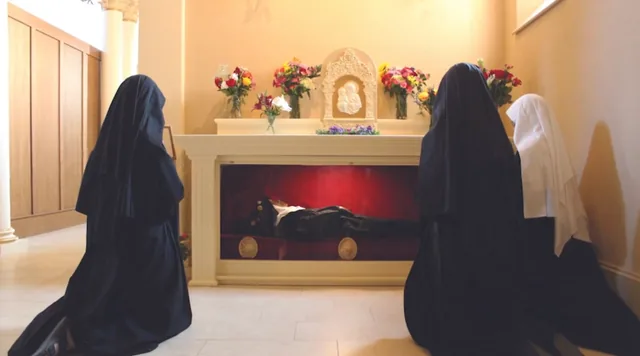
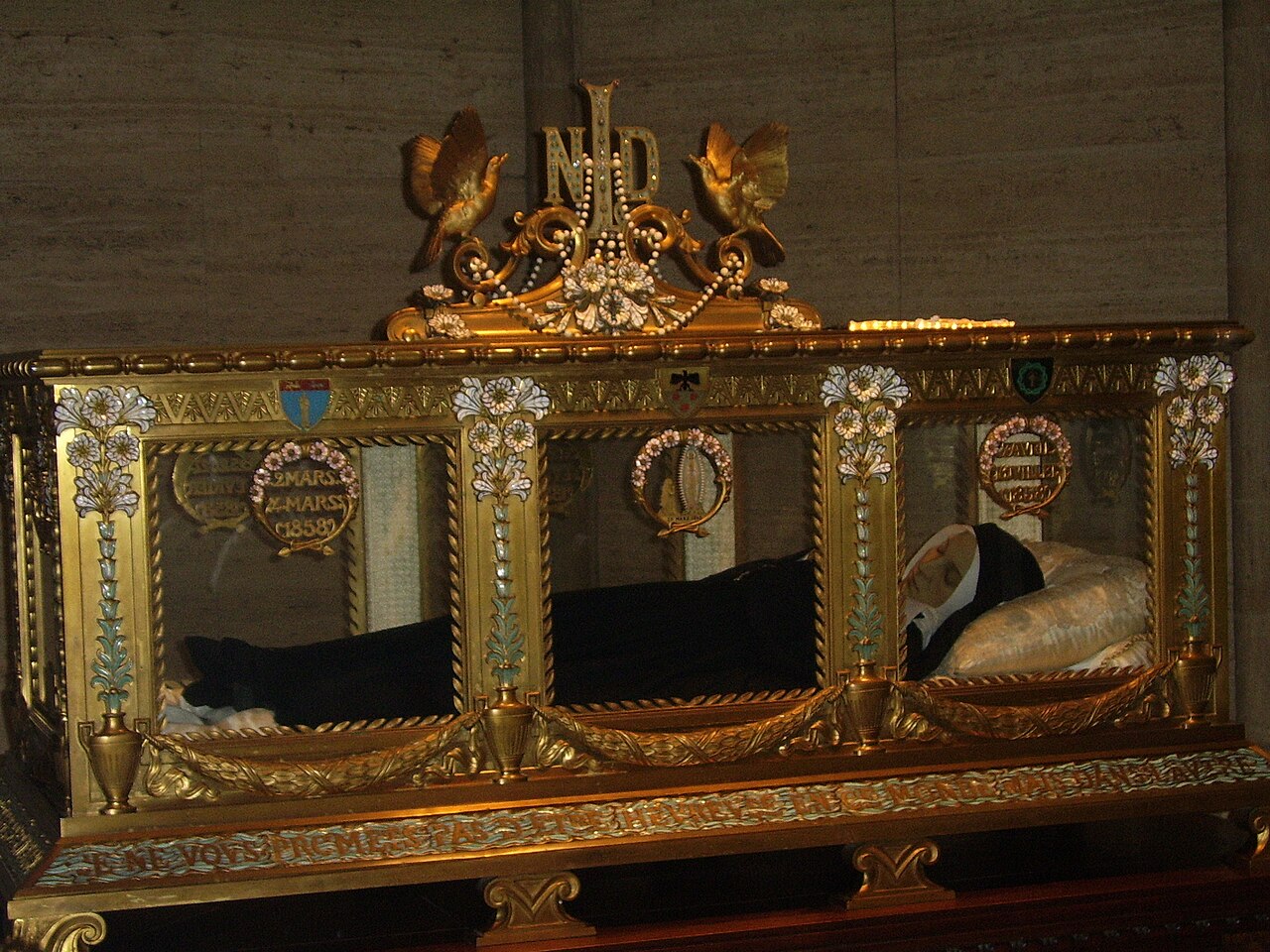
For a visitor, the reliquary can be an invitation to learn those years. For a caregiver or someone whose plans have been interrupted by illness, her life offers a less polished companionship: conviction and frustration can occupy the same day.
THROUGH THE EYES OF FAITH
Faith and daily life
Bernadette’s adult commitment brought her close to people who needed help while leaving her increasingly dependent on help herself. The diocesan account places those ordinary relationships within the Catholic understanding of holiness. Their importance survives any argument about the present condition of her remains. [4]
The holiness remembered at Nevers
The Diocese of Nevers makes a point of saying that Bernadette was canonized for the holiness of her ordinary life, rather than for the apparitions or preservation. Her 1933 recognition directs attention to the way she responded: prayer, humility, and love. A Catholic visit to Nevers can begin with the years she lived there. [4]
THROUGH THE LENS OF SCIENCE
The evidence about the remains
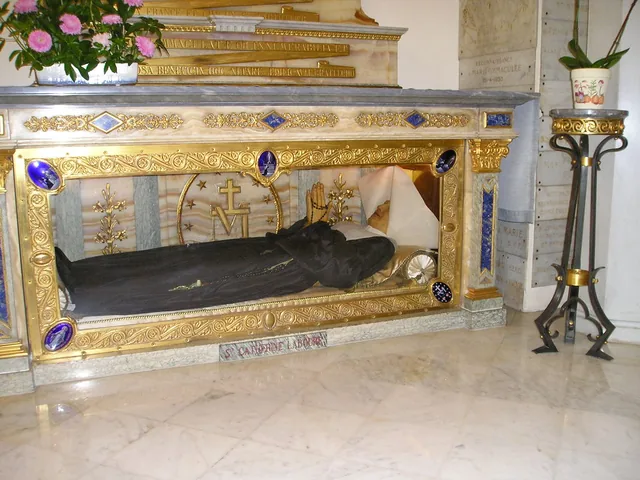
The visible remains have a documented history of preparation for viewing and medical interpretation. Wax coverings and a later mummification hypothesis need to be considered alongside reports of preservation. [5][9]
Three openings and a prepared display
The current sanctuary history dates inspections of the body to 1909,1919, and 1925, reporting it intact on each occasion. In 1925 her remains were installed in the chapel. The dates belong to the custodian’s history; the signed examination acts have not been inspected for this revision. [20]
A 2008 report in La Dépêche quotes the then-official sanctuary website describing thin wax masks on the face and hands, made from direct impressions. The report also describes removal of relic material. The visible face and hands should therefore be explained as a prepared presentation, not advertised as untouched exposed tissue. [5]
A medical history still worth studying
In 2021, AMIL president Alessandro de Franciscis identified Raoul Comte’s 1928 examination report and discussed pathologist Roger Pilon’s work on Bernadette. Pilon had proposed a mummification hypothesis and presented a 2017 lecture describing the body as semi-mummified. The editorial supplies a trail into medical history; it is not itself a full report of a new examination. [9]
READER QUESTIONS
Questions and answers
Was she canonized because her body was preserved?
The Diocese of Nevers explicitly centers her canonization on the holiness of her ordinary life. The preservation account is a separate historical and material inquiry. [4]
What are visitors seeing on her face and hands?
The 2008 report quoting the sanctuary describes thin wax masks on both. This detail belongs in any explanation of the display. [5]
FOLLOW THE SOURCES
Sources and further reading
- Lourdes sanctuary — Bernadette
Church or shrine source
Received biography, character, questioning, refusal of payment and vocation. Institutional devotional account.
- Vatican News — Sainte Bernadette Soubirous
Church or shrine source
Biographical chronology and religious recognition.
- Diocese of Nevers — Le sanctuaire Sainte Bernadette
Church or shrine source
Explains the Church’s emphasis on ordinary holiness, explicitly distinguishing it from apparitions and the body.
- Cyrille Marqué — Bernadette restera à Nevers, 6 November 2008
Reported account
Quotes the then-sanctuary site on wax masks and relic removal. An archival quotation in journalism, not the signed examination acts.
- Alessandro de Franciscis — AMIL editorial 351, 2021
Church or shrine source
Identifies Comte’s 1928 report and Pilon’s historical-medical work and hypothesis. Does not publish a new examination.
- Nevers sanctuary — Bernadette’s story and body
Church or shrine source
Custodian’s account of vocation, assignments, illness, three inspections and present shrine. No full treatment dossier.
Sources checked: 2026-10-27. Suggest a correction or a source.