THE PERSON BEHIND THE ACCOUNT
An abbess with a king’s letters on her desk
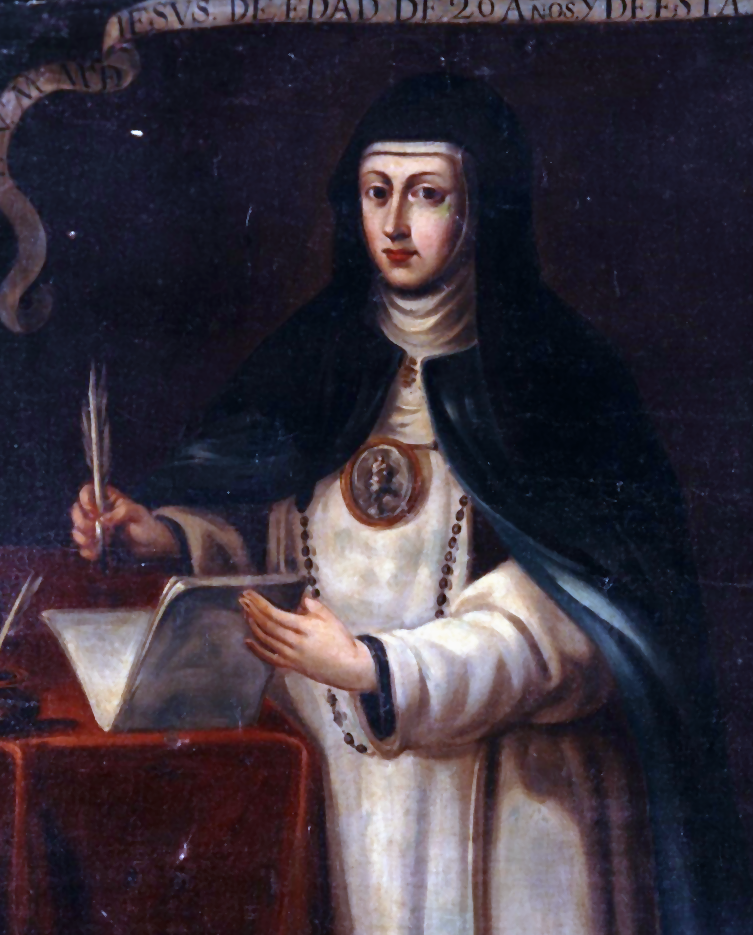
The University of Kansas preserves a volume of forty-seven letters exchanged by Philip IV of Spain and María de Jesús of Ágreda. At the king’s instruction, her answers occupy the same sheets as his questions. That small material detail captures an extraordinary relationship: an enclosed abbess participating in a long conversation with a monarch about the burdens of rule. [3]
A family home becomes a convent
Born María Coronel in Ágreda in 1602, she entered a community established in her own town. The municipality dates her taking the Conceptionist habit to 1619 and describes the eventual construction of a larger convent. She became its abbess. Building and maintaining that house was an enduring responsibility alongside the writing for which she became famous. [1][6]
Her decision placed a religious vocation within a family and a town rather than apart from them. The local account remembers neighbours helping build the new monastery. Its completion in 1633 gave the community a lasting home. The austere Franciscan building remains one of the places where her literary reputation can be connected to a practical achievement. [1][2]
Giving counsel without a throne
The correspondence with Philip IV lasted twenty-two years. Literary scholar José Vilahomat reads two registers in her letters: deferential language towards the king, and a more forceful voice criticizing nepotism, corruption and failures of government. Her religious language helped a woman who held no royal office speak about the exercise of power. [4]
That is a more precise contribution than the claim that she secretly ruled Spain. Advice is not the same as a decision, and surviving correspondence cannot establish that a monarch acted as she wished. The letters do show a sustained willingness to discuss public responsibility in moral terms. Their survival makes this part of her life unusually available for scrutiny. [3][4]
The woman in blue
The most contested part of her story concerns reports of bilocation to the American Southwest. Historian Donald E. Chipman recounts how Franciscan missionary Alonso de Benavides linked reports from Jumano people with María’s accounts of experiences in prayer. Benavides later interviewed her in Spain. These are historical reports of a claimed extraordinary event, not independently established journeys. [6]
Missionary interpretations give limited access to Indigenous voices. Treating the episode as a verified mass conversion caused by a distant nun would go beyond these reports. Their authors’ purposes need to stay visible. [6]
IN OUR OWN LIVES
Read the letters alongside the legend
María’s reputation can seem to depend on the hardest claims to verify. The surviving correspondence offers another starting point: how a woman addressed a powerful man, how religious duty shaped criticism, and how much influence advice actually has. Those questions remain recognizable even to readers who suspend judgment about bilocation and bodily preservation. [3][4][6]
THROUGH THE EYES OF FAITH
Faith and daily life
María belonged to the Franciscan Conceptionist tradition. Her best-known work, Mística Ciudad de Dios, narrates the life of the Virgin Mary. In a 2023 address, Pope Francis emphasized her attention to Scripture, silence and intercessory prayer; the Vatican used the title Venerable, not Saint or Blessed. [1][5]
The writer and the Virgin Mary
Mística Ciudad de Dios is a work of Marian spirituality, not a modern documentary biography. Its place in her reputation should not lead a reader to treat every narrated detail as an additional article of Catholic faith. Pope Francis’s later reflection drew attention to a more accessible practice: listening to Scripture and allowing prayer to turn attention towards other people. [1][5]
Her cloister did not make the wider world irrelevant to her. Political correspondence and concern for evangelization coexisted with enclosure. For a reader interested in women’s intellectual history, the surviving letters matter because a religious role could provide a setting for authorship and counsel, even within the constraints of seventeenth-century society. [3][4]
THROUGH THE LENS OF SCIENCE
The evidence about the remains
Ágreda’s municipal pages identify the convent chapel and glass urn where her remains are venerated as incorrupt. They publish no anatomical description or account of preservation treatments. [1][2]
An urn is not an examination report
The municipality calls the remains incorrupt and locates them in the Conceptionist convent. Its history page also gives an erroneous death year of 1655 while stating an age of sixty-three; the archival and historical records used here give 1665. Institutional authorship still requires checking individual claims. [1][3][6]
No examined source supplies a current tissue inventory, treatment history or method for determining the cause of preservation. The public description can be reported accurately without supplying a medical explanation that the evidence does not contain. The claim about the remains and the better-documented correspondence answer different questions. [1][2][3]
READER QUESTIONS
Questions and answers
Is she officially Saint María of Ágreda?
No. The Vatican’s 2023 conference address calls her Venerable María de Jesús of Ágreda. This profile retains that title. [5]
Are her alleged visits to America established historical travel?
No physical journey is established here. The evidence consists of reported mystical experiences and missionary accounts linking them to Indigenous encounters. Those claims should be read with their authors and circumstances in view. [6]
FOLLOW THE SOURCES
Sources and further reading
- Municipality of Ágreda: Sor María de Jesús
Local authority record
Supports convent foundation/building, authorship and local incorrupt-body description. Its death-year typo and unqualified bilocation wording are not adopted.
- Municipality of Ágreda: Convent and museum
Local authority record
Supports the convent, museum and local custody description; no physical examination.
- University of Kansas: correspondence, MS E25
Archive record
Catalogue identifies forty-seven letters dated 1646–1662 and the same-sheet reply practice. Individual letters were not newly transcribed; no specific policy effect inferred.
- José Vilahomat: Sor María de Jesús Ágreda, 2004
Scholarly account
Literary analysis of religious and deferential rhetoric, criticism of government and gendered authority. Its strongest claims of national control are not adopted.
- Pope Francis: address to Ágreda conference, 2023
Church or shrine source
Uses Venerable and discusses Scripture, silence, Marian faith and mission. It is a spiritual address, not a historical or forensic adjudication.
- Donald E. Chipman: Handbook of Texas, Ágreda entry
Historical reference
Supports life dates and contextualizes Benavides, Jumano reports and claimed bilocation; the extraordinary event is reported, not independently demonstrated.
Sources checked: 2026-10-27. Suggest a correction or a source.