

A priest calculates how fast the universe expands. Four sisters turn dots on photographic plates into star coordinates. A mathematician writes a book that helps students follow calculus. Catholic involvement in science includes discoveries, patient measurement, teaching, and arguments about who should be allowed to investigate.
This guide offers several ways into that history. Start with a scientific problem that interests you, then follow the person who worked on it. Each article explains a method and links the records behind its account.
Begin with an expanding universe
Georges Lemaître’s cosmology connects equations with observations. In 1927, the Belgian priest and physicist used Einstein’s theory and published galaxy measurements to describe expansion and estimate its rate. The article follows that calculation into later evidence for a hot early universe, while keeping Lemaître’s original proposal distinct from the modern theory.
Read his response to the religious question, too. He resisted using cosmology as a shortcut to God. His account of creation gives a Catholic reader a reason to ask what a physical explanation can answer, and what philosophical work remains.
Look at the measurements behind astronomy
In Angelo Secchi’s study of starlight, dark and bright features in a spectrum become evidence about a distant star. The Jesuit astronomer’s comparisons help explain how classification can come before a full physical theory. The article also follows his comparison of eclipse photographs: two observing locations helped test whether a feature belonged to the Sun.
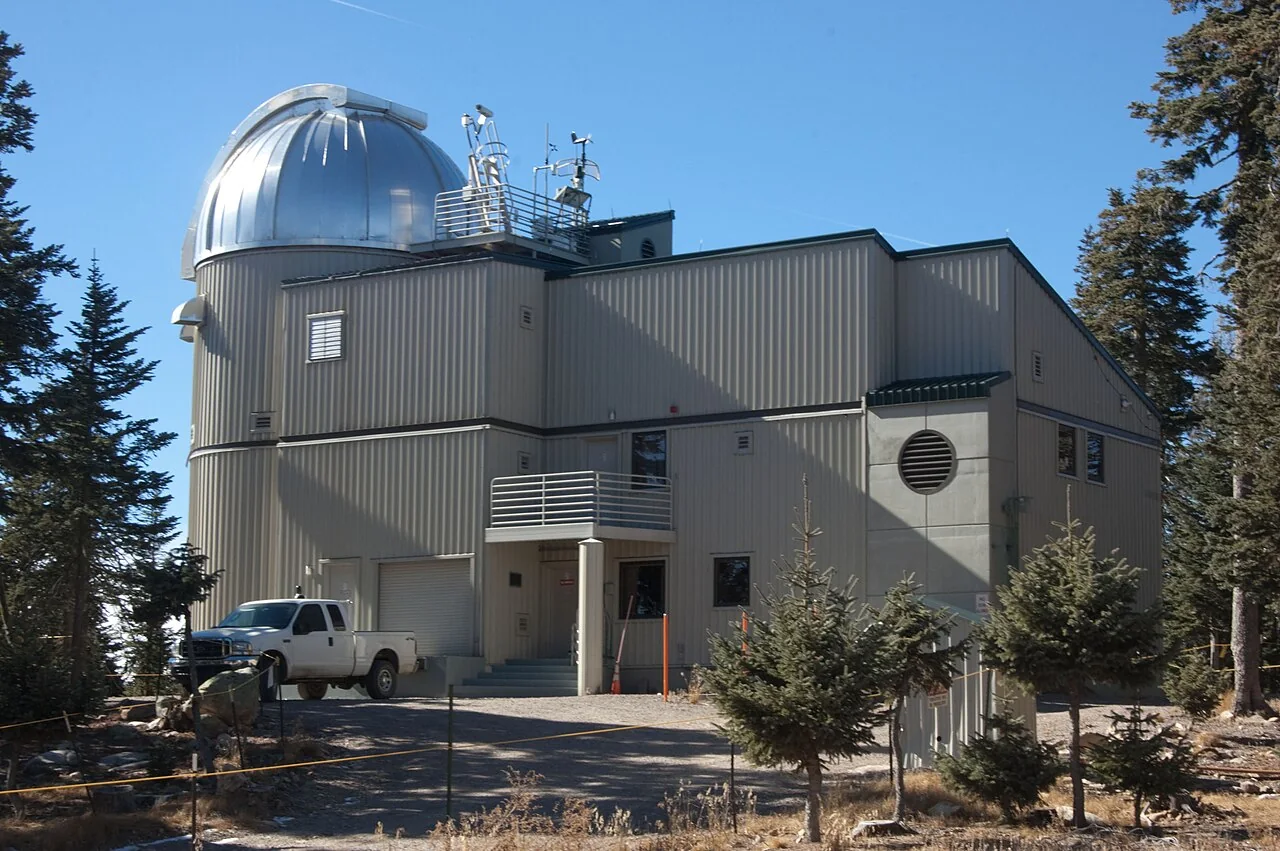
Emilia Ponzoni, Regina Colombo, Concetta Finardi, and Luigia Panceri worked on a different astronomical task at the Vatican Observatory. Their plate measurements helped produce a star catalogue. Read this next for the skilled work between taking a photograph and publishing a position that another astronomer can use.
Follow the people who made a subject teachable
Sister Mary Kenneth Keller investigated how a program might infer mathematical patterns, then built computing education at Clarke College. Her story moves from a doctoral problem to equipment, instructions, and access. It also checks a persistent legend: the archival study cited in the article rejects the claim that she helped invent BASIC.
For an earlier teacher, meet Maria Gaetana Agnesi. Her 1748 textbook organized algebra and calculus for learners. Later, she devoted decades to caring for poor and ill women. She was a lay Catholic, and her life makes room for intellectual achievement and sustained service without inventing a university teaching career she never pursued.
Read a medieval observer in his own world
Albert the Great’s writings about nature contain precise observations alongside explanations that later science revised. The article lets you separate those strengths and errors. Calling him a modern experimental scientist would obscure the medieval natural philosophy he actually practiced.
Our Albertus Magnus profile follows the wider life: teaching Thomas Aquinas, serving briefly as a bishop, and returning to study. It also examines the record of his relics in Cologne. Scientific influence, recognition as a saint, and the condition of remains each have their own history.
Keep the difficult history in view
The Galileo article begins with the Roman Inquisition’s 1633 sentence. It examines what his observations established, where his arguments failed, and how religious authority constrained inquiry. His scientific mistakes give no justification for compelled recantation. Read this alongside the accounts of institutional support to understand the choices a commitment to scientific inquiry requires.
See the work continuing
Our account of research on samples from asteroid Bennu returns to a present-day laboratory problem: a gas measurement produced implausible density readings. Follow how the team handled that result. For the institution behind the researcher, read why the Vatican has an observatory. If your interest is extraordinary religious claims, continue with Miracles and Scientific Evidence.